Walleye in Minnesota: Facts & Fishing Tips
There's nothing quite like the thrill of a walleye hitting your line in the Land of 10,000 Lakes. But let's be honest, these fish can be famously finicky, making anglers scratch their heads and sometimes feel like they're chasing ghosts. This comprehensive guide is here to demystify walleye fishing in Minnesota, providing you with all the essential facts, proven techniques, and insider tips to turn those frustrating outings into successful, stringer-filling days.
The Iconic Minnesota Walleye: Why We Love Them and Why They're Tricky
For many Minnesotans, the walleye isn't just a fish; it's a way of life. It’s the centerpiece of countless fish fries, the subject of campfire stories, and the ultimate prize that keeps us coming back to the water, season after season. But what makes this particular species so captivating and, at times, so maddeningly elusive?
Understanding Walleye Biology and Behavior
Walleye, scientifically known as Sander vitreus, are members of the perch family, but they grow considerably larger than their panfish cousins, often reaching impressive sizes in Minnesota's rich waters. Their name, "walleye," comes from their large, reflective eyes, which are perfectly adapted for low-light conditions. This biological trait is key to understanding their behavior; they thrive in dim light, whether that's during dawn, dusk, cloudy days, or in deeper, turbid waters. This is why you'll often hear veteran anglers talking about the "walleye chop" – a bit of ripple on the water surface that diffuses light and makes walleye more active, or why night fishing for walleye can be incredibly productive.
Their diet is primarily made up of smaller fish like yellow perch, cisco (tullibee), shiners, and smelt, but they're opportunistic feeders and will strike at crayfish, leeches, and even insect larvae. Understanding their forage base in a specific lake is a huge part of unlocking their patterns. When walleye spawn, typically in spring shortly after ice-out, they migrate to shallow, rocky areas, often in tributary rivers or along wind-swept shorelines where current provides oxygen to their eggs. This post-spawn period can be a fantastic time to target them, as they're hungry and recovering from the energy expenditure of spawning. Later in the year, as waters warm, they'll typically move to deeper, cooler waters, often congregating around structures.
Key Walleye Characteristics and Identification
Identifying a walleye is usually straightforward once you know what to look for, but it's crucial, especially given specific regulations that might differentiate between walleye and their close cousin, the sauger. Walleye typically boast a sleek, elongated body with a prominent dorsal fin that has sharp spines. Their coloration can vary, but they're most often a beautiful golden to olive green, with subtle, dark vertical bars along their sides.
The most distinctive characteristic, and one that every Minnesota angler should commit to memory, is the white tip on the lower lobe of their caudal (tail) fin. This is a dead giveaway. They also have large, opaque eyes that appear to "wall" out, giving them their name, and a mouth full of sharp, canine-like teeth. If you're ever in doubt when comparing your catch to a similar-looking fish, remember the white tail fin tip. For a deeper dive into the subtle differences, check out our guide on How to Identify a Walleye vs Sauger. Sauger, for instance, typically lack that distinct white tail tip and have more pronounced spotting on their dorsal fin and sometimes across their body. Misidentifying your catch can lead to some uncomfortable conversations with a DNR officer, so always be sure!
Mastering Walleye Fishing Techniques in Minnesota
Walleye fishing isn't a one-size-fits-all endeavor. What works on one lake, or even one side of a lake, might not work on another. The truly successful walleye angler in Minnesota is adaptable, armed with a variety of techniques and an understanding of when and where to deploy them.
Essential Gear for Walleye Success
You don't need to break the bank to start catching walleye, but having the right tools for the job certainly makes a difference. Think of it like a carpenter; they need a variety of saws, not just one.
- Rods and Reels: For most walleye fishing in Minnesota, a medium-light to medium power spinning rod, around 6'6" to 7' long, with a fast action tip, is a fantastic all-around choice. This setup offers enough backbone to handle a good-sized walleye while still being sensitive enough to detect those subtle bites. Pair it with a 2000-3000 size spinning reel. When it comes to specific recommendations, many anglers swear by rods from St. Croix or Fenwick, often pairing them with reliable reels from Shimano or Daiwa. You can find a vast selection of these on Amazon, often with reviews that can help you narrow down your choices based on your budget and preferred fishing style. For more detailed advice on what works best, explore our guide on Best Walleye Rods & Reels.
- Fishing Line: This is where things get a little nuanced.
- Monofilament (Mono): Affordable and forgiving with some stretch, making it good for crankbait trolling where a little give is beneficial.
- Fluorocarbon (Fluoro): Nearly invisible underwater and has less stretch than mono, providing good sensitivity. It sinks, which can be an advantage for certain presentations.
- Braided Line: Extremely strong for its diameter, zero stretch for maximum sensitivity and hook-setting power, and great for cutting through weeds. However, it's visible, so most anglers tie a fluorocarbon leader to it. For jigging, many prefer braid for the direct contact it offers.
Your choice often depends on the technique. For bottom bouncing or jigging in deeper water, braid with a fluorocarbon leader is a popular choice for its sensitivity.
- Lures and Live Bait: Walleye are suckers for certain presentations.
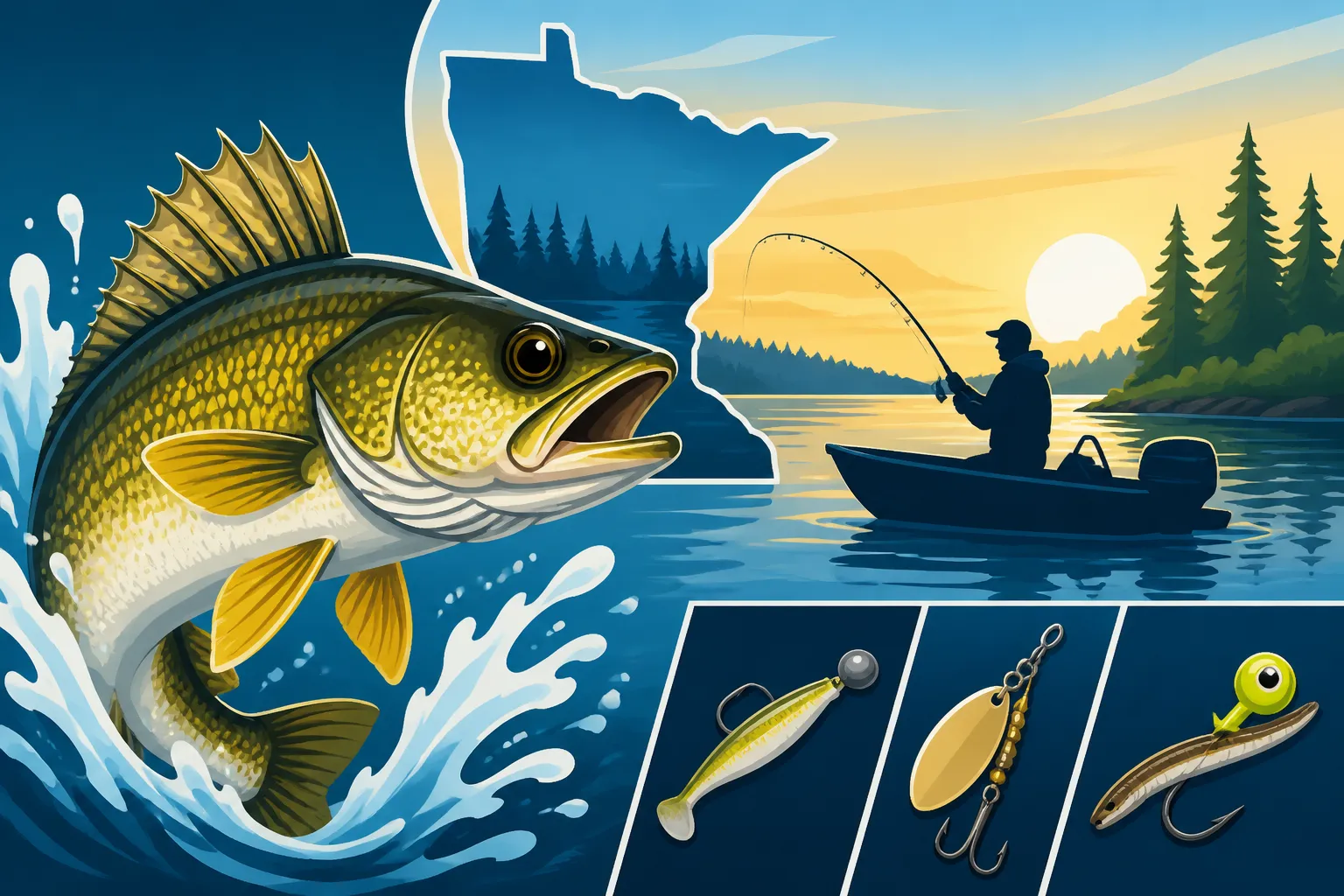
- Jigs: From 1/8 oz to 1 oz, jigs are walleye catchers year-round. Tipped with a minnow (like shiners or fatheads), a leech, a piece of nightcrawler, or even a soft plastic swimbait, a jig is incredibly versatile. Bright colors like chartreuse, orange, and white often work well, especially in stained water. Learn the basics with Jigging for Walleye: Jig & Minnow Basics.
- Crankbaits: Trolling crankbaits is deadly, especially in summer. Dive depth, color, and action are critical. Popular brands include Rapala, Berkley, and Salmo. Consider diving depth when selecting, as you'll want to target specific depths where walleye are holding. If you're looking to stock up, Amazon has a huge variety, often in multi-packs, making it easy to experiment. For more in-depth information on trolling, check out Trolling for Walleye: Crankbaits & Leadcore.
- Spinner Rigs/Crawler Harnesses: These are fantastic for slow-trolling or drifting, especially with a bottom bouncer. The spinning blade creates flash and vibration, irresistible to walleye, especially when tipped with a juicy nightcrawler.
- Slip Bobbers: A classic for fishing live bait at a precise depth. A lively leech or minnow suspended under a slip bobber near structure can be deadly, particularly in spring and fall.
- Live Bait: Minnows (shiners, fatheads, rainbows), leeches, and nightcrawlers are the holy trinity of walleye bait. Always check local bait shops for what's active and locally available. For a deeper dive into bait choices, read Best Live Bait for Walleye (Leeches, Minnows, Crawlers).
Top Walleye Fishing Techniques by Season
Minnesota's distinct seasons demand different approaches to walleye fishing. Understanding these shifts is paramount to consistent success. For a truly comprehensive look at seasonal strategies, consult our Walleye Fishing Techniques: Complete Minnesota Guide.
- Spring Opener (May): When the lakes just shed their ice and the walleye opener kicks off, walleye are typically shallow, often near spawning areas like rocky points, river mouths, and wind-blown shorelines. They're recovering and actively feeding.
- Techniques: Jigging with live minnows (especially shiners) is king. Pitching jigs into shallow breaks or slowly dragging them along contours. Trolling shallow-diving crankbaits can also be effective, especially on warming bays. Focus on depths of 5-15 feet, moving deeper as the sun gets higher.
- Scenario: Imagine you're on Lake Bemidji right after the opener. The water is still chilly. You're casting a 1/4 oz jig tipped with a shiner to a rocky point where the wind has been blowing, creating a good current. You feel a subtle "thunk" – that's a walleye!
- Summer (June-August): As water temperatures rise, walleye typically move to deeper, cooler water. They'll relate to offshore structure like humps, reefs, mud flats, and thermoclines. Finding the baitfish is often key.
- Techniques: Bottom bouncing with crawler harnesses or spinner rigs is a staple for covering water on expansive flats. Trolling deep-diving crankbaits or employing leadcore line to get lures to specific depths is also highly effective. Jigging with heavier jigs or using a How to Fish a Lindy Rig for Walleye with a leech or crawler can be deadly on specific deep structures. Night fishing with lighted slip bobbers over shallow weeds or rock reefs can also produce big fish, as walleye move up to feed under the cover of darkness.
- Scenario: It's a hot August day on Mille Lacs Lake. You're out on the famed mud flats, slowly drifting with a bottom bouncer and a crawler harness. Your fish finder shows baitfish and arcs near the bottom in 25 feet of water. You keep your speed just right, letting that spinner flash and wobble, waiting for the telltale pull.
- Fall (September-November): As water temperatures drop, walleye become more active and start gorging themselves in preparation for winter. This can be some of the best fishing of the year, especially during and after the "turnover" period when lake water mixes.
- Techniques: Similar to spring, jigs and minnows become incredibly effective again, often in shallower water, particularly near remaining green weeds or rocky structure. Trolling crankbaits in transition areas or deeper breaks can also be very productive. Walleye will follow baitfish into shallower bays or congregating near river inlets/outlets.
- Scenario: You're on Lake Vermilion in late October. The leaves are changing, and the water is cooling. You're casting a hair jig tipped with a fathead minnow to a rock-strewn shoreline that drops quickly into deeper water. The walleye are actively feeding, packing on pounds, and the bites are aggressive.
- Winter (December-March): Ice fishing for walleye is a Minnesota tradition. Walleye will move and feed under the ice, often staging on main lake points, humps, and deep breaks.
- Techniques: Jigging Raps, spoons, and Swedish Pimples tipped with a minnow head are popular. Deadsticking (a rod with live bait suspended) nearby is also very effective. Portable shelters, flashers (Vexilar, MarCum), and even underwater cameras have revolutionized ice fishing. Drilling many holes to find active fish is often key.
- Scenario: Bundled up on Upper Red Lake, you've got your portable ice house set up over a main lake break. Your Vexilar is showing fish darting in and out of your cone. You're gently jigging a buckshot spoon, feeling for that subtle tap that signals a walleye has taken the bait. To prepare for your ice adventures, check out our Ice Fishing for Walleye: Tactics & Setups guide.
Finding Walleye: Prime Minnesota Hotspots and Structure
Catching walleye often boils down to finding them. And finding them means understanding their preferred haunts and how to "read" a lake. It's not just about randomly dropping a line; it's about strategic placement.
Understanding Walleye Habitat and Lake Structure
Walleye are structure-oriented fish, meaning they relate to specific features on the lake bottom. These features provide cover, ambush points for prey, and preferred temperature/oxygen levels. Knowing what to look for on a map or your electronics is half the battle. Our guide on Where Do Walleye Live in a Lake (Structure) offers even more depth on this crucial topic.
- Weed Lines: The edges of submerged weed beds are prime walleye territory, especially in summer and fall. Walleye will patrol these edges, darting in and out of the weeds to ambush baitfish. Look for "green" weeds that still have good oxygen content.
- Rock Piles and Reefs: These hard-bottom structures, especially those with varying depths or sharp drop-offs, are classic walleye magnets. They provide cover and attract baitfish.
- Humps and Points: Underwater humps (isolated high spots) and points that extend from shore out into the lake are ambush points and travel corridors for walleye. The deeper side of a point where it meets a basin is often key.
- Mud Flats: Large, relatively flat areas of soft bottom, often found in bigger lakes, can hold massive schools of walleye, particularly in summer. They'll follow schools of cisco or perch across these flats.
- Breaks and Drop-offs: Any sharp change in depth is a "break" or "drop-off" and is almost always worth investigating for walleye. They can sit on the edge of the break, looking up into shallower water for prey, or down into deeper water for cooler temperatures.
- Electronics are Your Friend: Modern fish finders, especially those with GPS mapping and side/down imaging, are invaluable. Brands like Humminbird, Garmin, and Lowrance offer incredible technology that allows you to identify structure, mark baitfish, and even see individual walleye. Garmin's LiveScope, for example, allows you to see fish in real-time, almost like an underwater camera. While these high-tech gadgets can be an investment, you can often find great deals on previous models or accessories on Amazon. Learning to use your electronics effectively will dramatically increase your success rate.
Top Minnesota Walleye Lakes to Target
Minnesota boasts an incredible array of walleye fisheries, from massive boundary waters to smaller, hidden gems. Here are some of the perennial favorites, each offering a unique walleye experience:
- Mille Lacs Lake: A true walleye factory, though its regulations can change frequently. Known for its vast mud flats, rock reefs, and diverse structure. It's also a world-class smallmouth bass fishery. For the latest on this iconic lake, see our Mille Lacs Lake Fishing Guide: Walleye, Bass & More.
- Lake of the Woods: Up north on the Canadian border, this colossal lake offers an unparalleled walleye experience, with incredible numbers of fish. You can fish the main lake or head to the famed Rainy River for spring and fall river run walleye. Consult our Lake of the Woods Fishing Guide for everything you need to know.
- Leech Lake: A sprawling, diverse lake in north-central Minnesota known for its "potato chip" rock reefs and expansive bays. It's a fantastic multispecies lake, also famous for its muskies. Dive into the details with our Leech Lake Fishing Guide.
- Lake Winnibigoshish (Winnie): Another giant, often called "Big Winnie," famous for its walleye and jumbo perch. It's known for its relatively shallow, bowl-shaped basin with key humps and mud flats.
- Upper and Lower Red Lake: These large, shallower lakes in northern Minnesota have seen incredible walleye population booms in recent decades, offering fantastic fishing, especially for eating-sized walleye.
- Lake Vermilion: A picturesque, deep, clear lake in the Iron Range region, offering a classic northern Minnesota experience with abundant walleye and trophy muskies.
- Other Notable Lakes: Gull Lake (Brainerd area), Cass Lake, Lake Bemidji, Lake Minnetonka (metro area) also offer excellent walleye opportunities. For a broader perspective on where to cast your line, check out Best Walleye Lakes in Minnesota.
Walleye Lake Characteristics Table
| Lake Name | Primary Structure/Features | General Walleye Size Profile | Key Fishing Seasons | Special Regulations (Check DNR!) |
|---|---|---|---|---|
| Mille Lacs Lake | Mud Flats, Rock Reefs, Gravel Bars | Mixed, often regulated slots | All Seasons | Highly variable slot limits |
| Lake of the Woods | Bays, Reefs, River Mouths, Islands | High numbers, many eating-size | All Seasons, Ice | Stable, generous limits |
| Leech Lake | Rock Reefs, Potato Chip Reefs, Bays | Mixed, some trophy potential | All Seasons | Specific slot protection |
| Lake Winnibigoshish | Humps, Mud Flats, Deep Basins | Good numbers, eating-size to larger | All Seasons, Ice | Generally stable limits |
| Upper/Lower Red Lake | Shallow, Expansive Basins, Weeds | High numbers, abundant eating-size | All Seasons, Ice | Often a protected slot |
| Lake Vermilion | Deep Rocks, Humps, Islands, Bays | Mixed, good trophy potential | All Seasons | Protected slot on larger fish |
Note: Regulations are subject to change. Always verify the latest rules from the Minnesota DNR before fishing.
Navigating Minnesota Walleye Regulations
Minnesota's fishing regulations are designed to protect fish populations and ensure sustainable angling for future generations. For walleye, given their popularity, these rules are particularly important and can vary significantly from one lake to another. Ignorance of the law is not an excuse, so always be informed!
Licenses, Seasons, and Bag Limits
Before you even think about dropping a line, make sure you have a valid Minnesota fishing license. Whether you're a resident or a non-resident, nearly everyone over the age of 16 needs one, with some exceptions for seniors, youth, and free fishing weekends. You can easily purchase them online through the Minnesota DNR website, or at many bait shops and retailers like Walmart. For a full breakdown on acquiring your permit, consult Minnesota Fishing License: Cost, Types & How to Buy (2026).
- Walleye Season Opener: The statewide walleye season typically opens on the Saturday two weeks prior to the Saturday of Memorial Day weekend. This date is consistent across most of the state's inland waters. In 2026, you'll want to mark your calendar for the specific date. Our guide on Minnesota Fishing Seasons & Opener Dates (2026) will have the most up-to-date information.
- Statewide Bag and Possession Limits: For most of Minnesota's inland waters, the general statewide daily bag limit for walleye is six, and the possession limit is also six. This means you can keep up to six walleye caught in a single day, and you cannot have more than six walleye in your possession (at home, in your cooler, etc.) at any given time. However, this is just the general rule. Many lakes have specific regulations that override the statewide limits. Always, always check the current Minnesota Fishing Regulations handbook or the DNR website for the specific lake you are fishing. For general rules, our article on Minnesota Fishing Limits: Bag & Possession (2026) provides a good overview. For specific walleye regulations, check out Walleye Season & Limit in Minnesota.
Slot Limits and Special Regulations
This is where it gets critical, especially for walleye. Due to unique lake ecosystems, fishing pressure, or efforts to improve trophy potential, many Minnesota lakes implement slot limits or other special regulations for walleye.
- What is a Slot Limit? A slot limit means that fish within a certain size range must be immediately released. For example, a common walleye slot might be "all walleye from 17-26 inches must be immediately released." This means you can keep fish under 17 inches and over 26 inches, but nothing in between. The purpose of these slots is often to protect the prime spawning-size fish, allowing them to reproduce and grow, thus enhancing the overall fishery. It's a fantastic conservation tool that helps manage fish populations effectively.
- Examples of Lake-Specific Rules:
- Mille Lacs Lake Walleye Regulations: Mille Lacs is famous for its dynamic and often complex walleye regulations, which change annually based on population assessments. In some years, there might be a one-fish limit, with a protected slot, or even catch-and-release only. It is absolutely essential to check the current year's rules for Mille Lacs. We dedicate an entire guide to this: Mille Lacs Walleye Regulations (2026).
- Upper and Lower Red Lake: These lakes often have a protected slot and a reduced bag limit, typically to sustain their robust walleye populations, which have bounced back remarkably well.
- Why These Rules Exist: These rules aren't designed to make your life harder; they're based on extensive biological research by the Minnesota DNR. They ensure that our precious walleye populations remain healthy and productive for generations of anglers to enjoy. When you adhere to these rules, you're not just following the law; you're contributing to the sustainability of Minnesota's incredible fishing heritage. Always refer to the Minnesota DNR's official fishing regulations booklet or their website for the most current rules before you head out, and pay close attention to the specific rules for the body of water you intend to fish. Understanding the nuances of these rules, especially slot limits, is critical, as highlighted in Minnesota Slot Limits: Which Lakes & Why.
Disclaimer
Fishing regulations and conditions can change. Always consult the official Minnesota Department of Natural Resources (DNR) website or the most current Minnesota Fishing Regulations handbook before heading out on the water. This guide is for informational purposes only and does not supersede state fishing laws.