Ice Fishing for Walleye: Tactics & Setups
Minnesota winters are notoriously long, and there is nothing more demoralizing than sitting in a freezing fish house for six hours only to realize the walleye have completely snubbed your presentation. Most anglers struggle with the "mid-winter slump" where fish become lethargic and the bite seemingly vanishes into thin air. This guide solves that frustration by breaking down the precise tactics, gear setups, and seasonal movements required to consistently find and catch walleye through the ice.
Understanding Walleye Behavior Under the Ice
To catch walleye consistently in the Land of 10,000 Lakes, you first have to understand that their world changes dramatically once the ice cap forms. Unlike the aggressive feeding frenzies we see during the spring opener, winter walleye are often operating on a strict energy-conservation budget. They aren't going to chase a lure halfway across the water column like a hungry summer smallmouth might. Instead, they rely on short, intense bursts of activity that are dictated almost entirely by light levels and structure.
Low-Light Feeding Windows
If you’ve spent any time on the ice, you know the "Golden Hour." This is that magical thirty-minute window just before and just after sunset when the walleye move from their deep-water haunts up onto the flats to feed. Because walleye have a specialized light-gathering layer in their eyes called the tapetum lucidum, they have a massive predatory advantage in dim conditions. This is exactly why understanding Walleye Eyes: Why They Bite at Night & Low Light is so critical for ice anglers.
In many Minnesota lakes, the bite during the middle of the day can be non-existent. You might see "ghosts" on your flasher—fish that come in, look at the lure, and fade away—but they won't commit until the sun hits the horizon. During these windows, you need to be set up and ready to go before the fish arrive. Fiddling with your heater or drilling holes right as the bite starts is a surefire way to spook a school. Empathy for the fish's sensory world means realizing that every vibration on the ice above them is magnified in the silent winter water.
Structure and Depth Transitions
Walleye are creatures of the "break." They love edges where a shallow flat drops off into deeper water. In the early ice season, you might find them in 10 to 15 feet of water on weedy flats or rocky points. As the winter progresses and oxygen levels drop in the shallows, they migrate toward deeper transitions, often settling in 20 to 30 feet of water.
Large-scale structure is the name of the game on big water. For example, if you are looking at a Mille Lacs Lake Map: Mud Flats & Structure, you will notice how those deep mud flats serve as highways for roaming schools of fish. They move along the edges of these flats, looking for perch or emerald shiners. Finding a "spot on a spot"—like a small rock pile on an otherwise sandy transition—can be the difference between a limit and a "skunk" at the end of the day.
Oxygen and Water Temperature
One thing many casual anglers overlook is the role of oxygen. In smaller, shallower lakes, the decaying vegetation can actually sap the oxygen out of the water by mid-February. This is why the "mid-winter slump" happens. The fish aren't just being stubborn; they are physically sluggish because the environment is stressful.
Walleye will seek out the most stable water temperatures, which in winter is actually the "warmest" water at the very bottom (usually around 39 degrees Fahrenheit). They will hunker down in these pockets and barely move unless a meal is presented directly in their strike zone. Understanding this lethargy helps you realize why a massive, aggressive jigging motion might actually scare them away during the heart of January.
Essential Gear and Setups for Winter Walleye
You don't need a $50,000 wheelhouse to catch fish, but you do need a rod and reel combo that can handle the specific demands of ice fishing. The primary challenge is sensitivity. When a walleye inhales a jig in 25 feet of water, it often feels like nothing more than a tiny "tick" or a slight weight on the line. If your rod is too stiff or your reel's drag is frozen, you’re going to lose that fish.
Rod and Reel Selection
A dedicated walleye ice rod is usually between 28 and 36 inches long. For most Minnesota applications, a medium-light or medium-action rod with a fast tip is the gold standard. The fast tip allows you to see the bite before you feel it, while the backbone of the rod provides the power needed to drive a hook into a walleye’s bony jaw.
When it comes to reels, a high-quality spinning reel with a smooth carbon fiber drag is essential. Cold temperatures can make cheap grease inside a reel turn into "molasses," causing the drag to stutter. You can find several reliable Best Walleye Rods & Reels that are specifically designed to withstand sub-zero temperatures. If you're looking for a quick replacement, many veteran anglers browse Amazon for reliable Shimano or Abu Garcia reels that offer cold-weather performance without breaking the bank.
Choosing the Right Line and Leader
The debate between monofilament and fluorocarbon is a heated one in the bait shops of Brainerd and Bemidji. Monofilament has more stretch, which can be a safety net when fighting a big fish near the hole. However, fluorocarbon is nearly invisible underwater and has much less stretch, which is vital for deep-water hook sets.
Most pros prefer a "hybrid" approach: spooling the reel with a high-visibility braided line for sensitivity and then tying on a 3-to-4-foot fluorocarbon leader. This gives you the best of both worlds. It is worth checking out the Best Line for Ice Fishing (Walleye & Panfish) to see which pound-test is appropriate for the clarity of the lake you’re fishing. In crystal clear lakes like Ten Mile or Trout Lake, dropping down to 4-lb or 6-lb test can drastically increase your hook-up rate.
Tackle Box Essentials
Your lure choice should be dictated by the fish's activity level. If the fish are active, a rattle bait or a heavy spoon is excellent for calling them in from a distance. If they are finicky, a small 1/8-oz jig tipped with a minnow head might be the only thing they'll touch.
| Lure Type | Action | Best Used When |
|---|---|---|
| Jigging Rapala | Aggressive darting | Early/Late ice, active fish |
| Buckshot Rattle Spoon | Loud thumping/rattling | Stained water, calling fish in |
| Tungsten Jig | Slow, subtle finesse | Mid-winter slump, pressured fish |
| Set Line (Deadstick) | Passive, live bait | All season, secondary rod |
Stocking up on Best Lures for Ice Fishing Walleye ensures you have a variety of colors, from "glow" patterns for night fishing to natural perch patterns for clear water. Many anglers order bulk packs of these lures on Amazon to ensure they have plenty of backups when a toothy northern pike inevitably clips the line.
Proven Tactics for Active and Passive Walleye
The biggest mistake a beginner makes is "over-jigging." They treat the lure like a yo-yo, constantly moving it up and down with high energy. While this can attract fish, it rarely triggers a strike from a wary winter walleye. Success on the ice is a dance between being the "annoyance" that grabs their attention and the "easy meal" that they can't resist.
The Art of Jigging
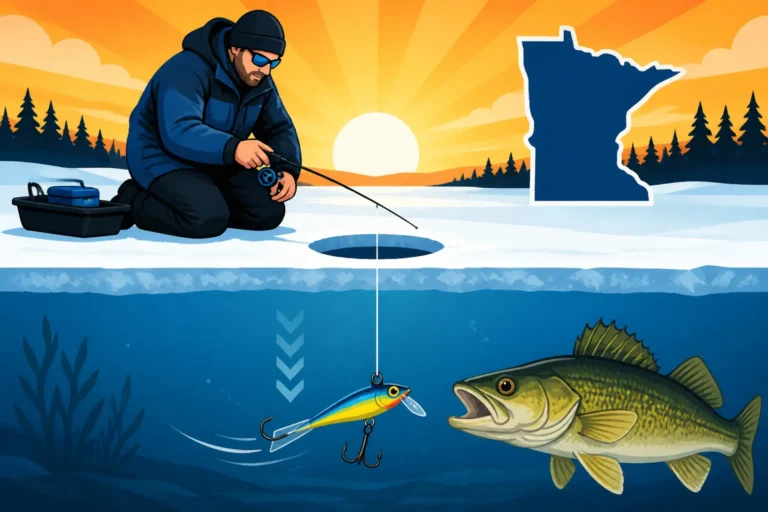
A successful jigging cadence usually involves a few big "calling" movements followed by a period of subtle "quivering." You want to lift the lure about 12 to 18 inches and let it flutter back down on a semi-slack line. Once it settles, hold it dead still for several seconds. Most hits occur right as you start to slowly "crawl" the lure upward away from a fish that has approached on the sonar.
Learning the Best Ice Fishing Jigging Cadence for Walleye takes practice. Every lake is different. On Upper Red Lake, the fish are notoriously aggressive and love a loud rattle. On Mille Lacs, you might need to be much more subtle. The key is to watch your electronics. If a fish comes in and then turns away, change your rhythm immediately. Sometimes, just "pounding" the jig into the bottom to create a small cloud of silt is enough to trigger a predatory strike.
Deadsticking and Tip-Up Strategies
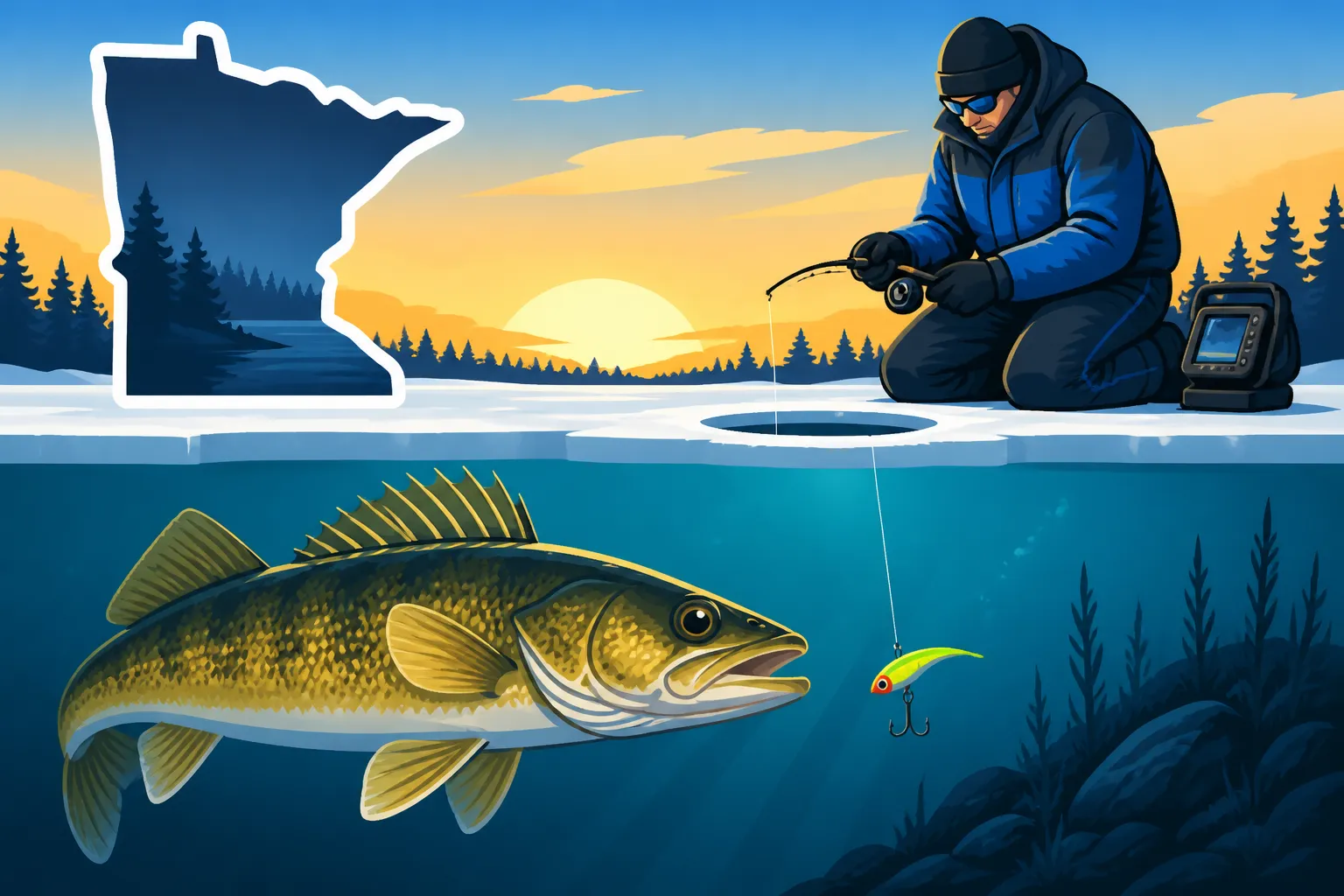
In Minnesota, you are generally allowed two lines through the ice. A common strategy is to have one "active" line that you are jigging and one "passive" line, often called a deadstick. A deadstick is simply a rod sitting in a holder with a live minnow suspended a foot off the bottom. The minnow does all the work, and the rod's soft tip indicates when a fish has taken the bait.
For those who prefer a more "old school" approach, tip-ups are the way to go. These are stationary devices that sit over the hole and "trip" a flag when a fish pulls line. This is a fantastic way to cover a lot of ice. If you are learning How to Catch Walleye Through the Ice in Minnesota, starting with a spread of tip-ups along a structural break is a highly effective way to locate where the schools are moving. You can easily find high-quality thermal tip-ups on Amazon that prevent your holes from freezing shut in negative temperatures.
Using Electronics to Trigger Strikes
It is almost impossible to be a consistent walleye angler today without some form of sonar. Whether it’s a traditional flasher or the latest forward-facing sonar, these tools allow you to see how the fish reacts to your lure in real-time. If you see a fish rising to your lure, the worst thing you can do is stop moving it. You want to "tease" the fish upward.
Comparing Vexilar vs Humminbird vs Garmin is a rite of passage for any serious ice fisher. A flasher tells you the depth, where your lure is, and where the fish is. If the fish is a "red" line on the screen and your lure is "green," your goal is to make those lines merge. When the lines merge and the signal gets "flickery," that is the moment to feel for the weight and set the hook.
Location Scouting and Late-Season Transitions
The walleye you caught in December on that 12-foot weed edge are likely long gone by late January. Understanding the "seasonal migration" within a frozen lake is what separates the veterans from the lucky amateurs. You have to be willing to move. "Ice trolling"—drilling 20 to 30 holes and spending only 10 minutes at each—is often more productive than sitting in one spot all day.
Early Ice vs. Mid-Winter Slump
During the early ice period (late November to December), walleye are often still in their fall patterns. They are shallow, aggressive, and can be caught in large numbers. This is the prime time to visit places like Upper Red Lake Walleye Fishing Tips where the shallow basin keeps fish active and hungry.
However, as the ice thickens to 20+ inches and snow piles up, the "slump" hits. The lack of light penetration through the snow can kill off weeds, causing fish to move deeper to find better oxygen and more stable conditions. During this time, look for the "deepest hole" in the immediate area or focus on the steepest drop-offs. If you can find a submerged bridge, a deep rock pile, or a trench, you will find the mid-winter survivors.
Late Season Patterns and Oxygen Movement
As March approaches and the snow begins to melt, oxygen-rich water starts to trickle back into the lake through the holes and cracks. This "wakes up" the fish. Walleye will begin to staging near the mouths of rivers or in the bays where they intend to spawn once the ice goes out.
Knowing the timing of Walleye Spawning: When and Where is vital for late-ice success. The fish are often heavily concentrated in these "pre-spawn" areas. While the fishing can be incredible, the ice can also be dangerous during this time. "Honeycomb" ice or ice near moving water can be deceptive. Always prioritize safety over a few extra fish in the bucket.
Safety and Ethics on the Ice
Ice fishing in Minnesota is a community event, but it comes with responsibilities. Every year, we hear stories of trucks going through the ice or anglers getting stranded on floating floes in Lake of the Woods. Being a "veteran" means knowing when to stay off the ice just as much as knowing where to fish.
Ice Thickness and Transport
The general rule of thumb is: 4 inches for walking, 5-7 inches for an ATV or snowmobile, and 12-15 inches for a medium-sized truck. However, these are just guidelines. Ice is never 100% safe. Factors like underwater springs, current, and recent temperature swings can make 12 inches of ice as weak as 2 inches of "good" clear ice.
Before heading out, always check the Minnesota Ice Fishing & Shelter Rules to ensure you are compliant with house identification and removal dates. It is also wise to carry ice picks (worn around your neck) and a throw rope. If you're heading to a new lake, stop by the local bait shop; they are usually more than happy to tell you where the "bad spots" are.
Catch and Release Best Practices
With the rise of high-tech electronics, the pressure on walleye populations has never been higher. While keeping a few fish for a fry is a time-honored tradition, it's important to be selective. Large "trophy" walleye (those over 20-22 inches) are usually the primary spawners. Their meat isn't as tasty, and they are much more valuable to the lake's future if they are released.
Following Catch and Release Best Practices in Minnesota is especially important in winter. Bringing a fish up from 30 feet of water can cause barotrauma (where their swim bladder expands). If you plan to release a fish, keep it in the water as much as possible and get it back down the hole quickly. Use a tool like a "recompression" weight if the fish is struggling to swim back down. We want our kids to enjoy the same "Golden Hour" magic that we do today.
Disclaimer
The information provided in this guide is for educational and entertainment purposes only. Fishing regulations in Minnesota are subject to change by the Department of Natural Resources (DNR). Always verify current seasons, bag limits, and ice safety conditions before heading onto the water. Ice fishing involves inherent risks; always prioritize personal safety and the safety of others.