Where Do Walleye Live in a Lake? (Structure)
Ever spend hours on a lake, staring at a blank fish finder screen, wondering where on earth the walleye are hiding? It's a common frustration, especially in Minnesota's vast and diverse waters. This comprehensive guide will pull back the curtain on walleye habitat, helping you understand precisely what structures and environments these elusive fish prefer, so you can spend less time guessing and more time reeling in your next catch.
Understanding Walleye Behavior and Habitat Needs
Walleye are fascinating creatures, and cracking the code to their whereabouts starts with understanding their fundamental needs and natural behaviors. They're not just randomly swimming; they have specific preferences for light, water temperature, and, most importantly, food. Knowing these foundational elements is like getting a peek into their daily diary, making it much easier to predict their movements.
Light Sensitivity and Preferred Depths
One of the most defining characteristics of a walleye is their incredible light sensitivity. Their large, reflective eyes are perfectly adapted for low-light conditions, giving them a distinct advantage over their prey during dawn, dusk, cloudy days, and deep-water excursions. This is why you often hear about the legendary "walleye chop"—a ruffled surface that scatters light, making walleye more comfortable feeding in shallower areas during the day.
During bright conditions, walleye will generally retreat to deeper, darker water or seek refuge under thick cover like dense weed beds or overhanging trees. They'll also hug the shady side of structure. This preference isn't just about comfort; it's a predatory strategy. They can see better than their prey in dim light, giving them an ambush advantage. Understanding this means you shouldn't always expect to find them cruising in the sunniest spots; instead, think about the shadows and the depths where light penetration is minimal.
Forage and Food Sources
Just like us, walleye need to eat, and their location is often directly tied to where their food is. They are opportunistic predators, meaning they'll feast on whatever is readily available, but certain forage species are staples in their diet. Yellow perch, cisco (tullibee), shiners, suckers, and various minnow species are high on their menu. In lakes where these baitfish thrive, walleye will often be found nearby, staging ambushes or actively hunting.
Think about the life cycles of these baitfish. Where do the perch spawn? Where do schools of cisco suspend? Walleye will follow these patterns. For instance, if a particular reef is known to hold vast schools of perch, you can bet walleye won't be far off, especially during prime feeding times. Monitoring lake reports or chatting with local bait shop owners can often give you invaluable insight into current forage patterns, which directly correlates to locating those hungry walleye. Understanding what Do Walleye Eat? (Forage in MN Lakes) is crucial for any successful angler.
Key Lake Structures that Attract Walleye
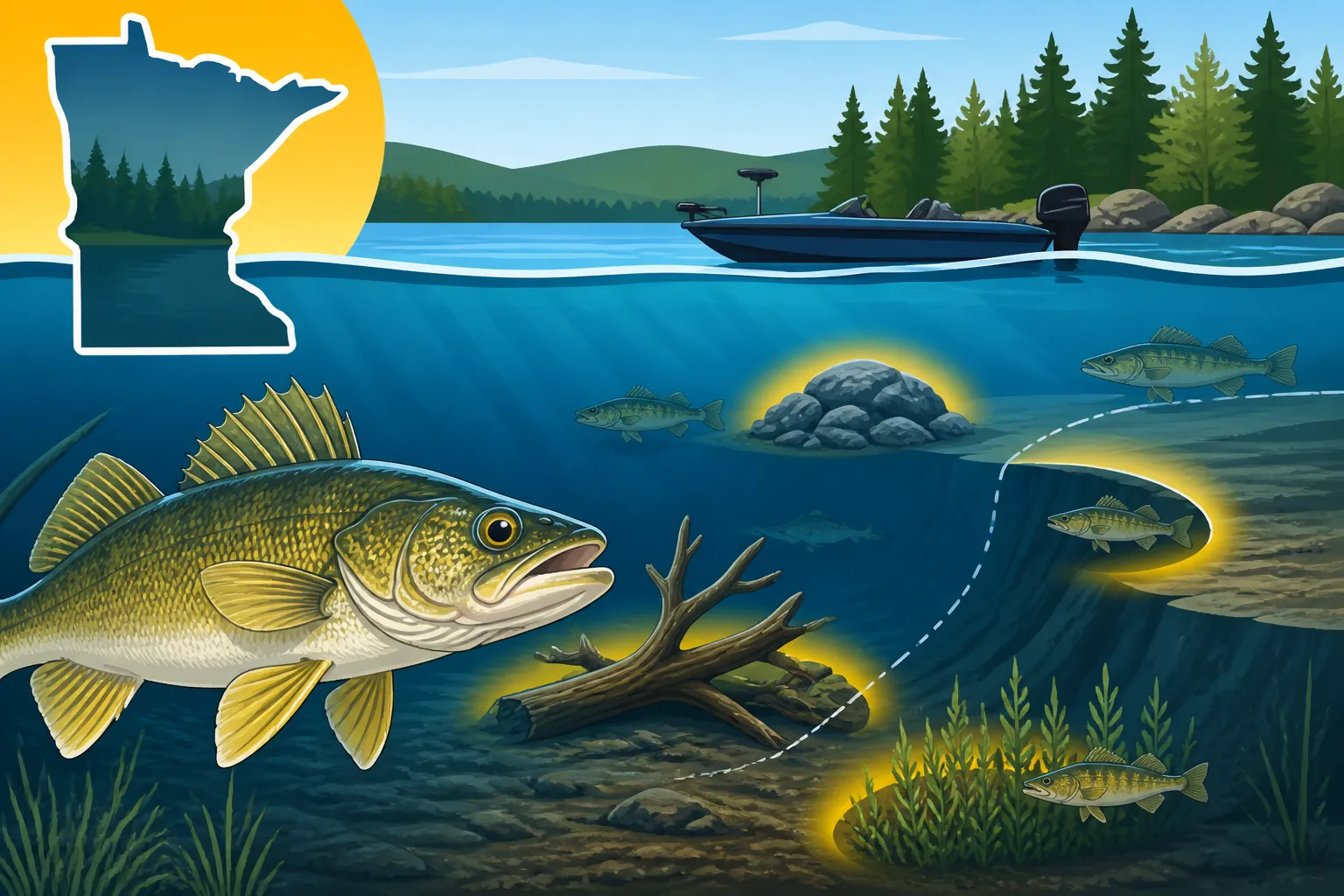
When we talk about "structure" in fishing, we're referring to any feature on the lake bottom that differs from the surrounding area. These anomalies provide shelter, ambush points, and often concentrate baitfish, making them prime real estate for walleye. In Minnesota's diverse lakes, these structures are abundant and varied, from rocky points to vast mud flats.
Points and Reefs
Points are areas where land extends out into the water, creating an underwater finger or ridge. Reefs are similar but are entirely submerged. Both act like highways or natural aggregation points for baitfish, which, in turn, draws in walleye. Walleye will often sit on the deep sides of these structures, facing into the wind or current, waiting for an easy meal to swim by. They might be right on top during low-light conditions or pulled back slightly into deeper water during the day.
Fishing a point effectively often means working multiple depths and angles. Start shallower and slowly work your way deeper, paying attention to any subtle changes in bottom composition. On places like Lake of the Woods, you'll find countless rock reefs that are absolute magnets for walleye. The key is to find the "sweet spot"—the specific depth or transition zone where the fish are holding, which can change daily.
Deep Water Breaks and Drop-Offs
Breaks and drop-offs are abrupt changes in depth, essentially underwater cliffs or ledges. These are quintessential walleye territory, providing easy access to deep, cool, low-light sanctuary while remaining close to shallower feeding grounds. Walleye frequently patrol these edges, moving up and down the break throughout the day, following baitfish that also utilize these depth transitions.
Whether you're fishing a gradual slope that eventually drops into a basin or a sharp, vertical wall, the principle remains the same: walleye will use these areas for cover and ambush. Often, the point where a subtle change in bottom content, like rock meeting sand or muck, occurs along a break line is a high-percentage spot. This is where you might find a concentration of forage, and thus, hungry walleye. Learning how to read your electronics to identify these breaks is a game-changer for finding where to catch Walleye in Minnesota.
Humps and Muck Flats
Humps are isolated rises on the lake bottom, often surrounded by deeper water. These underwater islands can be rocky, gravelly, or even muddy, and they are phenomenal walleye magnets. Much like points and reefs, they concentrate baitfish, but their isolated nature means walleye often have to actively seek them out, leading to more predictable holding patterns.
Muck flats, on the other hand, are vast, soft-bottomed areas. While they might seem featureless, they can be incredibly productive, especially in larger, nutrient-rich lakes like Mille Lacs Lake. Walleye will often cruise these flats, particularly at night or during low light, hunting for invertebrates and small baitfish that live in or on the soft bottom. The key on muck flats is often finding subtle transitions—perhaps a slightly firmer patch of bottom, a scattered rock pile, or a slight rise that offers a break in the monotony. These "micro-structures" can be identified with sensitive electronics.
Vegetation and Cover
It’s easy to focus solely on hard bottom structure, but vegetation and various forms of cover play an equally critical role in where walleye choose to live. They provide shade, oxygen, protection, and act as nurseries for baitfish, all of which are highly attractive to walleye. Ignoring these elements means you're missing out on a huge part of the walleye puzzle.
Weed Lines and Inside Turns
Weed lines are exactly what they sound like: the edges of aquatic vegetation beds. These can be the transition from sparse weeds to dense weeds, or the deep edge where weeds meet open water. Walleye love these edges. During daylight hours, they can hide within the deeper, denser parts of the weeds, ambushing unsuspecting baitfish that swim along the edge. As light fades, they'll often move right up into the shallower parts of the weeds to feed.
Inside turns within a weed line are particularly productive. These are indentations or coves in the weed bed that create a natural ambush point, often concentrating baitfish that follow the contour of the weeds. Think of it as a corner store for hungry walleye – an easy place to grab a meal without expending much energy. Pay close attention to the specific type of weeds too; broad-leaf cabbage weeds, for instance, often hold larger baitfish and bigger walleye.
Timber, Rocks, and Man-Made Structure
Beyond weeds, various other types of cover provide excellent habitat. Submerged timber, whether it's fallen trees, old stumps, or brush piles, offers complex cover and shade that walleye adore. These areas are often difficult to fish due to snags, but they can hold trophy-sized fish. The key is often to use snag-resistant presentations or be prepared to lose some tackle.
Rock piles, boulders, and rubble fields are another prime location. Rocks hold heat, attract crayfish and other invertebrates, and provide excellent ambush points. On lakes like Lake Vermilion, rocky shorelines transitioning into deeper rock piles are classic walleye spots. Man-made structures such as old cribs, docks, bridge pilings, or even submerged culverts also create valuable habitat. Walleye will use the shade and current breaks these structures provide. Always check local regulations, as some artificial structures might be off-limits or have specific rules.
Seasonal Movements and Location Shifts
Walleye are not static creatures; their preferred haunts shift dramatically throughout the year, driven by spawning instincts, water temperature changes, and the movements of their primary food sources. Understanding these seasonal patterns is like having a predictive calendar for walleye location.
Spring Spawning and Post-Spawn Locations
When the ice melts and water temperatures hover in the low 40s to mid-50s Fahrenheit, walleye move to their spawning grounds. These are typically shallow, rocky areas in rivers, along shorelines, or on windswept points where there's current or wave action to oxygenate the eggs. Think of places like the Rainy River, where massive walleye runs occur each spring. Once spawning is complete, usually in late April or early May, the walleye enter a post-spawn recovery phase.
During this post-spawn period, often right around the Minnesota Walleye Opener 2026, they'll often be found in relatively shallow, warmer bays adjacent to spawning areas, gorging themselves to regain energy. These bays are typically rich in baitfish. They’re still a bit sluggish but actively feeding. As the water warms further, they'll begin their transition to more typical summer patterns, slowly dispersing from the spawning areas.
Summer Deep Water Patterns
As Minnesota summers heat up and water temperatures rise, walleye typically move deeper to seek cooler, more oxygenated water. This is when they relate heavily to deep water breaks, main lake humps, and the deep edges of weed lines. They might still move shallow to feed under specific low-light conditions, but their daytime sanctuaries are almost always deeper.
During summer, baitfish also tend to disperse and move deeper, often suspending over open water or relating to deep structure. Walleye will follow suit. Trolling crankbaits over deep water or working jigs and live bait on deep breaks become highly effective techniques. Focus on temperature breaks, thermoclines, and areas with good oxygen content. Learning about Summer Walleye Patterns: Deep Structure is key for consistent success during the warmest months.
Fall Turnover and Cold Water Concentrations
Fall is a period of transition, often marked by the "turnover" event. As surface waters cool, they become denser and sink, mixing with the deeper, warmer water below. This mixing can temporarily scatter fish and make them harder to find, as their comfortable stratification disappears. However, once turnover is complete and the lake stabilizes, usually by mid-to-late fall, walleye will start to concentrate again.
In late fall, as water temperatures drop into the 40s and 30s, walleye often move to very specific, deep-water locations. These might be deep main-lake basins, distinct rock humps, or river channels. They're trying to find stable temperatures and concentrate on major baitfish schools. This can be some of the best fishing of the year, as walleye are aggressively feeding in preparation for winter. Mastering Fall Walleye Fishing: Turnover & Cold Water techniques can lead to some incredible catches.
River and Flowage Walleye Habitation
While many think of walleye as strictly lake dwellers, Minnesota's extensive river systems and flowages offer fantastic walleye fishing, but their habits in moving water are distinctly different. The presence of current adds another layer of complexity and opportunity.
Current Seams and Eddies
In rivers, walleye are masters of efficiency. They don't want to fight strong currents all day, so they position themselves in areas where they can expend minimal energy while still having easy access to passing food. Current seams—where fast water meets slow water—are prime real estate. Think of the edge of a main river channel or where a tributary feeds in. Walleye will sit on the slower side of the seam, darting into the faster current to grab baitfish that are carried past.
Eddies, which are swirling pockets of calm water behind an obstruction (like a large rock, point, or bridge piling), are also exceptional holding areas. These are like resting spots and ambush points combined. The walleye can sit comfortably in the eddy, and baitfish that get caught in the swirling water become easy targets. Understanding how to present your bait in these current breaks is vital for success in river fishing.
Dams and Bridge Pilings
Man-made structures like dams and bridge pilings create significant current breaks and concentrate fish. Below dams, the turbulent water often holds a wealth of oxygen and disorients baitfish, making it a feeding frenzy zone for walleye. These areas often require heavy jigs or specialized rigging to get your bait down in the strong current. Always be aware of safety and restricted zones around dams.
Bridge pilings, on the other hand, act like vertical structure in a river. Walleye will often stack up on the current-break side of these pilings, using them for shelter and ambush. The turbulent water around them can also attract baitfish. The depth around these structures can vary, and fishing multiple sides and depths of a piling can be key to finding active fish. These locations are particularly good during periods of high flow or when walleye are actively migrating up or down the river.
Reading the Lake: Using Electronics and Maps
Successfully locating walleye means combining your knowledge of their behavior with practical tools. Modern electronics and detailed lake maps are indispensable assets for any serious walleye angler, helping you visualize the underwater world and pinpoint those high-percentage spots.
Interpreting Sonar and Lake Maps
Your fish finder is more than just a depth sounder; it's a window into the underwater topography. Learning to interpret the arches that signify fish, the lines that indicate bottom hardness, and the depth readings is crucial. You'll use it to find those deep water breaks, humps, and weed edges we've discussed. Brands like Humminbird and Garmin offer excellent units that can show you detailed bottom contours and even forward-facing sonar like Garmin LiveScope, which can reveal fish actively moving around structure. Don't just look for fish; look for the features that hold the fish.
Lake maps, both paper and digital (like those found on Navionics or LakeMaster chips), provide an overhead view of the lake's structure. They show contours, depths, points, humps, and channels. By studying a map before you even launch your boat, you can identify promising areas and create a game plan. Look for areas where contour lines pinch together (indicating a sharp drop-off), isolated humps, or long tapering points. Cross-referencing your map with what you see on your sonar is the ultimate way to unlock a lake's secrets.
Best Fishing Apps for Minnesota
In today's digital age, your smartphone or tablet can become a powerful tool for finding walleye. Fishing apps like Fishbrain offer crowd-sourced fishing reports, showing you where and when fish are being caught, which species, and what lures are working. While not always precise enough for exact spot-on-the-spot fishing, they can indicate general patterns or hot areas on a lake.
Dedicated mapping apps like the Navionics Boating App or the Humminbird FishSmart app bring detailed lake contours and navigation right to your device. These apps often allow you to overlay satellite imagery, mark waypoints, and record your tracks, making it easier to navigate and return to productive spots. Some even integrate with your boat's electronics for a seamless experience. Learning to use these tools effectively can drastically reduce your search time and put you on fish faster.
| Structure Type | Walleye Preference | Ideal Season(s) | Key Identification Method |
|---|---|---|---|
| Points & Reefs | Ambush points for passing baitfish; current breaks. | All seasons | Lake maps, sonar |
| Deep Water Breaks | Access to cool, dark water; transition zones. | Summer, Fall | Sonar, contour lines on map |
| Humps | Isolated feeding grounds; concentrate baitfish. | Summer, Fall, Winter | Sonar, detailed lake maps |
| Muck Flats | Nighttime feeding grounds; subtle variations are key. | Night (all seasons) | Sonar (bottom hardness display) |
| Weed Lines | Shade, cover, baitfish habitat, ambush points. | Spring, Summer, Fall | Sonar, visual observation |
| Timber/Rocks | Shelter, shade, food sources (crayfish). | All seasons | Sonar (side imaging helpful) |
| Current Seams/Eddies | Energy conservation, ambush points in rivers. | All river seasons | Visual observation, current flow |
| Dams/Bridge Pilings | Current breaks, oxygenated water, baitfish concentration. | All river seasons | Visual observation, navigation maps |
Disclaimer
Fishing regulations, seasons, and limits are subject to change. Always consult the most current Minnesota Department of Natural Resources (DNR) fishing regulations handbook before heading out on the water. This guide is for informational purposes only and does not replace official state guidelines.