Jigging for Walleye: Jig & Minnow Basics
You have been there: sitting in the boat on a chilly May morning, watching the guy three boats over haul in his fourth walleye while your line stays dead still. It is maddening, and frankly, it makes you want to pack up the gear for good. This guide is designed to strip away the mystery of the jig and minnow, solving the frustration of the "no-bite" day by mastering Minnesota's most effective finesse technique.
Understanding the Walleye Jigging Mental Game
There is a common misconception among weekend warriors that walleye fishing is a game of luck. You throw a baited hook in the water, crack a cold one, and wait for the universe to provide. But if you have spent any time on Leech Lake or the Mississippi River, you know that the guys who consistently limit out are playing a high-stakes game of "feel." The jig and minnow is the ultimate bridge between you and the bottom of the lake. It is not just about the lure; it is about the tactile feedback of the lake floor and the subtle, almost imperceptible "tick" of a walleye inhaling your bait.
Why the Jig and Minnow Works in Minnesota
In the Land of 10,000 Lakes, the jig and minnow is the undisputed king for a reason. When the When Does Walleye Season Open in Minnesota 2026 rolls around, the water is usually still shivering in the 40s or low 50s. In these temperatures, a walleye’s metabolism is sluggish. They aren't looking to chase down a high-speed crankbait. They want a high-protein, easy-to-catch snack that sits right in their face. The lead-head jig provides the weight to get down to the strike zone, while the minnow provides the scent and natural action that a plastic lure sometimes lacks.
I remember a trip to Winnibigoshish a few years back where the wind was howling out of the northwest. Everyone was trying to troll, but the waves were making boat control impossible. I switched to a 1/4-ounce fireball jig with a fathead minnow and just hunkered down on a transition point. By staying vertical and moving slow, I found fish that the trollers were literally zooming right over. This is why Walleye Fishing Techniques: Complete Minnesota Guide always places the jig and minnow at the top of the list for early-season success.
Overcoming the Finesse Fear
A lot of anglers avoid jigging because they are afraid they won't know when they have a bite. They worry about "swinging at ghosts" or, worse, letting a fish hold the bait for too long until it feels the lead and spits it out. The secret is to stop thinking about the bite as a "hit." Sometimes it is a sharp "tink" on the line, but often it just feels like your jig suddenly gained two ounces of weight. It feels "mushy."
Validating this frustration is important: it takes time to develop "walleye hands." You will snag rocks, you will swing at weeds, and you will definitely miss fish. But once you realize that anything that feels "different" is worth a hookset, your catch rate will skyrocket. If you are struggling with the gear aspect, checking out a few budget-friendly options on Amazon can help you get started without breaking the bank, but the real growth happens on the water.
Choosing Your Weaponry Rods Reels and Line
If you are using a heavy-duty rod meant for pike or a flimsy setup meant for sunfish, you are already at a disadvantage. Jigging is about sensitivity. You need a rod that acts as an extension of your nervous system. If the rod is too stiff, you won't feel the bottom; if it is too soft, you won't be able to drive the hook through the bony jaw of a 24-inch walleye.
The Ideal Jigging Rod
For most Minnesota applications, you want a 6-foot-6-inch to 7-foot Medium-Light rod with a Fast or Extra-Fast action. The "Fast" part is crucial—it means the rod only bends near the tip, allowing the rest of the blank to remain stiff for sensitivity and hook-setting power. I personally prefer a rod with a high-modulus graphite blank. You can find high-end rods at local bait shops, but there are also fantastic entry-level graphite rods on Amazon that perform surprisingly well for the price.
When you are out on the water, pay attention to how the rod vibrates. On a hard sand bottom, you should feel a distinct "clack" when the jig hits. On muck, it will be a dull thud. If you can't tell the difference, your rod is likely too heavy. This is a core component of Best Walleye Rods & Reels that every serious angler should study before the season starts.
Reels and Line Management
Your reel doesn't need to be fancy, but it needs a silky-smooth drag. Walleyes are famous for their last-second headshakes right next to the boat. If your drag sticks, that 10-pounder is going to snap your line and leave you with nothing but a "one that got away" story. A 1000 or 2500 size spinning reel is perfect. Many anglers find reliable Best Spinning Reels for Walleye options that balance well with lighter rods.
As for line, there is a big debate in the Minnesota fishing community. Some swear by 6-pound monofilament because it has a bit of stretch and is nearly invisible. However, for deep-water jigging, I highly recommend 8-pound or 10-pound braid with a 6-pound fluorocarbon leader. Braid has zero stretch, meaning you feel every pebble on the bottom. When a walleye breathes on your minnow at 30 feet deep, you will feel it with braid. You can easily pick up a spool of high-quality braid on Amazon to get your reels spooled up before your next trip.
Selecting the Perfect Jig and Minnow Combination
Not all jigs are created equal. If you walk into a bait shop in Brainerd or Bemidji, you will see a wall of colors and shapes that can make your head spin. But for the beginner or even the intermediate angler, you only need to master two or three styles to be successful across the state.
Jig Head Styles and Weights
The round-head jig is the old reliable. It drops fast and works in almost any condition. However, if you are fishing in areas with a lot of rocks, a "stand-up" jig can be a lifesaver. It is designed to sit on the bottom with the hook pointing upward at a 45-degree angle, which keeps your minnow visible and reduces snags.
Weight is the most critical factor. The rule of thumb in Minnesota is to use the lightest jig possible that still allows you to feel the bottom. If it is a calm day in 10 feet of water, a 1/16-ounce or 1/8-ounce jig is plenty. If the wind is kicking or you are fishing 25 feet deep on the Mille Lacs Lake Fishing Guide: Walleye, Bass & More, you might need a 1/4-ounce or even a 3/8-ounce jig.
| Depth (Feet) | Wind/Current | Recommended Jig Weight |
|---|---|---|
| 4 – 10 | Calm | 1/16 oz |
| 10 – 18 | Light Breeze | 1/8 oz |
| 18 – 25 | Moderate Wind | 1/4 oz |
| 25+ or River | Heavy Wind/Current | 3/8 oz – 1/2 oz |
Matching the Minnow to the Season
Choosing the right bait is just as important as the jig itself. In the early spring, fathead minnows are the staple. They are hardy, cheap, and walleyes love them. But as the water warms up towards June, the "emerald shiner" or "spottail shiner" becomes the gold standard. Shiners have a flash and a scent that seems to drive Minnesota walleyes crazy, especially on clear lakes.
Don't overlook the importance of how you hook the minnow. If you are vertical jigging, go through the mouth and out the top of the skull. This keeps the minnow looking natural as it moves up and down. If you are pitching and dragging, hook it through the lips so it swims straight. For more specific gear tips, check out Best Walleye Lures: Jigs, Cranks & Spinners to see how different jig colors play into the forage base of your specific lake.
Master the Mechanics Vertical vs Pitching Approach
How you move the jig is what separates the "limit-getters" from the "skunked." There are two primary ways to work a jig and minnow in Minnesota, and knowing when to use each is the hallmark of a veteran angler.
Mastering the Vertical Jig
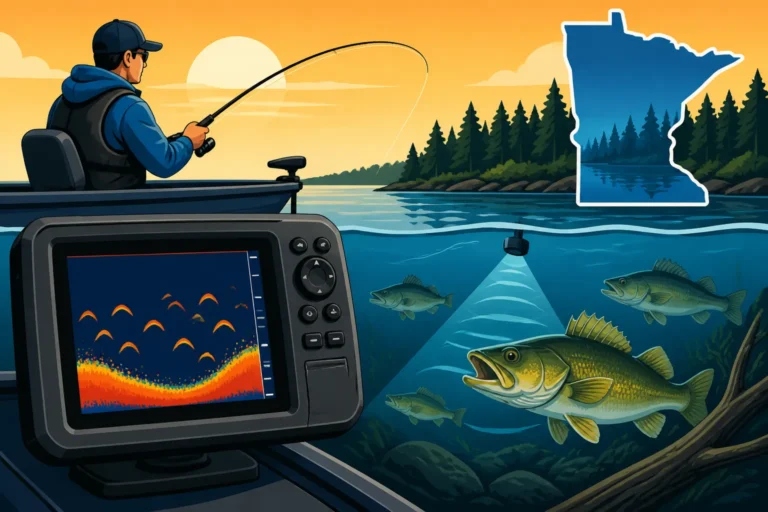
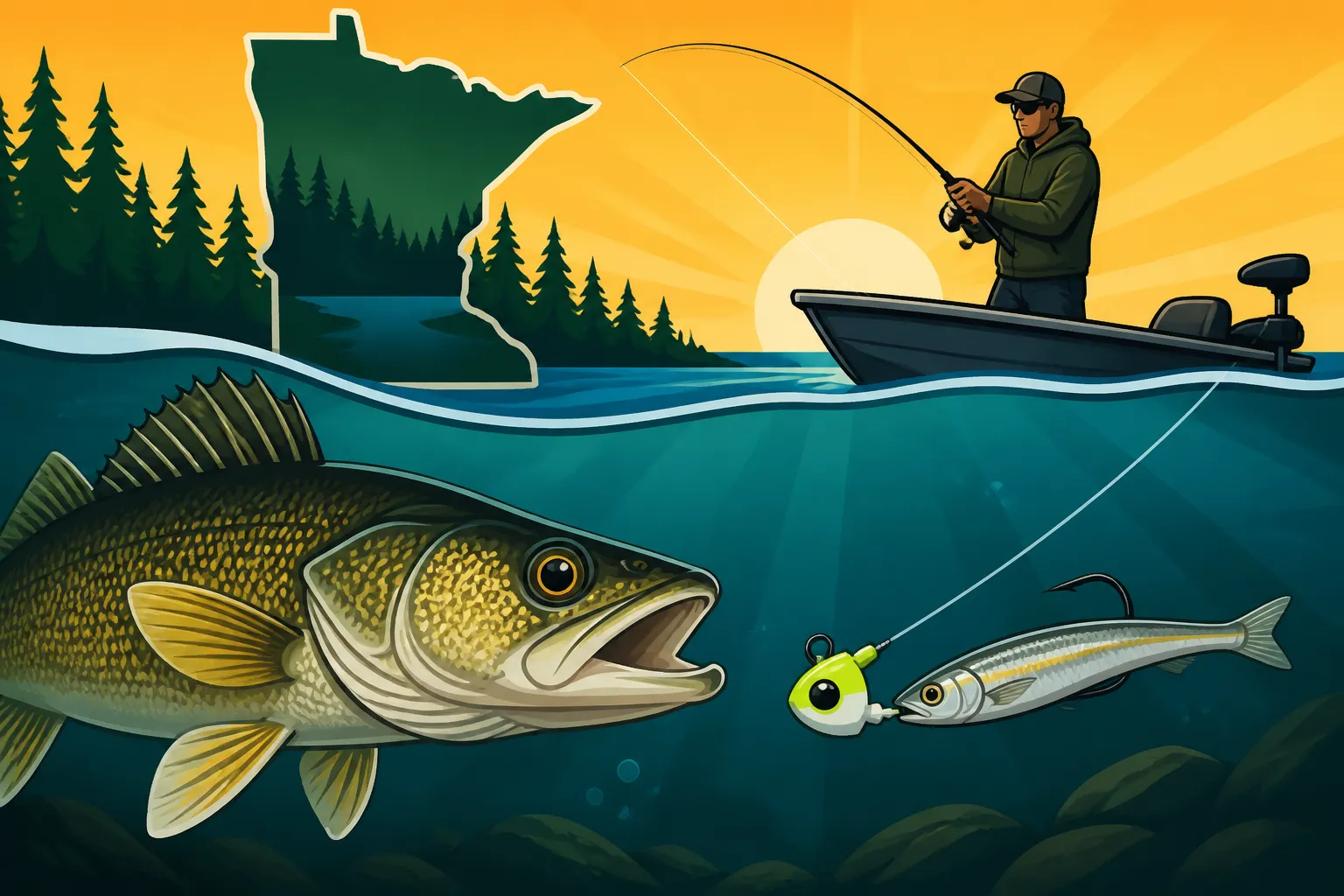
Vertical jigging is exactly what it sounds like: your line goes straight down from the tip of the rod to the bottom. This is the most precise way to fish. It allows you to keep the bait exactly where the fish are, usually within 6 to 12 inches of the bottom. This is the go-to move when you are fishing deep structure or hovering over a school of fish you found on your electronics.
The motion should be subtle. You aren't trying to rip the jig three feet off the bottom. Think of it more as a "lift and drop." Lift the rod tip about 6 inches, then follow the jig back down with your rod tip so the line stays taut. Most bites happen on the drop. If you have slack in your line, you won't feel the bite, and the fish will be gone before you even know it was there. This is a major part of How to Catch Walleye in Minnesota (Step by Step) that many people overlook.
Pitching and Dragging Techniques
Pitching is used when walleyes are in shallower water (4 to 12 feet) and are "boat shy." If you drive your big motor right over a school of walleyes in 6 feet of water, they are going to scatter. Instead, you stay back and "pitch" your jig 30 to 40 feet away from the boat.
Once the jig hits the bottom, you can either "hop" it back to the boat or "drag" it slowly along the sand. Dragging is incredibly effective in the spring. You literally just let the jig crawl across the bottom, occasionally giving it a tiny twitch. It mimics a dying minnow perfectly. If you are planning an opener trip, mastering this will be key to How to Catch Walleye in Early Spring (Opener) success.
Real World Scenarios on Minnesota Iconic Waters
Every lake in Minnesota has its own personality. What works on a stained-water lake in the north might fail miserably on a crystal-clear metro lake. Understanding these nuances is how you become a versatile angler.
Jigging the Mille Lacs Mud Flats
The mud flats of Mille Lacs are legendary. These are massive underwater plateaus that rise out of the deep water, and in the summer, they hold thousands of fish. The trick here is often "power jigging." Because the flats are so expansive, you need to cover water. Anglers often use a slightly heavier jig and a more aggressive snap to get the attention of roving walleyes.
Keep in mind that Mille Lacs Walleye Regulations (2026) can be strict, so always check the latest limits before you head out. When the bite is on, a simple yellow or orange jig head tipped with a leech or a fathead can be lights-out on the edges of these flats. If the wind is blowing, let the boat drift and "drag" your jigs along the transition from the mud to the gravel.
River Current Tactics on the Mississippi
River fishing is a whole different ballgame. You aren't just fighting the depth; you are fighting the current. In places like Pool 2 or Pool 4 of the Mississippi, you have to use the current to your advantage. The goal is to keep your jig bouncing along the bottom at the same speed as the water.
This usually requires a heavier jig—sometimes up to 5/8-ounce—to stay vertical. Look for "seams" where fast water meets slow water. Walleyes love to sit in the slow water and dart out into the fast water to grab a minnow. For a deeper dive into these specific spots, Mississippi River Pool Fishing in Minnesota offers a wealth of information on navigating the "Mighty Miss."
Advanced Tips for Turning Taps into Hooksets
Even the pros miss fish. The difference is that the pros know why they missed them and adjust immediately. If you are getting "tapped" but coming up empty, it is time to change your tactics.
Identifying the Mushy Bite
We talked about the "tick," but let's talk about the "heavy" feeling. Sometimes, a walleye won't strike the jig; it will simply swim up and inhale it while moving with the boat. Suddenly, your jig feels like it is dragging through wet carpet. When this happens, do not wait. Drop your rod tip for a split second to give the fish an inch of slack, then sweep the rod upward in a firm, steady motion.
I’ve seen many beginners think they are just caught on a weed, so they don't set the hook. Then, as the "weed" starts to swim away, they panic and rip the rod, usually pulling the jig right out of the fish's mouth. Trust your gut. If it feels heavy, set the hook. You can buy bulk packs of jigs on Amazon for cheap, so don't be afraid to lose a few to the bottom if it means you eventually catch that trophy.
Boat Control and Wind Management
You can have the best jigging technique in the world, but if your boat is spinning in circles, you won't catch a thing. Boat control is the "secret sauce" of walleye fishing. You want your line to stay as vertical as possible. If the wind is pushing you too fast, your jig will be dragging behind the boat at a 45-degree angle, and you will lose all "feel."
Use your trolling motor to "push back" against the wind. The goal is to slow your drift so you can use a lighter jig and maintain that 90-degree angle to the water. If the wind is truly brutal, consider using a drift sock (available on Amazon) to catch the water and slow your momentum. This level of detail is what separates a casual outing from a successful mission, much like the strategies found in Mille Lacs Lake Fishing Rules & Limits.
Minnesota Fishing Regulations Disclaimer
Fishing regulations in Minnesota are subject to change annually and can vary significantly by lake, river, or specific zone. This guide is for informational purposes only. Always consult the current Minnesota Department of Natural Resources (DNR) Fishing Regulations handbook or the official DNR website before heading out to ensure you are compliant with all season dates, bag limits, and size restrictions.