How to Fish a Lindy Rig for Walleye
Minnesota walleyes can be notoriously picky, especially when cold fronts or heavy fishing pressure make them tight-lipped and stubborn. You see them on your electronics, but they won't touch a fast-moving crankbait or a aggressive jig. This guide solves that frustration by teaching you the art of the Lindy Rig, a finesse technique that has put more walleye in Minnesota livewells than perhaps any other method.
Understanding the Lindy Rig: Why It Is a Minnesota Staple
The Lindy Rig is more than just a piece of tackle; it is a philosophy of fishing that revolutionized how we approach the "Land of 10,000 Lakes." Developed by the Lindner brothers in the Brainerd area decades ago, the core concept is simple: stealth and zero resistance. When a walleye feels the weight of a traditional sinker, it often drops the bait before you can even react. The Lindy Rig solves this by allowing the fishing line to slide through a specialized sinker, meaning the fish feels nothing but the natural weight of the bait.
In the crystal-clear waters of lakes like Lake Vermilion or the deep basins of the Mille Lacs Lake Fishing Guide: Walleye, Bass & More, transparency and subtlety are everything. Walleyes in these systems are highly educated. They have seen thousands of lures. The Lindy Rig works because it presents a meal in the most natural way possible, drifting along the bottom at a snail's pace, inviting a strike rather than demanding one.
The Anatomy of a Lindy Rig
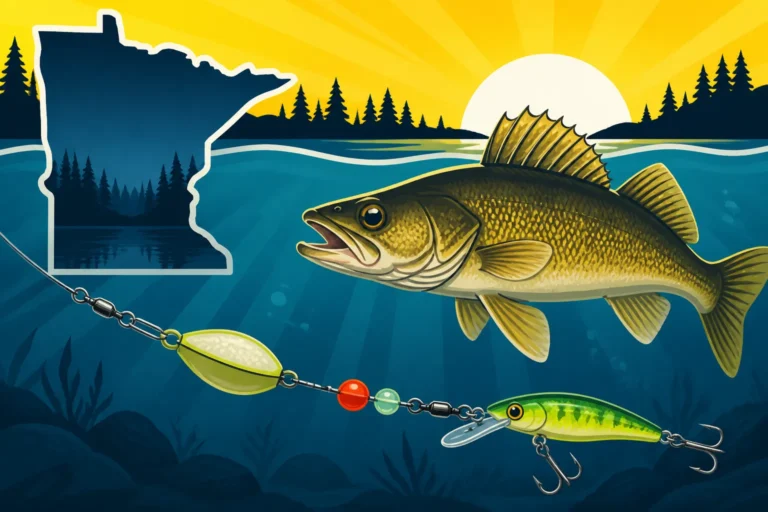
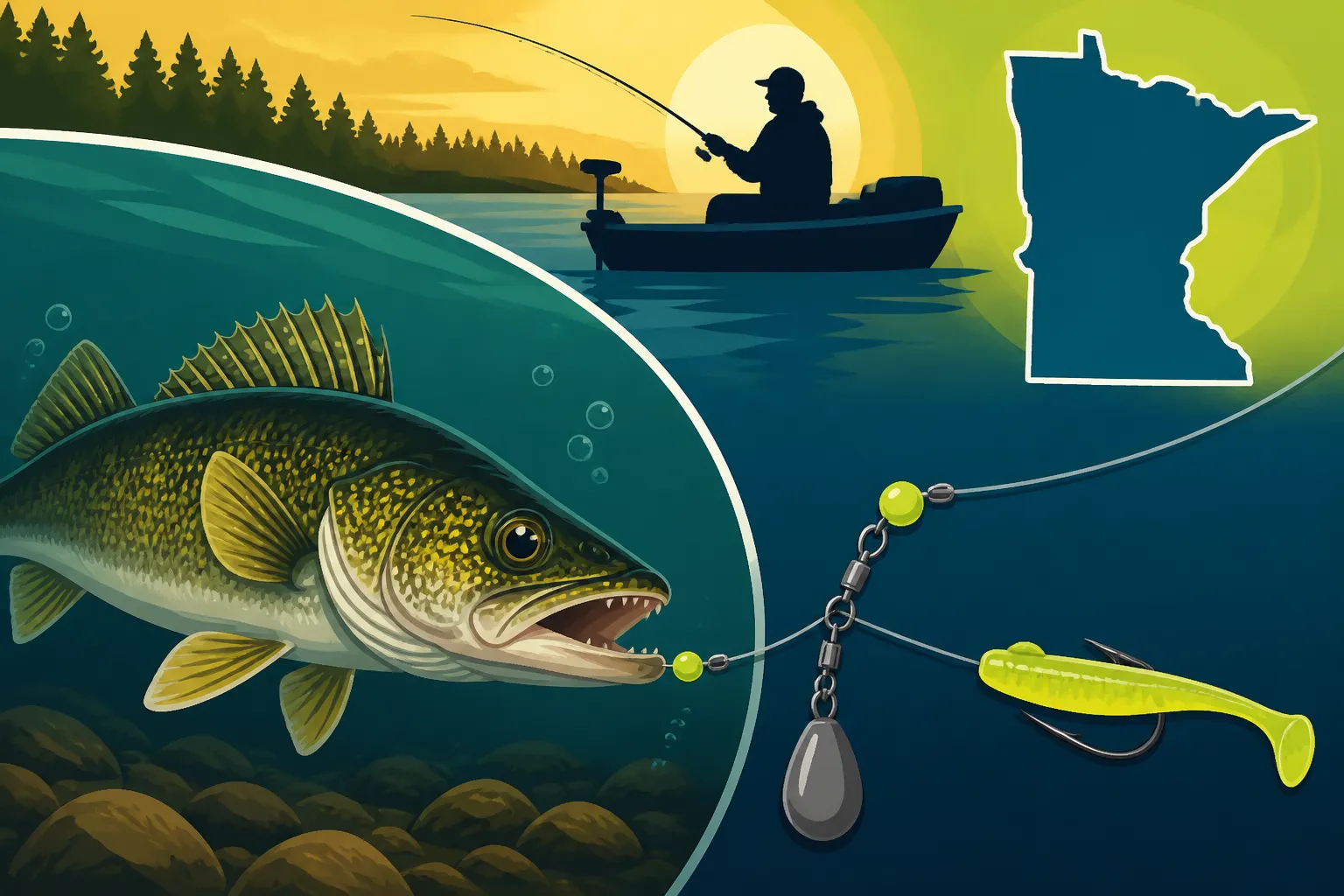
At its most basic, the rig consists of three primary parts: a walking sinker, a swivel, and a snell (the leader). The walking sinker is uniquely shaped to glide over rocks and through weeds without snagging, with its weight concentrated at the bottom to keep your bait in the strike zone. You can find these sinkers in various weights on Amazon if your local bait shop is sold out before the When Is the Minnesota Walleye Opener 2026? weekend.
The swivel acts as a stopper for the sinker and prevents line twist, which is a common headache when using live bait like large leeches or active minnows. Beyond the swivel is your leader, usually made of fluorocarbon or clear monofilament. This leader is the "business end" of the rig, and its length can vary significantly depending on the mood of the fish and the clarity of the water.
Why Stealth Matters for Walleye
Walleyes are apex predators, but they are also incredibly cautious. Their large, light-sensitive eyes allow them to feed in low-light conditions, but it also makes them very aware of shadows, boat noise, and unnatural line profiles. This is why the Lindy Rig is often considered the "gold standard" for finesse fishing. By keeping your boat a distance away from the bait through a long cast or a controlled drift, you minimize the spook factor.
When you use the Best Live Bait for Walleye (Leeches, Minnows, Crawlers), you want that bait to look like it’s just wandering across the sand flats or mud. A heavy jig pinned to the head of a minnow can sometimes look mechanical. A Lindy Rig, however, allows a jumbo leech to swim naturally, undulating in the current. In the eyes of a trophy walleye, that natural movement is the difference between a neutral "looker" and a committed "biter."
Selecting the Right Components for Your Rig
The beauty of this system is its customization. You aren't stuck with a one-size-fits-all setup. Successful Minnesota anglers know that the rig you use on Leech Lake Fishing Guide might be completely different from what you'd throw on a shallow, stained lake in the southern part of the state. It all starts with matching your components to the environment and the current Best Seasonal Pattern for Walleye in Minnesota.
If you are just starting out, you can buy pre-tied rigs, but veteran anglers prefer to tie their own. This allows you to choose the exact hook size and leader strength. High-quality fluorocarbon line, which is virtually invisible underwater, is available in bulk on Amazon and is a must-have for clear-water applications where walleyes are "line shy."
Sinker Choices: Walking vs. Egg
The "walking" sinker is the traditional choice. Its boot-like shape is designed to stand upright, which helps it "walk" over gravel and small stones. If you are fishing the rocky reefs of Lake Winnibigoshish, this is your best friend. The design keeps the line hole elevated, reducing the chance of the line getting pinched against a rock when a fish takes the bait.
Alternatively, some anglers prefer an egg sinker for very sandy or muddy bottoms. Egg sinkers are less likely to pick up debris, but they can be more prone to snagging in rocks. In very heavy current situations, like fishing the Mississippi River near Red Wing, a No-Snagg sinker—which is long and skinny—is often preferred to prevent the rig from getting wedged in deep crevices.
Leader Lengths and Line Types
Standard Lindy Rig snells are usually 3 to 6 feet long. As a general rule, the clearer the water, the longer the leader should be. If you are fishing a lake with high visibility, a 7-foot or even 10-foot leader might be necessary to keep your bait far away from the sinker. This ensures that even if a fish is slightly spooked by the sinker dragging across the bottom, it will still encounter the bait in a "safe zone."
For line type, 6-lb to 8-lb fluorocarbon is the sweet spot. It has enough strength to handle a 28-inch Mille Lacs walleye but is thin enough to remain stealthy. If you are fishing in heavy timber or near sharp zebra mussels, you might bump up to 10-lb test, but be aware that thicker line can dampen the natural action of smaller baits.
Hook Styles and Colors
Hook choice is often overlooked but critical. For nightcrawlers, a size 2 or 4 long-shank hook works best to keep the worm straight. For leeches, a size 6 or 8 short-shank "octopus" style hook is ideal, as it allows the leech to curl and swim freely. Color also plays a role; in many Minnesota lakes, a "fluorescent orange" or "chartreuse" hook acts as a small attractor, mimicking the flash of a small baitfish or a piece of roe.
| Sinker Weight | Ideal Depth | Best Bottom Type | Recommended Bait |
|---|---|---|---|
| 1/8 oz | 5-10 Feet | Sand / Weed Edges | Small Leeches |
| 1/4 oz | 12-18 Feet | Gravel / Flat Rock | Nightcrawlers |
| 3/8 oz | 20-30 Feet | Mud Flats / Deep Reefs | Fathead Minnows |
| 1/2 oz+ | 35+ Feet | River Current / Deep Basins | Red Dace / Large Minnows |
Step-by-Step Guide to Rigging Up
Getting your rig together shouldn't be intimidating. While there are advanced versions, the basic setup is something you can master in a few minutes on the deck of the boat. This reliability is why it's a core part of any How to Catch Walleye in Minnesota (Step by Step) lesson.
Before you start, ensure your main fishing line is in good condition. If you use a braided main line (which many do for the sensitivity), you absolutely must use a swivel to transition to your leader. Braid is too visible and lacks the stretch needed for the finesse hooksets required with a Lindy Rig.
Assembling the Standard Lindy Rig
- Thread the Sinker: Slide your walking sinker onto your main line. Make sure the "point" or the narrower end of the sinker is facing toward your rod tip.
- Add a Bead (Optional): Many anglers slide a small plastic bead onto the line after the sinker. This protects the knot on your swivel from being battered by the weight of the sinker during casts.
- Tie on the Swivel: Use a Palomar knot to attach a high-quality barrel swivel to your main line. This swivel acts as the stop for your sinker.
- Attach the Leader: Tie your fluorocarbon snell (the leader) to the other end of the swivel. Again, start with about 4 feet of line.
- Tie the Hook: Use a snell knot or a Trilene knot to attach your hook to the end of the leader.
You can find all these small terminal tackle items in kits on Amazon, which is convenient if you want to keep your tackle box organized with different hook sizes and swivel strengths.
The Floating Jig Head Variation
Sometimes, walleyes aren't hugging the bottom; they might be suspended 6 to 12 inches above the substrate. In this scenario, replace your plain hook with a floating jig head. These are lightweight, foam-filled hooks that stay buoyant. As you pull your sinker along the bottom, the floating jig keeps your leech or minnow hovering just above the weeds or rocks, right in the fish's line of sight.
This variation is deadly on lakes with a lot of "slime" or low-lying vegetation on the bottom. It keeps your bait clean and prevents it from hiding in the weeds where a walleye can't see it. It’s also a great way to avoid the pesky "perch peckers" that often swarm a bait sitting directly on the sand.
Mastering the Presentation: Boat Control and Speed
The most common mistake people make with a Lindy Rig is going too fast. This is not a power-fishing technique. If you are moving at 1.5 mph, your bait is likely spinning wildly and your sinker is bouncing off the bottom like a wrecking ball. The sweet spot for Lindy rigging is usually between 0.3 and 0.7 mph.
Boat control is the "secret sauce." Whether you are using a transom-mount electric motor or backtrolling with your main outboard, the goal is to keep your line at roughly a 45-degree angle. If your line is pointing straight down, your sinker is too heavy or you're moving too slow. If your line is way out behind the boat, you're moving too fast or your sinker is too light.
Backtrolling and Controlled Drifting
Backtrolling is a classic Minnesota move. By putting the boat in reverse and moving into the wind, you use the flat transom of the boat as a brake. This allows for incredibly precise speed control, which is essential when you're trying to stay on a tight contour line or a specific rock pile. If the wind is too high, a drift sock can help slow your boat down to that magic 0.5 mph range.
During a controlled drift, you should feel the sinker "tick" the bottom every few seconds. You don't want it dragging constantly, which can cause snags. Instead, you want to occasionally lift your rod tip and then drop it back down, letting the sinker settle. This "lift and drop" motion gives the bait a little surge of speed, often triggering a "reaction strike" from a following walleye.
Reading the Bottom Structure
To be successful, you need to know what you're dragging over. Modern electronics are great, but the Lindy Rig gives you a tactile feel that no screen can replicate. Through your rod tip, you can feel the difference between soft mud, crunchy gravel, and jagged rock. Walleyes love "transitions"—the places where a sand flat meets a mud basin, or where a rock pile tapers off into the weeds.
When you feel the bottom change from soft to hard, pay extra attention. These transition zones are often where walleyes congregate to ambush prey. If you're fishing Mille Lacs Lake Fishing Rules & Limits areas, the edges of the famous mud flats are prime Lindy Rig territory. You want to keep your sinker right on that edge as you slowly work the perimeter.
Strategies for Different Minnesota Seasons
While the Lindy Rig works year-round, your specific approach should change as the water temperature fluctuates. A walleye's metabolism dictates how aggressively they will chase a bait, and the Lindy Rig is the perfect tool to adapt to those changes. Make sure you are aware of the Minnesota Fishing Seasons & Opener Dates (2026) so you're ready for each phase of the year.
Early Season on Leech Lake
In the weeks following the opener, walleyes are often found in shallower water, especially on wind-swept points and shorelines. On a lake like Leech, they might be in 6 to 12 feet of water. During this time, use a lighter 1/8 oz sinker and a shorter 3-foot leader. Shiners are the bait of choice in May and early June. The lighter sinker prevents you from spooking fish in the shallows, and the shorter leader keeps the minnow from wandering into the developing weed growth.
Summer Deep Water Patterns on Mille Lacs
By July and August, the big walleyes often move out to the deeper mud flats and offshore reefs. This is the peak time for the "Long Snell" technique. Use a 1/4 oz or 3/8 oz sinker and a leader of 6 to 8 feet. Large jumbo leeches are the preferred bait during the heat of summer. The long leader is crucial here because the water is often very clear, and the fish are more spread out. You want to cover water slowly, letting that leech swim naturally over the vast mud basins.
Late Fall Walleye Transitions
As the water cools in September and October, walleyes begin to school up heavily and move toward steep drop-offs and river mouths. This is the time to go big or go home. Use a larger hook and a "muskie-sized" minnow if necessary. The fish are looking for high-calorie meals before the ice sets in. A Lindy Rig with a large creek chub or sucker minnow can be incredibly effective when worked along the base of deep breaklines.
Common Mistakes and How to Fix Them
Even experienced anglers run into trouble with the Lindy Rig. Because it is a finesse technique, the margin for error is smaller than it is with a jig and minnow. If you find yourself struggling, take a look at your setup and your speed. Most of the time, the solution is a simple adjustment.
Dealing with Tangled Leaders
There is nothing more frustrating than reeling in after a long drift only to find your leader wrapped around your main line in a bird's nest. This usually happens for two reasons: your bait is spinning, or you're dropping the rig too fast on the cast. If your leech is spinning, it’s likely hooked through the body rather than the sucker; always hook a leech through the large sucker end.
To prevent tangles during the cast, "feather" the line with your finger as it leaves the spool. This slows the bait down and ensures the sinker hits the water first, with the leader trailing behind it. If you just let it fly, the sinker and hook often tumble together in the air, creating a mess before they even hit the water.
Missing the Hookset: The Feed Rule
This is the hardest part of Lindy rigging for beginners. When you feel a "tap" or a heavy weight on the line, do not set the hook immediately. Because the sinker allows the line to slide, the fish doesn't feel any tension. You need to give the fish time to fully take the bait into its mouth.
The standard procedure is to "feed" the fish line. When you feel a bite, immediately open your bail or thumb your spool to let line out. Count to five—or even ten if the fish are being particularly lethargic. Once the count is over, close the bail, slowly reel in the slack until you feel the weight of the fish, and then perform a long, sweeping hookset. If you are missing fish, you are likely setting the hook too soon and pulling the bait right out of their mouths.
Before you head out, make sure you've handled all the legalities, like checking How Much Is a Minnesota Fishing License? and ensuring you are within the Minnesota Walleye Limit & Size Rules for the specific lake you are visiting.
Minnesota Fishing Regulations Disclaimer
Fishing regulations in Minnesota, including bag limits, size restrictions, and season dates, are subject to change by the Minnesota Department of Natural Resources (DNR). Always consult the most recent Minnesota Fishing Regulations handbook or the official DNR website before heading out on the water. Special regulations often apply to specific bodies of water, such as Mille Lacs or border waters, and it is the angler's responsibility to stay informed and compliant with all state laws.