Minnesota Fishing License: Cost, Types & How to Buy (2026)
Standing on the damp wooden planks of a boat launch near Brainerd at 5:00 AM, holding a steaming mug of coffee while watching the morning mist rise off the water, is an iconic experience. But nothing ruins that peaceful sunrise faster than the sudden, sinking realization that you might not have the correct permit in your wallet, or that your digital paper trail is incomplete. Navigating angling permits across the North Star State can feel overwhelmingly confusing when all you want to do is drop a line into the water. This comprehensive guide breaks down every single permit option, residency nuance, special endorsement requirement, and purchasing method so you can hit the water with total peace of mind.
Understanding Minnesota Fishing License Requirements
Who Needs a License to Fish in 10,000 Lakes
Every year, millions of anglers head toward Minnesota’s waters, ranging from the vast expanse of Lake Mille Lacs down to quiet urban ponds in the Twin Cities metro area. If you intend to take, harvest, or even attempt to catch fish in any public body of water across the state, you generally need to hold a valid angling permit. This requirement applies whether you are actively holding a rod, tending a set of tip-ups through a foot of ice, or simply helping a friend land a stubborn walleye into the net. State conservation authorities view any active participation in the act of angling as an activity that requires proper licensing.
It is a common misconception that simply staying on shore or fishing from a private dock absolves an angler from needing a permit. If the water body is connected to a public waterway or managed by public wildlife agencies, state angling laws apply fully. Even if you are standing on a footbridge dropping a simple cane pole into a small creek, the law requires you to carry valid documentation. The revenue generated from these permits goes directly toward maintaining state hatcheries, stocking popular lakes, managing aquatic habitats, and funding fish restoration programs across the statewide watershed network.
For many folks, getting back into angling after a hiatus raises questions about whether old exemptions still apply. The state regularly updates its operational frameworks to ensure that natural resource management remains properly funded. Before you pack your tackle box with fresh lures and drive out to the lake, checking your permit status is as essential as checking the weather forecast or packing extra boat fuel. Being caught on the water without proper documentation leads to unnecessary stress, potential fines, and a ruined day on the water.
Age Boundaries and Exemption Rules
When planning a family outing to the lake, understanding age-based exemptions saves both time and money. Residents of Minnesota who have not yet reached their sixteenth birthday are generally allowed to fish without purchasing an individual permit. This rule encourages young people to get outdoors, learn the basics of knot tying, and experience the thrill of feeling a bluegill tug on a bobber without adding a financial hurdle for parents. However, once an angler celebrates their sixteenth birthday, they transition into the adult licensing category and must secure their own valid paperwork before casting a line.
On the other end of the age spectrum, senior citizens also experience specific rules designed to keep angling accessible. While older anglers are still required to hold a permit to fish legally, the state offers tailored rates and streamlined purchasing options to accommodate lifelong residents. If you are shopping for an older family member, reviewing the specific age criteria on the state’s official license portal ensures you select the correct permit class. Detailed guidance on these senior options can be found in our guide to the Minnesota Fishing License for Seniors.
Youth nonresidents face a slightly different set of regulations compared to local kids. Nonresident children under the age of sixteen generally do not need their own individual permit if they are actively fishing with a licensed adult family member. However, any fish caught by an unlicensed nonresident child usually counts toward the licensed adult’s daily possession limit. If a visiting youth wishes to harvest and keep their own full limit of fish, purchasing an individual youth permit becomes necessary. To explore all the subtle details regarding youth anglers, take a look at our complete article covering the Minnesota Fishing License for Kids & Youth.
Residency Definitions and Verification Requirements
Determining whether you qualify for a resident permit is not always as simple as owning a cabin or spending summer weekends in the state. To legally purchase a resident angling permit, you must establish a bona fide legal residency within the state boundaries for at least sixty consecutive days prior to applying. This means the state must be your primary, permanent domicile where you maintain your legal records, pay resident income taxes, and register your motor vehicles. Merely owning seasonal land, paying local property taxes, or renting a vacation home does not grant resident angling privileges.
When purchasing your permit at a retail counter or setting up an online profile, you will be required to provide official proof of residency. The most common and widely accepted form of identification is a valid state driver’s license or a official state-issued identification card. The address on your physical ID must reflect your actual residential address within the state. If you have recently moved, you must update your identification records with the department of motor vehicles before attempting to buy a resident permit, as clerks are required to verify this information during transaction processing.
Falsifying residency status to acquire lower-priced permits is considered a serious legal infraction that carries significant penalties. Game wardens and conservation officers frequently check driver’s licenses against state databases during routine lake patrols. If an angler claims residency while holding an active driver’s license from another state, they risk receiving hefty citations, forfeiting their equipment, and losing angling privileges altogether. Taking the time to understand your exact legal classification prevents costly mistakes and ensures you remain in full compliance.
Types of Minnesota Fishing Licenses Explained
Individual Resident and Nonresident Licenses
The standard annual individual license serves as the backbone of Minnesota’s angling permit system. For local residents, this permit grants year-round access to thousands of inland lakes, major river systems like the Mississippi and Minnesota Rivers, and various boundary waters from early spring through the frigid winter ice season. The annual permit period typically runs from March 1 of the current year through the last day of February in the following calendar year, giving anglers a full twelve months of fishing opportunities across changing seasons.
For out-of-state visitors, the individual nonresident annual permit opens up the exact same iconic fishing destinations. Whether you are driving up from Iowa for weekend crappie trips or traveling from across the country to target trophy walleye on Lake of the Woods, holding a dedicated nonresident permit ensures your outing is fully legal. To better understand how non-resident frameworks operate, check out our comprehensive resource on Nonresident Fishing in Minnesota: Licenses & Rules.
Choosing between short-term options and an annual permit often depends on how many times you plan to wet a line during the calendar year. While a single long weekend might suggest a short-term permit is sufficient, many visiting anglers discover that purchasing an annual nonresident license pays for itself after just two or three short trips. Furthermore, holding an annual permit gives you the freedom to take spontaneous trips whenever a window of good weather opens up.
| License Class | Target Angler | Validity Period |
|---|---|---|
| Resident Individual Annual | In-state residents (16+) | March 1 to end of February |
| Resident Married Combination | Legally married state couples | March 1 to end of February |
| Nonresident Individual Annual | Out-of-state visitors (16+) | March 1 to end of February |
| Nonresident Family Annual | Visiting parents and children | March 1 to end of February |
| Nonresident Short-Term (1 to 7 Day) | Temporary tourists/vacationers | Specific contiguous calendar days |
Combination and Family Angling Permits
For households that love spending time together on the boat, combination permits offer a convenient and cost-effective solution. The state offers married couple combination licenses for residents, which allow both spouses to fish legally under a single shared account profile. This eliminates the need to keep track of two separate paperwork receipts in your tackle bag. Both individuals named on the combination permit must meet state residency requirements, and both names will appear clearly on the printed license document.
Family permit options also extend to nonresident visitors who bring their spouses and children along for Northwoods vacations. A nonresident family license allows married couples and their dependent children under sixteen years of age to fish together legally under one consolidated permit. This option is particularly popular for families spending a week at a lakeside resort near Lake Vermilion or Leech Lake, where everyone wants to try their hand at fishing for panfish from the resort docks.
When utilizing a combination or family permit, it is crucial to understand how catch limits apply to the group. In most cases, each individually named adult on the license is entitled to their own individual daily limit of fish, while minor children listed under family options typically share in the overall limits unless separate individual permits are secured. Keeping clear records of who caught what in your livewell prevents accidental over-limit violations during game warden inspections.
Short-Term Visitor and Tourist Fishing Licenses
If you are planning a brief fishing trip or taking a single day off work during a vacation, short-term permits provide a practical alternative to annual licenses. The state offers various short-term durations, including 24-hour, 72-hour, and seven-day options for both residents and out-of-state visitors. These permits are calibrated to start at a specific time chosen by the buyer, making them ideal for targeted charter trips, short weekend getaways, or casual fishing days.
For example, if you book a guided walleye trip on Lake Winnibigoshish for a Saturday morning, a 24-hour license allows you to cover your day on the water without paying for an entire year of privileges you might not use. However, you must specify the exact start date and precise hour when buying the permit. Once activated, the clock ticks continuously, meaning a 24-hour license cannot be paused or split across two separate weekends.
Visiting tourists should also note that short-term permits may have restrictions regarding special species endorsements. In some instances, short-term license holders may need to purchase separate stamps or validation tags if they plan to target trout or keep sturgeon. Always double-check that your short-term paper documentation includes the necessary add-ons before heading out to specialized fisheries like the Driftless Area trout streams or the Rainy River.
Special Stamps, Endorsements, and Permits
Minnesota Trout Stamp Requirements and Regulations
Anglers targeting trout in designated streams, inland lakes, or Lake Superior must obtain a special trout stamp validation in addition to their standard fishing license. This endorsement is required for anyone who actively attempts to catch brown trout, rainbow trout, brook trout, or lake trout in designated trout waters, regardless of whether they intend to harvest their catch or practice catch-and-release. The funds raised through stamp sales are placed into dedicated accounts that pay for stream habitat improvement, bank stabilization, and cold-water fish hatchery production.
There are a few key exceptions to the trout stamp rule that anglers should keep in mind. Generally, resident anglers under sixteen years of age and seniors sixty-five or older are exempt from purchasing the physical stamp endorsement, though they must still hold a standard permit if required by age. Additionally, anglers who are actively fishing on designated free fishing days or participating in sanctioned educational events may be exempt. To review detailed rules regarding cold-water streams and species rules, check out our guide on the Minnesota Trout Stamp & Trout Regulations.
When fishing Lake Superior or its tributary streams below the posted boundary markers, carrying a valid trout endorsement is strictly enforced by regional conservation officers. The North Shore fishery presents incredible opportunities for migratory trout and salmon, but the ecosystem is fragile and heavily managed. Ensuring your license profile clearly displays the trout stamp validation before stepping into a cold stream guarantees that you stay compliant while supporting cold-water conservation.
Lake Sturgeon Tags and Special Harvest Rules
Lake sturgeon represent one of Minnesota’s most impressive living fossils, with massive fish living in major river basins like the Rainy River, St. Croix River, and Minnesota River. Due to their slow growth rates, late maturity, and historic population declines, sturgeon angling is governed by extremely strict management protocols. If you intend to target lake sturgeon during specific open harvest seasons, you must secure a dedicated lake sturgeon tag alongside your regular angling permit.
The sturgeon tag acts as a single-use harvest permit. If you land a legal-sized sturgeon within the established slot limits during an open harvest window and decide to keep it, you must immediately notch and attach the physical tag to the fish’s tail before transporting it. Once tagged, you are required to register your catch through official state reporting channels within a designated timeframe. If you are strictly practicing catch-and-release during designated catch-and-release seasons, you may not need the harvest tag, but you must still possess a valid standard angling permit.
Anglers traveling to the northern border near Baudette or International Falls specifically to target these river giants should thoroughly review annual regulation updates. Harvest dates, size limits, and tagging protocols can change based on annual population assessments conducted by state biologists. Carrying proper measuring tapes, heavy-duty landing nets, and proper tagging tools ensures a safe experience for both angler and fish.
Dark House Spearing and Ice Shelter Licenses
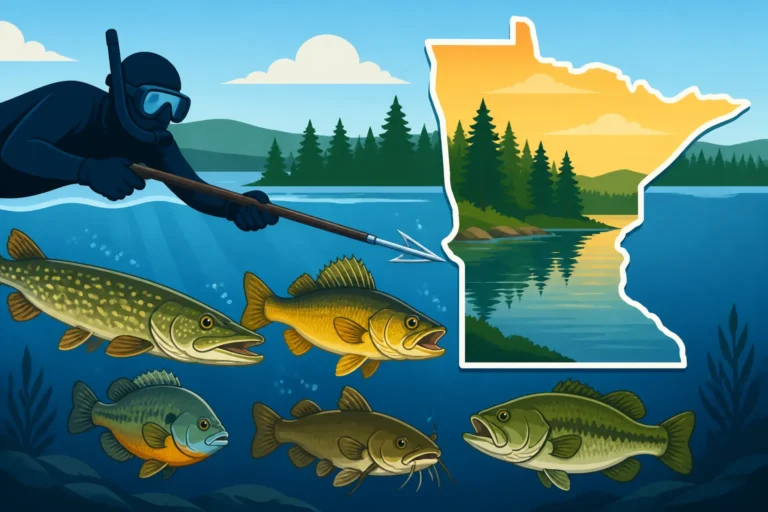
Winter brings a unique culture to Minnesota lakes as ice thickens and thousands of hard-water enthusiasts set up dark houses and portable fish shelters. If you participate in dark house spearing—an ancient method of northern pike harvest using decoys and large multi-pronged spears—you must obtain a dedicated spearing permit in addition to your standard angling license. Spearing rules are distinctly different from traditional line fishing, with specific size limits and designated waters where spearing is strictly prohibited to protect local pike populations.
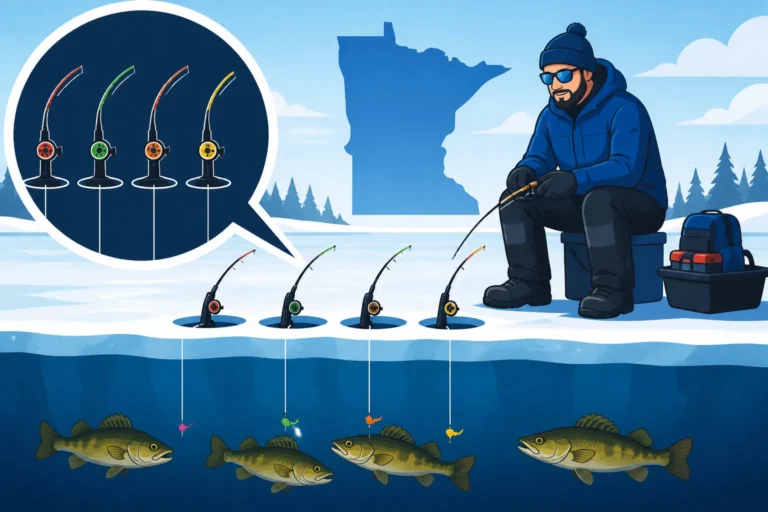
In addition to spearing permits, winter anglers who leave fish shelters unattended on the ice overnight must secure a shelter permit. Portable shelters that are packed up and removed at the end of each day typically do not require a shelter license, but any semi-permanent house, skid house, or wheelhouse left on the frozen lake surface must display a valid shelter license tag and clear owner identification. For a deeper breakdown of winter housing rules and safety guidelines, refer to our detailed summary on Minnesota Ice Fishing & Shelter Rules.
Shelter licensing laws also mandate strict removal deadlines in early spring to prevent houses from falling through melting ice and polluting lake bottoms. Depending on whether your shelter is located in the southern or northern half of the state, you must haul your ice house off the lake by specified calendar dates in late February or early March. Failing to purchase shelter credentials or ignoring removal deadlines results in significant financial penalties and municipal removal costs.
Cost Breakdown and Pricing Structure
Factors Influencing Licensing Fees
Understanding how fishing license pricing is established helps clarify where your hard-earned money goes when you make a purchase. Licensing fees are set by state legislative actions in coordination with wildlife management officials. Rather than functioning as a standard tax, permit revenue is strictly ring-fenced into a dedicated game and fish fund. This money directly funds fisheries research, lake surveys, water access maintenance, public boat ramp repairs, invasive species containment programs, and law enforcement operations.
The actual price you pay for an angling permit depends heavily on several core factors:
* Your legal residency status (residents pay significantly lower rates than out-of-state visitors).
* The duration of validity (single-day permits vs. full annual coverage).
* The age class of the applicant (youth, adult, or senior rates).
* Any additional endorsements attached to the transaction, such as trout stamps, sturgeon tags, or shelter permits.
* Transaction processing fees imposed by electronic licensing system vendors or retail counter agents.
When evaluating overall pricing, anglers should also consider the immense value provided by state fish management programs. stocking millions of walleye fry each year into popular fishing lakes ensures healthy population densities and consistent fishing action for generations to come. For an in-depth breakdown of current pricing structures, you can read our focused breakdown on How Much Is a Minnesota Fishing License? to help plan your seasonal budget.
Comparing Resident vs Nonresident Cost Expectations
The pricing disparity between resident and nonresident permits is a common topic among visiting anglers. State residents contribute to local infrastructure, county park maintenance, and watershed management through state property taxes, sales taxes, and income taxes throughout the entire year. To balance this financial equation, state authorities offer reduced angling permit rates to local residents while establishing higher rate tiers for out-of-state visitors who utilize the same natural resources on a temporary basis.
Nonresident anglers can choose between various duration tiers to optimize their spending based on their travel itineraries. For instance, a tourist visiting for a three-day weekend on Gull Lake will find a 72-hour permit far cheaper than a full annual nonresident license. However, if that same visitor plans to return for a fall trip to target crappies, upgrading to an annual permit at the beginning of the season quickly becomes the more economical strategy.
| License Category | Resident Financial Expectations | Nonresident Financial Expectations |
|---|---|---|
| Annual Individual | Standard baseline rate | Premium baseline rate |
| Married Couple / Family | Moderate savings vs two singles | Consolidated family rate |
| Short-Term (1 to 7 Days) | Low cost for targeted outings | Scaled options for brief trips |
| Specialized Endorsements | Standard fixed add-on fee | Standard fixed add-on fee |
Lifetime Licenses and Long-Term Value Options
For dedicated local anglers who know they will spend their entire lives fishing in Minnesota, the state offers a unique lifetime angling license program. Purchased as a one-time investment, a lifetime license guarantees full angling privileges for the rest of your life, regardless of whether you eventually move out of state in future years. The cost of a lifetime permit is structured around the age of the applicant at the time of purchase, with the lowest prices offered for infants and young children under three years old.
Parents and grandparents frequently purchase lifetime licenses as meaningful gifts for newborns or young toddlers. By locking in privileges early, the young angler never has to worry about buying an annual permit again when they grow up. Even if that child eventually attends college out of state or relocates permanently for work, their Minnesota lifetime license remains 100% valid whenever they return to fish their home waters.
While the upfront cost of a lifetime permit represents a noticeable commitment, calculating the cumulative cost of thirty or forty years of individual annual permits reveals substantial long-term savings. Furthermore, revenue from lifetime license sales is deposited into an immutable trust fund, where the earned interest continuously supports state conservation work in perpetuity. Anglers interested in securing a lifetime card can request formal application packets directly from central administrative offices.
How and Where to Buy Your Minnesota Fishing License
Purchasing Online via the Electronic Licensing System
In today’s digital world, buying an angling permit online is by far the fastest and most convenient method. The state operates a dedicated, secure web portal accessible 24 hours a day from any computer, tablet, or smartphone. Whether you are sitting at your desk at home or parked in a boat launch line on your phone, you can complete your purchase in just a few minutes using a major credit card.
When using the online platform, you will be prompted to create or log into a personal customer profile using your state driver’s license number or social security number. Once your identity and residency status are validated, you simply select the permit types and stamps you need, add them to your digital cart, and complete payment. Upon successful payment, the system generates an immediate electronic license document containing a unique authorization number. For a step-by-step walkthrough on using the web portal, check out our guide on How to Get a Minnesota Fishing License Online.
One major advantage of purchasing online is the ability to instantly save a digital PDF copy of your permit directly to your smartphone or mobile device. In most fishing situations, displaying a legible digital copy of your valid permit on your mobile screen satisfies legal requirements during field inspections by game wardens. However, if you purchase special harvest tags (like a sturgeon tag), you must still wait for physical paper tags to arrive in the mail before harvesting those specific species.
Buying In-Person at Local DNR Approved Retailers
If you prefer holding a durable paper document in your hand before stepping onto the boat, buying in person at an approved retail vendor is an easy option. The state partners with hundreds of local businesses across all eighty-seven counties to act as official licensing agents. These approved vendors include large big-box sporting goods chains, local hardware stores, corner gas stations, resort main offices, and classic bait shops located near popular lake access points.
When buying at a retail counter, simply present your physical driver’s license or state identification card to the clerk. The clerk will scan your ID barcode, pull up your customer history in the electronic terminal, and prompt you to confirm which permits and stamps you wish to buy. After you pay cash or card, the terminal prints out a durable, thermal-paper license document right on the spot.
Stopping at a local bait shop to buy your permit offers a fantastic added benefit: real-time local fishing knowledge. While the clerk prints out your paper license, you can pick up a tub of fresh minnows or leeches and ask about current water temperatures, active depths, and what lures have been working best on the local lakes. Supporting these small local retailers helps keep vibrant fishing communities thriving across northern towns like Walker, Ely, and Garrison.
Purchasing by Telephone and Mobile Device Convenience
For anglers caught in transit without reliable internet access or a nearby open retail store, the state offers a dedicated telephone purchasing service. By dialing a toll-free customer service number, you can speak directly with an automated processing agent or representative who can issue your angling credentials right over the phone. This service operates around the clock, providing a vital safety net for early morning anglers heading out before retail stores open.
When purchasing by phone, you will need to provide your full legal name, date of birth, address, driver’s license number, and a valid credit card for payment. Once the transaction is authorized, the customer service representative gives you an instant, multi-digit authorization code over the phone. You should immediately write this code down on a piece of paper and keep it in your tackle bag or wallet as temporary proof of purchase while on the water.
While phone purchasing is incredibly convenient in emergencies, keep in mind that phone transactions often carry a small convenience surcharge added by the third-party call center system. Additionally, if you need physical harvest tags, those will still need to be mailed to your home address. Nevertheless, for standard angling privileges on a clear sunny morning, telephone ordering ensures you never miss a minute of prime fishing time.
Regulations, Compliance, and Special Fishing Conditions
Rules for Boundary Waters and International Border Crossings
Minnesota shares extensive water boundaries with neighboring states like Wisconsin, Iowa, and North and South Dakota, as well as the Canadian province of Ontario. Fishing these shared boundary waters requires a clear understanding of jurisdictional boundaries, as licensing rules can shift dramatically once you cross an invisible line in the middle of a river or lake. For instance, when fishing shared waters like the Mississippi River or the St. Croix River, Minnesota and Wisconsin maintain reciprocal agreements that allow anglers holding a valid license from either state to fish the main channel waters legally.
However, international border waters like Lake of the Woods, Rainy Lake, and the Boundary Waters Canoe Area Wilderness (BWCAW) present much stricter regulatory environments. If you cross the international border into Canadian waters while on a fishing trip, you must hold appropriate Canadian provincial permits and comply fully with customs reporting laws. Simply holding a Minnesota license does not allow you to drop a line across the international boundary line. To avoid expensive legal headaches, read our complete overview on Border Water Fishing Rules (Minnesota-Ontario, Wisconsin).
Furthermore, season dates, harvest limits, and live bait restrictions often differ significantly on border waters compared to internal state lakes. For example, carrying live crayfish or specific minnow species across state lines or international borders is strictly regulated to prevent the spread of harmful aquatic invasive species. Always inspect regional regulations before launching your boat into border rivers or large lakes spanning state boundaries.
Free Fishing Weekends and Public Land Exceptions
To introduce new people to angling and encourage families to explore the outdoors together, the state designates specific free fishing weekends throughout the year. During these official promotional events, specific groups of people can fish legally without purchasing a standard angling permit. The most popular event is the Take a Kid Fishing Weekend held every summer, where resident adults accompanying children under sixteen years old can fish without a license.
Another major event occurs during the winter season with the Take a Kid Ice Fishing Weekend, which allows resident adults to sample hard-water fishing alongside youth without buying winter licenses or shelter permits. Additionally, state residents serving in the active military or stationed overseas often qualify for special free angling privileges during their official leave periods. To see exact calendar dates and event details, visit our complete guide covering Free Fishing Weekends in Minnesota.
It is essential to remember that while licensing fees are waived during free fishing weekends, all other state angling laws remain in full effect. Anglers must still obey all daily bag limits, size restrictions, slot limits, and species season closures. Conservation officers patrol public waters actively during free fishing events to ensure that fish populations are protected and that all participants practice safe, ethical sportsmanship.
Enforcement, Inspection, and Penalties for Unlicensed Fishing
State conservation officers, often referred to as game wardens, are tasked with enforcing all natural resource laws across the state’s lakes, rivers, and forests. These officers hold full law enforcement authority and regularly conduct routine boat-to-boat inspections, shore patrols, and winter ice shelter checks. When approached by a conservation officer, you are required by law to present your physical paper license, a valid digital document on your smartphone, or your official telephone authorization code upon request.
Fishing without a valid license or failing to present proof of purchase upon inspection can lead to serious consequences. Penalties typically include financial citations, court fees, and potential restitution costs for any illegally harvested fish found in your possession. In severe cases involving major over-limit violations or repeat offenses, officers have the authority to confiscate fishing rods, tackle boxes, electronic fish finders, and even boats or vehicles. Detailed information on enforcement policies is outlined in our article covering What Happens If You Fish Without a License in Minnesota?.
| Enforcement Scenario | Required Proof | Potential Consequences |
|---|---|---|
| Routine Lake Patrol Check | Paper license or Mobile Digital | Civil citation & fine |
| Unlicensed Harvest of Game Fish | Valid ID matching active record | Fines + per-fish restitution |
| Using Unlicensed Ice Shelter | Physical shelter license display | Citation & house removal fee |
| Major Over-Limit Violations | Paper/Digital documentation | Confiscation of gear/vessels |
Beyond financial penalties, receiving major wildlife citations can result in the temporary or permanent revocation of your angling privileges not just in Minnesota, but across all states that participate in the Interstate Wildlife Violator Compact. Maintaining an active, legitimate permit profile is a tiny price to pay for enjoying world-class natural resources stress-free.
Managing Your Paperwork and Physical vs Digital Licenses
Carrying Your License in the Field or on the Water
Once you have purchased your angling permit, ensuring you carry acceptable proof while fishing is your legal responsibility. For many decades, the standard requirement was carrying a signed, yellow thermal paper receipt in your wallet or tackle box. While physical paper remains completely legal and widely used, modern technological updates now allow anglers to store and display digital versions of their licenses directly on their personal mobile devices.
If you choose to carry a digital license on your smartphone, you must ensure that the document clearly displays your full name, customer identification number, permit type, and active validity dates. It is smart practice to take a clear screenshot of your digital license or save the official PDF to your phone’s offline file storage folder. Cellular coverage can be notoriously unreliable on wilderness waters like Upper Red Lake or inside deep river valleys, and being unable to load an app due to lack of signal is not an acceptable excuse during an inspection.
Furthermore, make sure your mobile phone battery is adequately charged before heading out onto the water. Carrying a portable power bank in your boat glovebox or ice fishing sled prevents your phone from dying right when a conservation officer pulls alongside your boat. If you prefer not to risk dropping your expensive phone into the lake, carrying a laminated paper copy in your tackle box remains a foolproof backup strategy.
How to Replace Lost or Damaged Paper Licenses
It happens to the best of us: a paper fishing license gets washed inside a pair of jeans, dropped into a wet boat bilge, or chewed up by a helpful hunting dog. Fortunately, if your physical paper permit is destroyed, lost, or rendered unreadable, you do not need to pay full price to purchase a completely new license. The state maintains your customer account records permanently within its central electronic database, making replacement fast and affordable.
To obtain a duplicate paper license, you can visit any local retail licensing vendor across the state or log into your account via the online electronic portal. By providing your driver’s license number or social security number, the system clerk can instantly bring up your active profile and print a official duplicate paper copy for a nominal administrative replacement fee.
If you originally purchased your license online and saved the digital PDF to your home computer, you can simply log into your personal profile and print out a fresh copy on your home printer at no additional charge. Keeping a spare paper printout inside your vehicle’s glove compartment ensures that even if you leave your primary wallet at home, you always have a valid backup document ready for a day on the lake.
Preparing for Seasonal Opener Dates and System Overloads
The spring walleye opener is practically a state holiday in Minnesota, with hundreds of thousands of anglers heading to the water simultaneously on a single Saturday morning in mid-May. Because so many people wait until the last minute to prepare, licensing retail terminals and web portals experience massive surges in traffic during the 48 hours leading up to the opener. System slowdowns, long retail checkout lines, and occasional website timeouts can occur when millions of users try to buy permits at the exact same time.
To avoid the frustration of standing in a long line at a busy bait shop while your friends are already at the boat launch, buy your permit well in advance. Annual licenses go on sale every February, giving you weeks of quiet time to update your profile, add required trout stamps, and print your documentation before the spring rush begins. Getting your paperwork cleared early leaves your pre-trip time free for spooling fresh line, sharpening hooks, and prepping your boat motor.
Taking an organized approach to your seasonal licensing sets the tone for a relaxed, enjoyable fishing season. Whether you are targeting panfish on small suburban lakes, chasing smallmouth bass on the St. Croix, or sitting in a heated ice house waiting for a walleye bite, carrying proper credentials ensures that your outdoor adventures remain safe, fun, and fully compliant with state law.
Disclaimer
This article is for general informational purposes only and does not constitute professional advice. Laws, prices and regulations vary by location and change over time. Consult a qualified professional for guidance on your specific situation.