Best Muskie Fishing Tactics in Minnesota
There's nothing quite like the thrill and frustration of muskie fishing in Minnesota. Often called the "fish of 10,000 casts," these apex predators demand dedication, specialized gear, and a strategic approach. If you've been putting in the hours without much to show for it, or you're just looking to refine your hunt for that elusive trophy, this comprehensive guide will break down the most effective muskie fishing tactics to help you increase your odds on our beautiful Gopher State waters.
Understanding the Elusive Muskie: Behavior and Habitats
To consistently catch muskie, you first have to think like one. These fish are creatures of habit but also opportunistic hunters, constantly adapting to their environment and available forage. Knowing where they'll be and what they'll be doing throughout the year is your first big step toward success.
Seasonal Movements and Preferred Habitats
Muskie movements are heavily influenced by water temperature, light penetration, and the location of their food source. Understanding these seasonal shifts is crucial for locating them.
During the spring, after the ice recedes and water temperatures slowly climb into the 50s Fahrenheit, muskie will often be found in shallower, warmer bays and protected areas. These spots are typically the first to warm up and attract baitfish, offering an easy meal for post-spawn muskie looking to recover. Look for emerging weed beds, shallow rock piles, and distinct points that extend into deeper water. As the water warms further, they'll start patrolling weed lines and shallow flats, especially during overcast days or low-light conditions. Targeting these areas early in the season can be incredibly productive, often yielding aggressive fish.
As summer progresses and water temperatures stabilize, muskie will spread out, often moving to deeper, cooler water during the hottest parts of the day. They'll relate to offshore structures like rock reefs, mid-lake humps, and deep weed edges (think cabbage or coontail). The thermocline, a distinct layer where warm surface water meets colder deep water, often concentrates baitfish and, consequently, muskie. However, they're still ambush predators, so don't rule out shallower weed beds, especially during early morning, late evening, or on cloudy days. You might even find them suspended over deeper water, chasing schools of cisco or perch, which are key forage in many of Minnesota's premier muskie lakes like Lake Vermilion or Leech Lake.
Fall is often considered trophy time for muskie anglers. As water temperatures drop, these fish go on a feeding frenzy, packing on weight for the upcoming winter. They'll often move to deeper breaks, main lake points, and areas where large schools of baitfish, particularly suckers and cisco, are present. This is when muskie are most likely to be found gorging themselves. Anglers will often focus on deeper presentations, slower retrieves, and larger baits to appeal to these actively feeding giants. The window for this intense feeding can be short, so paying attention to water temperature drops and local fishing reports is paramount.
Forage and Feeding Habits
Muskie are top-tier predators, and their diet consists primarily of other fish. Knowing what they're eating in a particular lake can help you choose the right lures and presentations. In many Minnesota lakes, smaller northern pike, perch, suckers, and various panfish are common prey. On larger, deeper bodies of water, cisco (tullibee) are a significant part of their diet, influencing muskie to suspend in open water or patrol deep structure.
They are primarily ambush predators, using cover like weed beds, fallen timber, or rock formations to hide and then explode onto unsuspecting prey. This is why targeting structure is so critical. However, in lakes with abundant open-water forage like cisco, muskie will sometimes suspend and actively chase bait schools, requiring different tactics such as trolling large crankbaits. Their feeding windows can be short but intense, often occurring during periods of low light, stable weather, or just before a cold front. Learning to identify these patterns and "prime times" will make a noticeable difference in your success.
Arming Yourself: Essential Muskie Gear and Lures
Muskie fishing isn't for the faint of heart, and neither is the gear required. These powerful fish demand heavy-duty tackle that can withstand violent strikes and powerful runs. Skimping on quality here can lead to heartbreak.
Rods, Reels, and Line Selection
A proper muskie setup starts with a stout rod. You'll want a heavy to extra-heavy power baitcasting rod, typically 8 to 10 feet in length, sometimes even longer. The extra length helps with casting large baits, controlling powerful fish, and performing the crucial "figure-8" boatside maneuver. Brands like St. Croix, a proud Minnesota company, or Thorne Bros. often offer excellent muskie-specific rods that balance power with sensitivity. When looking for a new rod, you might even find a good selection of specialized models on Amazon.
Pair your rod with a high-quality, heavy-duty baitcasting reel. Look for reels with a strong drag system, a large line capacity, and a high gear ratio (6.1:1 or higher) to quickly pick up slack and retrieve lures efficiently. Shimano Tranx or Abu Garcia Revo Toro Beast are popular choices that can handle the abuse.
For line, 80 to 100-pound test braided line is the standard. Braid offers exceptional strength, minimal stretch for solid hooksets, and casts well with heavy lures. A heavy-duty leader is absolutely essential to prevent bite-offs. This can be a high-quality fluorocarbon leader (100-150 lb test, often 24-36 inches long) or a wire leader, depending on the fishing situation and personal preference. Fluorocarbon is less visible and has some stretch, which can be an advantage, while wire offers maximum bite protection, especially for toothy critters.
| Component | Recommendation | Why It Matters |
|---|---|---|
| Rod | Heavy to X-Heavy Power, 8-10+ ft Baitcasting Rod | Handles large baits, strong fish, aids in Figure-8 |
| Reel | Heavy-Duty Baitcasting, High Gear Ratio (6.1:1+) | Strong drag, fast retrieve, stands up to abuse |
| Main Line | 80-100 lb Braided Line | No stretch for hooksets, strong, good casting |
| Leader | 100-150 lb Fluorocarbon or Wire (24-36") | Prevents bite-offs, fluorocarbon for stealth, wire for durability |
| Net | Large, Rubber-Coated Net (36"+ hoop) | Safely land and handle fish, protects slime coat |
| Tools | Long-Nose Pliers, Jaw Spreaders, Bolt Cutters | Essential for safe hook removal and quick release |
Lures and Baits: The Arsenal
Muskie lures are as varied as the fish themselves, each designed for specific conditions and presentations. Building a diverse tackle box is key to adapting to changing conditions on lakes like Gull Lake or Lake of the Woods.
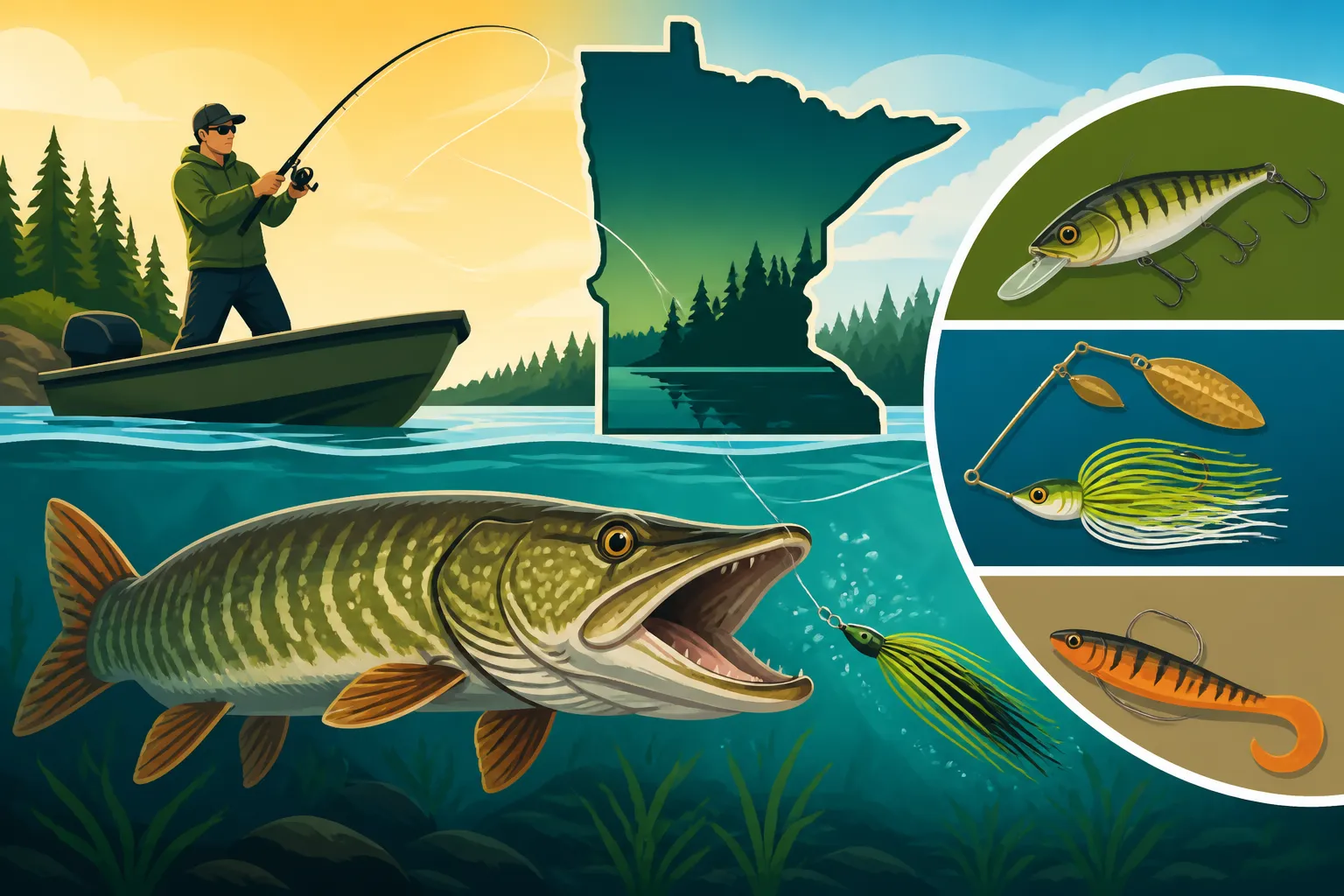
- Bucktails: These are arguably the most iconic muskie lures. They create flash and vibration, mimicking fleeing baitfish. Inline bucktails, like those from Musky Mayhem Tackle (Double Cowgirls) or Mepps (Musky Killers), are highly effective. Tandem bucktails with two blades create even more disturbance. Experiment with blade sizes (from #8 up to #12) and colors. Chartreuse, black, and white are perennial favorites.
- Jerkbaits: These lures are designed to be worked with rod snaps and pauses, creating an erratic, dying baitfish action. Glide baits (like a Salmo Slider) can be worked side-to-side, while dive-and-rise jerkbaits (like a Bondy Bait) plunge on the retrieve and float up on the pause. The unpredictable action often triggers reaction strikes from hesitant muskie.
- Crankbaits: Large, deep-diving crankbaits are workhorses for trolling, especially in summer and fall. They can cover vast amounts of water and reach suspended fish. Popular choices include large Rapala Super Shad Raps or Bucher DepthRaiders. For casting, shallow-diving crankbaits can be effective over weed flats.
- Topwater Lures: Nothing beats the explosive strike of a muskie on a topwater bait. Walk-the-dog style lures (like a Whopper Plopper) and prop baits (like a Top Raider) create surface commotion, making them irresistible to muskie in calm conditions, especially during low light. While often a high-risk, high-reward approach, the visual spectacle is unforgettable.
- Soft Plastics: Large swimbaits and soft plastic jerkbaits rigged on heavy jig heads can imitate various forage and are gaining popularity. They offer a more subtle presentation when muskie are finicky.
- Live Bait: In some situations and specific lakes, large suckers can be incredibly effective, particularly in late fall. However, regulations for live bait vary, and it requires specialized rigging and careful handling. Always check the current Minnesota Fishing Regulations for specifics on using live bait for muskie.
Mastering the Hunt: Core Muskie Fishing Tactics
Once you have the gear and understand muskie behavior, it's time to put those elements together with proven tactics. Persistence, attention to detail, and a willingness to adapt are your greatest assets.
Casting Techniques
Casting is the most common and often most exciting way to target muskie. It allows for precision placement around structure and the ability to work lures with varied retrieves.
When casting, aim to cover water thoroughly. Fan cast around points, along weed lines, and over submerged humps. Don't just cast in one direction; try different angles to present your lure from various perspectives to potential holding fish. Focus on areas where changes in depth, cover, or current are present. Remember that muskie often sit on edges, waiting to ambush. A good technique is to cast past your target structure and retrieve the lure through it, mimicking a baitfish swimming through a likely ambush point. Many experienced anglers agree that one of the Best Muskie Fishing Tactics in Minnesota involves meticulous casting.
The retrieve itself is crucial. Muskie are often drawn to erratic movements. Vary your retrieve speed, incorporate pauses, and add twitches or jerks of the rod to make your lure "dance." Sometimes a fast, burning retrieve is what triggers a strike; other times, a slow, methodical retrieve with long pauses is the ticket. The key is to experiment until you find what the fish want on that particular day.
Finally, and perhaps most importantly, is the "Figure-8" technique. This maneuver, performed right at the boat, is a game-changer. When your lure approaches the boat at the end of a cast, instead of pulling it out of the water, quickly plunge your rod tip into the water and trace a large "figure-8" or "oval" pattern with your lure next to the boat. Many muskie will follow a lure all the way to the boat and only strike during this boatside maneuver. It adds valuable seconds of presentation and is absolutely essential for every muskie angler to master. If you want to dive deeper into this technique, there's a great guide on the Muskie Figure-8 Technique that can really help you refine your execution.
Trolling for Open Water Giants
While casting is exciting, trolling is often a highly effective tactic for covering large areas of water, especially on expansive lakes and when fish are suspended.
Trolling is particularly effective during the warmer months when muskie might be holding in deeper water or chasing open-water forage like cisco. It's also an excellent strategy in the fall when fish are actively feeding and widely dispersed. Use large, deep-diving crankbaits that can reach the desired depth. Pay close attention to your electronics to identify baitfish schools or structural elements like humps and breaklines where muskie might be lurking. Precision trolling, often requiring the use of quality electronics and perhaps a good kicker motor, allows you to keep your lure in the strike zone for extended periods.
Boat speed is critical when trolling. Generally, speeds between 3 to 5 miles per hour are common, but again, experimentation is key. Sometimes a slight increase or decrease in speed can trigger a strike. It's also beneficial to vary your boat's direction, creating turns and swings that cause your lures to speed up, slow down, and change depth, often eliciting a strike. Many anglers find a vast array of trolling crankbaits on Amazon that are perfectly suited for this demanding style of fishing.
Targeting Specific Structures
Muskie, like most predators, are structure-oriented. Understanding which structures they prefer and when to fish them is vital.
- Weed Edges: Whether it's the deep edge of a cabbage bed in summer or a shallower coontail bed in spring, weed lines provide cover, oxygen, and ambush points. Cast parallel to these edges, or troll just outside them.
- Rock Reefs and Humps: These submerged structures provide excellent habitat, attracting baitfish and offering ambush opportunities. Muskie will often patrol the tops or sides of these structures. Look for distinct depth changes or areas where rock transitions to sand or mud.
- Points: Points that extend into deeper water are classic muskie holding areas. Fish can intercept baitfish moving along the point or transition from shallow to deep water. Both casting and trolling around points can be highly effective.
- Current Breaks: In river systems or where currents are present in lakes, muskie will often position themselves in eddies or behind obstacles to conserve energy while waiting for prey to be swept by.
Effective anglers use detailed lake maps, often available through apps like Navionics or LakeMaster, to identify these prime structures before they even hit the water. This allows for a more efficient and targeted approach to finding the fish.
Mindset and Persistence: The Muskie Angler's Edge
Muskie fishing isn't just about the right gear and techniques; it's also a mental game. The "fish of 10,000 casts" moniker exists for a reason, and a strong, patient mindset is often the difference between success and frustration.
The "Fish of 10,000 Casts" Reality
Let's be realistic: muskie fishing can be tough. There will be days, or even trips, where you cast tirelessly without a single follow or strike. This is the nature of pursuing such a large, elusive predator. It takes immense patience and a certain stubbornness. But every cast holds the potential for that one explosive strike, and that's what keeps us coming back. Instead of focusing solely on landing a fish, learn to celebrate the "follows" – seeing that torpedo-like shadow trailing your lure is a sign you're doing something right, even if it doesn't result in a hook-up.
Success in muskie fishing often comes down to perseverance. Don't give up on a spot too soon, but also don't be afraid to move if you're not seeing activity. The best muskie anglers are adaptable, constantly trying new lures, retrieve speeds, and locations until they crack the code for that day. Prepare for long hours, bring plenty of snacks and drinks, and remember that even an experienced muskie guide will have slow days. The journey, the anticipation, and the pursuit are as much a part of the experience as the catch itself.
Responsible Muskie Handling
Muskie are highly valued, often catch-and-release, sportfish in Minnesota. Proper handling is critical to ensure their survival and the health of the fishery.
- Use a Large Net: A large, knotless, rubber-coated landing net is essential. This protects the fish's delicate slime coat, fins, and scales. A hoop size of 36 inches or larger is recommended. You can find excellent options for large landing nets designed for muskie on Amazon.
- Minimize Time Out of Water: Get the fish in, unhooked, photographed (if desired), and back into the water as quickly as possible. Every second out of water is stressful for the fish.
- Proper Hook Removal: Have long-nose pliers, jaw spreaders, and bolt cutters readily available. If a hook is deeply set or difficult to remove, cut the hook rather than tearing at the fish's mouth. Removing hooks safely and efficiently is a key component of Catch and Release Best Practices in Minnesota.
- Support the Fish's Body: When holding a muskie for a photo, support its entire body horizontally, especially its belly. Never hold a large muskie vertically by the gill plates or jaw, as this can severely damage its internal organs and spine.
- Revive the Fish: After release, gently hold the fish in the water, facing into any current, until it regains its strength and can swim away on its own.
These practices ensure that the muskie you catch today can grow larger and provide a thrilling fight for another angler tomorrow. It's a fundamental part of the muskie fishing culture in Minnesota.
Disclaimer
Fishing regulations, seasons, and limits can change frequently. Always consult the official Minnesota Department of Natural Resources (DNR) website or the current fishing regulations handbook before heading out on the water. This guide is for informational purposes only and should not replace official sources.