How to Catch Walleye in Minnesota (Step by Step)
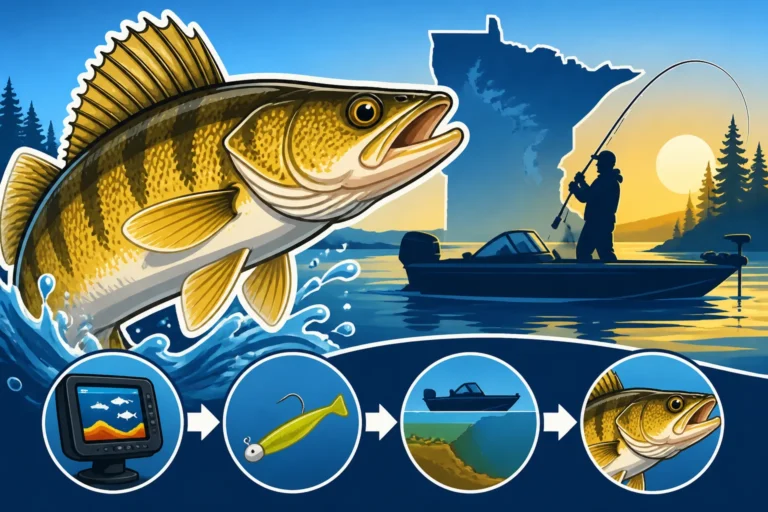
Oh, the elusive walleye! If you've spent any time on Minnesota's gorgeous lakes, you know the thrill of a walleye bite, but also the frustration when they decide to play hide-and-seek. It can feel like you need a secret handshake to figure out their patterns, especially with all the different lakes, seasons, and ever-changing regulations. But don't you worry, because this guide is designed to cut through the confusion and give you a step-by-step approach to consistently putting Minnesota's favorite fish in your livewell or on your dinner plate.
Understanding Minnesota Walleye Behavior and Habitat
Catching walleye isn't just about dropping a line in the water; it's about understanding their world. These fish are creatures of habit, influenced heavily by water temperature, light conditions, and the availability of their favorite snacks. Knowing where they should be and why they're there is half the battle won.
Seasonal Movements of Walleye
Walleye are constantly on the move, chasing optimal conditions and food sources. Their patterns shift dramatically throughout the year.
Spring Walleye Patterns After the Opener
When the ice finally melts and the lakes open up, usually in mid-May for the much-anticipated Minnesota Walleye Seasons & Opener Dates (2026), walleye are fresh off their spawning rituals. They're often hungry and recovering, making them somewhat predictable. In early spring, look for them to be in shallow, warmer bays, near river mouths, or on shallow rock piles and points where they spawned. They’ll gravitate towards areas that warm up fastest, often in water as shallow as 4 to 10 feet. As the water slowly heats up, they'll start moving out to slightly deeper edges, but still very accessible. Think about those shorelines with a quick drop-off or the first breaks leading to deeper water.
Summer Walleye Patterns: Deep Structure and Weeds
As Minnesota's legendary summer kicks in and water temperatures rise, walleye transition to deeper, cooler water. This is when they really start relating to structure. You'll find them hugging the deep edges of weed lines (especially coontail and cabbage), congregating on offshore humps, reefs, and rock piles. The thermocline, a layer in the lake where water temperature changes rapidly, often acts as a ceiling or floor for their movements. During the day, they might be tucked into 20-35 feet of water, only to move shallower to feed during low light periods. Big, clear lakes like Leech Lake or Lake Vermilion are classic examples where summer walleye suspend over deep water or relate to specific deep structure.
Fall Turnover and Cold Water Movements
Ah, fall turnover. This is when the lake's layers mix, and it can throw a wrench into even the most seasoned angler's plans. Water temperatures equalize from top to bottom, scattering fish initially. However, once the lake settles, walleye start to feed heavily in preparation for winter. They'll move back to shallower rock reefs and main lake points, often ambushing baitfish that are also fattening up. This can be some of the best fishing of the year, especially during the late afternoon and evening hours. Don't be afraid to revisit spots you fished successfully in the spring, as walleye might be using those same areas again.
Winter Walleye Patterns Through the Ice
When the lakes freeze solid, the walleye still need to eat! Ice fishing for walleye is a Minnesota tradition, but their behavior changes again. They tend to be less active than in open water, often holding tight to the bottom or suspending just a few feet off it over deep structure. Mid-lake humps, points, and sudden depth changes are prime targets. Early ice often sees them in shallower areas, similar to late fall, but as winter progresses, they'll move to deeper main lake structures. Understanding Ice Fishing for Walleye: Tactics & Setups is crucial for success during these cold months.
Key Walleye Habitat and Structure
Walleye are predatory fish, and they love to ambush their prey. This means they're always looking for cover or structure that gives them an advantage.
Reefs, Rock Piles, and Humps
These are classic walleye magnets. Underwater reefs and rock piles provide both cover and a smorgasbord of invertebrates and baitfish. Walleye will often sit on the deep sides or tops of these structures, waiting for an easy meal. On vast lakes like Lake of the Woods, finding these subtle humps can be a game-changer. These features often concentrate baitfish, which in turn attract hungry walleye. Learning Where Do Walleye Live in a Lake? (Structure) will give you a significant advantage.
Weed Lines and Edges
Healthy weed beds, particularly those comprised of coontail, cabbage, and even emergent lily pads, are fantastic walleye habitats. The edges of these weed lines provide cover, oxygen, and attract smaller baitfish that walleye prey upon. Look for transition zones where weeds meet sand or rock, or where a shallow weed flat drops off into deeper water. These edges are ambush points. Casting along these lines or trolling parallel to them can be incredibly effective, especially in lower light conditions.
Mud Flats
Don't let the name fool you – mud flats, especially those found on large, productive lakes like Mille Lacs or Winnie, are critical walleye foraging areas. These expansive, relatively flat areas often have subtle depth changes or isolated clumps of vegetation that act as mini-structures. Walleye roam these flats, often during low light, to feed on schools of suspended baitfish or insect larvae. Electronics like side imaging can be invaluable for finding these subtle nuances on a seemingly featureless flat.
Points and Breaks
Anywhere the bottom contour changes significantly, you'll likely find walleye. Points that extend out from shore, especially those with rock or gravel, are natural highways for feeding fish. Breaks are sudden changes in depth, such as where a shallow flat drops off into a deeper basin. Walleye will patrol these breaks, moving up and down the contours to feed. These are prime locations for vertical jigging or slowly dragging live bait rigs.
Essential Gear and Tackle for Minnesota Walleye
You don't need a boatload of expensive gear to catch walleye, but having the right tools for the job certainly helps. Think versatility and reliability.
Rods, Reels, and Line Choices
The foundation of your walleye setup starts with a balanced rod and reel combo.
Spinning vs Baitcasting Setups
For most walleye applications, a good spinning setup is your bread and butter. It excels at casting lighter baits, jigging, and working with live bait rigs. You'll want a medium-light to medium power rod with a fast action tip, paired with a 2000-3000 series reel. This offers enough backbone for a good hookset but enough sensitivity to feel those subtle walleye bites. Brands like Shimano and Daiwa offer excellent options across various price points.
Baitcasting setups, while less common for general walleye fishing, do have their place, especially when you're trolling heavier crankbaits, using larger spinner rigs with heavier weights, or casting big swimbaits for bigger fish. They offer more control for specific presentations and often pair well with heavier line. If you're serious about trolling deep water, a baitcaster might be worth considering.
Rod Action, Power, and Length
A medium-light to medium power rod is ideal for walleye. This power rating ensures you can handle the average walleye without overpowering them, yet still have enough strength for a larger fish or snag. The "action" refers to where the rod bends. A fast or extra-fast action tip is critical for walleye as it provides sensitivity to detect those often-light bites and allows for quick, positive hooksets. Rod lengths typically range from 6'6" to 7'6". Longer rods are great for casting distance or trolling, while shorter rods offer more control for vertical jigging or working tight spots.
Fishing Line: Braid, Fluorocarbon, and Monofilament
Choosing the right line can make a big difference.
- Braided Line: Super sensitive, has almost no stretch, and is incredibly strong for its diameter. It's excellent for jigging, feeling light bites, and getting better hooksets. A 6-10 lb test braid is common. However, it's visible, so often a fluorocarbon leader of 6-10 lb test is tied to the end to provide invisibility and abrasion resistance.
- Fluorocarbon Line: Less visible than mono, very sensitive, and sinks. It's a great choice for leaders or even as a main line for certain presentations where invisibility is paramount, like clear water jigging.
- Monofilament Line: The most traditional and affordable option. It has more stretch, which can be a pro (for absorbing shock) or a con (for feeling bites). It's forgiving and a good all-around choice, especially for beginners or for trolling crankbaits where stretch can prevent hooks from pulling out. A 6-8 lb test is standard for walleye.
You can find a great selection of all these lines on Amazon, making it easy to experiment with what works best for your style of fishing.
Must-Have Lures and Baits
Walleye can be picky, so having a diverse tackle box is key.
Jigs: The Walleye Workhorse
Jigs are arguably the most versatile walleye lure. From a simple lead-head jig tipped with a minnow or plastic, to more specialized jigging spoons and Rapala Jigging Raps, they mimic baitfish perfectly.
- Jig & Minnow: This classic combo is deadly, especially during spring and fall. A 1/8 to 1/4 oz jig, tipped with a lively fathead or shiner minnow, is a go-to. Learning Jigging for Walleye: Jig & Minnow Basics is fundamental.
- Jigging Raps/Blade Baits: These lures are fantastic for aggressive walleye, particularly when ice fishing or vertical jigging from a boat. Their erratic action triggers reaction strikes.
Crankbaits: Trolling and Casting
Crankbaits are hard-bodied lures that dive to specific depths, mimicking fleeing baitfish. They're excellent for covering water, especially when trolling or searching for active fish.
- Shallow Divers: For fishing weed lines or shallow flats, crankbaits like a Rapala Shad Rap or Berkley Flicker Shad are excellent.
- Deep Divers: When walleye are holding deep, diving crankbaits can reach depths of 15-25+ feet, especially when paired with methods like leadcore line. Understanding Trolling for Walleye: Crankbaits & Leadcore can be a game changer on big lakes.
Crawler Harnesses and Spinner Rigs
These are live bait rigs that combine a weight (often a bottom bouncer) with a snell (a leader with hooks and beads, often with a spinner blade) and a live nightcrawler. They're incredibly effective for slowly drifting or trolling along breaks, humps, and weed edges. The spinner blade adds flash and vibration, while the crawler provides scent and natural movement. This is a staple presentation in many Minnesota walleye fisheries.
Live Bait: Minnows, Leeches, and Nightcrawlers
Sometimes, nothing beats the real thing.
- Minnows: Fatheads, shiners, and rainbows are all excellent walleye baits, especially for jigging or under a slip bobber. Keep them lively!
- Leeches: Fantastic for summer walleye, as they're hardy, active, and walleye love them. They're especially popular for slip bobber fishing or on a Lindy Rig.
- Nightcrawlers: Used primarily with spinner rigs or Lindy Rigs. Walleye can't resist a juicy crawler. For more details on what works best, check out Best Live Bait for Walleye (Leeches, Minnows, Crawlers).
Step-by-Step Walleye Fishing Techniques
Now that you know where they live and what gear to use, let's talk about the actual fishing. Walleye fishing often involves a combination of presentations, adapting to conditions and fish mood.
Jigging for Walleye
Jigging is a cornerstone of walleye fishing in Minnesota, versatile for both open water and ice fishing.
Vertical Jigging from Boat or Through Ice
This technique involves positioning your boat directly over a concentration of fish or structure, or drilling holes over them on the ice. Drop your jig straight down to the bottom, then lift it a foot or so and let it fall back. The key is to impart action to the jig without moving it too far horizontally.
- Cadence: Experiment with different lift-and-fall speeds and pauses. Sometimes a sharp snap and long pause works, other times a subtle quiver.
- Strike Detection: Walleye bites can be incredibly subtle – a slight tick, a spongy feeling, or simply added weight when you lift. Watch your line closely for any unnatural movement.
- Bait Tipping: Always tip your jig with a live minnow, a piece of plastic, or a gulp minnow imitation. This adds scent and profile.
Pitching Jigs to Shorelines and Shallow Cover
When walleye are shallower, especially during spring or fall, pitching jigs can be highly effective. This involves casting a jig towards a shoreline, weed edge, or rocky point, letting it sink to the bottom, and then slowly retrieving it with a lift-and-drop motion.
- Targeting: Look for current breaks, submerged wood, or transition zones from rock to sand.
- Presentation: Keep your rod tip high to maintain good line feel. The bite often comes on the fall.
- Weight: Use the lightest jig possible that still allows you to feel the bottom and maintain control, typically 1/8 to 1/4 oz.
Trolling for Walleye
Trolling is an excellent method for covering large areas, finding active fish, and presenting baits at consistent depths.
Trolling Crankbaits: Speed, Depth, and Planer Boards
Crankbaits are designed to dive, and trolling them allows you to keep them in the strike zone for extended periods.
- Speed: Walleye typically prefer speeds between 1.5 to 3.0 mph, but this can vary daily. Experiment!
- Depth: Match the crankbait's diving depth to the depth where walleye are holding. Many crankbait manufacturers provide depth charts.
- Planer Boards: These devices allow you to spread out multiple lines away from the boat, covering a wider swath of water and presenting baits to undisturbed fish. They are indispensable for Walleye Fishing Techniques: Complete Minnesota Guide.
Bottom Bouncers and Crawler Harnesses
This technique is about dragging a live bait rig along the bottom.
- Bottom Bouncers: These L-shaped weights are designed to bounce along the bottom without snagging excessively, keeping your bait just above the lakebed.
- Crawler Harnesses: A snelled leader with hooks and often beads and a spinner blade, tipped with a full or half nightcrawler. The spinner creates flash and vibration, while the crawler provides natural scent and action.
- Speed: Usually trolled or drifted slowly, from 0.8 to 1.5 mph, just fast enough to get the blade spinning.
Slip Bobber Fishing
Slip bobbers are fantastic for presenting live bait at a precise depth, especially when walleye are suspended or holding in specific cover. This method allows for a natural, subtle presentation.
Setup and Depth Finding
A slip bobber rig consists of a bobber stop (a small piece of string or rubber on your main line), a bead, the slip bobber itself, another bead, a weight (split shot or small egg sinker), and a hook.
- Depth Setting: The bobber stop determines the depth your bait will suspend. Use a depth finder or a marked weight to find the bottom, then set your bobber stop to keep your bait just above it or in the middle of a fish school you see on your electronics. For a detailed guide, see How to Set Up a Slip Bobber Rig Step by Step.
- Live Bait: Tip your hook with a lively minnow or leech.
- Weight: Use just enough weight to get your bait down quickly and keep your bobber upright.
Presentation: Drifting, Anchoring, or Current
Slip bobbers can be fished in various ways.
- Drifting: Let the wind or a slight current carry your rig over structure or along a break.
- Anchoring: If you've found a concentrated school of fish on a hump or reef, anchor upwind and cast your bobber rig into the strike zone.
- Current: In rivers or areas with current, slip bobbers are excellent for presenting bait in a natural drift.
Ice Fishing Specifics
Ice fishing for walleye has its own set of unique tactics that build upon the open water principles.
Hole Hopping, Deadsticking, and Jigging Raps
- Hole Hopping: This is essential. Walleye are often nomadic under the ice. Drill a series of holes over structure and move frequently until you find active fish. A good electric auger, like the Strikemaster Lithium 40V, makes this much easier.
- Deadsticking: This involves setting up a second line (where legal) with a live minnow just suspended off the bottom, often in a rod holder, while you actively jig another line. Walleye often prefer a stationary bait.
- Jigging Raps and Spoons: These aggressive lures often trigger reaction strikes from hesitant walleye. Vary your jigging cadence – sometimes a hard snap, sometimes a subtle quiver is all it takes. Pair them with a flasher like a Vexilar for real-time fish detection.
Navigating Minnesota Walleye Regulations
Minnesota's fishing regulations can be complex, especially with special rules for certain lakes. It’s absolutely critical to know before you go! Ignorance is no excuse, and wardens don't mess around.
License Requirements and Season Dates
First things first, you need a license. It’s the law, and it supports conservation efforts in our state.
Obtaining Your Minnesota Fishing License
Anyone 16 years of age or older needs a valid Minnesota Fishing License: Cost, Types & How to Buy (2026). You can purchase them online through the Minnesota Department of Natural Resources (DNR) website, at most bait shops, or at many retail stores like Walmart. Make sure to get it before you head out, and keep it with you! There are different types of licenses too, including annual, short-term, and nonresident options.
Understanding Walleye Opener Dates
The statewide walleye opener is a huge event, usually the second Saturday in May. However, specific lakes or border waters might have slightly different dates. Always double-check the current Minnesota Fishing Regulations handbook or the DNR website for the exact When Is the Minnesota Walleye Opener 2026? for the waterbody you plan to fish. While many lakes allow year-round fishing for other species, walleye often have a closed season leading up to the opener to protect them during their spawning period.
Bag Limits, Possession Limits, and Slot Limits
This is where it gets really specific, and often, confusing for anglers. These rules are put in place to manage fish populations and ensure healthy fisheries for years to come.
Statewide and Lake-Specific Walleye Limits
The general statewide bag limit for walleye is usually six, but this is a possession limit that means the maximum number of fish you can have on your person, in your boat, or at your fish cleaning station, regardless of how many days you've fished. The actual daily limit might be less, and there are often size restrictions within that limit.
Many individual lakes have specific, often stricter, regulations due to unique population dynamics. For example, lakes like Mille Lacs, Upper Red Lake, and Leech Lake nearly always have special regulations that can change year to year, or even mid-season! It's not uncommon to see limits like "one walleye between 17-20 inches, and one over 26 inches" or a simple "one walleye over 26 inches." Always consult the Minnesota Fishing Limits: Bag & Possession (2026) for the specific lake you're targeting.
Decoding Slot Limits and Protected Slots
Slot limits are designed to protect certain size classes of fish, usually the prime breeding stock, or to thin out an overpopulated size class.
- Protected Slot: This means any fish within a specific size range (e.g., 17-28 inches) must be immediately released. You can only keep fish smaller or larger than that slot. This protects the big breeders. For example, Mille Lacs Lake Walleye Limit & Slot often has a protected slot to allow those big walleye to continue reproducing.
- Harvest Slot: Less common, but means you can only keep fish within a specific size range, and must release anything smaller or larger. This is usually to remove an abundance of a certain size class.
- Understanding Length: Always measure fish from the tip of the snout to the end of the tail with the tail compressed. It's crucial to have a reliable measuring board in your boat or tackle box.
Always, always, always check the current year's DNR Fishing Regulations handbook for the specific lake or river you plan to fish. These rules can change annually, and a quick check can save you a hefty fine. You can find the most up-to-date information on the Minnesota DNR website.
Advanced Tips and Local Knowledge for Walleye
Beyond the basics, a few extra considerations can help you consistently locate and catch Minnesota walleye.
Reading the Lake and Weather
Walleye are highly sensitive to their environment, making environmental factors critical.
Wind Direction and Strength
Wind is often a walleye angler's best friend. A consistent breeze pushes baitfish, insects, and plankton into a "wind-blown shore" or structure. Walleye will follow, using the chop on the surface to their advantage for ambushing prey, as the disturbed surface makes it harder for baitfish to see them coming. Focus on the windward side of points, reefs, and islands. However, too much wind can make boat control and presentation difficult, so balance is key.
Cloud Cover and Low Light Conditions
Walleye are known for their excellent low-light vision, thanks to their large, light-sensitive eyes (the "walleyed" look!). This means they are often most active during dawn, dusk, and cloudy days. Night fishing for walleye can be incredibly productive, especially in clear lakes where they might stay deep during the bright day. On clear, sunny days, look for them to be deeper, in heavier cover, or in shaded areas.
Electronics: Fish Finders and Forward-Facing Sonar
Modern marine electronics are incredibly powerful tools. A good fish finder (sonar unit) allows you to see depth, bottom contour, structure, and most importantly, fish. Spend time learning to interpret what you see on the screen. Brands like Humminbird and Garmin offer excellent units.
- Traditional Sonar: Great for seeing fish directly under the boat, depth, and bottom features.
- Side Imaging/Down Imaging: Provides picture-like views of the bottom and structure to the sides and directly beneath the boat, helping you find those subtle humps or weed edges.
- Forward-Facing Sonar (e.g., Garmin LiveScope): This newer technology allows you to see fish and structure in real-time, ahead of your boat. It's a game-changer for active fishing, letting you pitch jigs directly to fish you see on screen, or follow schools of walleye. While it's an investment, it can be incredibly effective for finding and staying on walleye.
Best Times and Locations (General)
While conditions change daily, certain times and places consistently produce walleye.
Morning, Evening, and Night Fishing
As mentioned, low light is prime time. Early morning (first hour or two after sunrise) and late evening (last hour or two before sunset) are often the most active feeding windows. On clear lakes, don't overlook night fishing. Walleye will move shallow after dark, providing exciting opportunities, especially with a slip bobber and a lively minnow.
Popular Walleye Lakes in Minnesota
Minnesota is called the "Land of 10,000 Lakes," and many of them hold fantastic walleye populations. While rules vary, some perennial favorites include:
- Lake of the Woods: A true walleye factory, offering incredible numbers and trophy potential, especially in the bays and around the Rainy River. Check out Lake of the Woods Walleye Fishing Tips.
- Mille Lacs Lake: World-famous for its walleye, though regulations here are notoriously dynamic. It’s also a premier smallmouth bass destination.
- Leech Lake: Known for its diverse structure and strong walleye population. Leech Lake Walleye Fishing Tips will help you here.
- Upper Red Lake: A shallower, darker water lake that often offers incredible walleye action, especially through the ice. It’s known for high catch rates. Learn about Upper Red Lake Walleye Limit & Slot before you go.
- Lake Winnibigoshish (Winnie): Another excellent choice, particularly for its mud flats and numerous humps.
Always consult local bait shops or online fishing reports for the specific lake you're visiting, as they often have the most up-to-date information on what's biting and where.
Here's a quick overview of some common walleye techniques by season and depth:
| Season | Typical Depth Range | Preferred Presentation | Lure/Bait Examples | Notes |
|---|---|---|---|---|
| Spring | 4-15 feet | Jigging, Slip Bobbers | Jig & Minnow, Small Crankbaits, Leeches | Walleye often near shallow spawning areas, river mouths. Post-spawn recovery. |
| Summer | 10-35+ feet | Trolling, Live Bait Rigs, Jigging | Crawler Harnesses, Deep Diving Crankbaits, Jigs, Leeches | Relate to deep structure, weed lines, thermocline. Active during low light. |
| Fall | 8-25 feet | Jigging, Trolling, Slip Bobbers | Jig & Minnow, Crankbaits, Large Leeches/Minnows | Walleye feed heavily before winter. Often return to shallower main lake points and reefs. |
| Winter | 10-40+ feet | Vertical Jigging, Deadsticking | Jigging Raps, Spoons, Tungsten Jigs, Live Minnows | Ice fishing. Relate to humps, points. Bites can be subtle. Mobility is key. |
This table is just a general guide, as walleye can be found at any depth, any time, depending on the specific lake and conditions. Adaptability is crucial.
Final Thoughts on Your Walleye Journey
Catching walleye in Minnesota is more than just a pastime; it's a way of life for many of us. It can be challenging, incredibly rewarding, and an endless learning experience. Don't get discouraged if the fish aren't biting right away. Experiment with different techniques, pay attention to the details of the lake and weather, and most importantly, enjoy the process. Every day on the water is a chance to learn something new. And always remember to be a responsible angler, respecting the regulations and the resource so that future generations can enjoy the thrill of a Minnesota walleye bite just as much as we do.
Disclaimer
The information provided in this guide is for general informational purposes only and is not intended as legal or professional advice. Fishing regulations, season dates, and limits are subject to change by the Minnesota Department of Natural Resources (DNR). Always consult the official Minnesota DNR fishing regulations handbook or their website for the most current and accurate information before heading out on the water. Following all applicable laws and regulations is the sole responsibility of the angler.