Best Seasonal Pattern for Walleye in Minnesota
Walleyes in Minnesota are legendary, but anyone who’s spent time chasing them knows they can be incredibly elusive. Just when you think you’ve got them figured out, the weather shifts, the water temperature changes, or the forage moves, and suddenly, your hot bite goes cold. Understanding the seasonal patterns of walleye behavior is absolutely crucial for consistent success, turning those frustrating days into memorable catches. This guide will walk you through the year, breaking down exactly where walleye typically go, what they’re doing, and how you can adapt your approach to catch them in Minnesota’s ever-changing waters.
The Dynamic Nature of Walleye Fishing in Minnesota's Seasons
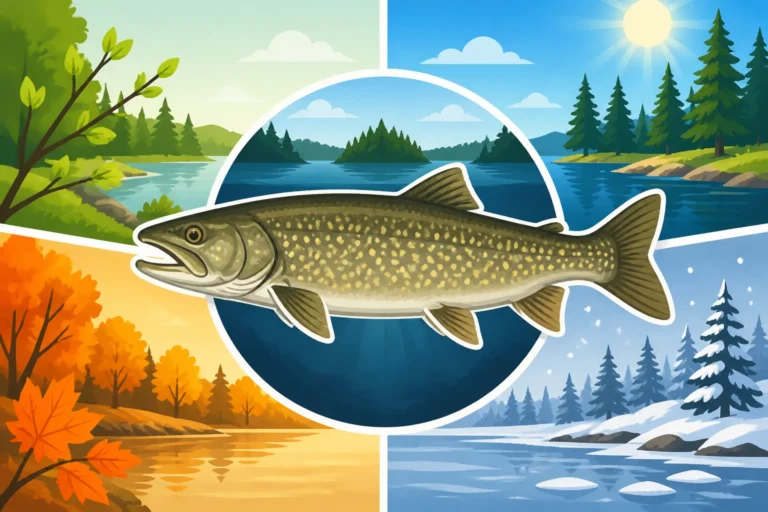
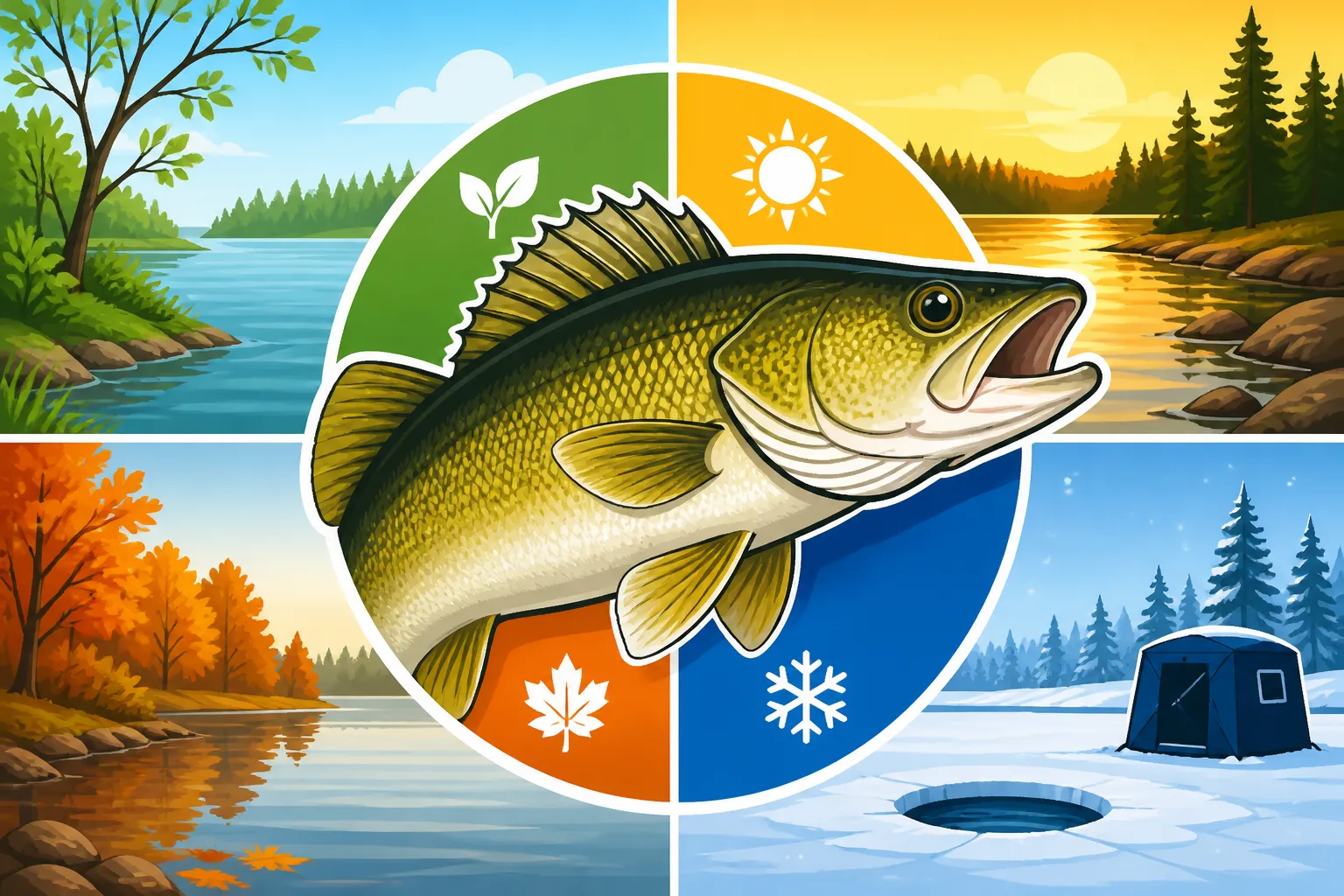
Minnesota is known as the Land of 10,000 Lakes, and within those lakes, walleye behavior is a constantly evolving puzzle driven by the changing seasons. It's not enough to know what to use; you truly need to understand when and where to use it, all predicated on the time of year. From the first trickle of ice-out in spring to the thickest ice in winter, walleye patterns shift dramatically, often moving from shallow spawning grounds to deep, offshore structures, and back again. Ignoring these shifts is a sure-fire way to spend more time casting and less time reeling.
Seasonal Drivers of Walleye Behavior
Several key environmental factors dictate where walleye are and what they’re willing to bite on. It's a complex interplay, but understanding the primary drivers can help you anticipate their movements.
Water temperature is arguably the biggest influence. Walleye are cold-blooded, so their metabolism and activity levels are directly tied to the water around them. In colder water, they're sluggish; in warmer water, they're more active, requiring more food. This dictates their preferred depth and often their aggressive feeding periods. Closely linked to temperature is the availability of forage. Walleye are predators, and they'll follow their food source. If schools of baitfish move, you can bet the walleye aren't far behind. This often leads them from shallow bays in spring to open water or deep breaks in summer, and then concentrating again in fall as baitfish seek refuge. Finally, light conditions play a massive role. Walleye have large, sensitive eyes, adapted for low-light conditions. This is why they often become most active at dawn, dusk, and even throughout the night, particularly in clear water lakes where sunlight penetrates deeply. On cloudy days or in stained water, they might feed more actively during daylight hours.
Reading the Lake: How to Adapt to Changing Conditions
Successfully fishing for walleye year-round isn't about rigid adherence to one spot or one technique; it's about flexibility and observation. Every lake is unique, and even within the same lake, conditions can vary daily. Pay close attention to surface water temperatures, observe baitfish activity, and note how changes in weather patterns (like a cold front or a prolonged warm spell) impact the bite. Using a good fish finder is invaluable for identifying structure and locating fish and bait schools. Modern units, easily found on platforms like Amazon, offer advanced sonar capabilities that can really help you "read" the underwater landscape. Don't be afraid to experiment with different depths, baits, and presentation speeds. Sometimes, a subtle change in your retrieve or a different colored jig can make all the difference, proving that adapting your strategy is paramount to cracking the code.
Spring Walleye: From Ice-Out to the Post-Spawn Rush
Spring in Minnesota is a time of immense excitement for walleye anglers. As the ice melts and the water warms, walleye begin their annual migration, driven by the urge to spawn. This period offers some of the most consistent and aggressive bites of the year, but timing is everything. Missing the window by even a week can mean the difference between a limit and a goose egg. Understanding the nuances of their pre-spawn, spawn, and post-spawn movements is key to capitalizing on this crucial season. You can learn more about specific dates by checking out our guide on Minnesota Fishing Seasons & Opener Dates (2026).
Pre-Spawn Prowling: Shallow Water Opportunities
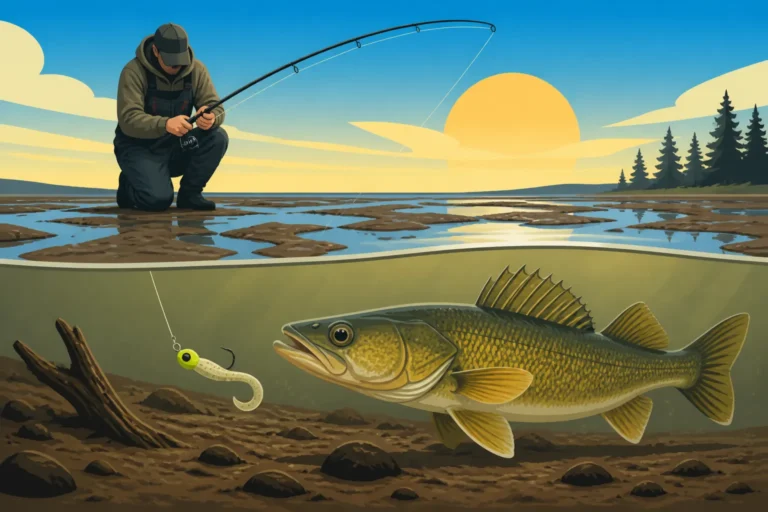
Once the ice finally recedes, often in late March to early May depending on the region, walleye begin to stage for their spawn. The water is still cold, typically in the low to mid-40s Fahrenheit. During this time, male walleye, usually smaller, will move into shallower, protected bays, current areas, or river mouths that warm up faster. They're looking for areas with hard bottoms – gravel, rock, or sand – where they can feed and wait for the females. Fishing these shallow, warmer zones with jigs tipped with live minnows (shiner minnows are a perennial favorite) or slow-rolling crankbaits can be incredibly effective. The walleye are actively feeding to bulk up for the energy-intensive spawn, making them relatively aggressive. Think about areas with incoming water, like creek channels or river inlets, as these often provide slightly warmer, oxygenated water and concentrated forage.
The Spawning Period: Respect and Strategy
Walleye typically spawn when water temperatures reach the upper 40s to low 50s Fahrenheit, usually around mid-April to early May. They seek out shallow, wind-swept rocky shorelines, reefs, or river rapids to deposit their eggs. While it's tempting to target them directly on the spawning beds, it's generally frowned upon and can be detrimental to the population, especially for the larger, egg-laden females. Many anglers choose to avoid fishing during the peak spawn to allow the fish to reproduce undisturbed. However, knowing the timing and locations of the spawn helps you understand where they’ll be before and after. Often, the spawn is a relatively short, intense period, lasting only a few days to a week in any given area. After spawning, female walleye will often retreat to slightly deeper water to recover, while males might linger a bit longer, still protecting the area and snapping at anything that comes close.
Post-Spawn Power Feed: Recovery and Aggression
This is where the magic often happens for many anglers. After the arduous spawning process, both male and female walleye are hungry and looking to replenish their energy reserves. Water temperatures are typically in the mid-50s to low 60s. They'll start to spread out from the immediate spawning grounds, moving to shallow breaks, emerging weed lines, and main lake points where baitfish are congregating. This post-spawn period, often coinciding with the Minnesota walleye opener, can lead to some truly epic bites. Target them with jigs and minnows, slip bobbers with leeches, or by trolling shallow-running crankbaits like a Rapala Shad Rap or Berkley Flicker Shad along breaking structures. The key is to find those transition zones where they can easily access both shallow feeding areas and slightly deeper recovery spots. This is also a great time to experiment with soft plastics on a jig head, mimicking baitfish. For more on this, check out our guide on Early Season Walleye After the Opener.
Summer Walleye: Deeper Waters and Structural Precision
As spring transitions into the warmth of summer, Minnesota walleye undergo a significant shift. The once-hot shallow bites cool off as water temperatures rise, pushing the fish out to deeper, more stable environments. This is when anglers need to transition from the spring-style shallow-water tactics to more precise, structure-oriented approaches. It's a fantastic time to chase those elusive giants, but it demands a different kind of finesse and understanding of their deep-water habits.
Early Summer Transitions: Weeds and Breaks
In early summer, as water temperatures climb into the mid-60s, lush green weed lines begin to flourish. These healthy weeds become prime habitat for baitfish, which in turn attracts walleye. Look for distinct weed edges, inside turns, and pockets within the weed beds, especially those adjacent to a sharp breakline dropping into deeper water. Walleye will often cruise these edges, ambushing unsuspecting bait. Another key area is main lake points and saddles between islands, which act as natural highways for fish moving between feeding and resting areas. Try working these areas with slip bobbers and leeches or nightcrawlers, casting jigs with soft plastics, or slowly trolling crankbaits parallel to the weed lines. A good sonar unit will show you the exact depth of the weed edge and any lurking fish.
Mid-Summer Deep Water Dwellers: Humps, Reefs, and Mud Flats
When the dog days of summer hit, with water temperatures consistently in the 70s, many walleye move to classic deep-water structure. This includes offshore humps, rock reefs, main lake points that extend into deep water, and expansive mud flats. These areas often hold cooler, more oxygenated water and serve as congregation points for schools of ciscoes, tullibees, and other baitfish. Identifying the thermocline (the layer where water temperature changes rapidly) is critical, as walleye will often suspend just above or within it, chasing bait. For this kind of fishing, methods like Lindy Rigging with live bait, using bottom bouncers and crawler harnesses, or vertical jigging with spoons and Rippin' Raps are highly effective. Focus on the edges of these structures, where hard bottom meets soft, or where there are subtle changes in contour. Our guide on Summer Walleye Patterns: Deep Structure offers even more insights into these techniques.
Nighttime Nymphs and Low-Light Legends
Even in mid-summer, walleye retain their natural preference for low-light conditions. While they might be deep during the day, as evening approaches and the sun dips below the horizon, many walleye will push shallow to feed under the cover of darkness. This can create incredible opportunities, especially in lakes with clear water where they are particularly light-sensitive during the day. Target shallow flats, shorelines, and the tops of rock reefs that are adjacent to deep water. Trolling shallow-running stickbaits like a Rapala Original Floater or casting shallow jigs with plastic tails can be deadly. Often, the biggest walleye are caught after dark. This is also a popular time to use a slip bobber and a lively leech near structure. Just remember to bring your headlamp, easily found on Amazon, and be mindful of your surroundings! To delve deeper into this, check out our piece on Night Fishing for Walleye in Minnesota.
Fall Walleye: The Pre-Winter Feast and Cooling Waters
Fall in Minnesota is a magical time to be on the water. The leaves are turning, the air is crisp, and the walleye are on a mission: to feed aggressively and pack on reserves for the long winter ahead. This period, from September through November, offers some of the best trophy walleye opportunities of the year, but it requires understanding how cooling water temperatures influence their movements and feeding behaviors.
Autumn Turnover and Dispersal
As the air temperatures drop in early fall, surface water cools, eventually matching the temperature of the deeper water. This causes the lake to "turn over," mixing the entire water column. This phenomenon can temporarily scatter baitfish and walleye, making them a bit harder to pattern. Water clarity might change, and dissolved oxygen levels can become uniform throughout the lake. During this turnover period, which typically happens in September, walleye might be found in a wider range of depths. Don't be afraid to experiment with different depths and areas, as the fish can be anywhere from shallow weed edges to deep open water. Focus on major points, large bays, and areas that were productive during summer, as fish will eventually return to familiar forage grounds once the turnover settles.
Aggressive Fall Feeding: Bulking Up for Winter
Once the turnover completes and water temperatures settle into the 50s and then 40s, walleye enter a sustained period of aggressive feeding. They know winter is coming and their metabolism, while slowing down, still requires significant energy intake. This is when larger baits often shine. Walleye will move shallower during low-light periods and deeper during bright sunlight, but their overall trend is to follow schools of baitfish, which are also grouping up in anticipation of winter. Trolling large crankbaits over main lake basins, using jigging spoons on deep humps, or focusing on large rock piles with jig-and-minnow presentations can be extremely effective. Target deep breaklines where baitfish are abundant, and don't hesitate to use bigger minnows like shiners or even smaller suckers. This pre-winter gorging can lead to some incredible catches. Learn more about this period in our detailed article on Fall Walleye Fishing: Turnover & Cold Water.
Late Fall Chill: Slow and Steady Wins the Race
As November approaches and water temperatures dip into the low 40s and even high 30s, the walleye's metabolism slows significantly. They become less active, preferring to conserve energy. This doesn't mean they stop feeding; it just means they become pickier and require a much slower, more subtle presentation. They'll often concentrate in deep, stable areas like deep main lake basins, steep breaklines, and river channels. Vertical jigging with a small, live minnow or a slow-moving blade bait can be the ticket. Patience is paramount, and often the bite will be extremely subtle – just a slight "mush" or added weight on your line. Dress warmly, bring a portable heater if you have one, and prepare for a grind, but the rewards can be substantial, often yielding some of the biggest, fattest walleye of the year.
Winter Walleye: Ice Fishing the Frozen Landscape
When Minnesota’s lakes finally lock up with a solid sheet of ice, the pursuit of walleye doesn’t stop – it merely changes form. Ice fishing for walleye is a cherished tradition, but like open water, success hinges on understanding their patterns beneath the frozen surface. The cold dictates much of their behavior, leading to distinct strategies for early, mid, and late ice. You can get started with our Ice Fishing in Minnesota: Complete Beginner-to-Pro Guide.
Early Ice Hot Spots: Finding the First Bite
The first few weeks of safe ice, usually from late November into December, are often a prime time for walleye. The fish haven't yet settled into their mid-winter patterns and can still be found in areas they frequented in late fall. Look for green weed lines in 10-20 feet of water, distinct structural breaks, and the tips of main lake points. These areas still hold abundant oxygen and baitfish. Walleye are often aggressive, making this a great time for active jigging with spoons like Northland Forage Minnow spoons or jigging raps. Tip your lures with a minnow head or a whole minnow for added attraction. Remember that early ice can be unpredictable, so always prioritize safety and check ice thickness meticulously. Gear up with reliable equipment, like ice augers and flashers, which are readily available on Amazon and will make a huge difference in your early ice success.
Mid-Winter Patience: Deep Basins and Finesse
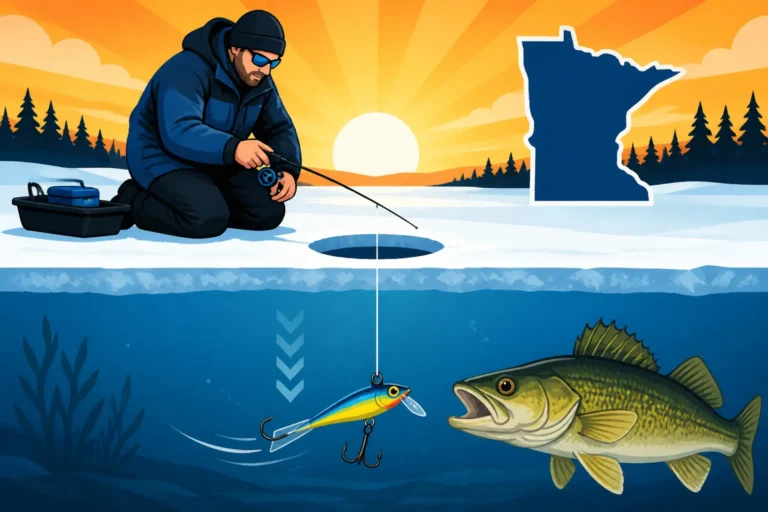
As winter progresses and the ice thickens (January and February), walleye often move to deeper, more stable environments. They might suspend in open water basins, relate to deep offshore humps, or patrol expansive mud flats. Their metabolism slows considerably, and the bite can become much more subtle. This is a time for finesse. Focus on presentations like deadsticking with a lively minnow suspended just off the bottom on one line, while subtly jigging a small tungsten jig or a slender spoon on your second line. Electronics like a Vexilar or MarCum flasher become indispensable, allowing you to see your lure and any approaching fish, and fine-tune your presentation. Often, simply holding your lure still or giving it the tiniest quiver is enough to trigger a bite. Be prepared for long stretches between fish, but these deep-water walleye are often larger, trophy-sized specimens. Our guide on Ice Fishing for Walleye: Tactics & Setups dives deeper into specific techniques for this challenging period.
Late Ice Surge: Pre-Spawn Preparations Underfoot
Toward late winter, as March approaches and the ice begins to show signs of deterioration, walleye activity often surges once more. This "late ice bite" is fueled by the warming water beneath the ice and the impending spring spawn. Walleye start moving shallower, often returning to the same bays, points, and current areas they’ll use in early spring. They become more aggressive, similar to the early ice period, as they begin to feed heavily for the spawn. Medium-sized jigging spoons, minnow-imitating crankbaits, and even larger deadstick minnows can be very effective. This period can offer incredible fishing, but just like early ice, safety is paramount. Always be aware of changing ice conditions and know when to call it a day. The rewards of late-ice walleye can be some of the most memorable catches of the year before the cycle restarts.
Seasonal Walleye Patterns at a Glance
To give you a quick reference point for planning your Minnesota walleye adventures, here’s a breakdown of the typical patterns and tactics:
| Season | Water Temperature | Typical Depth | Key Locations | Common Presentations | Notes |
|---|---|---|---|---|---|
| Spring | 40-55°F | 5-20 feet | Spawning areas, river mouths, shallow bays | Jigging w/ minnows, slip bobbers, shallow cranks | Pre-spawn staging, post-spawn aggression. |
| Early Summer | 55-65°F | 10-25 feet | Weed lines, breaklines, main lake points | Slip bobbers, jigs w/ plastics, trolling cranks | Transition phase, fish spreading out. |
| Mid-Summer | 65-75°F+ | 20-40+ feet (or suspended) | Offshore humps, mud flats, deep reefs | Lindy Rigs, bottom bouncers, vertical jigging, night trolling | Deep water and low-light focused. |
| Fall | 55-40°F | 15-35 feet (variable) | Deep breaks, rocky points, main lake basins | Large cranks, jigging spoons, jig-minnow | Pre-winter feeding frenzy, turnover period. |
| Early Ice | 35-39°F | 10-25 feet | Green weeds, structural breaks | Jigging spoons, jigging raps w/ minnow heads | Aggressive bite, fish still active. |
| Mid-Winter | 32-35°F | 25-45+ feet (or suspended) | Deep basins, offshore humps, mud flats | Deadsticking, small tungsten jigs, finesse spoons | Subtle bites, patience, electronics are key. |
| Late Ice | 34-38°F | 10-25 feet | Shallow breaks, spawning areas, current areas | Jigging spoons, crankbaits, deadsticking | Pre-spawn surge, often good numbers. |
Disclaimer
Fishing regulations, seasons, and limits can change from year to year in Minnesota. Always consult the most current Minnesota Department of Natural Resources (DNR) fishing regulations handbook before heading out on the water. This guide provides general information and recommendations, but it is your responsibility to know and follow all applicable laws. Be safe and enjoy your time fishing!