Best Seasonal Pattern for Largemouth Bass in Minnesota
Navigating the ever-changing moods of largemouth bass in Minnesota can feel like a riddle, especially when the seasons shift. What worked last week might utterly fail this week, leaving anglers scratching their heads and sometimes, sadly, empty-handed. But fear not, fellow bass enthusiasts! Understanding the seasonal patterns of largemouth bass is the key to consistent success, transforming frustration into fantastic fishing days. This guide will walk you through their predictable movements and behaviors across Minnesota’s diverse waters, helping you crack the code for every time of year.
Spring: The Awakening and the Spawning Frenzy
Ah, spring in Minnesota! The ice is finally gone, the trees are budding, and our beloved largemouth bass are stirring from their winter slumber. This season is a dynamic period, transitioning from frigid post-ice conditions to the vibrant, energy-filled spawn, and then into the recovery phase. It's a time of major biological shifts, and understanding these distinct phases is crucial for targeting these green giants.
Pre-Spawn Buildup and Feeding
As soon as the ice leaves the lakes, usually in April or early May, the water temperatures are still quite chilly, often in the low 40s to low 50s. Bass are lethargic but starting to think about food after a long, cold winter with minimal activity. They'll often stage in slightly deeper water adjacent to prime spawning areas, like protected bays, shallow flats, and emergent weed lines, soaking up any available sunlight. Think about those northernmost sun-warmed bays on lakes like Minnetonka or even smaller, shallower bodies of water that warm up faster. They aren't actively running into the shallowest water yet, but they're positioned for the move.
During this pre-spawn period, bass are looking for easy meals to pack on calories before the rigors of spawning. Slow-moving baits are your best friend. Jerkbaits that suspend and can be twitched erratically with long pauses are incredibly effective. A crankbait that deflects off early green weeds or rocks can also trigger a reaction strike. Plastics, especially creature baits or jig-and-trailer combos, fished slowly along the bottom or dragged through sparse cover, can entice even the most stubborn bass. You'll often find these fish tucked into the remaining pockets of deep weeds or on the outside edges of shallow flats that lead into spawning grounds. They're still somewhat grouped up, so if you catch one, there's a good chance more are nearby. Looking for areas protected from strong winds and with darker bottoms will often reveal these early season hotspots. Many anglers also find success by targeting rocky points or transitional areas where hard bottom meets soft.
The Largemouth Bass Spawn
When water temperatures consistently hit the mid-to-high 50s, typically late May into June, the largemouth bass spawn kicks into high gear. This is when males move into the shallowest, warmest water to fan out nests (beds) and guard the eggs. They prefer hard bottom areas like gravel, sand, or even hardened muck, often near some form of cover like docks, submerged timber, or emergent vegetation. It's a fascinating time to observe, but also a sensitive one for the fishery. Minnesota has adopted a Minnesota Bass Season (New 2026 Catch-and-Release) for many bass lakes, protecting these fish during their most vulnerable period. This ensures strong populations for years to come.
During the actual spawn, bass can be visually spotted on their beds. While many anglers enjoy "sight fishing" for these fish, remember that a male bass caught off its bed leaves the eggs vulnerable to predators like sunfish or even other bass. For purely recreational anglers, it's often more sporting to target non-spawning bass or to practice immediate catch-and-release with minimal disturbance. If you do target them, subtle presentations like weightless soft plastics, small jigs, or even wacky-rigged Senkos pitched right onto the bed can provoke a strike from a protective male. They're not necessarily feeding out of hunger, but out of an instinct to defend their territory. This is where precision casting and patience truly pay off, but always be mindful of the stress you might be putting on the fish and the future of the fishery. After all, we all want to ensure there are plenty of bass for future generations to enjoy.
Post-Spawn Recovery
Right after the spawn, usually in late June, you’ll find bass in a post-spawn recovery mode. Both males and females are exhausted. The females, having expended massive amounts of energy laying eggs, will often retreat to nearby deeper cover – sometimes the first available structure like a weed line, lay-down, or dock post – to recuperate. They are generally less aggressive during this time and might be a bit finicky. Males will typically stay on the beds for a short period after the fry hatch, guarding the young, before also moving off to recover.
During this period, targeting bass can be challenging. They’re still in relatively shallow water, but they’re not as eager to chase fast-moving baits. Finesse techniques become incredibly effective. Think about pitching Texas-rigged worms or small creature baits into dense cover, slowly dragging a jig-and-pig combo, or working a shaky head worm along transitions. Sometimes, a slow-rolled spinnerbait or a ChatterBait can draw a reaction strike from a recovering bass that’s still feeling a bit protective. Look for them in thicker weeds, under docks, or around submerged wood, often in water 5-10 feet deep, close to where they spawned but with more overhead cover. The key is to present your lure subtly and precisely, giving the bass plenty of time to decide to bite without expending too much energy.
Summer: The Heat is On and Bass Go Deep
Minnesota summers are beautiful, but they bring warmer water temperatures that drastically change largemouth bass behavior. As the mercury rises, bass often move from the shallows to deeper, cooler water, seeking out thermal refuges and abundant forage. This season offers some of the most consistent fishing, provided you adjust your tactics to match their movements.
Early Summer Transitions and Active Bites
As spring rolls into early summer, typically July, the post-spawn funk starts to fade, and bass begin to feed more aggressively. Water temperatures are climbing into the 70s, and baitfish populations are exploding. This is a prime time to target bass that are transitioning from their shallow spawning grounds to their deeper summer haunts. They’ll often stage on the first available cover along these migration routes, such as prominent weed lines, points extending into deeper water, or isolated clumps of vegetation. Lakes like Gull Lake or Lake Vermilion offer excellent examples of these kinds of transitional structures.
Topwater lures truly shine during early summer, especially during low-light conditions like dawn, dusk, or overcast days. Poppers, walk-the-dog baits like a Heddon Super Spook, and hollow-body frogs fished over emergent lily pads or thick mats can provoke explosive strikes. Spinnerbaits and chatterbaits are also highly effective for covering water and targeting the edges of weed beds. When the sun is high, Texas-rigged or Carolina-rigged plastics worked along the deeper edges of weed lines or across subtle humps can be deadly. The bass are active, but they’re starting to move towards more structured, often deeper, cover as the water continues to warm. Don't be afraid to experiment with retrieves, as some days they want it fast, and other days a more methodical approach is best.
Mid-Summer Patterns and Deep Cover
By mid-summer, usually August, Minnesota lakes are at their warmest. Largemouth bass will generally retreat from the shallowest, brightest areas to seek comfort in deeper, cooler water or dense overhead cover. This is when you'll find them hunkered down in the thickest weed mats, under expansive lily pad fields, in the deepest brush piles, or on primary lake points that drop into significant depths. Understanding How to Catch Bass in Weedy Lakes is paramount during this time. The thermocline, a distinct layer of water with a rapid temperature change, often holds cooler, oxygenated water, and bass will frequently suspend just above or within this zone if suitable cover is present.
Fishing during mid-day can be challenging due to the bright sun and heat. However, if you can get into the heavy cover, you might find some of the biggest bass of the year. Flipping and pitching heavy jigs or creature baits into dense weeds, punching through mats with tungsten weights, or working frog lures over the top of matted vegetation are classic mid-summer techniques. Deeper presentations also come into play: large crankbaits that dive to 10-20 feet, or slow-rolled football jigs on main lake points. For those who enjoy a bit of a nocturnal adventure, night fishing for walleye in Minnesota is popular, and night fishing for bass can also be incredibly productive during this time, as they move shallower under the cover of darkness. Make sure your fishing line is strong enough to pull these fish out of heavy cover; braided line is often preferred for punching and frogging.
Late Summer Forage and Fall Transition Prep
As summer winds down in late August and early September, largemouth bass start to feel the subtle shift in seasons. While water temperatures are still warm, the days are getting shorter, and this triggers an instinct to feed heavily in preparation for the upcoming fall and winter. Bass will continue to utilize deeper cover and offshore structure, but they may also make more frequent forays into shallower areas, especially during low-light periods or on cloudy days, to gorge on abundant baitfish. This can be one of the best times to experience some incredible action.
During late summer, bass often gang up on schools of baitfish, making a good fish finder invaluable for locating them. Spinnerbaits, swimbaits, and lipless crankbaits are excellent for covering water and mimicking baitfish. Topwater lures, particularly walking baits or large poppers, can still produce thrilling strikes, especially around dawn and dusk. Don't overlook Carolina rigs or deep-diving crankbaits around humps, ledges, and deep weed lines. The bass are aggressive and hungry, making it a fantastic time to connect with some real Minnesota giants. This preparatory feeding means they'll often chase down baits with gusto, making for an exciting fishing experience. Many anglers stock up on their favorite lures and terminal tackle from retailers like Amazon during this period, ensuring they have plenty of options for these hungry bass.
Fall: The Feeding Spree Before Winter
Fall in Minnesota is a bittersweet time for bass anglers. The vibrant colors of the landscape are breathtaking, and the fishing can be phenomenal, but it’s also a clear signal that winter is just around the corner. Largemouth bass undergo significant changes as water temperatures drop, leading to another intense feeding period.
Lake Turnover and Initial Cool Down
Early fall, typically late September through mid-October, brings the phenomenon of lake turnover. As surface water cools, it becomes denser and sinks, mixing with the deeper, warmer water. This process can temporarily disorient fish, as the entire water column becomes uniform in temperature and oxygen levels. For a few days to a week, fishing can be tough as bass disperse and adapt to the new conditions. However, once turnover is complete, and the lake stabilizes, the bass will quickly resume their feeding patterns, often congregating in specific areas.
After turnover, as water temperatures drop into the 60s, bass will actively hunt for large meals to build up fat reserves. They will often concentrate on main lake points, rocky outcroppings, and deeper weed edges. Crankbaits, especially those with tight wobbles that imitate cold-water baitfish, become very effective. Jerkbaits are also deadly, as they can be paused for extended periods, enticing hesitant fish. Don't be afraid to throw larger profile baits during this time; bass are looking to capitalize on every calorie. This is an excellent time to try out different retrieval speeds until you find what the fish are looking for.
Cold Water Foraging and Winter Preparation
As fall progresses into late October and November, and water temperatures dip into the 50s and even 40s, largemouth bass activity slows down considerably, but they are still catchable. They will typically move to even deeper, more stable structures, such as deep rocky points, submerged timber, or the deepest remaining green weed beds. Their metabolism slows, so they won't chase baits very far, but they will still strike if a meal is presented directly in front of them.
During this cold-water period, finesse tactics truly shine. Jig-and-pig combos, shaky head worms, and dropshot rigs are excellent choices. Slow-rolling spinnerbaits or blade baits can also tempt a strike from a lethargic bass. The key is to fish slowly and thoroughly, making multiple casts to the same piece of structure. Bass will often stack up in concentrated areas during this time, so finding one often means finding several. Many serious anglers dedicate time in late fall to target these cold-water bass, knowing that a patient approach can yield some of the biggest fish of the year. Finding the best fishing gear for beginners in Minnesota (By Budget) is important for any angler looking to explore these cold-water techniques effectively, and you can find a wide range of options on platforms like Amazon.
Winter: Ice Fishing Opportunities
While many anglers associate winter in Minnesota with targeting walleye or panfish through the ice, largemouth bass can also be caught, albeit with specific tactics.
Ice Fishing for Largemouth
Once the lakes are locked under a thick sheet of ice, typically December through March, largemouth bass enter a state of reduced activity. They tend to congregate in deeper pockets of remaining green weeds, around submerged timber, or near distinct bottom structure like humps and rock piles that offer both cover and a consistent food source. While they won't be as aggressive as their open-water counterparts, they will still feed opportunistically.
Ice fishing for largemouth bass requires a patient and often subtle approach. Small jigging spoons, particularly those tipped with a minnow head or a small plastic trailer, can be effective. Jigging Rapalas or similar baits fished with a lift-and-drop technique can also entice strikes. A deadstick rod with a live minnow suspended just above the weeds or structure is often a killer presentation. Look for areas with slightly warmer water or persistent oxygen, such as weed lines near deeper breaks or even around aerators if present (though safety around aerators is paramount). While not as popular as other species, catching a chunky largemouth through the ice can be a rewarding experience, especially when you figure out their specific winter haunts. Make sure you understand Minnesota Ice Fishing & Shelter Rules before heading out on the hard water.
Seasonal Pattern Summary for Largemouth Bass
To help visualize these seasonal shifts, here’s a quick summary table:
| Season | Typical Water Temperature | Preferred Depth/Location | Key Forage/Behavior | Recommended Lures/Techniques |
|---|---|---|---|---|
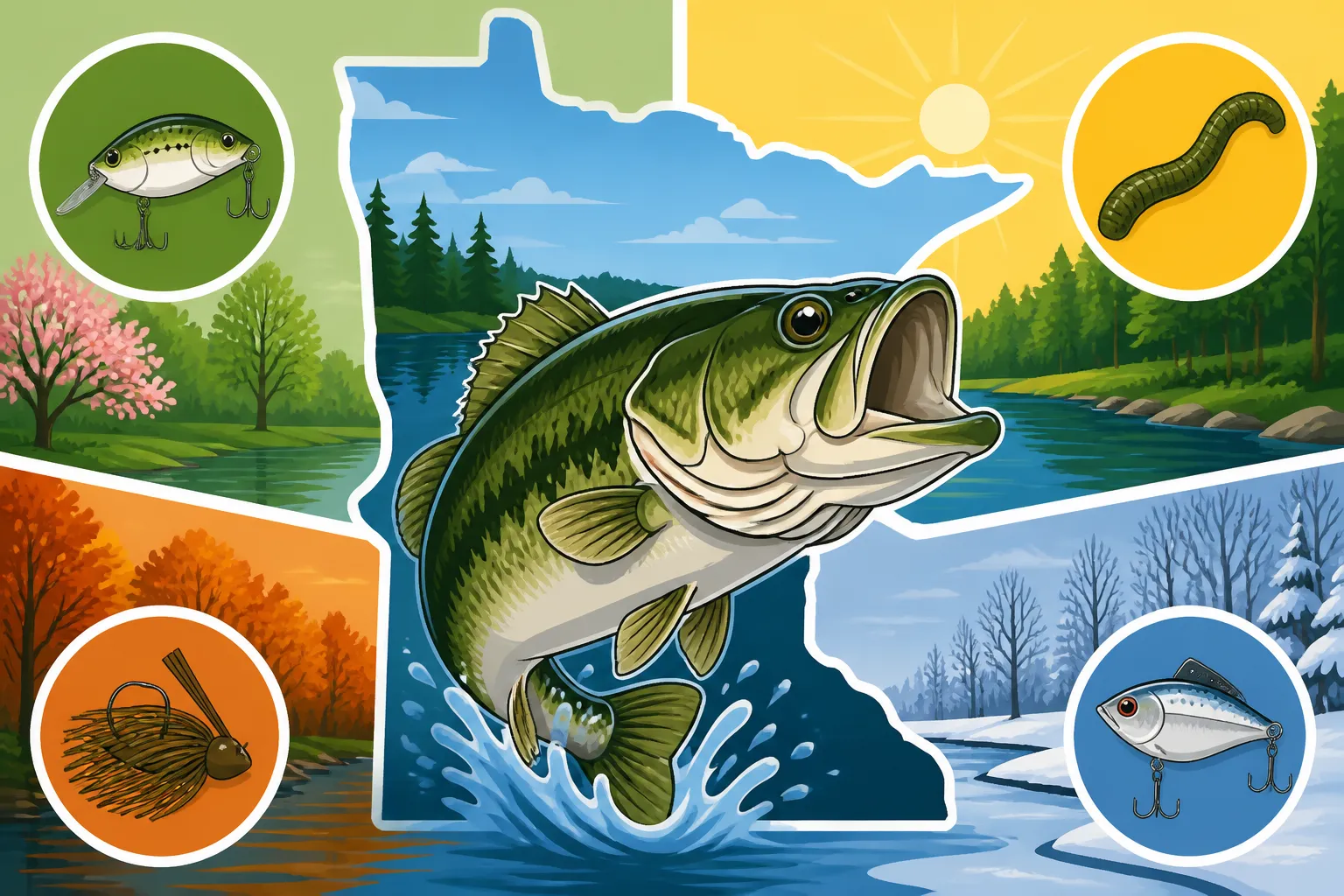
| Spring | 40s-60s | Shallower bays, transitional depths, spawning beds | Pre-spawn staging, spawning, post-spawn recovery | Jerkbaits, slow jigs, soft plastics, topwater (late) |
| Summer | 70s-80s | Deep weed lines, heavy cover, offshore structure | Active feeding, seeking cool water/shade, schooling | Topwater, crankbaits, flipping jigs, punching plastics |
| Fall | 60s-40s | Main lake points, deep rocks, remaining green weeds | Post-turnover feeding, bulking up for winter | Crankbaits, jerkbaits, jigs, spinnerbaits |
| Winter | 30s-40s | Deep weed pockets, submerged timber | Lethargic, opportunistic feeding | Jigging spoons, minnow baits, deadsticks |
Understanding the nuances of these seasonal patterns, and remembering that every lake is a little different, will significantly improve your success rate for catching largemouth bass in Minnesota. These "greenbacks" are incredible fighters, and experiencing their seasonal shifts is part of the joy of fishing in our beautiful state. Learning to adjust your Walleye Fishing Techniques: Complete Minnesota Guide to incorporate bass techniques, or vice versa, will make you a more versatile and successful angler. Before your next trip, consider browsing through a selection of Best Bass Lures for Minnesota Lakes to ensure you're equipped for any seasonal challenge.
Disclaimer
Fishing regulations can change frequently. Always consult the latest Minnesota Department of Natural Resources (DNR) fishing regulations booklet or website before heading out on the water to ensure compliance with all current rules, seasons, and limits. This guide is for informational purposes only and should not replace official DNR publications.