Leech Lake Walleye Fishing Tips
Leech Lake is truly a jewel in Minnesota's crown for walleye anglers, but let's be real, its sheer size and diverse structure can make even seasoned veterans scratch their heads. It’s not always about finding the fish, but figuring out which fish in which part of the lake are willing to bite on any given day. This guide isn't just a list of spots; it's a deep dive into the 'why' and 'how' of consistently catching walleye on this incredible body of water, offering practical tips to turn those head-scratching days into triumphant ones.
Understanding Leech Lake's Walleye Habitat
Leech Lake isn't just one big bowl of water; it's a complex ecosystem with incredible diversity that walleye utilize throughout the year. Knowing what makes a good walleye spot on Leech isn't about guesswork, it's about understanding the specific types of structure and forage that hold fish. This knowledge is your first and most crucial step toward consistent success.
Key Structures and Depths
Leech Lake is famous for its massive main-lake humps and vast weed flats, but it also boasts subtle points, rocky reefs, and sharp breaks that are walleye magnets. The depth you target often depends on the season and time of day, but understanding the types of structure is paramount.
In the spring, immediately after the ice goes out and leading up to the walleye opener, fish are often found in shallower, warming bays like Shingobee Bay or Portage Bay, or around river mouths such as the Leech River. As the water warms, they'll transition to main lake points and the shallow sides of humps and reefs. These areas offer both food and cover. During the summer, walleye frequently retreat to deeper humps and reefs in the main lake basin, such as those around Star Island, Submarine Island, or the areas off Bear Island. These structures provide cool water, oxygen, and ambush points for baitfish. Don't overlook the deep edges of prominent weed lines, especially coontail, as these can hold significant numbers of fish during both day and night.
Forage Base and Its Impact
What walleye eat dictates where they live and what presentation they’ll respond to. Leech Lake has a robust and varied forage base, including large populations of yellow perch, tullibee (cisco), various shiner species, and even young-of-the-year panfish. Understanding what the walleye are currently feeding on can completely change your approach.
For instance, if walleye are gorging on tullibee, which are typically found in deeper, cooler waters, you might need to target open water suspended fish with larger crankbaits or even lead core. If perch are the primary forage, a jig and minnow or a crawler harness fished near bottom structure often proves more effective. Shiners, a common baitfish, can be found almost anywhere and lead to a more opportunistic bite, making many standard walleye presentations effective. Keeping an eye on what's coming out of the stomachs of the fish you catch can provide invaluable clues. If you notice a particular hatch or baitfish migration, adapt your lure size, color, and presentation accordingly.
Essential Walleye Techniques for Leech Lake
Leech Lake walleyes respond to a variety of techniques, but some are more consistently effective given the lake's unique characteristics. It’s not just about having the right gear; it’s about knowing when and how to deploy it.
Jigging and Live Bait Rigs
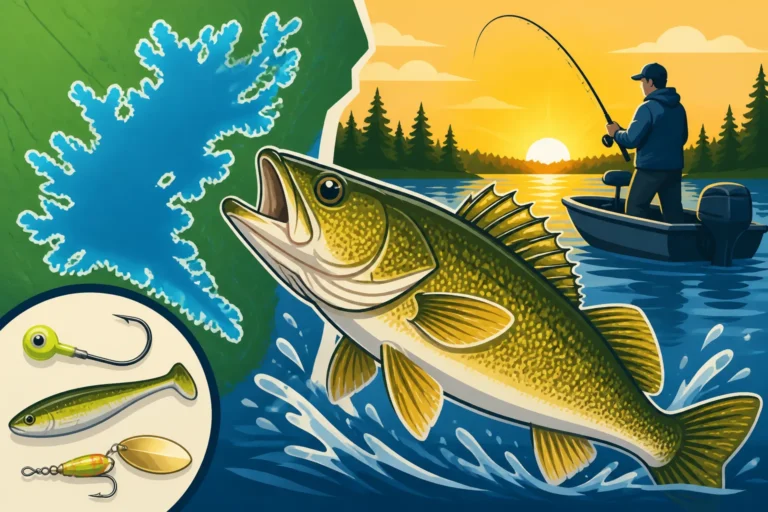
For many Leech Lake anglers, a classic jig and minnow or a well-presented live bait rig is the bread and butter, especially during specific times of the year. When the fish are relating tightly to structure, like the rocks of Otter Tail Point or the breaklines of Portage Bay, vertical jigging is often unbeatable. A 1/8 to 1/4 ounce jig, tipped with a lively shiner, rainbow, or even a fathead minnow, presented directly under the boat, allows for precise control. Experiment with jig color – chartreuse, orange, and white are perennial favorites, but sometimes a more natural brown or green can be the ticket. Learning how to properly jig for walleye is a skill that pays dividends.
Beyond jigging, live bait rigging with a Lindy Rig or a slip bobber is incredibly effective, especially when fish are a bit more scattered or finicky. A Lindy Rig allows you to slow-troll or drift live bait (leeches, minnows, or nightcrawlers) right on the bottom, mimicking natural forage. Adjust your snell length – longer snells (4-6 feet) often work better in clear water or for spookier fish, while shorter ones (2-3 feet) can be more effective when fish are aggressive or in snaggy areas. For suspended fish or those holding over weed tops, a slip bobber rig with a leech or minnow can be deadly, allowing you to present bait at a precise depth without spooking fish with boat traffic. If you're looking for more details on specific bait, check out our guide on Best Live Bait for Walleye (Leeches, Minnows, Crawlers).
Trolling Strategies
When walleye are spread out over large flats or suspended over deeper water, trolling becomes the most efficient way to cover ground and find active fish. Crankbaits are king here. Trolling speed, depth, and lure color are critical variables to dial in. Shallow-running crankbaits can be effective in spring and fall over weed beds or shallow humps, while deep-diving crankbaits or those run on lead core line are essential for targeting fish on main-lake structures in summer. Understanding how to troll crankbaits for walleye, including precise speed and depth, can dramatically increase your catch rates.
Spinner rigs, often called crawler harnesses, are another trolling powerhouse, especially when baited with a juicy nightcrawler. These are fantastic for slower trolling speeds (around 1-1.5 mph) and are excellent choices for fishing vast flats like those found near Walker Bay or over the sand grass areas. Bottom bouncers are typically used to keep spinner rigs or live bait rigs at the desired depth while trolling or drifting, ensuring your bait is right in the walleye's strike zone.
Adapting to Seasonal Patterns
Leech Lake walleye movements are heavily influenced by the seasons. What works in May won't necessarily work in August.
Spring (Walleye Opener to Mid-June): Post-spawn walleye are often hungry and found in shallower, warming water. Focus on bays, river mouths, and the shallow sides of main lake points and humps. Jigging with minnows or casting shallow-running crankbaits are prime tactics. This is often when you'll find the most aggressive bites in relatively shallow water, sometimes as shallow as 4-8 feet. For current dates and regulations, always check the Minnesota Fishing Seasons & Opener Dates (2026).
Summer (Mid-June to August): As water temperatures rise, walleye typically move to deeper, main-lake structures. Look for them on humps, reefs, and along deep weed lines in 15-30 feet of water. Trolling crankbaits or spinner rigs with bottom bouncers, as well as Lindy Rigging with leeches or nightcrawlers, are highly effective. Night fishing for walleye can also be incredibly productive during summer, especially on clear nights around shallow structures.
Fall (September to Ice-Up): Walleye start to transition back to shallower areas as the water cools, often staging around prominent points, weed edges, and even shoreline breaks as they fatten up for winter. Larger baits become more effective, mimicking the larger forage they are targeting. Trolling big crankbaits or jigging with large minnows can be outstanding. This period is notorious for producing some of the biggest walleye of the year. If you're planning a trip and want the most up-to-date information on what's biting, a quick check of the Leech Lake Fishing Report & What's Biting can be a game-changer.
Advanced Tips for Consistent Leech Lake Walleye Success
Catching walleye on Leech Lake isn't just about showing up with a rod and reel. To truly excel, you need to develop an understanding of the subtle nuances of the lake and how to leverage modern tools and local knowledge.
Reading the Lake and Weather
Walleye are incredibly sensitive to environmental conditions. Wind direction and speed, cloud cover, and even barometric pressure can all play a significant role in their activity levels and location. On Leech Lake, wind can be your friend, creating "walleye chop" that breaks up light penetration and allows fish to move shallower to feed. Target the windblown side of reefs and points; the wave action often pushes baitfish into these areas, creating a buffet for walleye.
Conversely, flat, calm, sunny days can push walleye deeper or make them more lethargic. On such days, you might need to slow down your presentation, downsize your bait, or switch to night fishing. Always pay attention to the forecast, not just for comfort, but for predicting fish behavior. A steady barometer often means consistent fishing, while rapidly dropping pressure before a storm can trigger a strong bite.
Electronics and Mapping Mastery
Modern marine electronics are indispensable for navigating Leech Lake and finding fish. A good fish finder with detailed GPS mapping is non-negotiable. Brands like Humminbird, Garmin, and Lowrance offer incredible tools. Detailed lake maps, such as those from Lakemaster or Navionics, are essential for identifying humps, reefs, breaks, and weed lines before you even wet a line. These maps allow you to mark waypoints on subtle structural elements that might be invisible to the naked eye.
Beyond basic sonar, tools like side imaging or forward-facing sonar (e.g., Garmin LiveScope) can reveal fish holding off to the sides of your boat or even out in front, allowing you to present your lure more effectively. Use your electronics not just to find fish, but to understand the contours of the bottom, the type of structure (rock, sand, mud), and the presence of baitfish schools. Don't be afraid to study your map at home and pre-plan your attack for different wind conditions and seasons. Many anglers also find great use in fishing apps like Fishbrain or Navionics on their mobile devices.
Best Times and Locations
While "anytime you can go fishing" is always a good answer, there are certainly peak periods and locations on Leech Lake. Early morning and late evening, especially around sunrise and sunset, are prime feeding windows for walleye. Low light conditions give them a distinct advantage over their prey thanks to their superior vision in dim light. During these times, fish often move shallower to feed.
Specific locations on Leech Lake become legendary for a reason. Walker Bay, with its diverse structure and proximity to the Leech River, is often a go-to. The main lake humps like Star Island, Submarine Island, and the numerous unmarked hard-bottom areas are consistent producers in summer. For some fantastic smallmouth bass, check out Mille Lacs Smallmouth Bass: World-Class Fishery. The vast weed flats, particularly those holding deep cabbage or coontail, can be dynamite, especially if you can find defined edges or pockets within them. Don't forget the narrows and current areas, especially during periods of water movement, as these funnel bait and attract hungry walleye. Sometimes the best way to crack the code on a lake as vast and dynamic as Leech is to learn from the pros. Hiring a local guide, perhaps found through platforms like FishingBooker, can be an invaluable investment, providing insights into current patterns and hot spots. If you're planning a trip and want to ensure you hit the ground running, consider browsing for experienced Leech Lake walleye guides on FishingBooker who can put you on the fish right away. For those interested in how many fish you can keep, understanding the Minnesota Walleye Limit & Size Rules is critical, especially given the state's conservation efforts. Always double-check the current Walleye Season & Limit in Minnesota regulations before you head out.
Here's a quick summary of general seasonal approaches for Leech Lake walleye:
| Season | Primary Locations | Key Techniques | Preferred Baits/Lures | Depth Range (Approx.) |
|---|---|---|---|---|
| Spring | Shallow bays, river mouths, main lake points | Jigging, casting shallow crankbaits | Minnows (shiners, rainbows), small crankbaits | 4-15 feet |
| Summer | Main lake humps, deep reefs, deep weed lines | Lindy Rigging, Trolling crankbaits/crawler harnesses | Leeches, nightcrawlers, deep-diving crankbaits | 15-35 feet |
| Fall | Prominent points, weed edges, deeper breaks | Trolling large crankbaits, jigging | Large minnows, large crankbaits, swimbaits | 10-25 feet |
| Winter | Humps, deep breaks, structure on flats | Jigging spoons, minnows | Minnows, Jigging Raps, spoons | 15-30 feet |
Always remember that these are general guidelines, and walleye are finicky creatures. The real key to Leech Lake success is constant adaptation and observation. If one technique isn't working, don't be afraid to switch it up! Many anglers use FishingBooker to find guides who can provide real-time updates on what's biting and where, offering a fantastic shortcut to success.
Disclaimer
Fishing regulations, seasons, and limits can change. Always consult the official Minnesota Department of Natural Resources (DNR) website or the current fishing regulations handbook before heading out on the water. This article provides general information and tips and should not be used as a substitute for official regulations.