How to Find Fish While Ice Fishing
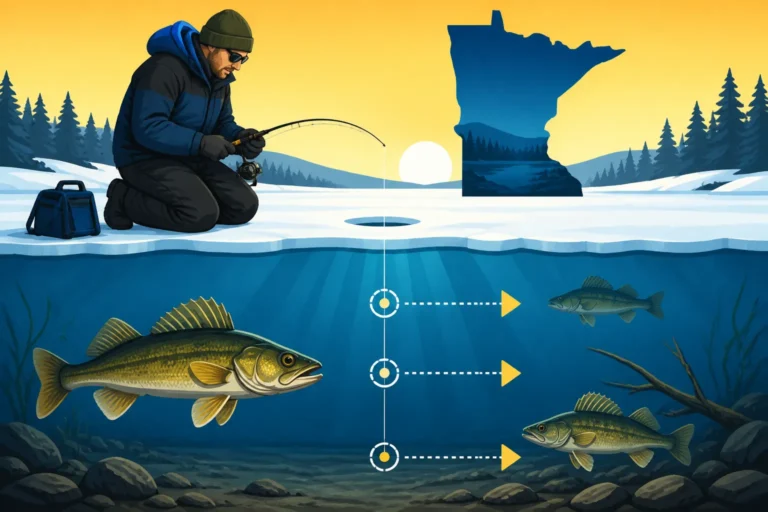
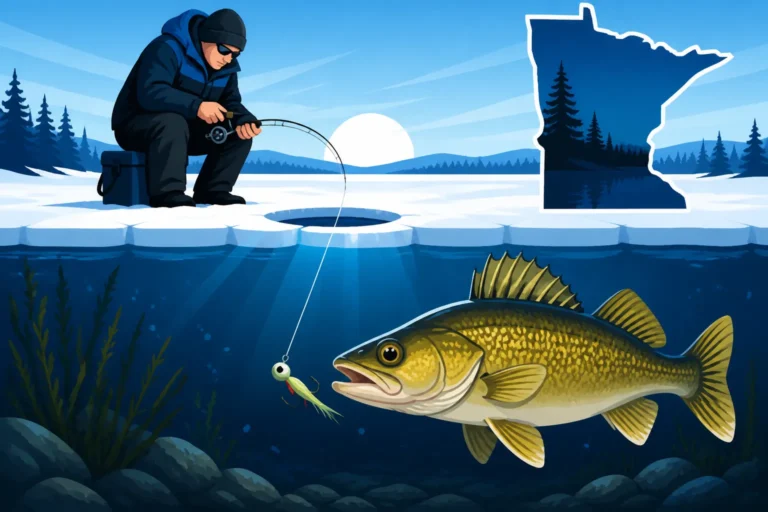
There’s nothing quite as frustrating as hauling all your gear onto a frozen Minnesota lake, drilling a dozen holes, and staring at a blank flasher screen or a still line. We’ve all been there, spending more time drilling and moving than actually catching fish. It feels like you’re playing a desperate game of "pin the tail on the donkey," except the donkey is underwater and constantly moving. But don't fret! Finding fish while ice fishing isn't just about luck; it's a skill you can absolutely learn. This guide is all about equipping you with the knowledge and strategies to confidently locate those elusive fish under the ice, turning those frustrating days into memorable ones.
Understanding Fish Behavior Under the Ice
Before you even think about drilling a single hole, it’s crucial to wrap your head around what fish are doing down there. Winter dramatically changes their environment, and their behavior shifts accordingly. They’re not just swimming aimlessly; they're reacting to key environmental factors that influence where they feed, rest, and survive.
How Water Temperature and Oxygen Influence Fish
Believe it or not, water doesn't freeze solid from top to bottom, and that little layer of ice creates a unique environment. Water is densest at 39 degrees Fahrenheit (4 degrees Celsius), which means this warmer water sinks to the bottom of the lake. Fish, being cold-blooded creatures, are always seeking out their most comfortable temperature zones. For many species like walleye, crappie, and perch, this often means they’ll gravitate towards these deeper, slightly warmer pockets.
Think about it like this: on a bitterly cold day, you want to be inside where it's warm and cozy, right? Fish are doing the same thing. They're trying to conserve energy, and being in water that's too cold for their metabolism makes them sluggish. This also ties into oxygen levels. Under a thick layer of ice, particularly if there’s a lot of snow cover blocking sunlight, aquatic plants can't photosynthesize as much, which means less dissolved oxygen. Fish will naturally move to areas with higher oxygen, which can often be shallower areas with some remaining vegetation or areas with incoming fresh water. Understanding this fundamental principle is key to knowing why fish might be hanging out in one spot versus another.
The Impact of Barometric Pressure and Light Levels
These subtle atmospheric changes play a much bigger role than most anglers realize. Barometric pressure changes can affect a fish's swim bladder, making them feel uncomfortable or more active. A stable, high-pressure system often means fish are more active and willing to feed. On the flip side, a sudden drop in pressure, usually before a storm, can make them lethargic and less inclined to bite. It's not a hard and fast rule, but it’s a good general guideline to keep in mind when planning your outings.
Light levels are another huge factor, especially for sight-feeders like walleye. Their eyes are specially adapted for low-light conditions, which is why they often feed more aggressively during dawn, dusk, and even right through the night. A bright, sunny day with clear ice can drive these fish deeper or into heavier cover to avoid the intense light. Conversely, a cloudy day or a lake with significant snow cover on the ice creates a "darker" environment, which can make walleye and other low-light feeders more active throughout the day. This is why you often hear about fantastic bites during those dreary, overcast days – the fish feel safer and more comfortable to roam.
Seasonal Movements of Key Minnesota Species
Fish don't stay in one spot all winter. Their patterns evolve as the season progresses, which is a crucial piece of the puzzle for any angler.
- Early Ice: When the ice first forms and is safe, fish often hang out in shallower areas, near remaining green weeds, points, and shallow flats. They're still somewhat in their fall patterns, chasing baitfish and soaking up the last bits of warmth. This is often a fantastic time for aggressive bites. You might find crappies suspended just off weed edges, while walleyes cruise breaks leading to flats. This stage is covered in more detail in our guide on Early Season Walleye After the Opener.
- Mid-Winter: As the ice thickens and snow piles up, light penetration decreases, and oxygen levels can drop in certain areas. Fish tend to move to deeper main lake basins, humps, and structural elements. Walleyes might relate to deep contours or mud flats, while crappies might suspend in the deepest parts of a basin. Perch will often follow these deeper walleye schools, picking off anything they can. Pike, being ambush predators, might still patrol deeper weed lines or sit near sharp breaklines.
- Late Ice: As spring approaches and the ice starts to break down, fish begin to move back towards shallower spawning areas. They become more active, feeding aggressively to bulk up for the spawn. Green weeds that are starting to regenerate, shallow points, and inflowing water can be prime locations. This is often another hot bite period, as fish start staging for their spring rituals.
Understanding these broad seasonal strokes will guide your initial hunt, preventing you from wasting precious time targeting deep basins during early ice or shallow weeds in the dead of winter. It's all about matching your effort to where the fish want to be.
Essential Gear for Locating Fish
Gone are the days when ice fishing was purely a game of chance and a spud bar. Modern technology has revolutionized how we find fish, turning a blind hunt into a much more targeted operation. Having the right tools isn't just a luxury; it's a necessity for consistent success.
The Power of Electronics: Flashers and Sonar
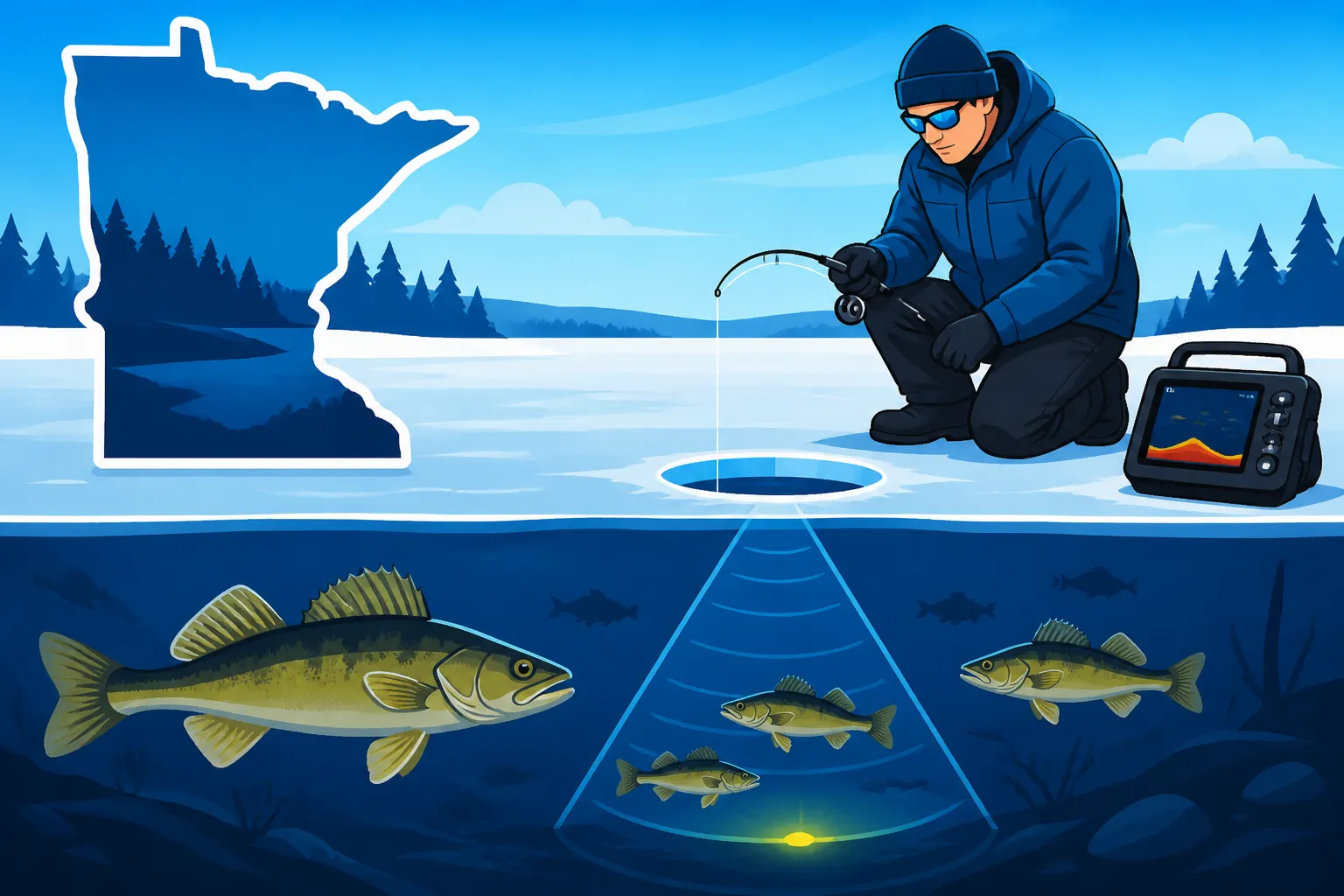
If there's one piece of gear that has single-handedly transformed ice fishing, it's the flasher or ice sonar. These devices send sound waves down into the water, and when those waves hit something—be it the bottom, a fish, or your jig—they bounce back and create a display on your screen. This real-time feedback is invaluable.
- Flashers (like Vexilar and Marcum): These traditional units display returns as colored segments on a circular dial. Green usually indicates weak signals (small fish, bait), orange for medium (your lure), and red for strong (a bigger fish, the bottom). The beauty of a flasher is its instant, real-time display. You can see your jig descending, and then a fish approach it, rise, or turn away. It’s like having X-ray vision into the water column beneath your hole. Many anglers swear by their ability to "read" fish mood based on how they react to the lure on the flasher. Our guide on How to Read a Flasher Vexilar/Humminbird dives deeper into mastering these devices.
- LCD Sonar (like Humminbird Ice Helix or Garmin Striker units): These units provide a more traditional graphical display, showing history as a scrolling image. They can be easier for beginners to interpret, often showing clear fish arches and bottom contours. Some models, especially those from Humminbird and Garmin, offer advanced features like GPS mapping, side imaging, and even forward-facing sonar (like Garmin LiveScope or Humminbird Mega Live), which allows you to see fish around your hole, not just directly beneath it. While more of an investment, these advanced sonars can be game-changers for identifying schooling fish or tracking individuals moving through an area. Finding the right one is key, and you can explore options on Amazon. To decide which is best for you, check out our comparison of Best Ice Fishing Flashers: Vexilar vs Humminbird vs Garmin.
No matter which type you choose, learning to effectively use your electronics is paramount. It allows you to:
- Confirm fish presence.
- Determine fish depth.
- Gauge fish activity (are they chasing, inspecting, or ignoring?).
- Identify bottom transitions and structure that might hold fish.
Underwater Cameras: A Visual Advantage
While flashers and sonar tell you something is there, an underwater camera (like those from Aqua-Vu or MarCum) shows you exactly what's there. This visual confirmation is incredibly powerful.
Imagine seeing a school of crappies suspended at 15 feet, or a big northern pike lurking in a patch of weeds. A camera can help you:
- Identify Species: Are those big marks on your flasher actually walleye, or just a school of tullibee? A camera tells you instantly.
- Gauge Fish Mood: Are they actively swimming, or just lying on the bottom? Are they inspecting your lure with curiosity or just ignoring it? This feedback helps you adjust your presentation.
- Understand Bottom Composition: See if you’re over rocks, mud, sand, or weeds. This helps you confirm what your map or flasher is telling you and fine-tune your location.
- Observe Lure Presentation: Watch how fish react to different jigging motions, bait choices, and colors. This is an unparalleled learning tool.
The downside is that cameras don't work well in murky water or low light, and they can be a bit cumbersome with cables and screens. However, in clear water, especially for panfish, they are an absolute blast and an incredible educational tool. You can find a wide range of these cameras available on Amazon.
GPS and Lake Maps: Your Navigational Tools
Before modern electronics, anglers relied on memory, guesswork, and collective knowledge. Today, GPS units with detailed lake maps are indispensable for any serious ice angler. These tools allow you to pinpoint underwater structure even when it's hidden beneath layers of ice and snow.
- Identifying Structure: Lake maps, like those from Navionics or LakeMaster (often built into units from Humminbird, Lowrance, or Garmin), show contour lines, breaks, humps, points, submerged islands, old roadbeds, and even weed lines. These are all prime fish-holding structures. Understanding these features is vital, especially when you're trying to figure out Where Do Walleye Live in a Lake? (Structure).
- Marking Waypoints: With GPS, you can mark hot spots, brush piles, underwater springs, or even where you last caught a fish. This allows you to return to productive areas year after year, or even within the same day if conditions change.
- Staying Found: On vast lakes like Mille Lacs or Lake of the Woods, whiteouts and featureless expanses can make it easy to get disoriented. GPS provides peace of mind and keeps you on track.
- Pre-Scouting: Before you even leave the warmth of your home, you can study lake maps on your computer or phone (using apps like Navionics Boating or Fishbrain). This pre-scouting helps you identify potential hotspots and formulate a drilling strategy, saving valuable time on the ice. Our guide to Best GPS Lake Maps for Minnesota (Navionics, LakeMaster) offers a deep dive into these essential tools.
Combining detailed maps with your electronics creates a powerful search and discovery system. You use the map to find potential areas, and your flasher/sonar to confirm fish presence and refine your spot.
Strategic Hole Drilling and Scouting Patterns
Once you have your gear ready, the next step is applying a strategic approach to finding fish. Simply drilling random holes is a surefire way to get cold and discouraged. You need a plan!
Grid vs. Fan Patterns: Efficient Search Strategies
When you're out on a new lake or a new area of a familiar lake, you can't just drop your auger anywhere. You need a system to efficiently cover water and find active fish.
- The Grid Pattern: This is a systematic approach best suited for exploring broader, flatter areas like large flats, mud basins, or expansive bays. You essentially divide the area into a grid and drill holes at regular intervals (e.g., every 20-30 yards). This method ensures you cover the ground thoroughly. As you drill each hole, you quickly drop your transducer in and scan for fish or interesting structure. If you mark fish or a subtle break, you can then switch to a fan pattern around that spot. The grid is about broad coverage and eliminating unproductive water. It’s a bit like mowing the lawn – methodical and ensures you don't miss anything.
- The Fan Pattern: Once you've identified a promising piece of structure (like a point, hump, or drop-off) from your map, or you've marked a fish in a general area, the fan pattern becomes your best friend. Start by drilling a hole on the most obvious part of the structure. Then, drill holes radiating out from that central point, much like spokes on a wheel. This allows you to explore different depths and nuances of the structure. For example, if you're fishing a point, you might drill holes at the very tip, along both sides of the break, and on the deeper flat and the shallower flat adjacent to it. This helps you determine exactly where the fish are positioned on that particular piece of cover. This technique is especially useful when trying to pinpoint crappie schools that might be suspended at specific depths along a basin edge, or walleyes hugging a particular contour.
Remember, the goal isn't to fish every hole for hours. It’s to quickly check each hole for activity, and if nothing shows up, move on. Your ice auger, especially an electric one like a StrikeMaster Lithium 40V, is your primary scouting tool. Speaking of tools, our Best Ice Augers for Minnesota: Electric vs Gas guide can help you choose the right one for this critical task.
Interpreting Lake Maps: Spotting Key Structures
Before you even step on the ice, your lake map should be your first point of attack. Spend time studying it, either on a dedicated GPS unit, a fish finder, or a phone app. Look for patterns and specific features that often hold fish.
- Contour Lines: These are the most basic and arguably most important feature. Where contour lines are tightly packed, it indicates a steep drop-off or breakline. Where they are spread out, it's a flatter area. Fish frequently relate to these depth changes. Walleyes might cruise the edge of a deep break, while panfish might hold just off a steep bank.
- Points and Humps: These are classic fish magnets. A point extends out from shore, creating a natural funnel for baitfish and a place for predators to ambush. Humps are submerged islands that rise up from the bottom, often providing excellent structure and feeding grounds. Look for points with quick access to deeper water, or humps that have a small flat top where fish can gather.
- Inside Turns and Bays: These can be overlooked but are often productive, especially for crappie and northern pike. An inside turn on a contour line offers a sheltered spot where fish can congregate. Shallow bays with remaining weeds can be early-ice hot spots.
- Transition Zones: Look for areas where different bottom types meet, such as sand to rock, or rock to mud. These transitions often harbor a diverse forage base and can attract various species. Your lake map might not explicitly show bottom composition, but sometimes deeper sections will be indicated as mud, while shallow reefs are marked as rock.
Using your GPS, mark several potential spots on your map before you even leave home. When you get to the lake, you can then navigate directly to these pre-scouted locations and start your drilling patterns, maximizing your time on the ice.
Drilling 'Test Holes' and Staying Mobile
This is arguably the most important mentality shift for successful ice fishing. You are not planting roots. You are scouting.
- Drill, Drop, Look, Move: The mantra of effective ice fishing. Drill a hole, drop your transducer or camera, take a quick look for fish, and if nothing’s there, move on. Don't sit on an unproductive hole for more than 10-15 minutes, especially when actively searching. If you're targeting walleyes, a quick jigging presentation with a minnow or a jigging spoon (check out Best Walleye Lures: Jigs, Cranks & Spinners) might tempt a lurking fish to show itself on your flasher. If not, it's time to relocate.
- Targeting Depths: Start by drilling holes at various depths along a chosen structure. For instance, on a deep breakline, drill holes at 15, 20, 25, and 30 feet. See which depth holds the most activity. Fish often relate to a very specific depth zone on any given day.
- The "Run-and-Gun" Approach: This aggressive style of fishing involves quickly moving from hole to hole, often with minimal gear, until you find active fish. It's incredibly effective, especially on highly pressured lakes or when fish are scattered. A good portable ice shelter (like those from Clam or Otter) can make this much more comfortable, allowing you to quickly set up and move. Check out Ice Fishing in Minnesota: Complete Beginner-to-Pro Guide for more tips on this approach.
- Don't Be Afraid to Leave: If a spot isn't producing, even one that was good yesterday, don't be afraid to pull up stakes and go somewhere else entirely. Conditions change, fish move, and sometimes you just need a fresh start. Remember, this is about finding fish, not just fishing a hole.
This mobile approach requires a reliable auger and the discipline to keep moving. By combining smart map study with strategic drilling and a willingness to stay mobile, you significantly increase your chances of finding those schools of hungry fish.
Reading the Ice and Environment
Sometimes, the answers aren't just beneath the ice, but all around you. Savvy ice anglers learn to observe their surroundings for subtle clues that can lead them to fish.
Snow Cover and Ice Thickness Cues
The surface of the ice itself can tell you a surprising amount about what's happening underneath.
- Snow Cover: A thick blanket of snow acts as insulation, slowing ice growth and often making the ice weaker in those spots. More importantly, it blocks sunlight, which reduces photosynthesis by aquatic plants. This can lead to lower oxygen levels in shallow, vegetated areas. If you find an area with noticeably less snow, it might be due to thinner ice (caution!), a current (which could bring food or oxygen), or even an area where gases are escaping, indicating potential biological activity. Conversely, heavy snow cover might push fish deeper into main lake basins where oxygen is more stable.
- Ice Color and Texture: Clear, black ice indicates minimal snow cover and good light penetration. Cloudy or milky ice often means slush and snow froze into it, or there are many tiny air bubbles, which can reduce light penetration. Blue ice is usually very strong. Pay attention to how the ice looks, as it offers clues about light transmission and oxygen. Areas of consistent thicker ice are generally safer, but those areas of thinner ice could be due to springs or currents that concentrate fish. Always prioritize safety and know the Minnesota Ice Fishing & Shelter Rules for ice thickness.
Natural Indicators: Wildlife and Fellow Anglers
You're not the only one looking for fish out on the ice. The local wildlife and other human anglers can provide valuable intel.
- Birds and Mammals: While less common than open water, sometimes you'll see eagles, gulls, or even otters keying in on areas with open water or thin ice where fish might be more accessible. This is a rare but definite sign that forage is present. If you see signs of other animals, like deer tracks leading to a spring or open water, that could also indicate a unique feature of the lake worth investigating.
- Other Anglers: Don't be afraid to observe where other anglers are congregating. If everyone is clustered in one spot, there's likely a reason. Respect their space, but learn from their choices. If you see a small cluster of portable shelters quickly moving from spot to spot, they're probably running-and-gunning for active fish. If a group of permanent houses is set up in a line, they might be targeting a specific depth on a breakline. This is particularly true on popular spots like the Mille Lacs mud flats. Just remember that success isn't guaranteed, and sometimes the best fishing is found by venturing away from the crowds. Asking politely what they're seeing can sometimes yield surprising tips, especially if you offer to share your own observations.
Understanding Bottom Composition and Structure
Once your line is in the water, even without an expensive fish finder, you can learn a lot about the bottom.
- "Feeling" the Bottom: Your jig or lure is your probe. Pay attention to how it feels when it hits the bottom. A soft thud usually means mud. A sharp tap could be rock or gravel. A mushy feel might indicate weeds or decaying vegetation. This helps you confirm what your map is showing (or not showing). Walleyes often prefer hard bottoms like rock or gravel, while crappies might suspend over mud flats.
- Subtle Structure: Don't just look for obvious humps and points. Sometimes, a subtle rise of just a foot or two on a vast flat, or a slight change in bottom composition, can concentrate fish. These "micro-structures" might not show up clearly on basic maps but can be felt with your lure or revealed by a sensitive flasher.
- Weed Beds: Green weeds, even sparse ones, are oxygen factories and prime ambush points. They hold baitfish, which in turn attract predators like pike, walleye, and even panfish. Look for the last remaining green weeds on early and late ice. Your camera will be invaluable for confirming the health of these weed beds. In some lakes, even dying weeds can hold fish if they’re still providing some cover or forage.
By combining your knowledge of fish behavior, the right gear, strategic drilling, and keen observation of your environment, you'll be well on your way to consistently finding fish while ice fishing in Minnesota.
Here's a quick look at common Minnesota species and their typical winter hideouts:
| Fish Species | Typical Winter Locations | Key Behaviors / Notes |
|---|---|---|
| Walleye | Deep breaks, humps, mud flats, river channels | Relate to structure, often near baitfish. Active during low light (dawn/dusk/night). May suspend over deep basins or hug bottom. Often found on Mille Lacs Lake Depth Map & Structure. |
| Crappie | Deep basins, suspended over mud, deep weed edges | Schooling fish. Often suspend at specific depths. Early/late ice in shallower weeds, mid-winter in deep water. Look for them with Ice Fishing for Crappie & Panfish. |
| Northern Pike | Deeper weed lines, sharp breaklines, points | Ambush predators. Often relate to cover or structure. Will move shallower for food. Can be caught on tip-ups. |
| Perch | Mud flats, soft bottom transitions, follow walleye | Schooling fish, often found near or on the bottom. Can be found in open basins. Great eating, look for jumbo perch! |
| Bluegill/Sunfish | Deep weed edges, brush piles, sheltered bays | Often found in dense schools near cover. Will move to deeper basins in mid-winter. Good target for beginners, especially with small tungsten jigs. Check our Crappie & Panfish Fishing Techniques guide for more. |
| Lake Trout | Deep, clear water; rock piles, steep drop-offs | Cold-water species found in deep, oligotrophic lakes. Often suspend or hug deep structure. Active throughout the winter. |
| Tullibee/Cisco | Open water, suspended in deep basins | Primary forage for many predator species. Often found schooling in open water. Can be targeted for bait or for consumption. |
The joy of ice fishing is in the hunt, the patience, and ultimately, the reward of finding those fish. It’s a learning curve, for sure, but with these strategies, you’ll be much better equipped to crack the code and enjoy more successful days on the hard water. If you're looking for more general ice fishing guidance, check out our Ice Fishing in Minnesota: Complete Beginner-to-Pro Guide.
Disclaimer
Fishing conditions and regulations in Minnesota can change rapidly. Always consult the official Minnesota Department of Natural Resources (DNR) regulations before heading out on the ice. Be aware of local conditions, especially ice thickness, and prioritize safety above all else. This guide is for informational purposes only and should not replace official sources or personal judgment regarding ice safety.