Best Ice Fishing Flashers: Vexilar vs Humminbird vs Garmin
There’s nothing quite like the rush of ice fishing in Minnesota, but let’s be real – sometimes it feels like you're just staring at a hole in the ice, wondering if anything is actually down there. The frustration of drilling hole after hole, moving your setup, and still coming up empty-handed is a feeling every ice angler knows too well. It's tough to catch fish if you don't even know they're around, let alone what depth they're hanging out at or how they're reacting to your bait. This comprehensive guide is here to shed some light on what lies beneath, diving deep into the world of ice fishing flashers and breaking down the top contenders: Vexilar, Humminbird, and Garmin, so you can make an informed choice and turn those unproductive days into fish-catching adventures.
Understanding Ice Fishing Flashers and Why They Are Essential
For decades, ice anglers relied on guesswork, knowing a lake's contours from summer fishing, or just plain luck. But then came the flasher, and it completely revolutionized the game. A flasher isn't just another gadget; it's your eyes under the ice, providing real-time information about fish, your bait, and the lake bottom. Without one, you're essentially fishing blind, which, let's face it, is a fast track to a cold, frustrating day on the ice. In Minnesota, where fish can be finicky and ice conditions vary wildly, having a reliable flasher can mean the difference between a memorable trip and a long drive home with an empty bucket.
How a Flasher Works: The Science Under the Ice
At its core, an ice fishing flasher operates on sonar technology, sending out sound waves and listening for their echoes. It’s pretty ingenious when you think about it. The unit emits a high-frequency sound pulse from a transducer, which travels through the water column. When these sound waves hit an object – whether it’s the lake bottom, a school of baitfish, or that monster walleye you’ve been dreaming about – they bounce back to the transducer. The flasher then measures the time it takes for those echoes to return, converting that delay into a visual representation of depth and distance on its display. The faster the echo returns, the shallower the object.
What makes a flasher so special for ice fishing is its real-time, instantaneous feedback. Unlike traditional chart plotters that scroll a historical view, a flasher gives you an immediate, live picture. This means you see your jig dropping, fish rising to meet it, and their reaction to your presentation all in a split second. This dynamic view allows you to adjust your jigging cadence, retrieve speed, or even bait choice on the fly, directly responding to what the fish are doing. It's a truly interactive fishing experience that significantly boosts your chances of success, especially when targeting popular species like walleye or crappie that often suspend at specific depths.
Key Components of an Ice Flasher System
Every ice fishing flasher system, regardless of brand, is built around a few fundamental components working in harmony. Understanding these parts will help you appreciate how each unit functions and where their differences truly lie.
First, you have the transducer, often considered the "ears and mouth" of the system. This is the device that sends and receives the sonar waves. For ice fishing, transducers are typically designed to be submerged directly into your drilled hole, allowing them to shoot sound waves straight down. The quality and frequency of the transducer greatly impact the clarity and detail of the images you see on your display. A good transducer will provide excellent target separation, allowing you to distinguish between your bait and a fish very close to it.
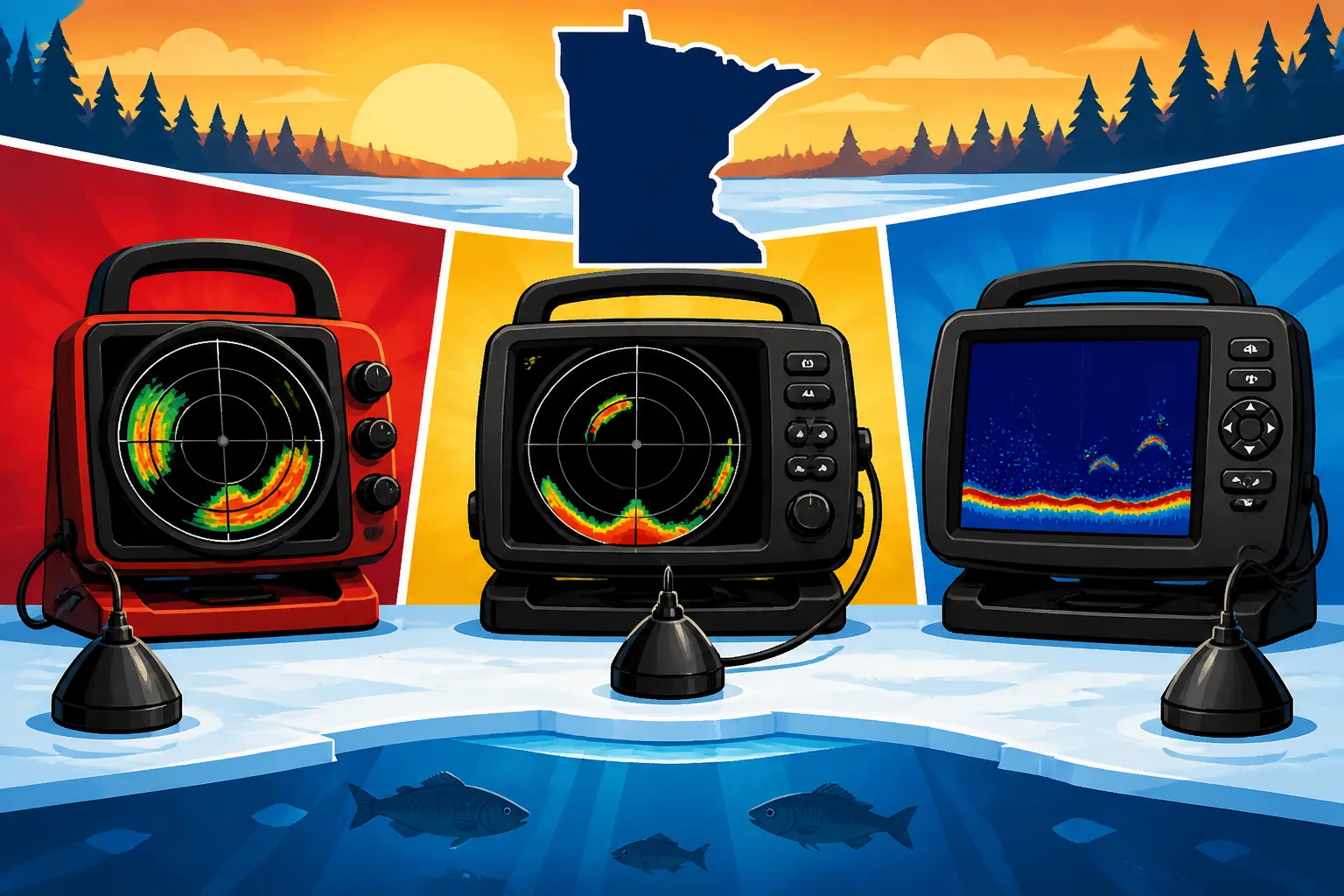
Next up is the display unit, which translates those sonar echoes into the visual information you interpret. This is where Vexilar, Humminbird, and Garmin really start to diverge. Vexilar is famous for its circular, color-coded analog display, while Humminbird and Garmin often lean into digital LCD screens, some even offering advanced mapping and forward-facing sonar capabilities. The display’s resolution, color palette, and ease of interpretation are crucial for quick decision-making on the ice.
Finally, the battery is the lifeblood of your flasher. Most ice fishing flashers run on 12-volt rechargeable batteries, often housed in a portable carrying case with the display and transducer. Battery life is a huge consideration, especially during long days on the ice in freezing temperatures. You need a battery that can power your unit reliably from dawn to dusk, or even longer if you’re pulling an all-nighter for crappies. Factors like screen brightness, GPS usage, and sonar intensity all draw power, so a robust battery and efficient power management are key. Many anglers opt for a second battery or a quality portable power station, especially when using more power-hungry digital units or when ice fishing in remote areas.
Vexilar Flashers: The Traditional Workhorse for Minnesota Ice Anglers
Vexilar is practically a household name in Minnesota ice fishing, and for good reason. They’ve been around for ages, building a reputation for rugged reliability and a no-nonsense approach to ice sonar. When you picture a classic ice flasher, chances are you're imagining a Vexilar. It's the unit many of us learned on, and for countless anglers, it's still the gold standard for its simplicity and directness. You often hear stories of Vexilar units being passed down through generations, still performing flawlessly on frozen lakes like Mille Lacs.
Classic Vexilar Features and Benefits
The defining characteristic of a Vexilar flasher is its circular, analog display. Instead of a scrolling digital screen, you're looking at a series of flashing lights around a dial. The colors on this dial (typically green, yellow, and red) instantly tell you about the strength of the sonar return. Green usually indicates weaker signals (like a small baitfish or the edges of a school), yellow signifies medium strength (a larger fish or softer bottom), and red means a very strong signal (the lake bottom, multiple fish, or a big lunker). This color-coding, combined with the real-time spinning display, gives you an incredibly intuitive and immediate read on what's happening beneath your hole.
One of the greatest benefits of Vexilar's analog design is its unmatched target separation. Vexilar units are renowned for their ability to distinguish between objects that are incredibly close to each other, often down to half an inch or less. This precision is invaluable when you need to see your tiny tungsten jig clearly as it hangs just above a reluctant walleye or when trying to pick out a single slab crappie from a tight school. This level of detail helps immensely when the fish are suspended and you need to present your bait exactly at their eye level. Another huge plus for Vexilar is its simplicity and robustness. There are no complex menus to navigate, no software updates to worry about, and the units are built like tanks, designed to withstand the harsh realities of ice fishing. Freezing temperatures, accidental drops, or slushy conditions rarely faze a Vexilar.
Common Vexilar Models and Their Use Cases
Vexilar offers a range of flashers, each designed to cater to different angler needs and budgets. The most iconic is arguably the Vexilar FL-8SE Genz Pack. This unit is the quintessential entry-level flasher, known for its incredible durability and ease of use. It's perfect for beginners or those who want a reliable, no-frills unit to find fish and structure. While it's a bit older technology, the FL-8SE still provides excellent target separation and a clear, readable display, making it a fantastic choice for chasing panfish or even searching for pike on smaller lakes.
Stepping up the ladder, the Vexilar FL-18 Genz Pack adds more depth ranges and a zoom feature, which allows you to magnify a specific portion of the water column. This is particularly useful when fishing in deeper water or when you need an even closer look at fish suspended near the bottom. The FL-18 is a favorite among serious anglers who appreciate the enhanced features without straying too far from the classic Vexilar experience. It's a workhorse for everything from chasing lake trout in the deep waters of Lake Superior to picking off big walleye on Lake of the Woods.
For those who demand the best in analog technology, the Vexilar FLX-28 Genz Pack is the top-tier offering. The FLX-28 boasts more color palette options, a digital depth readout, and even finer target separation settings. It's designed to give you maximum control and clarity, allowing you to fine-tune your display for various fishing conditions. Whether you're dealing with interference from other flashers in a crowded ice shelter village or trying to detect the lightest bite from a wary fish, the FLX-28 provides the tools to get the job done. Many veteran anglers swear by the precision and customization of the FLX-28, finding it indispensable for competitive tournament fishing or simply for maximizing their catch on tough days. You can often find a good selection of these units at major retailers like Bass Pro Shops or even compare prices and reviews on Amazon.
Humminbird Ice Flashers: Digital Precision and Features
While Vexilar champions the analog tradition, Humminbird has carved out a significant niche by bringing advanced digital sonar technology to the ice fishing world. Their Ice HELIX series, in particular, has become incredibly popular for anglers who want a versatile unit that combines the real-time flasher display with the comprehensive data and visual clarity of a digital fish finder. If you're someone who appreciates a clear, crisp screen and a wealth of information at your fingertips, Humminbird is definitely worth a closer look.
Humminbird's Digital Display and Sonar Options
The most striking difference when you first encounter a Humminbird Ice HELIX unit compared to a Vexilar is its full-color LCD digital display. These screens offer incredible detail, high resolution, and customizable views that can simultaneously show you a traditional flasher wheel, a 2D sonar graph, and even a zoom window. This multi-view capability means you get the best of both worlds: the instantaneous feedback of a flasher combined with the historical tracking and detailed imagery of a graphical sonar. Seeing how fish reacted a few seconds ago can be just as important as seeing them in real-time.
Humminbird units often incorporate advanced sonar technologies like CHIRP (Compressed High-Intensity Radiated Pulse) sonar. Unlike traditional single-frequency sonar, CHIRP sends out a range of frequencies, resulting in much clearer images, better target separation, and superior depth penetration. This means you can distinguish fish from structure more easily, see baitfish clouds with incredible accuracy, and get a clearer picture in deeper or muddier waters. Many Humminbird Ice HELIX models also come with GPS and built-in LakeMaster mapping, which is a massive advantage. Imagine being able to mark waypoints for hot fishing spots, navigate back to them with precision, and view detailed contours, breaklines, and depths directly on your flasher screen. This integrated mapping is a game-changer for finding structure and understanding the layout of complex Minnesota lakes, from the expansive waters of Lake Winnibigoshish to the intricate contours of Leech Lake.
Popular Humminbird Ice Series Models
Humminbird's Ice HELIX lineup offers a fantastic range of options, from compact and affordable to feature-rich powerhouses. The Humminbird Ice HELIX 5 CHIRP GPS G3 is an excellent starting point for many anglers. It provides a bright 5-inch color display, CHIRP sonar for excellent target separation, and integrated GPS with LakeMaster mapping. For its price point, it offers a remarkable amount of technology and versatility, making it a strong contender for anglers who want more than just a basic flasher without breaking the bank. It’s perfect for exploring new spots or precisely locating those productive weed edges.
Moving up, the Humminbird Ice HELIX 7 CHIRP GPS G4 features a larger 7-inch display, which makes reading the screen much easier, especially when you’re trying to multitask with multiple views. This model often includes more advanced mapping features and processing power, providing even crisper sonar returns and faster map loading. The increased screen real estate is incredibly valuable when running a split-screen view, allowing you to monitor both your flasher and 2D sonar simultaneously without squinting. Anglers targeting larger fish or those who spend many hours on the ice appreciate the enhanced visibility and detail this unit offers.
At the top of the line, the Humminbird Ice HELIX 9 or 10 CHIRP GPS G4N units are true powerhouses. With massive 9-inch or 10.1-inch displays, these units offer unparalleled clarity and the ability to view a multitude of data points at once. They often come with advanced networking capabilities, allowing you to link them with other Humminbird devices, and feature even more powerful processors for seamless operation. These larger units are often favored by hardcore anglers, guides, and those who participate in tournaments, as they provide every advantage possible on the ice. They are particularly effective when fishing in an ice house, where screen size isn't a portability constraint, allowing you to fully appreciate the detail of the sonar and mapping.
| Feature | Vexilar FLX-28 Genz Pack | Humminbird Ice HELIX 7 CHIRP GPS G4 | Garmin Striker Vivid 5cv Ice Bundle |
|---|---|---|---|
| Display Type | Analog LED Flasher (Color-Coded) | Digital LCD (Full-Color) | Digital LCD (Full-Color) |
| Screen Size | N/A (Circular LED Ring) | 7 inches diagonal | 5 inches diagonal |
| Sonar Technology | Single Frequency (200kHz) | CHIRP Digital Sonar | CHIRP Digital Sonar (Traditional & ClearVü) |
| Target Separation | ~0.5 inch (Excellent) | ~1 inch (Very Good) | ~1 inch (Very Good) |
| GPS & Mapping | No | Yes (LakeMaster, Navionics compatible) | Yes (Built-in GPS, custom mapping) |
| Interference Rejection | Strong (Digital IR) | Strong (Adjustable IR) | Strong (Adjustable IR) |
| Key Features | Patented 5 & 10 ft Auto Ranging, Day/Night Modes, Digital Depth | Dual Spectrum CHIRP, Ice Flasher View, Custom Views, AutoChart Live | High-Sensitivity GPS, Quickdraw Contours, Wi-Fi |
| Battery Life (Approx) | 10-12+ hours | 8-10 hours | 8-10 hours |
| Ideal For | Traditionalists, panfish/walleye, extreme cold, simplicity | Tech-savvy anglers, versatile fishing, mapping needs | Value, GPS & mapping, forward-facing sonar readiness |
Note: Price ranges are highly variable based on new/used condition, sales, and specific bundle inclusions.
Garmin Ice Flashers: The Rise of Forward-Facing Sonar
Garmin has been a formidable player in marine electronics for years, and they've brought that innovation to the ice fishing market with a significant impact. While they offer excellent traditional flasher options, Garmin has truly shaken things up with their groundbreaking forward-facing sonar technology, particularly LiveScope. For anglers in Minnesota always looking for an edge, especially on highly pressured waters, Garmin provides tools that can literally show you fish far beyond the cone angle of your hole.
Garmin's Traditional Flasher Offerings
Before diving into the revolutionary, let's talk about Garmin's solid offerings in the traditional ice flasher space. The Garmin Striker Vivid series is their primary line of ice bundles, available in various screen sizes like the Striker Vivid 4cv, 5cv, and 7cv. These units feature bright, high-resolution color displays that are incredibly easy to read, even in direct sunlight. They typically include CHIRP traditional sonar for crisp, clear returns and often integrate ClearVü scanning sonar, which provides a nearly photographic image of fish and structure below your transducer. While ClearVü isn't always ideal for seeing your jig in real-time during ice fishing, it's fantastic for scanning a hole initially to identify bottom composition or submerged objects.
What truly sets Garmin's traditional flashers apart for many anglers is the inclusion of high-sensitivity GPS and Quickdraw Contours mapping. Quickdraw Contours allows you to create your own custom contour maps of any lake in real-time as you fish. Imagine driving across a featureless flat in your ice house, and as you drill holes and drop your transducer, your Garmin unit automatically creates a detailed map of humps, breaks, and hidden structure that might not be on pre-loaded maps. This feature is incredibly powerful for discovering new spots or understanding subtle nuances of familiar lakes, especially when fishing for walleye that relate to subtle depth changes. The ability to mark waypoints for fish catches or prime structure is seamless, making navigation and returning to hot spots a breeze. Many anglers find these units offer an exceptional blend of traditional flasher functionality with modern GPS and mapping advantages, often at a very competitive price point, which you might find particularly attractive on sites like Amazon or at your local Bass Pro Shops.
The Game-Changing LiveScope and Panoptix Systems
Now, let's talk about the true game-changer: Garmin LiveScope. This isn't just a flasher; it's a real-time, live-scanning sonar system that lets you see fish and structure in incredibly detailed, photographic quality up to 100 feet around and below your hole. For many, it's completely redefined what's possible in ice fishing. Instead of just seeing what's directly under your transducer, LiveScope allows you to scan an entire area, locate schools of fish, see how they're moving, and even watch them react to your bait from a distance. If you've ever found yourself wondering, "Is there anything else around here?", LiveScope answers that question with unprecedented clarity. You can learn more about this revolutionary tech in our guide on How to Use Garmin LiveScope for Walleye.
The technology works by mounting a specialized Panoptix LiveScope transducer to a pole that's inserted into your ice hole, or off the side of your ice house. This transducer can be rotated to scan in different directions (forward, down, or even perspective mode for a wide-angle view). The display, typically a Garmin ECHOMAP or GPSMAP unit, then shows you a live video-game-like feed of everything in the sonar beam. You can watch your jig drop, see individual fish approach it, and observe their body language – are they aggressive? Spooked? It provides an incredible amount of information that was simply impossible to obtain with traditional sonar. This system is particularly devastating for targeting suspended fish like crappie or walleye on large, featureless flats, as you can quickly locate them without drilling dozens of holes. While the initial investment is significantly higher than a traditional flasher, the advantage it provides is unparalleled for serious anglers looking for a competitive edge. It's truly changing how many of us approach ice fishing, pushing the boundaries of what's possible.
Direct Comparison: Vexilar vs Humminbird vs Garmin
Choosing between these three powerhouses can feel overwhelming, especially when each brings something unique to the table. It’s not just about which one is "best," but which one is best for you and your specific ice fishing style. Let’s break down some critical comparison points.
Display Readability and Resolution: Analog vs Digital
The most obvious difference lies in the display. Vexilar offers a classic analog, circular LED display. Its readability is fantastic in all light conditions, from bright sun to complete darkness inside an ice house. The color-coding (green, yellow, red) makes it incredibly intuitive to interpret signal strength at a glance. There's no lag, just immediate, raw sonar data. However, it lacks the detailed graphics and multiple viewing options of digital screens. You won't see historical graphs or mapping on a Vexilar.
Humminbird and Garmin both utilize full-color digital LCD screens, which offer high resolution and crisp, detailed imagery. These screens allow for multiple display modes (flasher wheel, 2D sonar, zoom, mapping) simultaneously, providing a wealth of information at once. Humminbird's screens are known for their vibrant colors and clarity, while Garmin's Striker Vivid series lives up to its name with exceptional brightness and contrast. The downside of digital screens can be visibility in direct sunlight, though modern screens have vastly improved, and some anglers find the sheer amount of information overwhelming at first. However, for those who want mapping and detailed sonar graphs, digital is the only way to go.
Target Separation and Interference Rejection
Target separation refers to a unit's ability to distinguish between two objects that are very close together. Vexilar units are legendary for their superior target separation, often down to half an inch. This is a huge advantage when you're trying to separate your tiny jig from a fish hovering right below it. The analog nature seems to excel here, providing incredibly precise feedback.
Humminbird and Garmin flashers, particularly those with CHIRP sonar, offer very good to excellent target separation, typically around one inch or slightly less. While not quite as precise as a top-tier Vexilar in some scenarios, it's more than sufficient for most ice fishing applications and easily allows you to see your bait and fish distinctly.
Interference rejection is crucial when fishing in crowded areas, like a popular panfish lake where multiple flashers are running close together. All three brands offer some form of interference rejection. Vexilar uses digital interference rejection (DIR) to help filter out signals from other units, though in extremely crowded conditions, some ghosting can still occur. Humminbird and Garmin units typically have robust, adjustable interference rejection settings that allow you to fine-tune the frequency or pulse to minimize crosstalk from neighboring units. This is a critical feature when you're in a cluster of portable shelters, trying to find your own fish amidst the sonar chaos.
Battery Life and Portability Considerations
When it comes to battery life, Vexilar's analog simplicity often gives it an edge. Without power-hungry digital screens, GPS, or advanced processors, many Vexilar units can run for 10-12 hours or even longer on a single 12-volt battery. This is a huge advantage for all-day fishing trips, especially in sub-zero Minnesota temperatures where battery performance can dip.
Humminbird and Garmin digital units, with their bright screens, GPS, and more complex sonar processing, typically have shorter battery lives, often in the 8-10 hour range. While this is usually sufficient for a day, carrying a spare battery is a common practice, particularly for longer excursions or if you run the screen at maximum brightness. The power draw of a Garmin LiveScope system is considerably higher and almost always requires a larger, dedicated lithium battery for extended use.
Portability is also a key factor. All three brands offer well-designed carrying cases (often called "shuttle" or "Genz Pack" for Vexilar) that hold the unit, battery, and transducer, making them easy to transport from hole to hole. Vexilar and the smaller Humminbird and Garmin digital units (5-inch and 7-inch screens) are generally very compact and lightweight. The larger 9-inch and 10-inch digital units from Humminbird and Garmin are still portable, but their increased screen size and battery requirements make them slightly bulkier and heavier, more suited for a permanent ice house or a sled than being carried by hand across a vast lake.
Choosing the Right Flasher for Your Needs
Deciding on the perfect ice flasher isn't a one-size-fits-all situation. Your ideal choice will hinge on several personal factors, from how much you're willing to spend to the specific species you target and your overall fishing philosophy. Let's break down how to tailor your choice to your unique ice angling journey in Minnesota.
Budget and Experience Level
For beginners just getting into ice fishing, or those on a tighter budget, a simpler unit is often the best choice. The learning curve for reading a flasher can be steep enough without adding complex menus and features. A classic Vexilar FL-8SE or even a basic Garmin Striker Vivid 4cv offers excellent functionality at a more accessible price point. These units provide the essential real-time sonar feedback without overwhelming you with options. They're robust, reliable, and will definitely help you find fish more efficiently. It's also easy to find deals on these entry-level units, sometimes even used, at online marketplaces or sporting goods stores like Bass Pro Shops.
If you're an intermediate angler looking to upgrade or someone who already has a grasp of sonar, the mid-range options are incredibly compelling. The Vexilar FLX-28 or a Humminbird Ice HELIX 7 offers a significant leap in features, clarity, and customization. These units provide better target separation, more detailed displays, and often include GPS and mapping capabilities, giving you more tools to locate and catch fish. The investment is higher, but so is the potential for increased success and enjoyment.
For the advanced angler or serious enthusiast who demands the absolute latest technology and doesn't mind a premium price tag, the high-end units are where it's at. This includes the larger Humminbird Ice HELIX 9/10 units or, of course, a full Garmin LiveScope system. These are powerful tools designed for maximum advantage, offering large, detailed screens, advanced sonar options, comprehensive mapping, and for LiveScope, the ability to see fish at a distance. These are often the choice for tournament anglers or those who spend an immense amount of time on the ice and want every possible edge.
Fishing Style and Target Species
Your preferred fishing style and target species in Minnesota will heavily influence your flasher choice.
If you primarily chase panfish like crappie and sunfish, which often school tightly and suspend, excellent target separation is paramount. Being able to discern your tiny tungsten jig from a small panfish is critical. Both Vexilar's precision and Humminbird/Garmin's CHIRP sonar excel here. For finding those suspended schools quickly, especially on larger, featureless lakes, the wider coverage and quick scanning ability of a digital unit's 2D sonar or even LiveScope can be a huge asset.
For walleye anglers, especially those who fish on vast lakes like Lake of the Woods or Leech Lake, finding subtle structure and navigating back to hot spots is key. Units with integrated GPS and detailed mapping, like the Humminbird Ice HELIX series with LakeMaster or the Garmin Striker Vivid with Quickdraw Contours, become invaluable. These allow you to mark waypoints, follow contours, and precisely position yourself over humps or breaks. When walleyes are tight to the bottom, the incredible target separation of a Vexilar can also be a significant advantage in seeing them in relation to the lakebed.
If you're a run-and-gun angler who drills many holes and moves frequently, a lightweight, compact, and quick-to-deploy unit is essential. Smaller Vexilar or Humminbird/Garmin 5-inch models are perfect for this. Their portability makes it easy to quickly scan a hole, assess the situation, and move on if fish aren't present. Conversely, if you primarily fish out of a permanent ice house or a large portable hub, where you stay put for extended periods, then larger screen units and even a Garmin LiveScope setup become more practical, as portability constraints are reduced, and you can truly leverage their comprehensive features.
Future-Proofing Your Investment
Thinking about the future can also guide your purchase. If you're considering expanding your fishing electronics in the years to come, choosing a brand with a strong ecosystem might be beneficial.
Humminbird's networkable units, especially the "N" series, allow you to link multiple devices, share waypoints, and even control features from a single display. If you envision eventually adding a second unit or integrating with a boat's electronics, this can be a smart move. Their AutoChart Live feature also allows for incredibly detailed map creation, which can be shared and updated, adding long-term value.
Garmin's ecosystem is particularly robust, especially if you're intrigued by LiveScope. Many of their traditional Striker units can serve as a display for LiveScope with an upgrade to the necessary Black Box and transducer, offering a clear upgrade path. Their Quickdraw Contours feature, constantly building personalized maps, means your investment continues to grow in value with every trip.
Vexilar, while not part of a complex networkable ecosystem, is "future-proof" in its own way through its legendary durability and timeless functionality. A Vexilar purchased today will likely still be finding fish effectively for many years to come, requiring minimal maintenance beyond a fresh battery. Its straightforward design means fewer points of failure, making it a reliable choice for the long haul. Ultimately, considering where you see your ice fishing journey going will help you pick a flasher that not only meets your current needs but also grows with your passion.
Tips for Maximizing Your Flasher's Performance
Buying a top-notch flasher is only the first step. To truly get the most out of your Vexilar, Humminbird, or Garmin, you need to understand how to set it up correctly, interpret what you're seeing, and maintain it properly. It’s like having a high-performance vehicle – you wouldn’t just jump in and expect to win a race without knowing how to drive it.
Proper Set-Up and Calibration
Before you even drop your transducer in the water, a few critical steps can make all the difference. First, charge your battery fully! A weak battery can lead to erratic readings and a frustratingly short day. Most manufacturers recommend charging for at least 8-12 hours before first use and after every outing.
When you get on the ice, ensure your transducer is level and hanging freely in the water. If it’s tilted or resting against the side of the hole, you’ll get distorted readings. Many shuttles come with a float and a spring-loaded arm to help keep the transducer centered and level. In a portable shelter, ensure the transducer cable isn't crimped or tangled. On a larger unit like a Humminbird or Garmin with a high-definition screen, you might also need to adjust the gain (sensitivity). Start with the gain low and slowly increase it until you see your jig clearly. If you go too high, you’ll start picking up too much clutter and interference, making it harder to discern fish from noise. Experiment with gain settings throughout the day, as conditions (like weed growth, bottom composition, or even water clarity) can change.
For digital units, also pay attention to ping speed and cone angle settings. A wider cone angle (e.g., 20 degrees) will show you a larger area under the ice, great for searching, but might reduce target separation. A narrower cone (e.g., 9 degrees) offers more detail directly below your hole. Adjusting these settings can dramatically improve what you see, making it easier to fish for walleye that are hugging the bottom or suspended crappie.
Reading Your Flasher Display
Interpreting your flasher display effectively is an art that comes with practice.
For Vexilar's analog display, remember the color code:
- Green: Weak signal, often your bait or small fish.
- Yellow: Medium strength, larger bait, smaller fish, or softer bottom.
- Red: Strongest signal, lake bottom, multiple fish, or large fish.
As your jig drops, you’ll see a green or yellow line descend. When a fish moves in, you’ll see another color band appear. If it moves into the red, it's either a big fish, or multiple fish. Watch for how these bands react to your jigging motion. A fish rising to meet your bait is a good sign! If it rises and holds, but doesn't hit, try a different jigging pattern or bait. This real-time feedback is invaluable for understanding how fish are reacting to your presentation.
For Humminbird and Garmin's digital displays, you often have multiple views. The flasher view will mimic the circular analog display, using colors to indicate signal strength. The 2D sonar view shows a scrolling graph, with stronger returns appearing as thicker, brighter lines or arcs. Your jig will show up as a distinct line, and fish will appear as arcs (if they pass through the cone) or solid lines (if they hold still). Learn to differentiate between your bait, fish, and bottom structure. A common technique is to use a split screen: one side with the flasher view for instant reactions, and the other with 2D sonar for a historical view and structure identification. Understanding how to interpret these displays effectively is covered in depth in resources like our guide on How to Read a Flasher Vexilar/Humminbird.
Maintenance and Care: Protecting Your Investment
Your ice flasher is an investment, and proper care will ensure it serves you well for many seasons.
After each outing, dry your transducer and cables thoroughly to prevent ice buildup and corrosion. Store the transducer in a way that protects the sensitive face. Always store your battery in a cool, dry place, and ensure it’s fully charged before putting it away for the off-season. Some anglers opt for a "maintenance charge" every few months during storage to prolong battery life. If using a lithium battery, follow the manufacturer's specific charging and storage instructions, as they differ from traditional lead-acid batteries.
Keep the display screen clean using a soft cloth and avoid harsh chemicals that could damage the screen coating. If you have a digital unit, periodically check for software updates on the manufacturer's website. These updates can improve performance, fix bugs, or even add new features. Registering your product with the manufacturer can also keep you informed about these updates. Finally, always transport your flasher securely in its protective shuttle or case to prevent damage from bumps and jostles, especially when navigating bumpy ice roads in Minnesota winters. By taking these simple steps, you'll ensure your ice flasher remains a reliable and effective tool in your ice fishing arsenal for years to come, helping you fill your pail on countless trips.
Disclaimer
Fishing regulations and best practices can change. Always consult the most current Minnesota Department of Natural Resources (DNR) regulations before heading out on the ice. This guide is for informational purposes only and should not replace official guidelines.