How to Catch Stream Trout: Nymphs & Dries
There's a special kind of challenge and immense satisfaction that comes with chasing stream trout in Minnesota, especially when you're wading into the delicate world of fly fishing. Many anglers feel a bit intimidated by the precise presentations required, wondering if they're using the right flies or if their technique is truly putting them in front of fish. This guide is here to break down the complexities, focusing on two of the most effective methods – nymphing and dry fly fishing – to help you confidently approach Minnesota's beautiful trout streams.
Understanding Minnesota's Trout Streams and Their Inhabitants
Minnesota might be known as the Land of 10,000 Lakes, but for the fly angler, its hidden gems are the cold, clear streams that crisscross the landscape. These aren't just ditches; they're vibrant ecosystems holding some truly spectacular fish.
The Unique Ecology of Minnesota's Driftless Area
When we talk about stream trout fishing in Minnesota, the conversation almost always turns to the southeastern "Driftless Area." This region is a geological anomaly, bypassed by the last glaciers, leaving behind a stunning landscape of steep valleys, bluffs, and spring-fed streams. Unlike many areas, these streams flow over limestone bedrock, which filters the water, enriching it with minerals, and keeping water temperatures consistently cool throughout the year – absolutely vital for trout survival.
Think of it as nature's perfect trout laboratory. These constant cold-water springs create ideal conditions for aquatic insect life, which in turn fuels a healthy trout population. Streams like the Root River system near Lanesboro, Hay Creek near Red Wing, or the numerous tributaries around Preston offer diverse habitats, from fast-flowing riffles to deep, slow pools. It's in these subtle nuances that you'll find trout holding, waiting for their next meal. Exploring these unique waterways is a core part of the experience, offering both challenging fishing and breathtaking scenery. If you're new to the area, a great starting point for local knowledge can be found in a Driftless Area Trout Streams Southeast Minnesota guide.
Key Stream Trout Species in Minnesota
Minnesota's trout streams are home to three main species, each with its own quirks and preferences, making the angling experience constantly varied and engaging. Understanding what you're targeting can significantly improve your success.
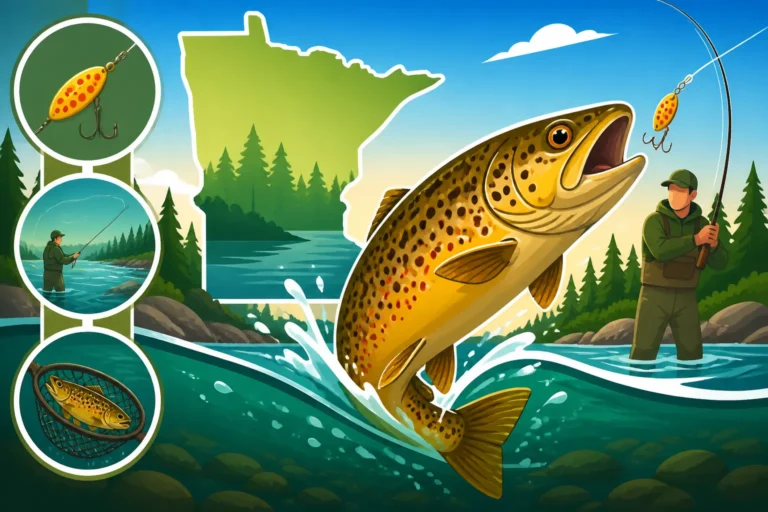
- Brown Trout ( Salmo trutta ): These are the most common and often the largest trout found in Minnesota's streams. Known for their beautiful golden-brown coloration with red and black spots, browns are notoriously wary and can be quite challenging to catch. They prefer slightly warmer water than brook trout and often hold in deeper pools, undercut banks, and near submerged structure. Brown trout are opportunistic feeders, readily taking nymphs, streamers, and dry flies, especially during evening hatches or after dark. You can learn more about targeting these elusive fish with our How to Catch Brown Trout in Minnesota Step by Step guide.
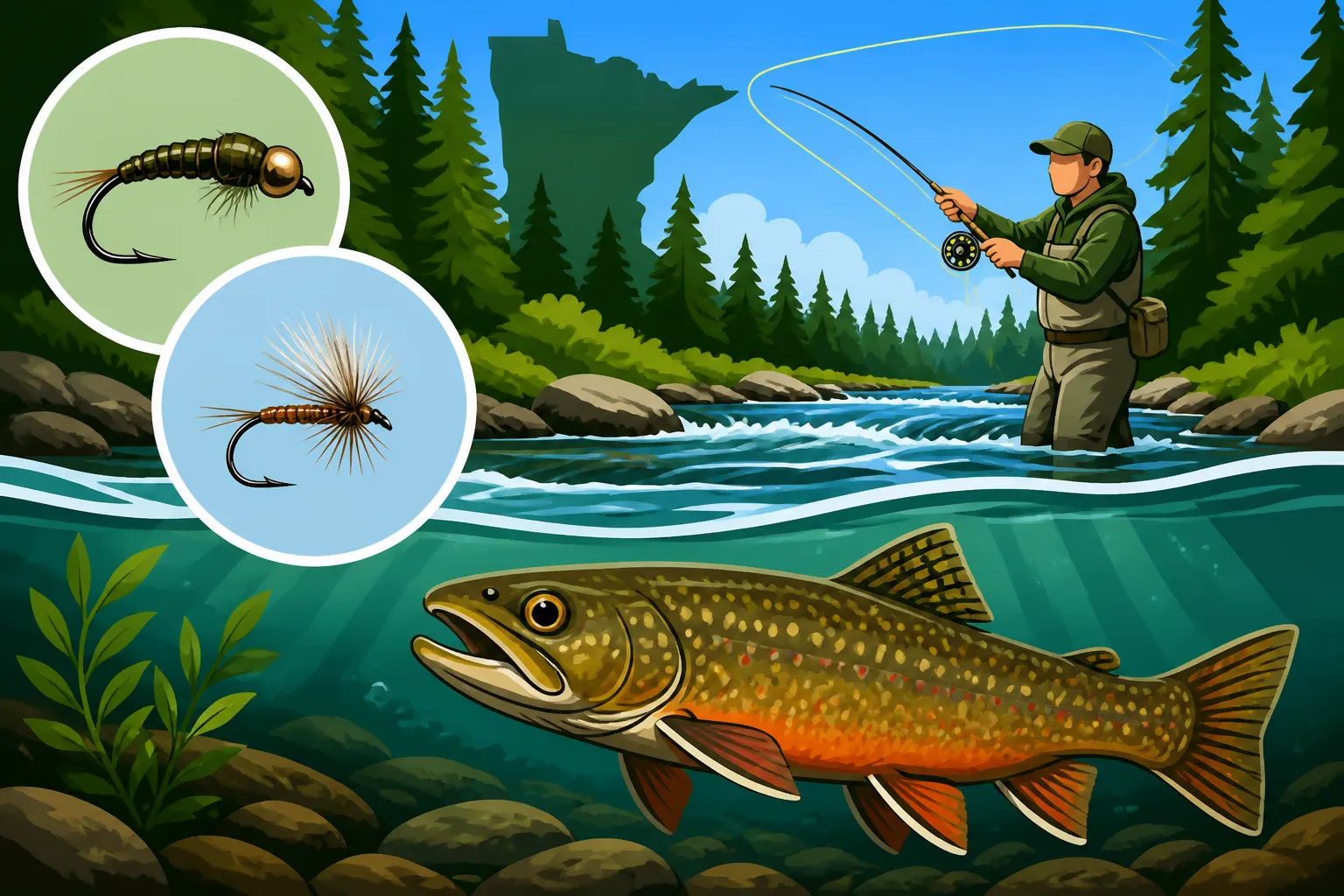
- Brook Trout ( Salvelinus fontinalis ): The only trout species native to Minnesota, brook trout are stunning fish with vibrant red spots, a blue halo, and distinctive wavy markings (vermiculations) on their backs. They are often found in the coldest, purest headwaters of streams, preferring small, clear runs and pocket water. Brook trout are typically smaller than browns but are incredibly aggressive and a blast to catch on light tackle. They're less selective than browns and will often readily strike both nymphs and dry flies. For detailed tactics, check out How to Catch Brook Trout in Minnesota Step by Step.
- Rainbow Trout ( Oncorhynchus mykiss ): Identified by their iridescent pink or red stripe along their sides, rainbows are often stocked in Minnesota streams to supplement populations, especially in waters that receive heavy fishing pressure. They are strong fighters, known for their acrobatic jumps when hooked. Rainbows tend to favor faster, oxygenated water, such as riffles and runs, where they can intercept drifting insects. They're usually quite aggressive, making them a popular target for many anglers. If you're keen on chasing rainbows, our How to Catch Rainbow Trout in Minnesota Step by Step article has some excellent advice.
Knowing which species you're likely to encounter in a particular stretch of stream will help you choose the right approach, from the flies you select to the presentation techniques you employ.
Essential Gear for Stream Trout Fly Fishing
Stepping into the world of fly fishing for stream trout can feel like preparing for a scientific expedition, but it doesn't have to be overly complicated or expensive. Having the right tools makes all the difference in presentation and enjoyment.
Rod, Reel, and Line Selection
Choosing your fly fishing setup is like picking the right brush for a painting – it needs to match the canvas and your artistic style. For Minnesota stream trout, you're generally looking for lighter, more sensitive gear that allows for delicate presentations.
- Rod: A fly rod in the 2-weight to 5-weight range is ideal. For smaller, brushy streams, a shorter rod (7 to 8 feet) offers better maneuverability and accuracy in tight quarters. If you're fishing larger, more open rivers like sections of the Root or the Whitewater, an 8.5 to 9-foot rod will give you more casting distance and line control. A 4-weight, 8.5-foot rod is often considered a versatile "all-around" choice for most Minnesota streams.
- Reel: Your reel for trout fishing is primarily a line holder, though a smooth drag system is beneficial for those unexpected larger fish. A lightweight, single-action reel that balances well with your chosen rod is perfect. Don't feel the need to break the bank here; many affordable reels offer excellent performance.
- Fly Line: A weight-forward (WF) floating line is the standard for most stream trout applications. The weight-forward taper helps load the rod for easier casting, while the floating nature keeps your line on the surface for both dry fly and indicator nymphing. Match the line weight to your rod's recommended weight (e.g., a 4-weight line for a 4-weight rod). If you're just starting out, many great Best Rod and Reel Combo for Beginners sets are available, often providing a balanced rod, reel, and line ready to go. You can find many reliable options on Amazon, making it easy to get started without a huge initial investment.
Leaders, Tippet, and Indicators
These often-overlooked components are crucial for successful fly fishing, acting as the invisible link between your fly line and the fly itself. They determine how naturally your fly drifts and how easily you can detect strikes.
- Leaders: A tapered leader is a length of monofilament or fluorocarbon that gradually tapers from a thick butt section (which connects to your fly line) down to a fine tip. This taper helps transfer casting energy smoothly, allowing your fly to land delicately. For stream trout, a 7.5-foot to 9-foot leader with a 4X to 6X tippet size at the end is generally appropriate. Use longer leaders (up to 12 feet) for spooky fish or clear water.
- Tippet: This is the very end section of your leader, to which you tie your fly. Tippet material is typically rated in "X" sizes (e.g., 5X, 6X), with higher numbers indicating finer diameter and lighter breaking strength. Finer tippet allows for a more natural fly presentation and is less visible to fish. Carry spools of 4X, 5X, and 6X tippet. Fluorocarbon tippet is often preferred for nymphing due to its invisibility underwater and its density, which helps flies sink. Monofilament is fine for dry flies.
- Indicators: When nymphing, a strike indicator (or bobber, as some call it) is vital. It suspends your nymph at the desired depth and, most importantly, signals even the slightest strike. Popular types include buoyant foam indicators, yarn indicators, or even just a brightly colored section of fly line. The choice often comes down to personal preference and how well it registers subtle takes.
Waders, Boots, and Accessories
Comfort, safety, and preparedness can make or break a day on the stream. Don't underestimate the importance of good wading gear and essential tools.
- Waders: Chest waders are almost a necessity for stream fishing in Minnesota, allowing you to wade into the cold water to access prime fishing spots and maintain optimal casting angles. Breathable waders are excellent for warmer weather, preventing you from overheating. Neoprene waders are better for colder seasons.
- Wading Boots: Felt-soled wading boots provide superior grip on slippery, rock-strewn stream bottoms, making your wading safer. Some areas might have restrictions on felt soles to prevent the spread of aquatic invasive species, so always check local regulations. Rubber-soled boots with studs are a good alternative.
- Accessories:
- Nippers: Small clippers for cutting line and tippet. Keep them on a retractable zinger.
- Hemostats/Forceps: Essential for safely removing hooks from trout, especially when practicing catch and release.
- Net: A small, rubber-mesh landing net protects the fish's slime coat and gills. Look for a net with a rubberized or silicone mesh to be gentler on the fish.
- Fly Box: A compact, waterproof fly box to store your carefully selected flies.
- Polarized Sunglasses: Crucial for spotting fish, reading water, and protecting your eyes from stray hooks and UV glare.
- Sunscreen and Insect Repellent: Minnesota streams are beautiful but can come with sun exposure and bugs.
- Fishing Vest or Pack: To keep all your essentials organized and easily accessible.
Preparing with the right gear ensures you're ready for whatever the stream throws at you, allowing you to focus on the fishing rather than fumbling for tools or being uncomfortable. Remember that you’ll need to understand the Minnesota Trout Stamp & Trout Regulations before heading out.
Mastering Nymphing Techniques for Minnesota Streams
Nymphing is often the most productive method for catching stream trout because a vast majority of their diet consists of subsurface insects. It's about getting your fly down to where the fish are feeding and mimicking their natural food source.
The Art of Reading Water for Nymphs
You can have the perfect nymph, but if you're not putting it in front of a fish, it's just a tiny piece of fluff and metal. Reading the water is paramount. Trout are energy efficient; they position themselves in currents where food is delivered to them, but where they don't have to fight the strongest flow.
- Riffles and Runs: These are areas of faster, turbulent water, often shallower. Trout will sit just below the main current, picking off dislodged nymphs. Focus on the edges of these faster flows, behind rocks, and in small depressions. The churning water provides both cover and a conveyor belt of food.
- Deeper Pools: Slower-moving, deeper sections of the stream are prime holding areas, especially for larger brown trout. Look for fish suspended near the bottom or along the edges where currents converge. Overcast days or low light conditions often see trout move into more open sections of pools.
- Current Seams: Where fast water meets slow water, or where two currents merge, are critical feeding lanes. Trout will sit in the slower water, darting into the faster current to grab passing insects. These seams are goldmines for nymphing.
- Undercut Banks and Submerged Structure: Tree roots, fallen logs, and undercut banks provide excellent cover and current breaks. Trout feel safe here and often wait for food to drift by. These spots can be tricky to fish without snagging, but they often hold the biggest fish.
Pay attention to subtle differences in current speed, depth, and bottom structure. A keen eye will reveal where the water is "working" to deliver food, and that's where you'll want your nymphs.
Rigging and Presentation for Nymphs
Once you've identified a promising spot, the next step is getting your nymph to the fish in a convincing way. This involves thoughtful rigging and a precise "dead drift."
-
Rigging:
- Indicator Placement: Attach your strike indicator to your leader. The general rule of thumb is to place it about 1.5 to 2 times the depth of the water you're fishing above your first fly. If you're fishing 3 feet deep, place the indicator 4.5 to 6 feet above your lead nymph.
- Weighting: Many nymphs come weighted (e.g., bead-head nymphs), but often you'll need additional weight to get your flies down quickly. Small split shot (non-toxic, please!) can be pinched onto your leader a few inches above your first fly. Experiment with different amounts of weight until your indicator occasionally "ticks" the bottom or you feel a subtle bump, indicating your flies are at the correct depth.
- Multi-Nymph Rigs: A popular and effective strategy is to fish two nymphs. Tie your heaviest or largest nymph (the "point fly") to the end of your tippet. Then, off the bend of that hook, tie another piece of tippet (usually 10-18 inches long) and attach your second, lighter nymph (the "dropper"). This allows you to fish two depths and two patterns simultaneously.
- Fly Selection: Popular nymph patterns for Minnesota streams include the Pheasant Tail Nymph, Hare's Ear Nymph, Prince Nymph, Copper John, and various caddis larva patterns. Carry a range of sizes and colors to match what the trout might be feeding on. You can find many of these Best Lures & Baits for Minnesota by Species on Amazon.
-
Presentation (The Dead Drift): This is the holy grail of nymphing. You want your flies to drift naturally, at the same speed as the current, without any drag from your fly line.
- Casting: Cast upstream and across the current, aiming to land your indicator and flies gently without a big splash.
- Mending: Immediately after your cast, as your flies drift downstream, you'll likely need to "mend" your line. This means lifting a loop of fly line off the water and repositioning it upstream, effectively allowing your flies to continue their natural drift without being pulled by the faster surface current. This takes practice but is critical.
- Tracking: Keep your rod tip slightly elevated and follow your indicator with your eyes, maintaining a direct line of sight to it. You want minimal slack but enough to allow a natural drift.
Strike Detection and Hook Set with Nymphs
This is often the trickiest part for beginners, as nymph strikes can be incredibly subtle. Don't be fooled by aggressive tugs; often, it's just a slight hesitation or twitch.
- Watching the Indicator: Your strike indicator is your primary visual cue. Any unusual movement – a pause, a slight twitch, moving sideways, or disappearing even slightly – can indicate a strike. Don't second-guess it.
- Watching the Line: Sometimes, especially with less buoyant indicators or if you're "tight-line nymphing" (without an indicator), you'll need to watch your fly line where it enters the water. A subtle stop or change in its drift can mean a fish has taken your fly.
- Feeling the Take: With experience, you'll start to feel the subtle weight or resistance of a trout taking your nymph. This is more common in faster currents where the take is more pronounced.
- The Hook Set: When you see or feel a strike, resist the urge to violently yank your rod. Instead, make a quick, sharp, but controlled "strip set" by pulling your line horizontally with your line hand, or a short, crisp upward sweep of the rod. This sets the hook efficiently without startling other fish or breaking fine tippet. Many missed strikes are simply due to not setting the hook quickly enough or not recognizing a strike at all.
The Thrill of Dry Fly Fishing in Minnesota
While nymphing might be the bread and butter for consistent catches, there's nothing quite like the visual excitement of a trout rising to a perfectly presented dry fly. It's a dance of observation, delicate casting, and precise timing.
Identifying When to Fish Dries
Dry fly fishing hinges entirely on trout feeding on the surface, which is usually dictated by insect hatches. Learning to recognize these conditions is key.
- Insect Hatches: This is the most obvious time for dry flies. When you see adult insects (mayflies, caddisflies, stoneflies) emerging from the water or fluttering over the surface, trout will often switch their feeding focus from nymphs to these easy surface meals. Hatches can be prolific, turning the water into a boiling cauldron of rising fish. Pay attention to the size, color, and silhouette of the natural insects. Early mornings, late evenings, or overcast, humid days are often prime times for hatches.
- Terrestrial Falls: Even without a hatch, trout will opportunistically feed on "terrestrials"—land-dwelling insects like grasshoppers, ants, and beetles that fall into the water from overhanging vegetation. Mid-to-late summer, especially on windy days, can be excellent for fishing terrestrial patterns.
- Rising Fish: The most direct signal that dry flies are in order is seeing fish "rise." This can range from a subtle sip, leaving a small ring on the water, to an aggressive splash. Observe the rise form carefully; a gentle rise might indicate a mayfly feeder, while a splashy rise often suggests a caddis or terrestrial taker. If fish are rising consistently, it's time to tie on a dry fly.
- Water Conditions: Clear, low water often makes trout more cautious, but also more prone to looking up for food. After a rain, or during slightly higher flows, trout might still be feeding subsurface, so always assess the conditions before committing to dry flies.
Dry Fly Selection and Matching the Hatch
Choosing the right dry fly is crucial for convincing a discerning trout that your offering is the real deal. It’s all about imitation and subtlety.
-
Matching the Hatch: This classic fly fishing concept means selecting a dry fly that closely imitates the natural insects (the "hatch") that trout are currently feeding on. Focus on three main characteristics:
- Size: This is often the most important factor. If the natural insects are size 16, don't throw a size 10. Carry a range of sizes (from small 20s to larger 12s or 10s).
- Silhouette/Profile: Does your fly look like a mayfly, a caddis, or a hopper? The general shape and how it sits on the water matter.
- Color: While secondary to size and profile, matching the general color of the naturals can also be important, especially on clear water or with picky fish.
-
Popular Dry Fly Patterns for Minnesota:
- Mayfly Imitations: Parachute Adams, Blue-Winged Olive (BWO), Hendrickson, Light Cahill. These are essential for matching many common mayfly hatches throughout the season.
- Caddisfly Imitations: Elk Hair Caddis, X-Caddis. Caddisflies are abundant in many Minnesota streams and often elicit aggressive strikes.
- Terrestrial Imitations: Foam Hoppers, Chernobyl Ants, Griffith's Gnat (for midges). These are great when no specific hatch is occurring or in grassy areas.
- Attractor Patterns: Stimulator, Royal Wulff. These don't imitate a specific insect but are "buggy" enough to attract opportunistic trout, especially in faster water.
Don't be afraid to experiment! If fish are rising but not taking your first choice, try a smaller size, a different color, or a different profile. It's a puzzle, and solving it is half the fun.
Presentation and Drift for Dry Flies
A perfectly chosen fly is useless if it's not presented naturally. Dry fly presentation is about stealth, accuracy, and achieving a "drag-free" drift.
- Casting Accuracy: You want to place your fly gently and accurately a few feet upstream of a rising fish or into a promising feeding lane. A soft landing is key; a splashy cast will often spook the fish. Practice your cast to minimize false casts and achieve delicate presentations.
- The Drag-Free Drift: This is the single most important aspect of dry fly fishing. "Drag" occurs when your fly line, leader, or tippet is pulled by different current speeds, causing your fly to skate unnaturally across the surface. Trout can instantly detect this artificial movement and will refuse the fly.
- Upstream Cast: Generally, cast upstream of the target, allowing your fly to drift down towards the fish.
- Mending: Similar to nymphing, mending your line is crucial. As your fly drifts, quickly reposition your fly line upstream without disturbing the fly itself. This compensates for varying current speeds.
- Slack Line Casts: Sometimes a "reach cast" or a "parachute cast" (where you intentionally throw a curve or slack into your leader) can help achieve a longer drag-free drift in complex currents.
- Timing the Hook Set: When a trout takes your dry fly, wait for the fish to turn its head down or for the fly to disappear completely before setting the hook. Setting too early ("trout set") often results in pulling the fly away from the fish. A gentle, upward sweep of the rod tip is usually sufficient. Remember, it's about reacting to the fish, not just the splash.
- False Casting: Minimize unnecessary false casts (casts where the line doesn't hit the water) to reduce spooking fish and prevent the fly from drying out too quickly. After each retrieve, quickly dry your fly with a few false casts before presenting again.
Advanced Tactics and Troubleshooting for Stream Trout
Even with a solid understanding of basic nymphing and dry fly techniques, stream conditions are constantly changing. Being adaptable and knowing how to troubleshoot difficult situations will elevate your fishing game.
High-Water vs. Low-Water Strategies
Stream conditions are rarely static, and successfully catching trout often means adjusting your approach to match the water levels.
- High Water Strategies (After Rain or Spring Runoff):
- Problem: High, often murky water makes it hard for trout to see small flies, and they might move out of their usual holding lies. Currents are stronger, and debris can be an issue.
- Solution: Trout often move closer to the banks, seeking slower water and cover. They'll also be less selective. Focus on fishing the edges, eddies, and submerged structure near the banks. Use larger, darker, and heavier nymphs (e.g., a heavily weighted stonefly nymph or a large San Juan Worm) to get down quickly in the strong current. Consider adding more split shot. Indicators need to be larger and more visible. Dry fly fishing is usually difficult, but large, visible terrestrials or attractor patterns might work if fish are looking up near the banks. Stealth is less critical, but casting accuracy to those sheltered pockets is paramount.
- Low Water Strategies (Mid-Summer Droughts or Stable Conditions):
- Problem: Low, crystal-clear water makes trout incredibly spooky and selective. They have fewer places to hide and a clearer view of your leader and line.
- Solution: Stealth is your best friend. Approach carefully, stay low, and minimize movement. Use longer, finer leaders (e.g., 9-12 foot leaders with 6X or even 7X tippet). Downsize your flies dramatically to smaller nymphs (size 18-22 Pheasant Tails or BWO nymphs) or tiny dry flies (midges, small ants). Presentation must be impeccable; focus on absolutely drag-free drifts. Trout in low water often congregate in deeper pools or under heavy cover, so target these areas with precision. Fishing during low light conditions (dawn/dusk) can also be more productive as trout feel safer.
Dealing with Finicky Trout and Challenging Conditions
Some days, no matter what you do, the trout just seem to have lockjaw. These are the days that test your patience and force you to think outside the box.
- Spooky Trout: If you're seeing fish dart away as you approach, or if they refuse your fly after a perfect drift, they're spooked.
- Solutions: Increase your distance from the fish. Use longer leaders and finer tippet. Change your casting angle to present from downstream if possible. Rest the water for a few minutes or move to a different section. Try a completely different fly pattern or a much smaller size. Sometimes, simply changing the color of your indicator can make a difference.
- No Obvious Hatch or Feeding Activity: When there are no rises and no clear indication of what trout are eating, it's time for some detective work and versatile tactics.
- Solutions: Start with a "searching pattern"—a reliable nymph or dry fly (like a Pheasant Tail or an Elk Hair Caddis) that imitates a general food source. Fish promising water methodically. Consider a "dry-dropper" rig: a buoyant dry fly on top (e.g., a Stimulator or Hopper) with a nymph suspended underneath as a dropper. This allows you to cover both the surface and subsurface at once. Pay close attention to any subtle signs of life, like a single rise or a stone turned over revealing a nymph.
- Windy Conditions: Wind can make casting a nightmare and make dry fly presentation very difficult.
- Solutions: Cast with the wind at your back if possible. Use slightly heavier fly line or leaders to punch through the wind. On particularly windy days, nymphing is often a more practical and effective choice than dry fly fishing. If dry fly fishing, use larger, more wind-resistant flies like hoppers or Chernobyl ants that are easier to cast and track. Find sheltered pockets or stretches of the stream where the wind is less impactful.
Remember, every day on the stream is a learning experience. Don't get discouraged by challenging conditions; view them as opportunities to hone your skills and deepen your understanding of these magnificent fish. And remember, for comprehensive information about fishing season and limits, check out Stream Trout Season & Limit in Minnesota.
| Feature | Nymphing Techniques | Dry Fly Fishing Techniques |
|---|---|---|
| Primary Goal | Imitate subsurface insects, larvae, and pupae. | Imitate adult insects on the surface of the water. |
| Key Advantage | Most consistently productive; trout feed subsurface 90% of the time. | Visually exciting; thrilling to watch a fish take the fly. |
| Strike Detection | Watching a strike indicator, line movement, or feeling subtle takes. | Directly observing a fish rise and take the floating fly. |
| Depth Covered | Bottom to mid-column of the water. | Surface of the water only. |
| Gear Emphasis | Weighted flies, split shot, strike indicators. | Buoyant flies, floatant. |
| Ideal Conditions | Any time, especially when no surface activity. Often effective in murky or higher water. | During insect hatches or terrestrial falls; clear, stable water. |
| Stealth Required | Moderate to High (less sensitive to surface disturbance). | Very High (fish are looking up and easily spooked by unnatural presentations). |
| Presentation Focus | Dead drift with proper depth and minimal drag below surface. | Drag-free drift on the surface with delicate landing. |
| Common Mistakes | Not getting deep enough, insufficient weight, missing subtle strikes. | Dragging the fly, splashy casts, setting hook too early. |
Essential Streamside Etiquette and Conservation
Our beautiful Minnesota trout streams are fragile ecosystems, and it's up to all of us to protect them for future generations. Practicing good etiquette and conservation habits is just as important as knowing how to cast a fly.
Practicing Catch and Release Responsibly
Many of Minnesota's trout streams support wild, self-sustaining populations, especially in the Driftless Area. Responsible catch and release practices are vital to ensuring these populations thrive.
- Barbless Hooks: Crimp down the barbs on all your hooks with pliers. Barbless hooks greatly reduce harm to the fish, making removal quick and easy. Many anglers even feel a slight competitive edge in keeping a fish on a barbless hook!
- Minimize Handling: Keep the fish in the water as much as possible. Even a few seconds out of water can be stressful for a trout, especially in warmer temperatures. If you must handle the fish for a quick photo, wet your hands thoroughly first. Dry hands can remove the fish's protective slime coat, making it vulnerable to disease.
- Gentle Release: Support the fish gently in the water, facing upstream, until it regains its strength and swims away on its own. Don't toss it back or hold it by the tail; let it recover naturally.
- Know When to Keep: While catch and release is highly encouraged, if you decide to harvest fish, be absolutely sure you understand the Minnesota Fishing Limits Bag & Possession 2026 and size regulations for the specific stream and species you're fishing. Some areas have special regulations, like single-trout limits or specific slot limits.
Protecting Minnesota's Pristine Trout Streams
Our access to these incredible natural resources is a privilege. Let's do our part to keep them healthy and beautiful.
- Leave No Trace: Pack out everything you pack in, and perhaps even a little extra. This means all trash, including discarded fishing line, which can be deadly to wildlife.
- Respect Private Property: A significant portion of Minnesota's trout streams flows through private land. Always be mindful of property lines and seek permission if you're unsure. Public access points are clearly marked, and respecting landowners ensures continued access for everyone.
- Prevent Aquatic Invasive Species (AIS): Invasive species like zebra mussels or New Zealand mudsnails can devastate stream ecosystems. Before moving between different streams or bodies of water:
- Clean: Remove all visible aquatic plants, mud, and debris from your waders, boots, and gear.
- Drain: Drain all water from your gear, including wading boots.
- Dry: Allow your gear to thoroughly dry for at least 5 days, or follow specific decontamination procedures (e.g., freezing, hot water wash). This is especially important for felt-soled boots. You can get more details on Aquatic Invasive Species AIS Rules for Boaters.
By being conscientious stewards of these waters, we ensure that Minnesota's trout streams remain a vibrant and rewarding destination for anglers for generations to come. Your fishing adventures in Minnesota's trout streams can be truly unforgettable experiences.
Disclaimer
Please note that fishing regulations in Minnesota, including those pertaining to trout streams, can change seasonally and annually. Always consult the most current Minnesota Department of Natural Resources (DNR) fishing regulations booklet or website before heading out on the water. This guide is intended for informational purposes and should not be considered a substitute for official regulations.