Can You Keep Walleye From Mille Lacs?
Oh, the age-old question that keeps every Minnesota angler on their toes: "Can you actually keep walleye from Mille Lacs?" It's a frustrating dance, isn't it? One year you can, the next you can't, or there's a slot limit so confusing you need a PhD in fisheries management just to cast a line. This guide is here to cut through the confusion and give you the real scoop on catching and keeping walleye on the legendary Mille Lacs Lake, helping you understand the ever-evolving regulations for the season and beyond.
Understanding Mille Lacs Walleye Regulations: A Moving Target
If you've spent any time fishing Mille Lacs, you know the walleye regulations can feel like a riddle wrapped in an enigma. It's not uncommon to hear whispers at the bait shop about rule changes happening mid-season, or to see anglers scratching their heads trying to decipher the latest slot limit. This constant evolution can be incredibly frustrating, especially when you've planned a trip, bought bait, and are ready to enjoy Minnesota's favorite pastime. You just want to know what's legal to put in the livewell, right?
Why the Rules Change So Often
The Minnesota Department of Natural Resources (DNR) doesn't change these rules just to make your life harder, believe it or not. Mille Lacs Lake is a truly unique and immensely popular fishery, and its walleye population is under constant scrutiny and management. The primary reason for the frequent adjustments is to ensure the long-term health and sustainability of the walleye population. This involves balancing angling pressure, the natural reproductive success of the fish, and the lake's forage base – basically, what the walleye have to eat. When the DNR sees changes in these factors, they adjust the regulations to protect the future of the fishery, often targeting specific size classes of fish to encourage growth and spawning success. It's a complex ecological puzzle, and our role as anglers is to adapt and understand the "why" behind the "what."
Where to Find the Most Current Information
Given how frequently regulations can shift, relying on last year's memories or even a quick Google search from a few weeks ago simply won't cut it for Mille Lacs. The absolute best place for up-to-the-minute, accurate information is always the official Minnesota Fishing Seasons & Opener Dates (2026) or, even better, the specific DNR Mille Lacs Lake regulations page. You can usually find a link to the most recent "Mille Lacs Lake Fishing Regulations Explained" document directly on the Minnesota DNR website. Don't be shy about stopping into local bait shops around the lake, like Lyback's Resort or Mac's Twin Bay. These folks are on the front lines, often talking to DNR officials daily, and they can provide invaluable, practical advice on the current rules and even what's biting. Just remember, a quick phone call or website check before you head out is always your safest bet.
Current Walleye Regulations on Mille Lacs Lake (2026 Season)
Alright, let's get down to brass tacks: what's the deal with keeping walleye on Mille Lacs for the 2026 season? As an angler, you crave clarity, but Mille Lacs rarely offers it in a simple "yes" or "no" answer. The regulations are usually tailored to protect specific segments of the walleye population, which means you'll almost certainly encounter bag limits and length restrictions, often involving a protected slot. These rules are designed to allow specific sizes of walleye to be harvested while ensuring a robust population of breeding-age fish remains to sustain the fishery. It's all about finding that delicate balance.
The Basics: Bag Limits and Length Restrictions
For the 2026 season, like many years before, Mille Lacs walleye regulations will likely feature a strict daily bag limit and specific length restrictions. While I can't give you the exact numbers for 2026 right now, based on historical patterns and current management goals, it's highly probable you'll be looking at a very conservative bag limit, perhaps one or two walleye per angler. The goal here is to reduce the overall harvest pressure, especially on the most desirable eating-size fish.
For instance, if the regulation states a daily bag limit of one walleye, that means each licensed angler can only keep a single walleye per day. This isn't a suggestion; it's a hard rule. You can learn more about general state limits in the Minnesota Fishing Limits: Bag & Possession (2026) guide. It's also crucial to understand the difference between a daily bag limit and a possession limit. Your daily bag limit is what you can harvest in a 24-hour period, while your possession limit is the total number of fish you can have on hand, whether at home, in your cooler, or in your vehicle, from any given water body. On Mille Lacs, these two limits are often the same for walleye to simplify enforcement and prevent stockpiling fish.
Slot Limits and Protected Lengths
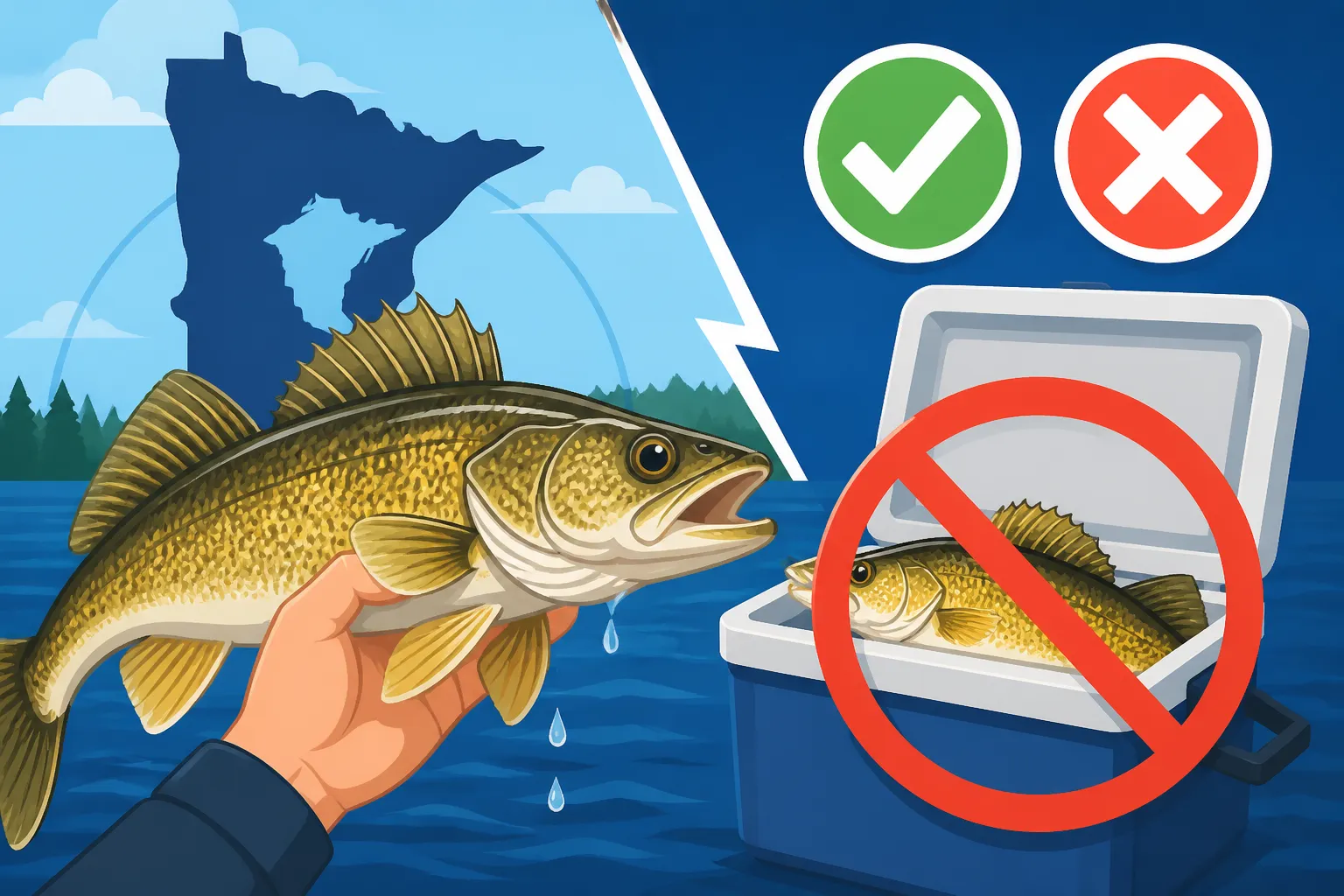
This is where Mille Lacs walleye regulations get truly unique and often require careful attention. A slot limit means there's a specific size range of fish that cannot be kept – they must be immediately released. These protected fish are typically the prime spawners, the backbone of the lake's reproductive potential. The DNR wants these fish in the lake making more walleye, not in your cooler. For example, a common slot might be "no walleye between 19 and 21 inches may be kept." This means if you catch a 19.5-inch walleye, you must release it, even if it's the only fish you've caught all day.
To make things even more interesting, the harvestable fish often fall outside of this slot, meaning you might only be allowed to keep fish under a certain length, or sometimes over a certain length. A typical scenario might be: "Daily bag limit one walleye. Only one walleye between 17-19 inches OR one walleye over 28 inches may be kept." Or perhaps, "One walleye under 17 inches OR one over 20 inches." These examples illustrate the kind of precise rules you'll need to follow. Always measure your fish carefully and accurately before deciding to keep it. This dynamic regulation system is why understanding Mille Lacs Walleye Regulations (2026) is so important, and why checking the most current DNR materials is non-negotiable every time you venture onto the lake.
Special Seasons and Considerations for Walleye on Mille Lacs
Mille Lacs is a year-round fishing destination, and that means the walleye regulations can shift not just year-to-year, but also between the open water season and the ice fishing season. It's a whole different ballgame when the lake freezes over, and the DNR often adjusts harvest strategies to account for different fishing pressures and behaviors. The sheer accessibility of ice fishing on Mille Lacs, with its extensive network of plowed roads and rental houses, means a higher concentration of anglers, which can lead to specific rules for winter harvest.
Open Water Season Rules
During the open water season, which typically runs from the statewide walleye opener in May through late fall, the regulations are designed to manage harvest during periods of high angler activity. This is when the lake is dotted with boats of all sizes, from small fishing rigs to large guided charters. Anglers are often trolling, jigging, or slip-bobbering for walleye across various structures. For more on techniques, check out our Walleye Fishing Techniques: Complete Minnesota Guide. The daily bag and slot limits during this time are directly influenced by the current health of the walleye population and the DNR's projected harvest goals for the entire open water period. It's common for the DNR to announce these regulations in late winter or early spring, giving anglers time to prepare. However, as we've mentioned, pay attention to mid-season updates, especially during years when the population might be more vulnerable or if harvest numbers exceed projections.
Ice Fishing Season Rules
When winter rolls around and Mille Lacs transforms into a vast ice city, the walleye regulations can sometimes see further modifications. The accessibility of the lake during ice fishing season often means a surge in angler numbers, leading to increased harvest potential. The DNR is acutely aware of this and may implement even stricter rules for ice fishing. For instance, the daily bag limit might be reduced further, or the slot limit might be adjusted to protect different size classes of fish compared to the open water season.
It's also worth noting that ice fishing on Mille Lacs has its own set of unique rules regarding shelters, especially deadlines for removal, which you can read about in Minnesota Ice Fishing & Shelter Rules. While these don't directly impact walleye limits, they are part of the overall regulatory framework for winter angling. Always check the official DNR Mille Lacs regulations specifically for the ice fishing season before drilling your first hole, because what was legal in August might not be in January.
Beyond Walleye: Other Species to Target on Mille Lacs
While walleye are undeniably the star of Mille Lacs, obsessing solely over them and their ever-changing regulations can cause you to miss out on some truly incredible fishing opportunities for other species. Mille Lacs is a diverse fishery, offering world-class angling for several other highly sought-after fish. Diversifying your targets not only increases your chances of a successful day on the water but also spreads the angling pressure, which is good for the lake's overall health. Don't put all your eggs in one walleye basket!
Smallmouth Bass: A World-Class Fishery
If you've never targeted smallmouth bass on Mille Lacs, you are truly missing out. This lake is renowned as one of the best smallmouth bass fisheries in the world, regularly producing trophy-sized bronze backs. Unlike walleye, the smallmouth regulations on Mille Lacs tend to be much more stable and often lean towards catch-and-release, which aligns with the desires of many dedicated bass anglers.
Typically, you'll find a conservative bag limit (often one fish) and a generous protected slot (e.g., no bass between 17-21 inches), with only a fish over the slot allowed for harvest. Many anglers choose to practice catch and release exclusively for these incredible fighters, preserving the trophy potential for others. The shallow rocky reefs, expansive sand flats, and scattered boulder fields are prime smallmouth habitat. Chasing these powerful fish can be an exhilarating experience and a fantastic alternative or complement to your walleye pursuits. Learn more about this incredible fishery in our guide to Mille Lacs Smallmouth Bass: World-Class Fishery.
Northern Pike and Muskie Opportunities
Mille Lacs also offers fantastic opportunities for anglers seeking the thrill of battling a big northern pike or the ultimate challenge of a muskie. Both species are present in healthy numbers and provide thrilling fights. Northern pike are abundant throughout the lake, often found in and around weed lines or adjacent to deeper structure. Their regulations are typically more liberal than walleye, often allowing for a higher daily bag limit, though specific size restrictions may apply, especially for larger trophy fish. You can find more detailed information on these toothy critters in our Northern Pike in Minnesota: Identification & Where to Catch article.
For the truly dedicated, Mille Lacs boasts a healthy population of muskie, Minnesota's revered "fish of 10,000 casts." Muskie fishing is almost exclusively catch-and-release due to their slow growth rates and trophy status. Regulations typically require a very large minimum size (often 50 or 54 inches) for harvest, making it rare for any angler to actually keep one. Most muskie enthusiasts are after the thrill of the fight and a quick photo before carefully releasing these magnificent fish. If you're considering targeting these giants, our Muskie Fishing in Minnesota: The Fish of 10,000 Casts guide is a great place to start. Exploring these other species can add a whole new dimension to your Mille Lacs fishing adventures, proving there's more to this lake than just walleye, no matter how much we love them!
Responsible Angling on Mille Lacs: Protecting the Fishery
Fishing Mille Lacs is more than just catching fish; it's about being a steward of a precious natural resource. The lake has faced its share of challenges, and every angler plays a role in its health and future. This responsibility extends beyond just following the rules; it's about adopting practices that minimize your impact and help preserve the incredible fishing opportunities for generations to come. After all, we all want to keep coming back to this amazing lake, don't we?
Catch and Release Best Practices
With slot limits and conservative bag limits often in place for walleye on Mille Lacs, practicing proper catch and release techniques is absolutely vital. Many of the fish you encounter will be within a protected slot and must be returned to the water unharmed. This isn't just about legality; it's about ensuring these important spawners survive to contribute to future walleye populations.
When practicing catch and release, handle fish gently with wet hands, minimize their time out of the water, and use needle-nose pliers or a hook remover to quickly extract hooks. Avoid handling fish by their gills or vertically by the jaw, especially larger fish, as this can cause internal damage. If a fish is deeply hooked, it's often better to cut the line as close to the hook as possible rather than tearing at its internal organs trying to retrieve the hook. For more detailed instructions on how to ensure the best outcome for released fish, check out our guide on Catch and Release Best Practices in Minnesota. Your careful handling can make a real difference to the walleye you release.
Aquatic Invasive Species (AIS) Prevention
Another critical responsibility for every angler on Mille Lacs is preventing the spread of Aquatic Invasive Species (AIS). Mille Lacs is unfortunately home to several AIS, including zebra mussels and starry stonewort. Moving these invasive species from one lake to another, even accidentally, can cause irreversible damage to entire ecosystems. The rules are strict for a reason: "Clean, Drain, Dry."
Before leaving Mille Lacs, you must clean all weeds and debris from your boat, trailer, and fishing gear. Then, you must drain all water from your livewell, bilge, and motor. Finally, it's highly recommended to let your equipment dry thoroughly before launching into another body of water. Some species like zebra mussels can survive out of water for surprising lengths of time. These simple steps, while sometimes a hassle, are absolutely essential to protect Minnesota's precious waters. Ignoring these rules can lead to hefty fines and, more importantly, irreparable harm to our cherished lakes. For a full breakdown of the rules, see Aquatic Invasive Species (AIS) Rules for Boaters. Let's all do our part to keep Minnesota's lakes healthy.
Here's a quick overview of hypothetical Mille Lacs walleye regulations for the 2026 season, keeping in mind that actual regulations must always be verified with the MN DNR.
| Regulation Aspect | Open Water Season (Hypothetical 2026) | Ice Fishing Season (Hypothetical 2026) |
|---|---|---|
| Daily Bag Limit | 1 Walleye | 1 Walleye |
| Possession Limit | 1 Walleye | 1 Walleye |
| Length Restriction | 17-19 inch protected slot. Only one walleye under 17 inches OR over 28 inches may be kept. | 17-19 inch protected slot. Only one walleye under 17 inches OR over 28 inches may be kept. |
| Important Note | Regulations are subject to change. Always confirm with MN DNR. | Regulations are subject to change. Always confirm with MN DNR. |
For the most accurate and up-to-date information, always consult the official Minnesota Department of Natural Resources website or their specific Mille Lacs Lake regulations. This table is illustrative based on common regulatory approaches but should not be taken as fact for the 2026 season. You can also explore our Mille Lacs Lake Fishing Guide: Walleye, Bass & More for broader information on fishing this incredible lake.
Disclaimer
Please remember that fishing regulations, especially on dynamic fisheries like Mille Lacs Lake, are subject to frequent changes. While this guide provides comprehensive information, it is crucial to verify all current regulations directly with the Minnesota Department of Natural Resources (MN DNR) before you head out on the water. Relying solely on information from third-party sources, even well-intended ones, could lead to unintentional violations. Always check the official MN DNR website or regulation booklet for the most up-to-date rules for the specific body of water and season you plan to fish.