Minnesota Fishing License Without an ID
We've all been there: the fishing itch hits hard, you've got your gear ready, but then it dawns on you – where's your ID? Whether it's lost, expired, or just plain forgotten at home, the thought of needing a valid identification to get a fishing license can throw a wrench in your plans, especially if you're already at the bait shop or campground. This guide is here to untangle the often-confusing process of securing a Minnesota fishing license when your primary ID isn't immediately available, ensuring you can still hit the water without unnecessary stress.
Understanding Minnesota's ID Requirements for Fishing Licenses
Let's face it, dealing with government regulations can feel like navigating a maze blindfolded. When it comes to Minnesota fishing licenses, the Minnesota Department of Natural Resources (DNR) has rules in place to ensure fair play and proper identification. But these rules aren't always black and white, and it's easy to get frustrated when you're just trying to enjoy a peaceful day on the lake.
The General Rule: Why an ID is Usually Necessary
Typically, when you walk into a sporting goods store, a bait shop, or a county auditor's office to purchase your annual or temporary Minnesota fishing license, they're going to ask for a valid form of identification. This isn't just to be difficult; it's a standard procedure to confirm your identity, residency status (which affects the price you pay for a Minnesota Fishing License: Cost, Types & How to Buy (2026)), and age. They need to make sure you're who you say you are and that you qualify for the license you're requesting, especially if it's a specialized one or a resident rate. Imagine trying to buy a fishing license as a nonresident without proper ID – the system just wouldn't work. The DNR needs to keep track of who's fishing, not just for revenue, but also for managing fish populations and enforcing regulations like Minnesota Fishing Limits: Bag & Possession (2026).
It's about accountability. Your fishing license is a legal document, a privilege granted by the state, and like any official document, it requires verification of the holder's identity. This helps prevent fraud and ensures that only eligible individuals receive licenses, especially considering the different types available, like those for residents, nonresidents, seniors, or disabled veterans.
Acceptable Forms of Identification
So, what exactly counts as a "valid ID" in Minnesota for purchasing a fishing license? The good news is it's not always just your driver's license, though that's certainly the easiest and most common. Generally, the DNR accepts several forms of government-issued identification. Your Minnesota driver's license or state ID card is, of course, the gold standard. It has all the necessary information: your photo, date of birth, and residency.
However, if you've misplaced your driver's license, other options can often work. A valid passport is almost universally accepted. Military ID cards are also typically fine. For minors, a school ID might sometimes be accepted, especially if accompanied by a parent or guardian who can verify identity. The key is that the ID should be official, contain your photo, and ideally, have your current address. Always remember that the agent selling you the license has the final say on what they deem acceptable, and if they're unsure, they might err on the side of caution.
Here’s a quick overview of commonly accepted IDs:
| Type of Identification | Photo Required | Address Included | Government Issued | Notes |
|---|---|---|---|---|
| Minnesota Driver's License | Yes | Yes | Yes | Most common and preferred. |
| Minnesota State ID Card | Yes | Yes | Yes | Equivalent to driver's license for ID purposes. |
| Valid US Passport | Yes | No | Yes | Excellent for identity, but residency might need supplemental proof. |
| US Military ID Card | Yes | No | Yes | Widely accepted, but similar residency considerations as a passport. |
| Permanent Resident Card | Yes | No | Yes | For non-citizens, helps establish legal presence. |
| Foreign Passport | Yes | No | Yes | Non-residents, often requires additional proof of residency in their home country. |
| Tribal ID Card (Federally Recognized) | Yes | Yes | Yes | Recognized for tribal members. |
| Certified Birth Certificate | No | No | Yes | Often needs to be paired with another photo ID (like a student ID) for verification. |
| Social Security Card | No | No | Yes | Not typically accepted alone due to lack of photo and easily stolen identity concerns. |
What Happens If You Don't Have an ID (Initial Roadblocks)
This is where the frustration really kicks in. You're standing at the counter, wallet in hand, ready to pay, and realize your driver's license is gone. Many times, the immediate answer from a bait shop or big box retailer (like if you're wondering Can I Buy a Minnesota Fishing License at Walmart?) will be a firm "no." They're trained to require a valid, physical ID, and for good reason—they don't want to be on the hook for issuing a license improperly.
Without a standard ID, you might find yourself hitting a wall. Store clerks often lack the discretion to bend the rules, as their systems are set up for strict compliance. This can be incredibly annoying, especially if you're a regular customer and they know who you are, but policy is policy. It's not personal; it's procedure. This is why it's always best practice to double-check you have your ID before heading out, especially on a spontaneous fishing trip.
Scenarios Where an ID Might Be Less Critical and the Nuances
While a photo ID is generally required, Minnesota does have some specific situations and allowances that might make obtaining a fishing license a bit easier, or at least clarify the process, if you don't have that shiny card on hand. It's not a free pass, but it's important to understand the distinctions.
Special Cases: Youth, Seniors, and Specific Exemptions
Minnesota is pretty thoughtful when it comes to youth and seniors, which is a big relief for many families. Generally, kids under the age of 16 do not need a fishing license to fish in Minnesota. This is fantastic for getting young ones hooked on the sport without extra hurdles! So, if you're asking, "Do Kids Need a Fishing License in Minnesota?", the answer is usually no, alleviating the ID issue for them entirely.
For older anglers, those 65 and over, Minnesota offers a special senior fishing license at a reduced rate. While they still generally need an ID to prove their age and residency for this specific license, the requirements can sometimes be slightly more flexible in terms of what constitutes proof, especially if they are well-known in a small community. However, it's safer to assume a standard ID will be needed. Additionally, certain groups like residents who are legally blind or disabled veterans may be eligible for special licenses or exemptions. These often require specific documentation, but it's not always a standard driver's license that's needed, it's proof of their status.
The "Known Angler" Exception (or Lack Thereof)
Here's a common misconception: "The bait shop owner knows me, they'll sell me a license." While your friendly local bait shop owner might know your name, your favorite lure, and even your go-to spot on Lake Mille Lacs, they usually cannot bypass the official ID requirement. Their point-of-sale system, which connects directly to the DNR's licensing database, typically flags transactions that don't include valid identification details. It's a system limitation, not a lack of trust.
Even if they wanted to, issuing a license without verifying identity puts the vendor at risk of penalties from the DNR. So, while you might feel like family at your favorite fishing supply store, don't expect them to make an exception for an ID. It's a bummer, I know, but it keeps the system legitimate. This is a critical point to remember, especially if you're thinking about Where Can I Buy a Minnesota Fishing License?. No matter where you go, the ID rule generally stands.
Online vs. In-Person Purchases: How the Process Differs
Ah, the internet – our modern-day problem solver! This is where you might find a bit more flexibility, or at least a different kind of verification. When you purchase a Minnesota fishing license online through the official DNR website, you typically won't be asked to physically show an ID to a person. Instead, the system relies on personal information verification.
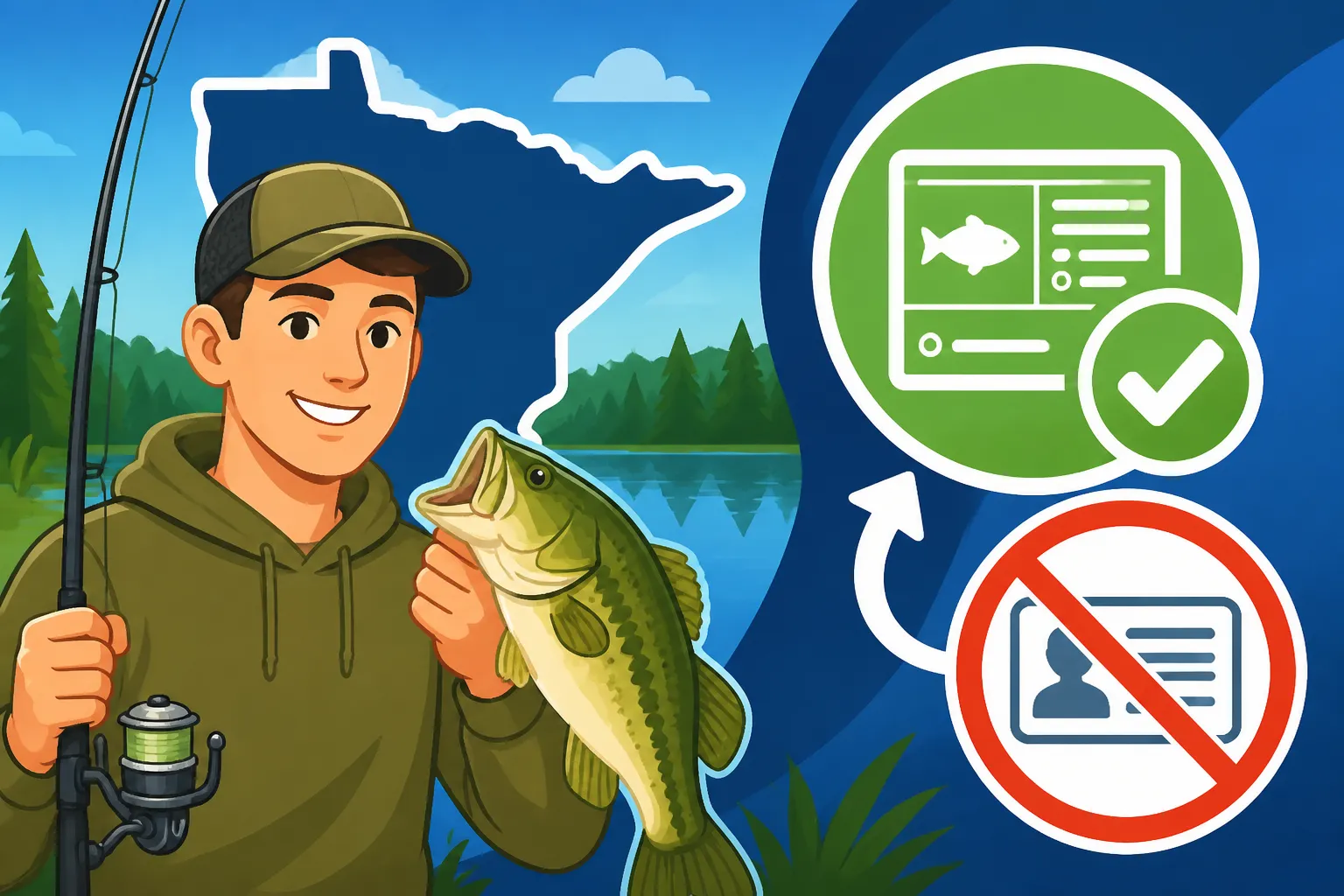
You'll usually need to provide your full name, date of birth, address, and often your Minnesota driver's license number or state ID number. The system then cross-references this information with state databases. If you know your driver's license number, even if you don't have the card in your pocket, you can often successfully purchase a license online. This is a huge workaround for those moments of forgetfulness! The system then generates a printable license, which you can keep with you (or save on your phone). This is often the easiest route if you're in a pinch and know your identifying numbers. Just make sure you can access and print (or digitally store) the license, as you still need to possess it while fishing.
Step-by-Step Guide: How to Obtain a License Without a Physical ID on Hand
Okay, so you're in a bind. Your physical ID is missing, but you need that license. Don't despair! There are still avenues to explore, especially if you're diligent and know what information you do have at your disposal.
Proving Identity Without a Card: What Documentation Works?
The key here is providing enough verifiable information that a license agent, or the online system, can confirm your identity and residency. If you don't have your physical driver's license, but you remember your driver's license number, you can often use the online system, as mentioned earlier. This is probably the most straightforward "without a card" solution.
If the online route isn't an option (maybe your numbers aren't memorized, or you don't have internet access at the moment), you'll need to think about supplemental identification. Sometimes, a combination of documents can work, especially if you visit a full-service DNR office (not just a bait shop). This might include:
- A certified birth certificate: While it doesn't have a photo, it proves your date of birth and legal name. It might need to be coupled with something else that has your photo, even if it's not a primary ID.
- Social Security card (used cautiously): While not typically accepted alone, it provides a crucial identifying number. You should never carry your Social Security card around for routine ID purposes, but if you're at a DNR office, they might be able to use it for verification if combined with other documents.
- Utility bills or mail: These can prove residency if combined with a photo ID that doesn't have your address (like a passport).
- Expired photo ID: In some very rare circumstances, an recently expired driver's license might be accepted if it's combined with other current documentation, but this is a long shot and entirely up to the agent's discretion.
The general rule of thumb is the more official documents you can bring that collectively confirm your name, date of birth, photo (if possible), and residency, the better your chances.
The Role of License Agents and DNR Offices
When you're trying to navigate this situation, not all license vendors are created equal. Your best bet for unique circumstances is often a dedicated DNR office or a county auditor's office. These locations typically have more direct access to state databases and personnel who are more experienced in handling unusual ID situations compared to a typical retail clerk.
If you find yourself needing to prove identity without a primary photo ID, I'd highly recommend calling your local DNR office ahead of time. Explain your situation clearly and ask what specific documents they would accept as alternative proof of identity and residency. They might guide you to bring a birth certificate, a social security card (again, handle with extreme care), or another form of documentation that their system can verify. Remember, these folks are there to help, but they also have rules to follow. Being polite and prepared with any documentation you do have will go a long way.
Emergency or Temporary License Solutions
Let's be real, sometimes you need a license right now. If you're planning a trip to a prime spot like Mille Lacs Lake Fishing Regulations (2026) or heading up north for the Minnesota Walleye Opener 2026, waiting isn't an option. Minnesota doesn't typically offer a specific "temporary ID" fishing license in the way some states might. Your license is valid as soon as you purchase it and have the documentation (either a physical paper copy or the digital version on your phone).
The most reliable "emergency" solution without a physical ID is purchasing online if you know your driver's license or state ID number. The DNR's online portal is available 24/7. Once purchased, you can simply save the PDF to your phone or email it to yourself. This acts as your valid license, and as long as you can display it to a conservation officer, you're good to go. This beats the alternative of fishing without a license, which can lead to hefty fines and a ruined day. It's better to get a Minnesota Fishing License Online even if you can't print it right away.
Common Pitfalls and How to Avoid Them
Even with the best intentions, it's easy to stumble over the regulations. Understanding common mistakes and how to sidestep them can save you a lot of headache and potentially a fine.
Misconceptions About ID Requirements
One of the biggest misconceptions, as we touched on earlier, is that if someone "knows" you, or if you're a long-time angler, you can skip the ID check. Unfortunately, this isn't how it works. The system is designed for broad compliance, not individual recognition. Another common pitfall is believing an expired ID will "probably" work. While it might sometimes be accepted in conjunction with other proofs in rare cases at a DNR office, relying on an expired ID for a license purchase at a typical vendor is a gamble that usually won't pay off. Conservation officers also expect a currently valid license, and while they might show some leniency on a recently expired ID if you have your license, it's best not to test those waters.
Don't assume that because you have your old fishing license from last year, that will suffice as ID. While it proves you had a license, it doesn't necessarily prove your current identity for a new purchase. Always treat the process of buying a new license as a fresh start, requiring current and valid identification.
Planning Ahead: Best Practices for License Purchase
The easiest way to avoid this whole mess is to plan! Before fishing season starts (check out Minnesota Fishing Seasons & Opener Dates (2026)), or even before you head out for a spontaneous trip, make sure you know where your ID is. Here are some best practices:
- Check your wallet: A simple step, but easily overlooked in the excitement of a fishing trip.
- Renew your ID early: If your driver's license or state ID is nearing expiration, renew it well in advance.
- Keep a digital copy: Take a photo of your valid ID and store it securely on your phone. While this isn't usually accepted for purchasing a license, it can be useful for identification if you're stopped by a conservation officer and have your physical license but no ID.
- Buy online: If you have access to your driver's license number, buying your license online is often the most convenient and ID-friendly method. You can purchase your license weeks or months in advance and print it out at your leisure.
- Know your numbers: Memorize or keep a secure note of your Minnesota driver's license or state ID number. This is vital for online purchases if you don't have the physical card.
Consequences of Fishing Without a Valid License or ID
This is the part nobody wants to hear, but it's crucial. Fishing without a valid Minnesota fishing license when one is required is a violation of state law. This can result in fines, which vary depending on the severity and whether it's a repeat offense. It's not uncommon for fines to be several hundred dollars. Additionally, your fishing equipment, like rods and reels, can be confiscated.
Being unable to produce identification when requested by a conservation officer, even if you do have a valid license, can complicate matters. It might lead to a longer stop, a call to verify your identity, or even a citation for obstruction. Officers need to be able to confirm you are the person whose name is on the license. So, while this guide focuses on buying a license without an ID, remember that possessing identification while fishing is also important. The hassle and cost of a fine far outweigh the minor inconvenience of making sure you have your documents in order. To understand more, you can read about What Happens If You Fish Without a License in Minnesota?.
Navigating Specific Situations and Solutions
Life throws curveballs, and sometimes those curveballs involve misplaced IDs right before a big fishing weekend. Let's look at some specific scenarios and how to navigate them.
Lost or Stolen ID: What to Do
If your ID is genuinely lost or stolen, your first step should be to report it to the local authorities. This creates a police report, which can be helpful for various reasons, including preventing identity theft. For purchasing a fishing license, if you've reported it, you still have the option of buying online if you know your driver's license number.
If you don't know your numbers, and you need a license immediately, your best bet is a visit to a DNR office or a county auditor. With a police report number, a birth certificate, and potentially a bill with your current address, they might be able to manually verify your information and issue a license. It won't be a quick in-and-out, but it's often your most viable option when a primary ID is completely gone. Remember, you'll also need to start the process of getting a replacement ID, which takes time.
Non-Residents and Out-of-State IDs
For our friends visiting the Land of 10,000 Lakes, the rules are slightly different, but the ID principle remains. Non-residents absolutely need a valid ID to purchase a Nonresident Fishing in Minnesota: Licenses & Rules license. Your out-of-state driver's license or state ID is perfectly acceptable, as is a passport.
The challenge for non-residents without an ID is often greater, as Minnesota doesn't have your information in its state databases. So, relying on "knowing your numbers" for an online purchase won't work in the same way. A valid out-of-state ID (driver's license or state ID) or a U.S. passport is almost always required. If you're a non-resident who has lost their ID, you'll likely need to go through the process of obtaining a temporary ID from your home state's DMV or proving identity at a DNR office with a combination of documents, possibly including a birth certificate and proof of residency from your home state. It's definitely more complicated, so guarding your ID carefully while traveling is paramount.
Troubleshooting Common Issues
Let's say you're trying to buy online, you enter your driver's license number, but the system says "information not found" or "does not match." This can happen for a few reasons:
- Typo: Double-check every digit! It's easy to transpose numbers.
- Outdated Information: If you've recently moved or renewed your ID and some information changed, the online system might be looking for older data.
- System Glitch: Rarely, but it happens. If you're positive your information is correct, try again later or call the DNR's licensing support line.
If you're at a vendor and they refuse your alternative forms of ID, politely ask if there's a DNR office nearby that might be able to assist with a more comprehensive verification process. Sometimes, retailers simply aren't equipped to handle complex ID scenarios, and a dedicated government office is better suited. Don't get discouraged; there's usually a way to get you fishing!
Remember, the goal is always to comply with regulations while still enjoying Minnesota's incredible fishing opportunities, whether that's targeting walleye on Lake of the Woods Fishing Regulations (2026) or chasing smallmouth bass on Lake Vermilion Fishing Guide. Planning ahead and knowing your options are your best tools in avoiding ID-related headaches.
Disclaimer
Please note that fishing regulations and requirements, including those for identification, can change. While this guide is compiled with the most current information available, it is always recommended to check the official Minnesota Department of Natural Resources (DNR) website or contact a local DNR office for the absolute latest and most specific details before heading out. This content is for informational purposes only and does not constitute legal advice.