Ice Fishing for Crappie & Panfish
Staring at a flickering screen in a dark fish house while the temperature drops below zero can be one of the most rewarding experiences in the Great North, or it can be an exercise in pure futility. Many anglers spend hours hovering over a single hole, watching stubborn marks on their electronics refuse to budge, leading to frozen fingers and empty buckets. This guide dives deep into the nuances of ice fishing for crappie & panfish, providing you with the tactical edge needed to turn those "lookers" into "biters" on any Minnesota lake.
Locating Mid-Winter Panfish
Finding fish in the vastness of a frozen Minnesota lake like Lake Minnetonka or Mille Lacs is the first and often most difficult hurdle. In the early ice period, panfish are typically found in the remaining green weeds of shallow bays. However, as winter progresses and oxygen levels in the shallows drop, these fish migrate toward deeper basins. This transition can be frustrating because the fish don't move all at once; they linger in "no man's land" for weeks, making them difficult to pin down without a solid plan.
Identifying Key Structure and Basin Patterns
When you are looking for slabs, you need to think about the "basin." In many central Minnesota lakes, this means looking for the deepest part of a specific bay or the main lake itself where the bottom is soft and silty. This muck is home to bloodworms and other larvae that panfish crave during the lean months. You aren't necessarily looking for a massive drop-off; sometimes, a subtle change from 20 feet to 24 feet is all it takes to hold a massive school of crappies.
Bluegills, on the other hand, tend to be more structure-oriented even in the dead of winter. While crappies might roam the open water of the basin, bluegills often hug the transition lines where a hard sandy bottom meets the soft mud. If you can find a submerged rock pile or a lingering weed edge near these transitions, you’ve found a gold mine. I’ve spent many afternoons on smaller lakes near Alexandria where simply moving ten feet to the left of a weed edge meant the difference between a bucket of sunnies and a quiet afternoon.
Using Technology to Cut Down the Search Time
The days of "blind" fishing are largely over, and for good reason. To be successful, you must embrace mobile fishing. If you haven't seen a fish on your electronics in 15 minutes, it is time to move. This is where Best Ice Fishing Electronics for Beginners comes into play. You don't need a multi-thousand-dollar setup to find panfish, but you do need a reliable flasher or entry-level sonar that can distinguish between the bottom and a fish hugging the mud.
Modern GPS mapping apps are also a lifesaver. Before you even step onto the ice, use an app like Navionics or Fishbrain to identify those basin transitions. On a large body of water like Upper Red Lake, finding a tiny hummock or a slight depression can be the key to avoiding the crowds. You want to look for "funnels"—areas where the lake contours squeeze fish into a smaller space as they move between deep and shallow water.
Essential Gear for Success
Ice fishing for panfish is a game of ounces and millimeters. Because these fish often feed by inhaling water to draw in their prey, the "bite" can be incredibly subtle. If your rod is too stiff or your line is too heavy, you will never even know the fish was there. You’ll pull up your jig only to find your waxworm gone, wondering how they keep stealing your bait. It’s a common frustration that usually points back to a gear mismatch.
Rod and Reel Selection for Finesse Bites
For crappie and bluegill, a "noodle" rod is your best friend. These rods have an extremely soft tip that allows you to see the bite before you feel it. When a sunfish "lifts" the bait, the tip of the rod will actually move upward—this is known as a lift-bite, and it’s nearly impossible to detect on a standard medium-light rod. I prefer a 28 to 30-inch rod with a sensitive carbon or fiberglass tip.
The reel doesn't need to be fancy, but it does need a smooth drag. Panfish might be small, but a 14-inch "slab" crappie can put a surprising amount of pressure on 2-pound test line. Many anglers now opt for "inline" reels, which help eliminate line twist. Line twist is the enemy of finesse fishing; if your jig is spinning like a top under the water, a wary panfish will turn away every time. If you’re looking to upgrade your setup, you can often find great bundles on Amazon for inline reels that won't break the bank.
The Role of Electronics: Flashers vs. Live Sonar
There is a heated debate in the Minnesota ice community right now regarding Garmin LiveScope Review: Is Forward-Facing Sonar Worth It?. While live sonar allows you to see fish in real-time up to 100 feet away, it can be a significant investment. For the average person targeting bluegills on a Saturday morning, a traditional flasher is still incredibly effective.
Knowing How to Read a Flasher (Vexilar/Humminbird) is a fundamental skill. You need to be able to see your jig as a tiny green or yellow flicker and the fish as a solid red bar. When that red bar starts to move toward your flicker, that’s when the adrenaline kicks in. The key is to keep your jig slightly above the fish. Panfish, especially crappies, have eyes positioned to look up. If your bait is below them, they likely won't even see it.
| Feature | Crappie Approach | Bluegill Approach |
|---|---|---|
| Primary Depth | Suspended in Basins (15-30 ft) | Near Bottom/Weed Edges (8-20 ft) |
| Feeding Style | Aggressive "Thump" or Lift | Picky, "Pecking" or Nibbling |
| Best Time | Low Light / Night | Mid-Day to Early Evening |
| Jig Preference | Horizontal / Minnow Profiles | Vertical / Small Tungsten Drops |
| Bait | Minnows or Large Plastics | Waxworms or Spikes |
Advanced Presentation Techniques
Once you've found the fish and you're rigged up, the real work begins. This is where many people fail. They drop their jig to the bottom and just sit there. In the world of Ice Fishing in Minnesota: Complete Beginner-to-Pro Guide, movement is life. You have to convince the fish that your lure is a living, breathing, and—most importantly—vulnerable snack.
Master the Jigging Cadence
Every day on the ice is different. Some days the fish want a "power jigging" approach where you aggressively snap the rod tip to attract them from a distance. Other days, they want a "deadstick" where the bait sits perfectly still. Most often, the sweet spot is somewhere in between. I like to start with a high-frequency "quiver." You aren't moving the rod tip more than an inch, but you're making the jig dance rapidly.
As the fish approaches on your electronics, slow down. This is the "tease." If they stall out and won't commit, try slowly lifting the rod. This mimics an insect trying to escape to the surface, and it often triggers an instinctive strike. If that fails, try dropping the jig quickly and then stopping it abruptly just above their heads. If you're struggling to get the right action, checking out some of the specialized panfish kits on Amazon can give you a variety of head shapes to experiment with.
Horizontal vs. Vertical Jigs: When to Swap
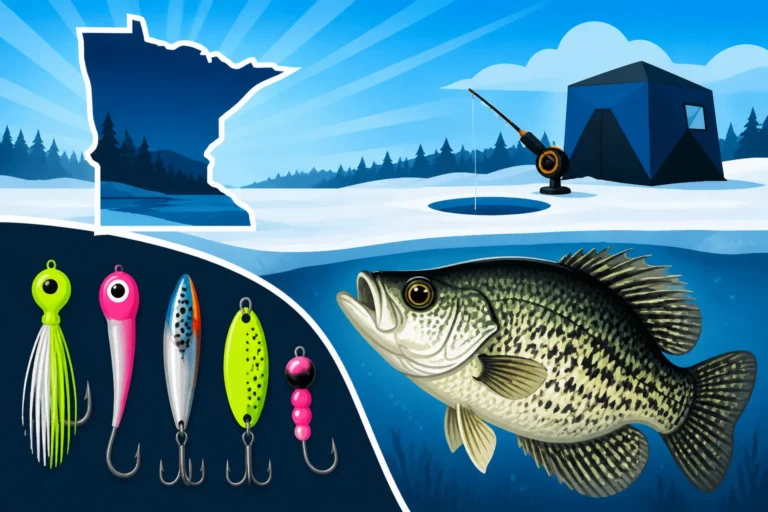
Not all jigs are created equal. Horizontal jigs, which sit flat in the water, are excellent for mimicking minnows or larger crustaceans. These are usually my go-to for crappies. Vertical jigs, often teardrop-shaped, are better for bluegills because they allow for a much smaller profile.
In recent years, Best Tungsten Jigs for Panfish have revolutionized the sport. Tungsten is much denser than lead, meaning you can use a tiny jig that still sinks quickly and shows up clearly on your sonar. This is a game-changer when you're fishing in 25 feet of water for suspended crappies. The extra weight also helps keep your line tight, which improves bite detection significantly.
Night Fishing for Slab Crappies
While bluegills usually shut down once the sun goes beneath the horizon, crappies are just getting started. Many of the largest crappies I've ever caught in Minnesota came between 6:00 PM and midnight. This nocturnal behavior is a survival mechanism, allowing them to hunt smaller forage that is less active during the day.
The Transition Period and Prime Hours
The "magic hour"—that 30 minutes before and after sunset—is the most critical time of the day. As the light fades, crappies will often move from the deep basin toward the nearest weed edge or flat to feed. If you are set up in a permanent shack, this is when you want to make sure your lines are clean and your bait is fresh.
If you’re out on a lake like Leech Lake or Upper Red, the crappies might stay in the basin but move higher in the water column. It isn't uncommon to find fish suspended only 5 or 10 feet below the ice in 30 feet of water. Always check the top half of the water column with your electronics before you move to a new hole. For safety during these late-night treks, I always suggest keeping a high-lumen headlamp (plenty of reliable options are available on Amazon) to navigate the ice and see your tip-ups.
Glow Lures and Light Attraction
Visibility is the biggest challenge at night. This is where "glow" finishes become essential. A glow-in-the-dark jig can act like a beacon in the murky depths. However, don't overdo it. Sometimes a super-bright lure can actually spook wary fish. I like to charge my jigs with a small UV flashlight for about 5 seconds. You want a soft, natural glow, not a neon sign.
Another trick used by veteran Minnesota anglers is the use of underwater lights. While Minnesota Ice Fishing & Shelter Rules govern what you can and cannot do, a small, submersible light dropped down a separate hole can attract zooplankton, which in turn attracts minnows, which eventually brings in the crappies. It’s a slow-play strategy, but it can turn a slow night into a frenzy.
Understanding Species-Specific Behavior
To truly master panfishing, you have to realize that crappies and bluegills are very different animals. Treating them the same is a recipe for a mediocre day. Their mouth structure, eye placement, and social hierarchy all dictate how they feed and where they hang out.
Bluegill Habits: Weeds and Wood
Bluegills are the "homebodies" of the lake. They love cover. If there is a fallen tree on a shallow flat, there are almost certainly bluegills nearby. They are also highly social and competitive. If you catch one, there are likely twenty more right under it.
When fishing for "gills," I focus on the "peck." They don't usually inhale the bait as aggressively as crappies. Instead, they might nip at the tail of your waxworm. This is why using a Minnesota Crappie & Sunfish Limits guide is important—you'll likely be catching a lot of them, and it's easy to lose track of your count when the action gets fast. To trigger the bigger "bull" bluegills, try to get your jig through the smaller fish at the top of the school to the larger, more cautious fish that often sit at the very bottom.
Crappie Schools: Suspended Giants
Crappies are the "nomads." They are constantly on the move, following schools of shad or shiners. This is why you can be catching them one minute and then have the screen go blank the next. They haven't necessarily stopped biting; they've simply swam twenty yards away.
Because they are suspended, your mobility is paramount. This is where a light setup and a good sled come in. If you're looking for gear to make this easier, check out Best Ice Fishing Sled or Tub options. Being able to pack up and move to a new hole in under two minutes is the secret of the most successful crappie hunters. If you're on a lake known for "slabs," like some of the metro-area lakes, remember that these fish are often older and wiser. They’ve seen every jig in the catalog, so don’t be afraid to try weird colors or larger-than-normal plastics.
Staying Mobile and Comfortable
The biggest mistake I see on Minnesota lakes is "fortress fishing." Someone hauls a massive wheelhouse out to a spot, sets it up, and stays there for three days regardless of whether they’re catching fish. If you want to consistently fill a bucket with Ice Fishing for Perch in Minnesota or crappies, you have to be willing to move.
The "Hole Hopping" Strategy
Hole hopping involves drilling 10 to 20 holes in a grid pattern over a likely structure and then moving from hole to hole with just your rod and your flasher. You spend no more than five minutes at each hole. If you don't see anything on the sonar, move to the next one.
This strategy is much easier if you have a lightweight power auger. Electric augers have become the standard because they are quiet and don't require you to mess with gas and oil in the freezing cold. Once you find the school, you can bring your portable shelter over to stay warm, but let the fish tell you where to sit. This proactive approach is also much more effective during Spring Crappie Fishing in Minnesota when the ice is melting and fish are moving toward their spawning grounds.
Proper Clothing and Shelter Management
You cannot fish effectively if you are shivering. The modern "float suit" is the single best investment an ice angler can make. Not only are they incredibly warm and windproof, but they also provide buoyancy in case of an accident. I also recommend keeping a stock of high-quality hand and toe warmers, which you can buy in bulk on Amazon to save some money over the course of a long Minnesota winter.
When using a portable hub-style shelter, management of your heat and moisture is key. Use a propane heater, but always ensure you have a vent open for fresh air. Condensation can build up quickly, dripping on your electronics and making your rod tips freeze up. A small, battery-operated fan hanging from the ceiling of your shelter can help circulate the warm air and keep the floor (and your holes) from freezing over.
Minnesota Fishing Regulations Disclaimer
Fishing regulations in Minnesota are subject to change annually and can vary significantly from one body of water to another. Always consult the latest version of the Minnesota Department of Natural Resources (DNR) fishing handbook or their official website before heading out. Be sure to check for specific "experimental" or "special" regulations that may apply to the lake you are visiting, particularly regarding bag limits and size restrictions for panfish. Ensuring you have the correct Minnesota Ice Fishing & Shelter Rules and a valid license is the responsibility of every angler to preserve our fisheries for future generations.