Best Seasonal Pattern for White Crappie in Minnesota
Understanding where white crappie go throughout the year in Minnesota can feel like trying to solve a moving puzzle. One day they're shallow, the next they've vanished into the depths, leaving you wondering if you're fishing in the right spot at all. This guide is here to unravel the mystery of white crappie seasonal patterns, giving you a clearer picture of where to find these elusive, delicious panfish, no matter the time of year.
Understanding White Crappie Behavior Throughout the Year
White crappie, like most fish, are creatures of comfort and convenience. Their entire existence revolves around finding optimal water temperatures, readily available food, and safe cover from predators. What makes them particularly interesting is their tendency to school up, sometimes in massive numbers, making them a fantastic target once you crack their seasonal code. Unlike their black crappie cousins, white crappie often tolerate — and sometimes even prefer — slightly murkier water and tend to be found in more open-water environments, or areas with extensive submerged timber and brush.
Why Seasons Dictate Crappie Locations
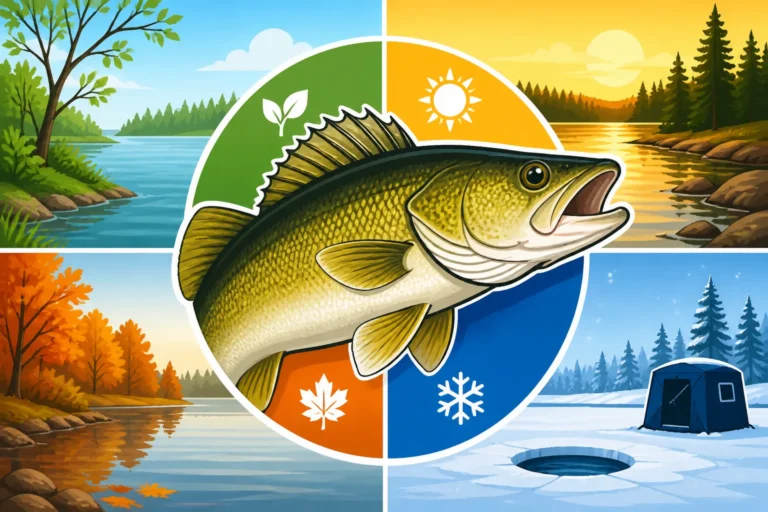
The changing seasons in Minnesota bring dramatic shifts in water temperature, light penetration, and food availability, directly influencing where white crappie will hold. Think of it like this: when the water is cold, their metabolism slows down, and they become less active, often seeking out stable, deeper water. As things warm up, they're on the move, chasing baitfish and preparing for their annual spawn. When the lake cools again in the fall, they're in a feeding frenzy, trying to pack on pounds before the long winter sets in. Ignoring these seasonal cues is like trying to catch a fish in a bathtub when it's really swimming in a lake – you're just not in the right place.
The Importance of Forage and Cover
White crappie are primarily sight feeders, and their diet consists largely of small minnows, insect larvae, zooplankton, and smaller invertebrates. Where the food goes, the crappie will follow. In spring, minnows move shallow to warmer water, and crappie are right behind them. In summer, schools of baitfish might suspend over deep basins, and that's exactly where you'll find the crappie. Beyond food, cover is paramount. White crappie are notorious for relating to submerged timber, brush piles, dock pilings, old submerged road beds, and the edges of weed lines. This cover provides ambush points for feeding and protection from larger predators like northern pike and walleye. The type and density of this cover can change with water levels and seasonal plant growth, so staying observant of these changes is crucial for consistent success.
Spring: Pre-Spawn and Spawning Frenzy
Spring in Minnesota is a magical time for crappie anglers. After months of ice fishing, the open water beckons, and white crappie are starting to get active, moving from their winter haunts towards shallower spawning grounds. This period offers some of the most predictable and exciting crappie fishing of the entire year.
Early Spring Warm-Up: Finding the Pre-Spawn Staging Areas
Once the ice finally gives way, usually in late April to mid-May, white crappie begin their annual migration. Water temperatures are slowly creeping up from the low 40s into the low 50s Fahrenheit. During this pre-spawn phase, crappie will stage in deeper water adjacent to their eventual spawning grounds. Think about points, channel edges, and drop-offs at the mouths of shallow bays, especially those with dark bottoms that absorb sunlight more efficiently. North-facing shorelines, sheltered from cold north winds, tend to warm up fastest, attracting both baitfish and the crappie that prey on them.
I've had some incredible days targeting these staging areas by slowly trolling small jigs tipped with a lively minnow or a soft plastic grub. A classic How to Use a Slip Bobber for Walleye & Crappie rig, set to suspend your bait just above these submerged features, can also be deadly. It's not about speed at this point; it's about methodical presentation and letting the fish find your bait as they slowly move and feed. Keep an eye on your fish finder for schools suspending along these breaks.
The Spawning Ritual: Shallow Water Explosion
The real excitement hits when the water temperatures consistently reach the 60-70°F range, typically from late May through early June in most Minnesota lakes. This is prime white crappie spawning time. They'll move right into shallow water, often 2-5 feet deep, seeking out hard bottom areas or submerged woody cover to build their nests. Unlike black crappie which prefer softer bottoms and dense vegetation, white crappie often favor areas with stick-ups, brush piles, flooded timber, and even the shallow sides of docks and bridge pilings.
Targeting them during the spawn is often a matter of finding these specific types of cover in shallow, warm bays. Casting tiny 1/32 or 1/16 ounce jigs under a small bobber, or even just free-lining a minnow into the cover, can result in explosive strikes. They become incredibly aggressive as they protect their nests and feed actively. This is when you can really rack up numbers, but remember to practice responsible catch and release to ensure future populations thrive. If you want to dive deeper into techniques for this time, check out our guide on Spring Crappie Fishing in Minnesota.
Summer: Deep Structure and Open Water
Once the spawn is over and the shallow waters heat up, white crappie tend to disperse from their spawning beds and transition to deeper, more stable environments. This can be a bit more challenging for anglers, as they might spread out or suspend over vast areas, making them harder to pinpoint without the right tools and tactics.
Post-Spawn Dispersion and Mid-Summer Patterns
After expending so much energy during the spawn, white crappie need to recuperate and feed heavily. As surface temperatures climb into the 70s and beyond, they'll generally move away from the super-shallow spawning flats. You'll often find them relating to main lake structural elements. This includes submerged humps, deep weed lines (especially the green, healthy ones), rock piles, and artificial fish cribs that the DNR or local groups place in lakes.
A key thing to remember about summer crappie, particularly white crappie, is their tendency to suspend. They might be chasing schools of baitfish in the middle of a deep basin, 10-20 feet down over 30 feet of water. This is where good electronics, like a fish finder, become invaluable. Using your sonar, you'll be looking for "clouds" or "arcs" of fish that aren't necessarily on the bottom. Once you locate a school, you'll need to figure out their depth. Don't be afraid to experiment with different depths until you get bites.
Targeting Summertime Crappie in Minnesota
To consistently catch white crappie in summer, you'll need to adapt your techniques. One popular method is long-lining small crankbaits or jigs with soft plastic tails, especially when trolling along break lines or over open water where crappie are suspended. The idea is to cover a lot of water until you connect with a school. Another effective approach is slow trolling with live minnows, again using a slip bobber or simply counting down your bait to the depth you've marked fish.
For those targeting specific submerged cover like brush piles or cribs, vertical jigging is often the ticket. Drop small jigs (1/16 to 1/8 ounce) directly into the cover, working them slowly up and down. Some anglers also find success fishing for white crappie during low light hours – dawn, dusk, or even at night. Crappie eyes are well-adapted to low light, giving them an advantage over baitfish during these times. Fishing under a dock light or street light can draw in both bait and crappie. For a more general overview of targeting these fish, our guide on Crappie & Panfish Fishing Techniques offers some excellent insights.
Fall: Feeding Frenzy Before Winter
Autumn is another fantastic time to target white crappie in Minnesota. As the days shorten and water temperatures begin to drop, crappie enter a distinct feeding pattern, aggressively trying to put on weight in preparation for the long, lean winter months. This can lead to some truly epic days on the water.
Autumn Turnover and Migration
As fall progresses, usually from September into November, Minnesota lakes experience what's known as "turnover." This is when the surface waters cool, become denser, and sink, mixing with the deeper, warmer water. This process can temporarily disperse fish and make fishing a bit tougher, but it doesn't last forever. Once the lake has fully mixed, oxygen and temperature become more uniform, and crappie settle into their fall patterns. They often move back towards deeper main lake structure and can be found relating to the remaining green weed lines that still offer cover and attract baitfish. Transition zones where hard bottom meets soft bottom, or where shallow flats drop into deep basins, are excellent places to start your search.
During this time, white crappie often form large, tight schools. When you find one fish, there are likely many more. This schooling behavior is driven by their instinct to feed efficiently and conserve energy as temperatures continue to fall. They're often found slightly deeper than in spring, but shallower than their mid-winter haunts, typically in the 10-25 foot range, depending on the lake's depth and clarity.
Fall Crappie Hotspots and Tactics
Finding these congregating schools is the name of the game in fall. Concentrate your efforts on deeper breaks, prominent points that extend into the main lake, and any substantial submerged cover like timber or artificial cribs in deeper water. Your fish finder is your best friend here, helping you mark those schools. Once you find them, precise bait presentation is key.
Vertical jigging with minnows or small spoons is highly effective. A shiner or fathead minnow on a plain hook or a small jig head, slowly lowered into a school of crappie, is often irresistible. Small, flashy spoons or blade baits can also trigger reaction strikes. Another great tactic is using a slip bobber to present your bait at a precise depth, especially if the crappie are suspended just off the bottom or holding tight to structure. The cooler water means they might not chase as actively as during the spawn, so a slower, more deliberate retrieve is usually best. Many anglers stock up on their live bait for these productive fall runs, often finding great deals on minnows from local bait shops or even larger online retailers like Amazon which might carry artificial options or tools.
Winter: Ice Fishing for White Crappie
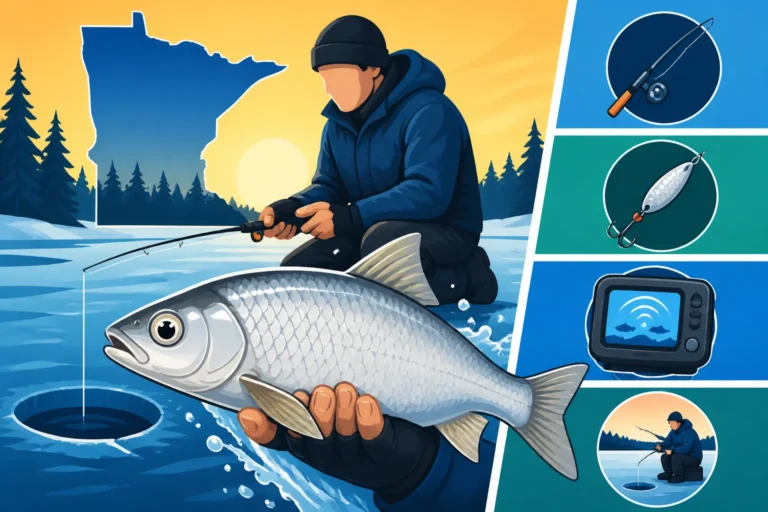
When the lakes freeze over, the chase for white crappie doesn't stop; it merely changes form. Ice fishing for white crappie in Minnesota can be incredibly rewarding, offering a unique challenge and the opportunity for some truly memorable catches.
Early Ice: Transition Zones and Green Weeds
The first few weeks of safe ice, typically from early December to late December, offer a fantastic window for active white crappie. During this period, crappie often haven't moved far from their late fall haunts. Look for them along the deeper edges of bays, basin edges adjacent to main lake structure, and any remaining healthy, green weed beds that are still producing oxygen and holding baitfish. In lakes like Lake Minnetonka or even some of the deeper spots in the Brainerd Lakes Area, these green weed edges can be white crappie magnets.
At early ice, crappie tend to be more active and willing to chase a lure, as their metabolism hasn't slowed down completely yet. This is a great time to be aggressive with your presentations, using slightly larger jigs or small spoons. Don't be afraid to hop around from hole to hole, drilling a grid pattern over potential crappie holding areas until you locate a school.
Mid-Winter Slump and Deep Basins
As the ice thickens, snow accumulates, and oxygen levels beneath the ice begin to fluctuate, white crappie often shift into a more sedentary mid-winter pattern, typically from January through February. This is when they move to deeper basin areas of the lake, often suspending over soft bottoms, or relating to isolated deep cover like artificial fish cribs, submerged humps, or even the subtle contours of a deep mud flat. Their metabolism slows considerably, and they become much more finicky.
Success during mid-winter hinges on finesse. You'll need a sensitive ice fishing rod, often with a spring bobber or highly visible tip, paired with tiny tungsten jigs (1/32 or 1/64 ounce) tipped with a small plastic, a wax worm, or a single minnow eye. Light line, usually 2-4 lb test monofilament or fluorocarbon, is essential. This is also when your electronics, such as a Vexilar or Humminbird flasher, become absolutely critical. They allow you to see your lure and the fish, helping you adjust your presentation to their mood. Often, the crappie might just rise slowly to inspect your bait, and a subtle "quiver" of the rod tip is all it takes to entice a bite. For those looking to upgrade their gear, our guide on Best Ice Fishing Electronics for Beginners offers some great starting points. You can also explore How to Catch Crappie Through the Ice in Minnesota for more specific tactics.
Late Ice: Return to Shallower Waters
As spring approaches and the ice begins to show signs of softening, usually in March, white crappie start to feel the pull of the upcoming spawn. This "late ice" period sees them gradually moving shallower, often staging in areas that are transitional between their deep wintering holes and their shallow spawning grounds. Think about the mouths of bays, points leading into shallow flats, or areas where current might create warmer water pockets.
Activity levels generally pick up again compared to mid-winter. Crappie might be found higher in the water column, and they might even chase slightly more aggressive presentations. Pay close attention to current ice conditions and always prioritize safety during this time of year. Knowing Ice Shelter Removal Deadlines in Minnesota is also key, as regulations often require shelters to be removed before the ice becomes too unstable.
Seasonal White Crappie Patterns in Minnesota
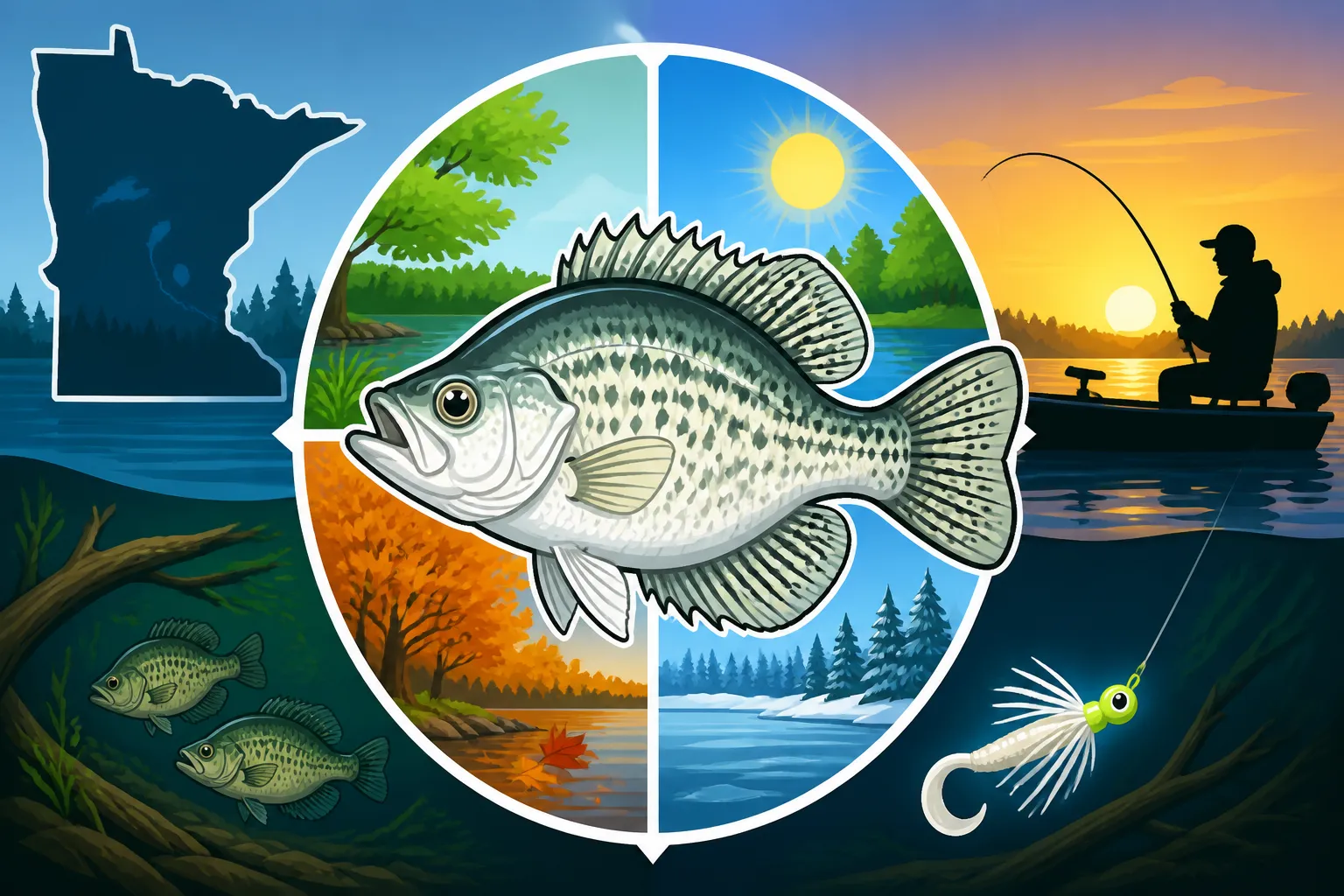
To help you keep track of these changes, here's a quick reference guide for white crappie seasonal patterns in Minnesota:
| Season | Water Temperature (°F) | Typical Location | Key Depths (feet) | Recommended Tactics | Common Baits/Lures |
|---|---|---|---|---|---|
| Early Spring | 40s – Low 50s | Deep breaks, channel edges, mouths of shallow bays | 8-20 | Slow trolling, slip bobbers, vertical jigging | Small jigs + minnows, plastic grubs |
| Spawn (Late Spring) | 60-70 | Shallow bays, submerged brush, docks, cattails | 2-8 | Casting jigs under bobbers, free-lining minnows | Tiny jigs + minnows, small plastic tubes |
| Summer | 70s+ | Deep humps, main lake structure, suspended over basins | 10-30+ | Long-lining crankbaits, slow trolling minnows, vertical jigging | Small cranks, plastic jigs, live minnows |
| Fall | 60s – 40s | Deeper breaks, main lake points, green weed edges | 10-25 | Vertical jigging, slip bobbers, slow trolling | Minnows, small spoons, plastic jigs |
| Early Ice | Ice covered | Deep weed edges, basin edges of bays | 8-20 | Aggressive jigging, tip-downs | Jigs + minnows, small spoons |
| Mid-Winter Ice | Ice covered | Deep basins, isolated deep cover (cribs) | 15-35+ | Finesse jigging, deadsticking | Tiny tungsten jigs + waxies/minnow heads |
| Late Ice | Ice covered (thinning) | Transitional areas, mouths of bays, shallowing breaks | 5-15 | Active jigging, slip bobbers | Small jigs + minnows, plastic grubs |
Remember, these are general guidelines, and specific lakes and conditions can always vary. However, understanding these seasonal movements will give you a significant advantage in consistently finding and catching white crappie in Minnesota.
Disclaimer
Fishing conditions and regulations in Minnesota can change. Always consult the most current Minnesota Department of Natural Resources (DNR) fishing regulations booklet before heading out on the water. This guide is for informational purposes only and should not be considered a substitute for official regulations.