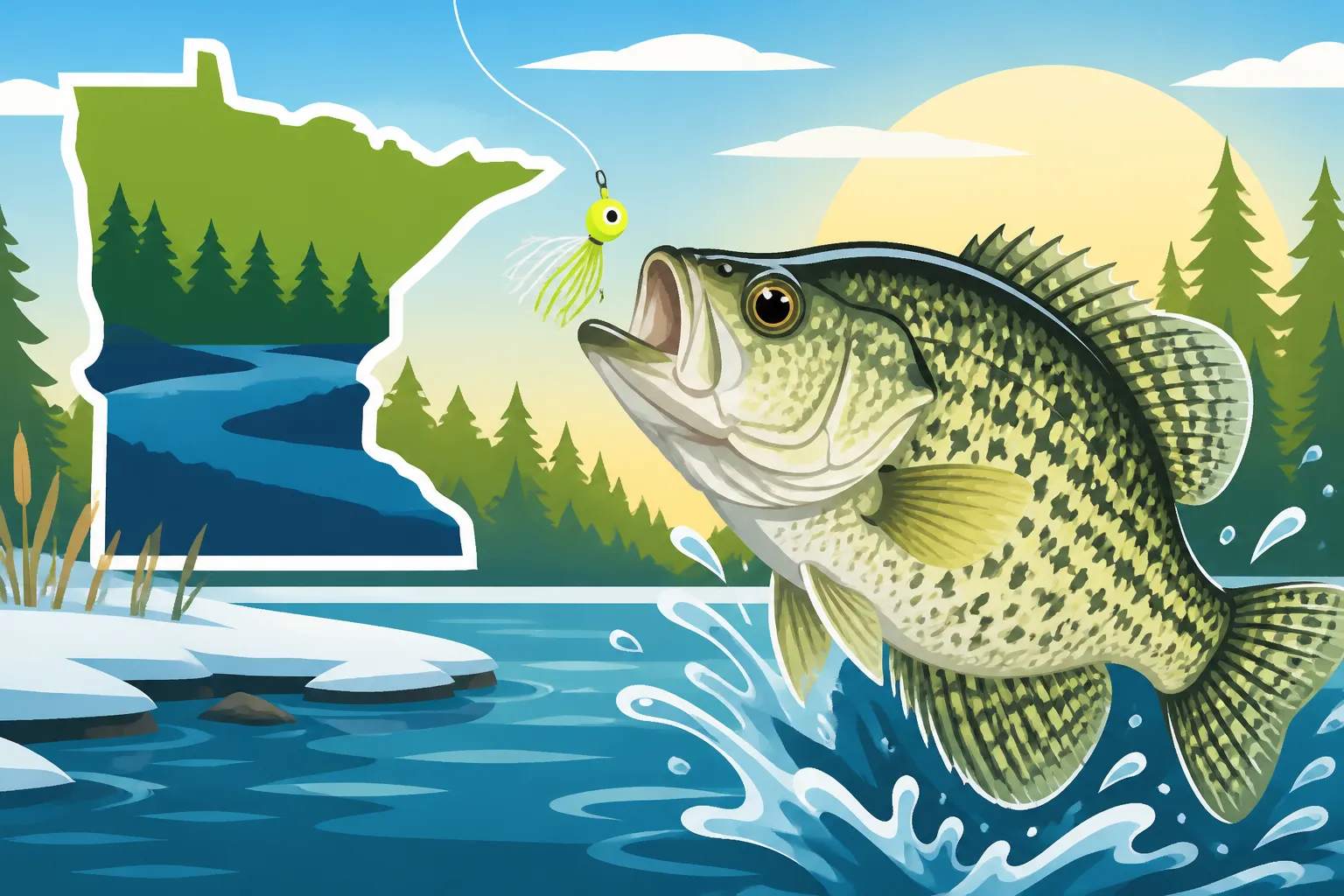
Spring Crappie Fishing in Minnesota
After the brutal stretch of a Minnesota winter, the wait for the walleye opener can feel like a test of human endurance, leaving many of us staring longingly at open water from the shore. This guide solves that agonizing "in-between" season frustration by detailing how to master the spring crappie run, the first and most exciting open-water bite of the year.
Understanding the Spring Crappie Migration
The transition from ice-out to the first true lily pad growth is a magical window for panfish anglers. As the sun begins to stay out longer and those first few 50-degree days hit, the water in the shallow bays of lakes like Lake Minnetonka or Prior Lake begins to warm much faster than the deep main basins. Crappies are cold-blooded creatures, and after a long winter of lethargy in 30-foot holes, they are desperate for two things: warmth and food. Understanding this biological drive is the difference between a bucket full of "slabs" and a frustrating afternoon on the dock.
The Role of Water Temperature
In the world of spring panfish, the thermometer is more important than the GPS. When the ice first leaves the lake, the water is usually a chilly 36 to 38 degrees. At this stage, the fish are still staging just outside their wintering holes. However, once that water temperature hits the 45-degree mark, the migration begins in earnest. Crappies will start pushing into the northernmost bays of a lake because these areas receive the most direct sunlight and are protected from the cold north winds.
If you find a bay with a dark, muddy bottom, you’ve found a gold mine. Mud absorbs heat better than sand or rock, often staying 3 to 5 degrees warmer than the rest of the lake. I’ve had days on Lake Waconia where the main lake was 48 degrees, but a tiny, muddy pocket in the reeds was 54 degrees. In that 54-degree water, the crappies were aggressive and stacked like cordwood. Keeping a close eye on your electronics for these temperature spikes is essential, but if you don't have high-end tech, simply feeling the water with your hand in various spots can give you a clue. You should also be aware of the Minnesota Crappie & Sunfish Limits to ensure you are fishing responsibly during this sensitive time.
Identifying Spawning Channels and Bays
Not all shallow water is created equal. When searching for spring crappies, look for "nooks and crannies" rather than wide-open shorelines. Channels that connect two bodies of water are classic hotspots because they often have slightly moving water that stays oxygenated and attracts minnows. On lakes like the Whitefish Chain, these channels can become congested with fish as they move toward the shallow, weedy backwaters.
Vegetation is another key factor. While the lush green cabbage of summer isn't present yet, the brown, matted remains of last year’s bulrushes and cattails provide excellent cover. Crappies will tuck themselves right into the middle of these old reeds to soak up the sun. If you can find a spot where a small creek or even a drainage pipe is trickling into a bay, the slightly warmer runoff can attract fish from hundreds of yards away. This is a great time to brush up on How to Catch Black Crappie in Minnesota (Step by Step) to understand the nuances of their behavior in these specific environments.
Top Spring Crappie Techniques
Once you’ve located the fish, the next hurdle is presentation. Spring crappies can be notoriously finicky. One hour they’re hitting anything that moves, and the next, a cold front rolls through, and they won't look at a lure unless it's sitting perfectly still. You need to be versatile and willing to change your approach based on the hour-to-hour weather shifts that define a Minnesota spring.
The Classic Slip Bobber Setup
There is perhaps no more iconic image in Minnesota fishing than a small foam bobber dancing on the surface of a calm bay. The slip bobber is the undisputed king of spring crappie fishing because it allows for two vital things: precise depth control and extreme vertical stillness. When fish are buried in the reeds, you need a lure that can drop straight down into a small opening without snagging on the way in.
I typically use a 1/32 oz or 1/64 oz jig head tipped with a live fathead minnow or a small wax worm. The key is to set your bobber stop so the bait sits about 6 to 12 inches above the fish. Crappies have eyes positioned on the top of their heads; they almost always feed upward. If your bait is below them, they’ll never see it. If you’re fishing a lake with clear water, like Gull Lake, try using a fluorocarbon leader to make your line invisible. You can find great deals on spool-sized fluorocarbon on Amazon if you want to stock up before the season starts. For more detailed rigging, check out our guide on How to Use a Slip Bobber for Walleye & Crappie.
Vertical Jigging and The Slow Roll
Sometimes, the fish are aggressive enough that you don't need the bobber. When crappies are spread out across a shallow mud flat, "the slow roll" is a deadly technique. This involves casting a small plastic jig—like a Bobby Garland Baby Shad or a Panfish Assassin—and retrieving it just fast enough to keep it off the bottom. The tail should have a subtle, enticing wiggle that mimics a dying minnow.
In thicker cover, vertical jigging is the way to go. This is common on lakes like Lake Minnetonka where the docks and boat lifts are already in the water. You can dip your jig directly into the shadows of the dock pilings. It’s a game of inches; often, the fish are tight against the wood. If you're losing a lot of jigs to the brush or dock legs, I recommend buying your jig heads in bulk on Amazon to save money over the course of the season. Mastering these Best Crappie Fishing Tactics in Minnesota will significantly increase your catch rate when the bite gets tough.
Where to Find Crappies in Minnesota Lakes
Minnesota is blessed with thousands of panfish lakes, but a few stand out as legendary for their spring production. Whether you’re in the metro or heading "up north," knowing which lakes turn on first can help you plan your weekend trips more effectively.
Metro Hotspots: Minnetonka and Waconia
Lake Minnetonka is arguably the most famous spring crappie destination in the state. The sheer number of bays—from Gray's Bay to Cook's Bay—provides endless opportunities. The key here is to find the bays that are shallow and protected. Because Minnetonka has so much boat traffic, the fish can be a bit more "skittish" than on a quiet northern lake. Using a longer rod to make long casts away from your boat can be a game-changer.
Lake Waconia, located just west of the metro, is another powerhouse. It’s a shallower lake overall, which means it warms up faster than the deep metro lakes. The weed lines on the south side of the lake are prime territory in late April. If you find yourself struggling to find fish, looking at the Best Crappie Lakes in Minnesota list can give you some alternative options in the surrounding counties.
Central MN Powerhouses: Gull and Pelican
Moving toward the Brainerd Lakes area, Gull Lake is a premier destination. While known for walleyes, the spring crappie bite in the northern channels is world-class. The fish here tend to be slightly larger on average, with 12-inch "slabs" being quite common. Pelican Lake, near Breezy Point, is another gem. It has a lot of shallow, sandy flats that transition into muck, creating perfect staging areas for schools of crappies.
On these larger lakes, wind is your enemy and your friend. A "warm" wind blowing into a bay will push the surface-warmed water and the plankton into that area, bringing the baitfish and the crappies with them. However, a "cold" north wind will shut the bite down instantly. Always fish the windward shore if the air is warm, and the leeward shore if a cold front just passed. You'll want to stay updated on the Minnesota Fishing Regulations Changes for 2026 to ensure you're following any new size restrictions on these popular waters.
| Lure Type | Best Condition | Suggested Size | Hook Style |
|---|---|---|---|
| Marabou Jig | Cold Water / Finicky Fish | 1/64 oz | Long Shank |
| Plastic Paddle Tail | Warm Water / Aggressive Fish | 2 inch | Ball Head |
| Live Minnow | Post-Front / Negative Mood | Small Fathead | #6 or #8 Aberdeen |
| Tungsten Jig | High Wind / Deep Staging | 3mm – 4mm | Drop Style |
Essential Gear for Spring Panfish
You don't need a $50,000 bass boat to catch spring crappies, but having the right specialized gear makes the experience much more enjoyable and successful. Precision is the name of the game when dealing with light baits and sensitive bites.
Rod and Reel Selection
A dedicated panfish rod is a must. You are looking for a light or ultra-light power rod with a fast action tip. The "light" power ensures you don't rip the hook out of the crappie's notoriously thin, "papery" mouth—hence the name "papermouths." The "fast" action tip allows you to feel the slightest tick on the line.
I prefer a rod in the 6'6" to 7' range. This extra length helps with casting light 1/32 oz jigs and provides more leverage when you’re trying to hoist a fish out of heavy lily pads. Pair this with a 1000 or 2000 series spinning reel. Many anglers find high-quality panfish combos on Amazon that are perfectly balanced for this type of fishing. For a deeper dive into specific brands and models, see our guide on the Best Gear for Crappie Fishing in Minnesota.
Lines and Baits
Line choice is perhaps the most overlooked aspect of crappie fishing. Most people use line that is way too heavy. For spring crappies, 4lb test monofilament or fluorocarbon is the gold standard. If you go up to 8lb or 10lb, you lose the ability to cast light lures, and the fish will see the thick line in the clear spring water.
For baits, nothing beats the real thing when the water is under 50 degrees. Small fathead minnows or "crappie minnows" are the staple. As the water warms above 50, you can switch to plastics. The advantage of plastics is efficiency; you don't have to re-bait your hook every time a small sunfish nipped at it. If you’re heading out for a full day, I always suggest bringing a variety of colors. In stained water, like the Minnesota River backwaters, bright oranges and chartreuse work best. In clear water, natural silvers and whites are superior. Keeping your tackle organized in a small box (plenty of waterproof options are available on Amazon) will save you from fumbling when the bite gets fast and furious.
Minnesota Crappie Regulations and Conservation
As much as we all love a good fish fry, spring is a vulnerable time for crappies. Because they congregate in such large numbers in shallow water, they are very easy to overharvest. Following the law is the bare minimum; practicing good conservation ensures our kids can enjoy the same "slab" fishing we do today.
Knowing Your Limits
In 2026, Minnesota continues to implement more lake-specific regulations for panfish. While the statewide limit for crappies is 10 fish, many popular lakes have reduced limits of 5 fish to help maintain the average size of the population. It’s incredibly important to check the DNR regulations for the specific body of water you are fishing.
I always tell people that if you want a meal, keep the 9 and 10-inch fish. The 13 and 14-inch "trophy" crappies are often 8 to 10 years old and carry the best genetics for the lake. Releasing those big females allows them to finish their spawn and keep the population healthy. You can find all the details in the Minnesota Fishing Limits: Bag & Possession (2026) guide. If you're a new angler or visiting from out of state, don't forget to check the Minnesota Fishing License: Cost, Types & How to Buy (2026) to stay legal.
Special Regulations and Ethical Fishing
Some lakes, like those in the "Quality Sunfish Initiative," have very strict rules. These are designed to combat "stunting," where a lake has thousands of tiny fish but none of keepable size. By limiting harvest, the DNR allows the fish to reach their full potential.
Beyond the legal limits, consider your impact on the environment. Spring shorelines are often soft and prone to erosion. If you're shore fishing, be mindful of where you're walking and avoid trampling new spring growth. Also, ensure you are cleaning your gear to prevent the spread of invasive species, a topic covered extensively in our Aquatic Invasive Species (AIS) Rules for Boaters guide. Responsible angling ensures that the thrill of the first spring bobber down remains a Minnesota tradition for generations to come.
Minnesota Fishing Disclaimer
This guide is intended for informational and educational purposes only. While we strive to provide the most accurate and up-to-date information regarding Minnesota fishing regulations, seasons, and techniques, rules can change frequently. Always consult the official Minnesota Department of Natural Resources (DNR) handbook or website before heading out on the water. Fishing involves inherent risks, including weather changes and water safety concerns; always wear a life jacket and fish responsibly.