Garmin LiveScope Review: Is Forward-Facing Sonar Worth It?
You’ve been out on your favorite Minnesota lake, marking fish on your traditional sonar, seeing those arches, but nothing bites. It’s a common frustration, isn't it? We've all stared at a screen, wondering if those fish are actually there, how active they are, and if our lure is even in their strike zone. Garmin LiveScope promises to change all that, offering a real-time, underwater view that feels like magic. But is this forward-facing sonar really worth the significant investment for us everyday anglers? This guide will dive deep into what LiveScope offers, its benefits, its drawbacks, and help you decide if it's the game-changer you need for Minnesota fishing.
Understanding Forward-Facing Sonar Technology
For years, our fish finders showed us glimpses of the past. Traditional sonar paints a picture of what our transducer has already passed over, or what's directly beneath us in a cone shape. It's fantastic for mapping bottom contours, identifying structure, and marking bait schools, but it leaves a lot to the imagination about what's actually happening in front of or around our boat. Forward-facing sonar, like the much-talked-about Garmin LiveScope, flips that script entirely, giving you a live video-game-like view of the underwater world in real-time.
Traditional Sonar Limitations
Think about your trusty 2D sonar or even your down imaging and side imaging. They are incredibly useful tools, no doubt. You see those iconic "arches" indicating fish, or maybe a clearer representation of a school of baitfish. Side imaging lets you scan wide swaths of the bottom, revealing hidden rock piles or sunken timber off to the sides of your boat. But here's the rub: all of this is historical data to some extent, or a narrow snapshot. When you mark an arch, you don't know if that fish is actively feeding, if it's moving left or right, or even if your lure is truly presenting itself to that fish.
This limitation often leads to frustration. You pull up to a promising breakline on a lake like Leech Lake or Lake Vermilion, see a cluster of arches on your traditional sonar, drop your jig, and… nothing. Was your jig landing ten feet away from the fish? Did they spook before you got there? Are they just not interested in what you're throwing? Traditional sonar often leaves you guessing, forcing you to make educated assumptions and rely heavily on past experience or sheer luck. It's a great tool for finding where the fish might be, but not necessarily how they're behaving in the moment.
The Real-Time Advantage of LiveScope
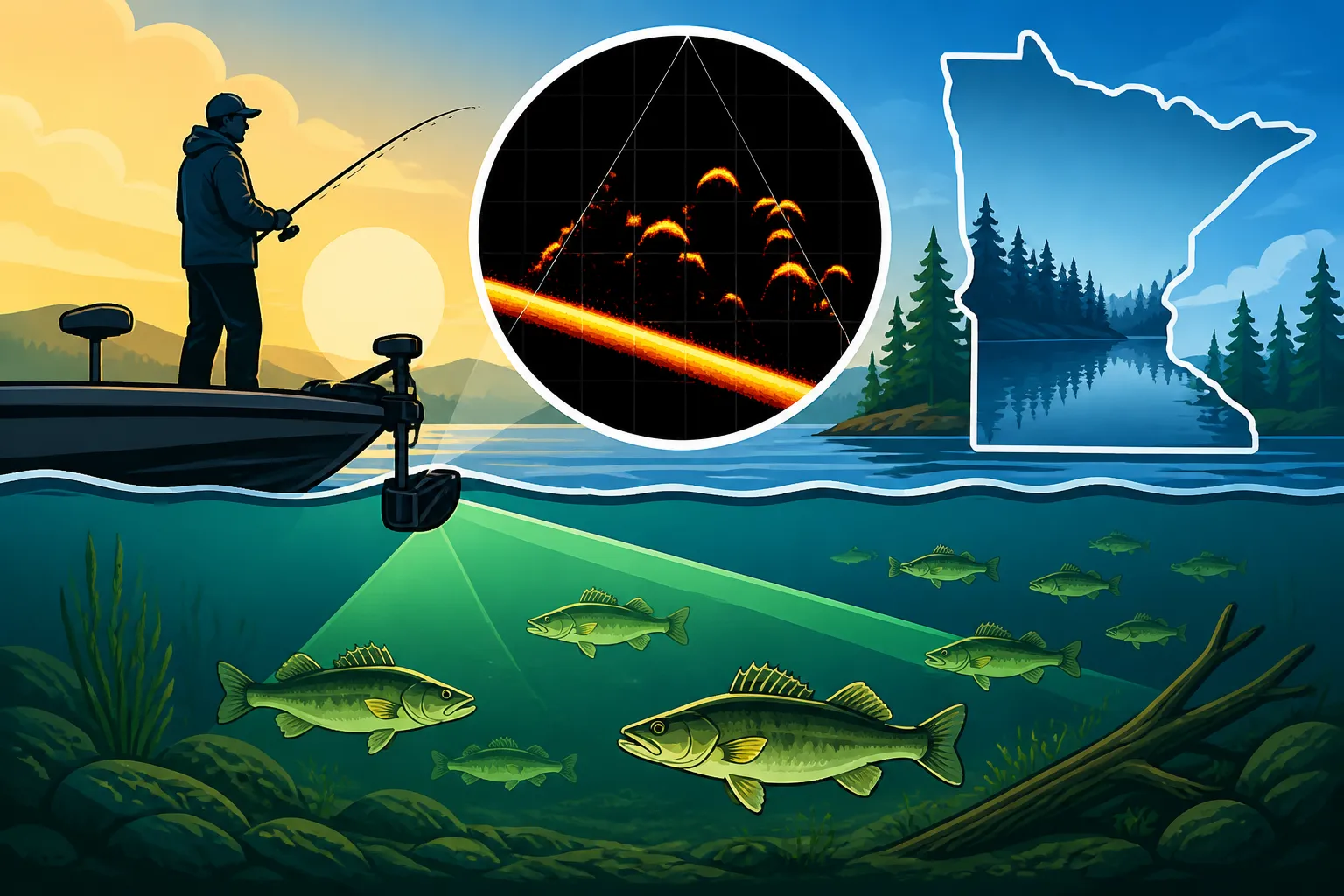
Garmin LiveScope uses a revolutionary transducer that sends out a fan-shaped sonar beam, painting a live picture in front of your boat, below it, or even off to the sides in a wide "perspective" view. This isn't historical data; it's happening right now. You can literally watch your lure descend through the water column, see a walleye approach it from a submerged log, or observe a smallmouth bass dart out from a rock pile to inspect your offering. The clarity and detail are simply astounding, making you feel like you have an underwater camera, but one that can see through murky water and at significant distances.
The immediate feedback loop is what truly sets it apart. If a fish ignores your presentation, you see it happen. You can make immediate adjustments – twitch your jig differently, change your retrieve speed, or even swap out your lure entirely – and instantly see the fish's reaction. This real-time interaction fundamentally changes how you approach fishing. Instead of blind casting or hoping for a bite, you can actively hunt and engage with individual fish or schools. This technology gives you a distinct edge, especially when the bite is tough or fish are scattered.
Key Features and Benefits of Garmin LiveScope for Minnesota Anglers
For those of us who spend countless hours on Minnesota's diverse waters, from the vast expanses of Lake of the Woods to the intricate structures of Mille Lacs Lake, Garmin LiveScope offers some truly compelling advantages. It's more than just a fancy fish finder; it's a strategic tool that can refine your techniques and unlock new fishing opportunities.
Precision Fishing and Target Acquisition
One of the most profound benefits of LiveScope is its ability to facilitate precision fishing. Imagine you're fishing for wary walleye on a clear-water lake. With traditional sonar, you might see them scattered along a break, but you're still guessing where exactly to cast. With LiveScope, you can scan ahead, spot an individual walleye tucked next to a boulder, and then precisely pitch your jig or cast your crankbait directly to that fish. You can watch your lure fall, see the fish react, and know instantly if your presentation is on target or needs adjustment.
This level of targeting is revolutionary for specific species. For instance, chasing trophy smallmouth bass on a rocky reef structure? You can identify specific ambush points and cast right to them. Targeting crappie suspended in a brush pile? You can drop your jig directly into the densest part of the school and observe their reaction. This precision minimizes wasted casts and maximizes your time interacting with actual fish, greatly increasing your efficiency and ultimately, your catch rates. It's the difference between blindly swinging a bat and knowing exactly where the ball is coming.
Unlocking Structure and Cover
Minnesota lakes are renowned for their incredible variety of structure and cover, from massive rock reefs and deep weed lines to subtle mud flats and submerged timber. Traditional sonar helps you find these features, but LiveScope lets you truly understand them in a new way. You can approach a deep weed edge and see how tall the weeds are, where the pockets are, and if fish are holding in or around them, all before you've even passed over the area. This helps you identify the best fish-holding spots immediately, without having to make a guess and then drift or troll over them.
Consider navigating a field of submerged standing timber on a river system. With LiveScope, you can see the individual trees, their branches, and any fish relating to them, allowing you to pick your way through safely and effectively. This capability is also invaluable for ice fishing. Instead of drilling a dozen holes trying to find the perfect spot on a deep break, you can use LiveScope to scan horizontally from a single hole, locate prime structure or a school of fish, and then drill your next hole exactly where it counts. This strategic advantage saves time, effort, and propane!
Is It Worth the Investment? Weighing the Pros and Cons
This is the million-dollar question for many anglers, especially with the considerable price tag associated with quality forward-facing sonar. Garmin LiveScope isn't a cheap piece of equipment, and it's important to approach the decision realistically. Is it a magical solution that guarantees fish? No. Is it a powerful tool that can dramatically improve your fishing experience and success? Absolutely, for the right angler.
The "Worth It" Factors: Who Benefits Most?
Let's be honest, LiveScope isn't for everyone. But for a certain type of angler, it can be profoundly "worth it." If you are a competitive angler, participating in tournaments for walleye, bass, or crappie, this technology is almost non-negotiable at this point. The ability to quickly locate active fish, observe their behavior, and make real-time adjustments provides a significant edge over the competition. It's a tool that can translate directly into higher finishes and more prize money.
Beyond the tournament scene, serious recreational anglers who dedicate significant time to specific species will also find immense value. If you're passionate about catching big walleye, obsessed with cracking the code on finicky muskie, or constantly trying to find those jumbo crappie, LiveScope offers insights that traditional electronics simply cannot. It helps you become a more efficient and effective angler by eliminating much of the guesswork. Anglers who already possess a strong foundation of fishing knowledge – understanding Seasonal Fishing Patterns in Minnesota and fish behavior – will be able to integrate LiveScope into their existing strategies most effectively, using it to refine and execute those strategies with greater precision. For these individuals, the investment pays off in increased success and a deeper understanding of the underwater world.
The Downsides and Considerations
While the benefits are significant, it's crucial to consider the downsides before pulling the trigger. The most obvious hurdle is the cost. A complete Garmin LiveScope system, including the transducer, black box, and a compatible head unit (like a Garmin ECHOMAP or GPSMAP), can easily run several thousand dollars. That's a serious chunk of change, especially when you factor in installation costs if you're not doing it yourself. You can certainly find components at major retailers like Bass Pro Shops or Amazon, but it's a major purchase regardless.
Another consideration is the learning curve. LiveScope isn't entirely plug-and-play. It takes time on the water to learn how to interpret the images, adjust settings for optimal clarity in different conditions, and develop effective fishing strategies around it. Some anglers might also find it a distraction, leading to "screen watching" instead of paying attention to the feel of the bite or subtle rod movements. It requires a balance, integrating the visual information with traditional angling senses. Finally, there are practical aspects like battery drain. Running a powerful system like LiveScope requires a robust power source, and you might need to upgrade your trolling motor batteries or add a dedicated lithium battery to power your electronics for a full day on the water.
Practical Applications in Minnesota Waters
Alright, so we've talked about the tech and the pros and cons in theory. But how does Garmin LiveScope actually translate into more fish and a better fishing experience on our beloved Minnesota lakes and rivers? The real magic happens when you apply this technology to specific fishing scenarios and target species that call the Land of 10,000 Lakes home.
Ice Fishing Game Changer
If there's one area where forward-facing sonar has unequivocally revolutionized fishing in Minnesota, it's ice fishing. Traditional flashers are excellent for seeing what's directly below your hole, but LiveScope takes it to a whole new level. Imagine you're targeting walleye on a deep break. Instead of drilling a grid of holes and dropping a transducer down each one, you can use LiveScope in "forward" or "perspective" mode from a single hole to scan a massive area around you. You can see baitfish, structure, and individual walleye up to 100 feet away.
When you spot a fish, you don't just guess its position; you know exactly where it is. You can then drill your next hole directly over it or strategically position yourself to cast to it from a distance. Once a fish appears on screen, you can watch it approach your lure, see if it's interested, and adjust your jigging cadence or bait size in real-time. This is particularly effective for finicky fish. If you want to learn more about fishing through the hard water, check out our guide on How to Ice Fish for the First Time in Minnesota. Whether you're chasing jumbo perch on Lake Winnibigoshish, hungry crappie, or even actively targeting northern pike with a deadstick, LiveScope turns ice fishing into a dynamic, interactive experience, significantly reducing the guesswork and maximizing your time interacting with fish.
Open Water Domination: Walleye, Bass, and Muskie
On open water, Garmin LiveScope continues to prove its worth across various species and techniques. For walleye anglers, especially those who love jigging or slip-bobber fishing, the ability to see individual fish relating to structure is paramount. You can precisely place your bait on the nose of a walleye holding tight to a rock pile on a lake like Gull Lake or Cass Lake. When trolling with crankbaits or spinner rigs, you can identify isolated bait schools or fish on breaks and adjust your boat's path or lure depth to intercept them, rather than just pulling lines hoping for the best. Check out our comprehensive guide on Walleye Fishing Techniques: Complete Minnesota Guide for more insights.
For bass anglers, particularly those chasing smallmouth bass in clearer waters, LiveScope enables true sight fishing. You can scan ahead of your boat, spot smallmouths cruising rock points or hiding in sparse weeds, and then pitch your soft plastic or topwater bait directly to them, watching their response. It's incredibly exciting to see a big smallmouth charge your lure! And for the dedicated muskie hunters, while these giants often reveal themselves through their sheer size, LiveScope provides an extra layer of confidence, allowing you to confirm that a "follow" is indeed a muskie or to identify potential casting targets around prominent cover. It truly is one of the Best Fish Finders & Electronics for Minnesota Fishing available today.
Getting Started with Garmin LiveScope
So, you're leaning towards taking the plunge into the world of forward-facing sonar. That's awesome! It's a significant step for any angler, and knowing how to get started and what to expect can make a big difference in your experience. Like any advanced piece of fishing gear, a little homework goes a long way.
Choosing the Right System and Components
Garmin offers several iterations of their LiveScope technology, each with different capabilities. The most common transducers are the LVS32 and the newer, more advanced LVS34, which boasts even better clarity and range. There's also the LiveScope XR (Extra Range) for deeper water applications. These transducers connect to a "black box" module (the GLS 10) which then links to a compatible Garmin chartplotter or fish finder display, such as an ECHOMAP or GPSMAP series unit. You'll want a display large enough to truly appreciate the detail LiveScope provides, so generally, a 9-inch screen or larger is recommended.
When it comes to purchasing, you have options. Many anglers find competitive pricing and broad selection at large outdoor retailers like Bass Pro Shops, or online through platforms like Amazon. Local marine electronics dealers are also an excellent resource, often providing expert advice on installation and setup specific to your boat. Don't forget to consider the mounting system for your transducer. There are various options for trolling motors, transom mounts, and even dedicated poles for forward-facing use, especially important for maximizing visibility while ice fishing. For more details on what accessories to look for, our guide on Best Ice Fishing Gear for Minnesota (2027 Guide) might be a helpful resource.
Learning Curve and Maximizing Your Investment
Let's be real: simply buying LiveScope doesn't automatically make you a fishing wizard. There is a definite learning curve. The images you see on screen can look a bit abstract at first, and it takes time and practice to truly interpret what you're seeing. However, Garmin has made the interface quite user-friendly, and there's a wealth of information out there to help.
Start by spending time in familiar areas, observing how different fish species appear, how your lures look, and how structure is rendered. Play with the settings, like gain and range, to understand how they impact your view. YouTube is an incredible resource, with countless videos from pro anglers and enthusiasts demonstrating how they use LiveScope for different species and techniques. Joining online forums or local fishing clubs can also provide invaluable tips and tricks from experienced users. Remember, the goal isn't just to see fish, but to understand their behavior and use that information to improve your angling skills. It's an investment, not just in gear, but in your development as an angler.
By integrating LiveScope into your fishing repertoire, whether you're chasing Best Walleye Lures: Jigs, Cranks & Spinners in the summer or trying to dial in the panfish bite through the ice, you'll gain an unparalleled understanding of the underwater world, making your time on the water more productive and enjoyable.
| Feature / Scenario | Traditional Sonar (2D/Side) | Garmin LiveScope (Forward-Facing) | Benefit for Angler |
|---|---|---|---|
| Fish Detection | Arches, blobs, historical view, general location | Real-time, individual fish visible, reaction to bait | Pinpoint casting, immediate feedback on fish interest, fewer wasted casts |
| Structure Interpretation | Outline of bottom, general shapes, some detail off to sides | Detailed 3D-like view of brush piles, rock crevices, weed lines in front | Understand fish-holding spots, safer navigation, precise lure placement |
| Ice Fishing | Vertical view only, limited horizontal scan, historical data | Wide horizontal scan from one hole, real-time fish movement | Fewer holes, faster fish finding, observe fish interaction with bait |
| Targeted Casting | Guesswork based on sonar marks, general area casting | Cast directly to visible fish or specific parts of structure | Increased hook-up rates, less time searching, more time catching |
| Lure Presentation | Unseen interaction, relying on feel and assumptions | Watch your lure descend, see fish approach and react | Adjust retrieve speed/cadence in real-time, instantly adapt to fish mood |
| Learning Curve | Relatively quick to understand basics | Requires practice to interpret images and integrate into fishing | Deeper understanding of fish behavior, faster skill development |
Disclaimer
The information provided in this article is for general guidance and informational purposes only. Fishing regulations, season dates, and limits are subject to change by the Minnesota Department of Natural Resources (DNR). Always consult the most current official Minnesota Fishing Regulations handbook or the MN DNR website before heading out on the water. Equipment recommendations are based on general experience and market research; individual results and preferences may vary.