How to Catch Muskie for the First Time
So you've decided to chase the elusive muskie, huh? Welcome to the club! Many anglers, especially those new to muskie fishing in Minnesota, feel a mix of excitement and intimidation. It's a journey filled with long casts, incredible scenery, and often, plenty of waiting. It can be frustrating when you spend hours on the water without a sniff, but that moment when a giant follows your lure to the boat is absolutely electrifying. This guide is for you, the first-timer, to help demystify the process and equip you with the knowledge to make your initial muskie adventures successful and, most importantly, fun.
Understanding the Muskie Mentality: The "Fish of 10,000 Casts"
Let's be real: muskie fishing has a reputation, and for good reason. They're often called the "fish of 10,000 casts," and while that's an exaggeration, it highlights the challenge and reward. Unlike a panfish that will readily bite, a muskie is a true apex predator, a creature of instinct and ambush, and they can be incredibly picky. Don't let the moniker scare you off, though. It simply means you need a different mindset than when you're targeting a mess of crappies. This isn't about numbers; it's about the chase, the thrill of the potential, and the sheer power of these freshwater giants.
The Muskie Mindset: Patience and Persistence
The biggest hurdle for a first-time muskie angler isn't always the gear or the technique; it's often the mental game. You might spend an entire day casting heavy lures, working those arms until they ache, and not see a single fish. It's easy to get discouraged, to question if you're doing something wrong. But here's the truth: that's just muskie fishing. These fish are masters of their domain, and they don't give themselves up easily. You need to commit to the process, trust your casts, and truly believe that the next retrieve could be the one. Think of each cast as a potential opportunity, a lottery ticket. The more you cast, the better your odds. This dedication is what separates a muskie angler from the casual weekend warrior. If you embrace the challenge and the slow pace, the rewards when they come are truly unforgettable.
Identifying Muskie Waters
Minnesota is blessed with incredible muskie fisheries, but you can't just cast anywhere and expect success. Muskie thrive in specific environments. They prefer large, clear to moderately stained lakes and rivers with abundant forage like sucker, cisco, and perch. Look for areas with diverse structure: weed lines, rock reefs, sharp break lines, submerged islands, and even standing timber. These are ambush points where a muskie can hide and dart out to intercept prey. Lakes like Lake Vermilion, Leech Lake, and Mille Lacs Lake are renowned for their muskie populations, offering fantastic opportunities. But don't overlook smaller, lesser-known waters that might hold trophy fish with less fishing pressure. Familiarize yourself with local lake maps and consult bait shop reports to pinpoint productive areas. Understanding the general habitat is crucial before you even make your first cast. Knowing where muskie typically hang out will drastically improve your chances compared to just randomly exploring. It also helps to know how to differentiate them from their northern pike cousins; check out our guide on What's the Difference Between a Muskie and a Pike? for helpful tips.
Essential Gear for Your First Muskie Hunt
When you're chasing the biggest freshwater predators, your standard bass or walleye setup just won't cut it. Muskie fishing demands specialized gear designed to handle powerful fish, heavy lures, and aggressive fights. Skimping on tackle here can lead to heartbreak, snapped lines, and lost fish.
Rods and Reels: The Heavy-Duty Setup
Let's talk about the backbone of your muskie arsenal. For rods, you're looking for something long and stiff – typically 7'6" to 9' in a heavy or extra-heavy power rating, with a fast or extra-fast action. This length gives you leverage for long casts with big baits and helps control a powerful fish boat-side. Popular brands like St. Croix, Thorne Bros., and Shimano offer excellent muskie-specific rods. For reels, a heavy-duty baitcasting reel is essential. You'll need a reel with a high line capacity, a strong drag system, and a comfortable gear ratio (around 5.X:1 or 6.X:1 is good for most applications, offering a balance of power and retrieve speed). Brands like Shimano Tranx, Daiwa Lexa, or Abu Garcia Revo Toro Beast are favorites among muskie anglers for their durability and performance. Don't be afraid to invest a bit here; a quality rod and reel will last you many seasons. You can often find great deals on these specialized setups, sometimes even on Amazon. If you're looking for more detailed options, take a look at our Best Baitcasting Reels for Muskie & Pike guide.
Line, Leaders, and Lures: Choosing Wisely
The line you spool up needs to be robust. Most muskie anglers opt for braided line, with 80-100 pound test being standard. The lack of stretch in braid gives you excellent feel for your lure and solid hooksets. Because muskie have razor-sharp teeth, a heavy-duty leader is absolutely non-negotiable. Fluorocarbon leaders in 100-150 pound test or wire leaders are common choices, often 12-24 inches long to prevent bite-offs. Never, ever fish for muskie without a proper leader – it's both an ethical and practical choice.
Now for the fun part: lures! Muskie lures are big, heavy, and come in a dizzying array of options. For beginners, focus on versatile options:
- Bucktails: These are spinning lures with a skirt of deer hair, often adorned with blades. They're excellent for covering water and creating flash and vibration.
- Jerkbaits: These lures are retrieved with a series of jerks and pauses, mimicking a wounded baitfish. They require a bit more practice but can be incredibly effective.
- Crankbaits: Large, deep-diving crankbaits are great for trolling or casting over deeper structure.
- Topwater Lures: Prop baits or walk-the-dog style lures create a commotion on the surface, eliciting explosive strikes that will get your heart pounding.
When you're first starting out, don't feel like you need a tackle box full of hundreds of lures. A few proven bucktails like a Mepps Musky Killer or a large Cowgirl, a couple of reliable jerkbaits like a Storm ThunderStick or a shallow-running Rapala Super Shad Rap, and maybe a big crankbait for trolling will give you a solid foundation. Many beginners find it helpful to start with a few different types, easily found on platforms like Amazon, to see what they're comfortable casting and what the fish respond to in their local waters. Our article on the Best Muskie Lures (Bucktails, Jerkbaits, Topwater) offers a deeper dive into specific recommendations.
Landing Net and Tools: Non-Negotiables
Landing a muskie boat-side is where many new anglers run into trouble. These fish are powerful, often thrashing wildly. A standard bass net simply won't cut it. You need a large, heavy-duty muskie-specific landing net with a long handle and a deep, rubberized mesh bag. The rubberized mesh is crucial for protecting the fish's slime coat, which is vital for its health upon release.
Beyond the net, you'll need a few essential tools for safe handling:
- Long-nose pliers or jaw spreaders: Muskie have rows of sharp teeth, and reaching in with bare hands is a recipe for injury. These tools help you safely remove hooks.
- Bolt cutters: In the rare event a hook is deeply embedded and cannot be removed, bolt cutters allow you to cut the hook and save the fish's life.
- Measuring tape: To record your catch (and if you're lucky, hit that trophy size!).
- Release glove (optional but recommended): A thick, protective glove can offer an extra layer of safety when handling a slippery, thrashing fish.
Having these tools ready before you even start casting is paramount. Muskie conservation is a big deal in Minnesota, and safe handling ensures these incredible fish can continue to thrive for future generations.
| Lure Type | Description | Ideal Conditions | Retrieve Style | Common Brands (Examples) |
|---|---|---|---|---|
| Bucktail | Spinning lure with blades and a hair skirt. Creates flash/vibration. | All conditions, especially for covering water. | Steady retrieve, varied speeds. | Mepps, Musky Innovations, Livingston |
| Jerkbait | Hard plastic lure, no inherent action. Mimics wounded baitfish. | Clear water, around structure, active fish. | Jerk-pause-jerk, varied cadences. | Rapala, Livingston, Salmo |
| Crankbait | Hard plastic lure with a lip for diving. | Trolling open water, casting over deep breaks/reefs. | Steady retrieve, trolling. | Rapala, Salmo, Bagley |
| Topwater | Floats on surface, creates disturbance. Walk-the-dog, prop baits. | Calm water, low light (dawn/dusk), around cover. | Walk-the-dog, rip-and-pause, steady. | Whopper Plopper, Heddon, Drifter |
| Rubber/Soft Baits | Large plastic lures, swimbaits, grubs. | Weedy cover, deeper water, slower presentations. | Slow roll, jigging, steady retrieve. | Bull Dawg, Medussa, Bondy Bait |
Where and When to Find Muskie in Minnesota
One of the keys to success in muskie fishing, especially as a beginner, is understanding their habitat preferences and seasonal movements. These aren't random wanderers; they follow predictable patterns tied to forage, water temperature, and spawning cycles.
Prime Muskie Lakes and Rivers
Minnesota truly is a muskie angler's paradise, boasting some of the best waters in the country. Many of the larger, clearer lakes with abundant cisco and sucker populations hold trophy muskie.
- Lake Vermilion: Known for its stunning scenery and consistent muskie action. It's a vast, complex lake with endless bays, islands, and rocky structures that hold big fish. Our Lake Vermilion Fishing Guide is a must-read for anyone heading there.
- Leech Lake: Another legendary fishery, particularly famous for its unique "Leach Lake strain" muskie. The large cabbage beds and expansive reefs are prime hunting grounds. You can learn more about its specific opportunities in our Leech Lake Muskie Fishing article.
- Mille Lacs Lake: While primarily famous for walleye, Mille Lacs has developed into a formidable muskie lake, especially for targeting fish on the expansive mud flats and rock reefs.
- Cass Lake & Lake Bemidji: These interconnected lakes in the Bemidji area offer fantastic muskie opportunities, often with more manageable sizes for beginners but still plenty of big fish potential.
- Lake of the Woods: While remote, the sheer size and diverse habitat make it a world-class muskie destination, especially in its southern bays and connected rivers.
- Mississippi River: The river sections, particularly below locks and dams, can hold overlooked populations of river muskie, which fight incredibly hard.
When starting out, choosing a lake known for a healthy muskie population can increase your chances of at least seeing a fish, even if it's just a "follow." The Minnesota Department of Natural Resources (DNR) also stocks many lakes with muskie, and their website can be a great resource for identifying good fisheries in your area.
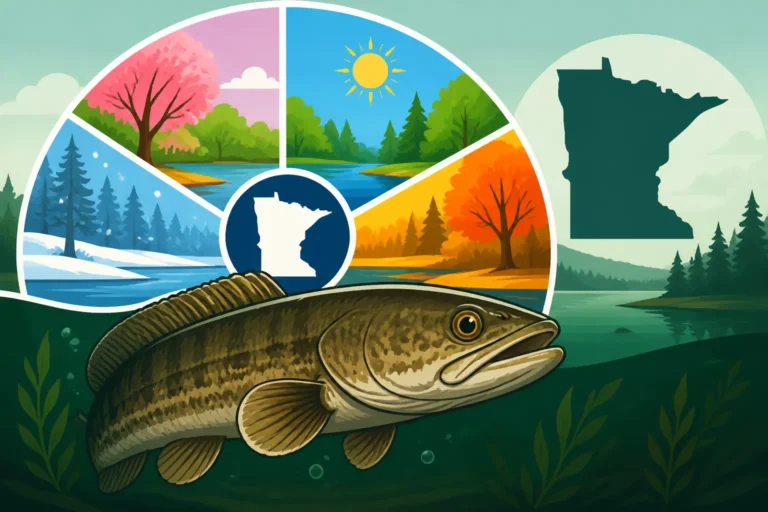
Seasonal Patterns and Best Times
Muskie behavior changes significantly throughout the year, primarily driven by water temperature.
- Spring (Post-spawn/Opener): The muskie season typically opens around the first Saturday in June in most of Minnesota, usually after the muskie have finished spawning. Early season muskie can often be found shallower, around new weed growth or rocky points near spawning areas, as they recover and begin to feed aggressively. Look for them in bays and protected areas that warm up faster. Check the Minnesota Muskie Season & Size Limit for exact dates.
- Summer: As waters warm, muskie often move to deeper weed lines, offshore humps, rock reefs, and submerged structures. They might be found suspended over deep water, particularly if there's a thermocline. Early morning, late evening, and overcast days are generally the most productive times. Hot, sunny afternoons can be tough, but if you're out, focus on deep breaks or shady areas.
- Fall (Prime Time): This is often considered the absolute best time for trophy muskie. As water temperatures drop, muskie go on a major feeding binge to pack on weight for winter. They'll often be found on main lake points, steep breaks, and deep structures where large baitfish like cisco are congregating. They'll hit larger, slower-moving baits, and the weather can be colder, but the potential for a true giant is at its peak. This period typically extends until ice forms, offering some of the most exciting fishing of the year.
Understanding these patterns means you're not just casting randomly; you're fishing with purpose, targeting areas where muskie are most likely to be active and feeding. For comprehensive info, check out our Muskie Season & Limit in Minnesota guide.
Basic Techniques for Muskie Beginners
Now that you're geared up and know where to look, it's time to talk about the actual fishing. Muskie fishing isn't overly complicated, but it does require precision, consistency, and a few key maneuvers.
Casting and Retrieve Fundamentals
Muskie fishing involves a lot of casting, so getting your technique down is important for both efficiency and avoiding fatigue.
- Casting: Use an overhead or sidearm cast with your heavy muskie rod and lure. Aim for accuracy to hit those prime ambush points like weed edges, rock transitions, or submerged timber. Practice makes perfect – the better you can cast, the less time you waste untangling backlashes (which will happen, don't worry!).
- Retrieve: The retrieve depends entirely on the lure you're using. For bucktails, a steady, fast retrieve is often effective, just fast enough to keep the blades spinning and create flash. For jerkbaits, it's a rhythmic "jerk-jerk-pause" action, making the lure dart erratically. Crankbaits are generally a steady retrieve or troll. The key is to vary your retrieve speed and cadence until you find what the fish are reacting to. Sometimes a subtle change can make all the difference. Always be ready for a strike; these fish can hit with surprising violence. For more beginner strategies, check out Muskie Fishing Techniques for Beginners.
The Crucial Figure-Eight Maneuver
This is perhaps the most critical technique for a first-time muskie angler, and it's often overlooked by those new to the game. Many muskie will follow your lure right to the boat, often unseen until the very last second. If you simply reel in and lift your lure out of the water, that fish is gone. The "figure-eight" gives them a second, third, or even fourth chance to strike.
As your lure approaches the boat, instead of lifting it, smoothly guide it into a large figure-eight pattern directly beside or just below the boat. Keep the lure moving, just under the surface, making broad loops. The muskie, if it's following, might suddenly turn and strike inches from your rod tip. This close-quarters strike is one of the most exciting moments in muskie fishing. Maintain eye contact with your lure and be prepared for that explosive hit. Practice this maneuver even when you don't have a fish following; it needs to become second nature. Our dedicated article, Muskie Figure-8 Technique, provides step-by-step instructions.
Boat Control and Positioning
Effective boat control is vital for presenting your lure correctly and maximizing your time in productive areas. If you're drifting, use your trolling motor to maintain a steady course along a weed line or contour. When casting to specific structures, position your boat so you can make repeated, accurate casts without spooking the fish. For example, if you're targeting a point, approach it from downwind or with a current, allowing you to drift or slowly motor over it while casting to its sides.
Modern electronics like GPS and mapping software (e.g., those from Humminbird or Garmin) can be incredibly helpful for identifying structure and staying on course. Even without high-tech gadgets, simply paying attention to wind, current, and boat speed can drastically improve your presentations. Understanding how to use your boat to your advantage means you're not just fishing in muskie water, you're fishing it effectively. A little practice with boat positioning can make a huge difference in your success rate. For a comprehensive list of what you need, refer to Best Gear for Muskie Fishing in Minnesota.
Disclaimer
Fishing regulations, seasons, and limits in Minnesota can change. Always consult the most current Minnesota Department of Natural Resources (DNR) fishing regulations booklet or website before heading out on the water. This guide is for informational purposes only and should not be considered a substitute for official regulations.