Minnesota Crappie & Sunfish Limits
There's nothing quite like a day spent on a Minnesota lake, the bobber dancing, and then, thwack! — another panfish tugging at your line. Whether it's the thrill of a fat crappie or the steady pull of a feisty sunfish, these abundant fish are a staple of our angling culture. But let's be honest, figuring out exactly how many of these tasty little guys you can keep, especially with all the talk about special regulations and changing limits, can feel like trying to solve a riddle wrapped in a mystery, tucked inside a fishing regulations booklet. It's enough to make even a seasoned angler scratch their head and double-check, and that's exactly what we're going to demystify for you today.
Understanding Minnesota's Panfish Regulations
Minnesota takes its fishing seriously, and that means managing our precious fish populations for today and for future generations. It's not just about stopping people from taking too many; it's about making sure our lakes stay healthy and vibrant, offering great fishing experiences year after year. This is particularly true for panfish, which, while abundant, can be easily overharvested if not managed carefully.
Why Limits Exist: Conservation & Management
You might wonder why we even have limits on fish that seem to be everywhere, like crappies and sunfish. The truth is, panfish are often the backbone of a lake's ecosystem and a huge draw for anglers, from kids with cane poles to folks looking for a delicious fish fry. When too many large sunfish or crappies are removed from a lake, it can lead to what biologists call "stunting." This means the remaining fish might grow slower, become overcrowded, and never reach a desirable size, turning a once-productive lake into one filled with tiny, undesirable fish. Limits are put in place by the Minnesota Department of Natural Resources (DNR) to prevent this, ensuring a healthy age and size structure within the panfish populations. It’s all about finding that delicate balance between angler harvest and fish reproduction and growth. Without these rules, the fantastic fishing we enjoy across the state, from Lake Minnetonka to Lake Winnibigoshish, could quickly decline.
The Statewide Daily & Possession Limits
Before we dive into the nitty-gritty of individual lake exceptions, let's establish the baseline. In Minnesota, there are general statewide regulations that apply to most waters unless otherwise specified. For crappies, the statewide daily and possession limit is 10. For sunfish, which includes bluegill, pumpkinseed, and green sunfish, the statewide daily and possession limit is 20. What does "daily and possession" actually mean? A daily limit is the maximum number of fish you can keep in a 24-hour period. A possession limit is the maximum number of fish you can have on hand, whether at home, in your cooler, or in your freezer, at any given time. So, if you catch 10 crappies on Monday and take them home, you've met your daily limit for that day, and your possession limit for crappies is now 10. If you go out again on Tuesday, you can catch and keep another 10 crappies, bringing your possession limit up to 20, but you cannot exceed 20 crappies in your possession at any time unless they are processed and become part of a meal that has been consumed. This distinction can sometimes trip people up, but it's crucial for staying compliant. For a broader look at general limits, check out our guide on Minnesota Fishing Limits: Bag & Possession (2026).
Navigating the Nuances: Lake-Specific & Special Regulations
While the statewide limits provide a good starting point, Minnesota is home to thousands of lakes, each with its own unique characteristics and fish populations. This means that a "one-size-fits-all" approach simply wouldn't work for effective panfish management. This is where lake-specific and special regulations come into play, making fishing a bit more complex, but ultimately, much more sustainable.
The Designated Waters Program: When Lakes Differ
Many of Minnesota's most popular panfish lakes operate under special regulations, often referred to as "designated waters." These regulations are tailored to the specific ecological needs of individual lakes or even stretches of rivers. For panfish, this commonly means reduced daily limits and sometimes even length limits or protected slots. For example, instead of a statewide limit of 10 crappies or 20 sunfish, you might find a lake with a daily limit of 5 crappies or 10 sunfish, sometimes with a stipulation that only one or two fish over a certain length can be kept. These measures are designed to distribute the harvest more evenly among anglers and to protect the larger, older fish that are vital for maintaining a healthy population of quality panfish. It’s the DNR's way of ensuring that a lake known for trophy sunfish doesn't get fished out, allowing those big ones to continue to grow and reproduce.
How to Check for Special Lake Regulations
This is arguably the most critical step for any angler planning a panfish outing in Minnesota. Before you even pack your cooler, you absolutely must check the specific regulations for the body of water you intend to fish. Relying solely on statewide limits can quickly lead to violations if your chosen lake has special rules. The easiest and most reliable way to do this is through the Minnesota DNR's LakeFinder tool on their website. You can search by lake name or county, and it will pull up a wealth of information, including current fish population data, public access points, and, most importantly, any special regulations that apply to that specific lake.
Here’s a quick rundown of how to use LakeFinder:
- Go to the Minnesota DNR website. Look for the "Fishing" section.
- Find LakeFinder. It's usually prominently displayed.
- Enter the lake name. Be specific, as many lakes share similar names.
- Review the "Regulations" section. This is where you'll find the daily and possession limits, as well as any length restrictions for all species in that lake, including crappies and sunfish.
It’s also a good idea to grab a physical copy of the annual Minnesota Fishing Regulations booklet. You can find these at most bait shops, sporting goods stores, and DNR offices. Keep it in your tackle box or boat for quick reference. Trust me, a few minutes of checking can save you a whole lot of headache, and potentially a fine, down the road. For more on overall rules, our article on Minnesota Fishing Regulations Changes for 2026 can be a helpful resource.
Crappie Limits in Detail
Crappies are arguably one of Minnesota's most sought-after panfish, revered for their delicious fillets and often aggressive bites. However, their popularity also makes them susceptible to overharvest, which is why their limits are frequently adjusted on specific lakes to maintain healthy populations.
Black Crappie vs. White Crappie: Do Limits Differ?
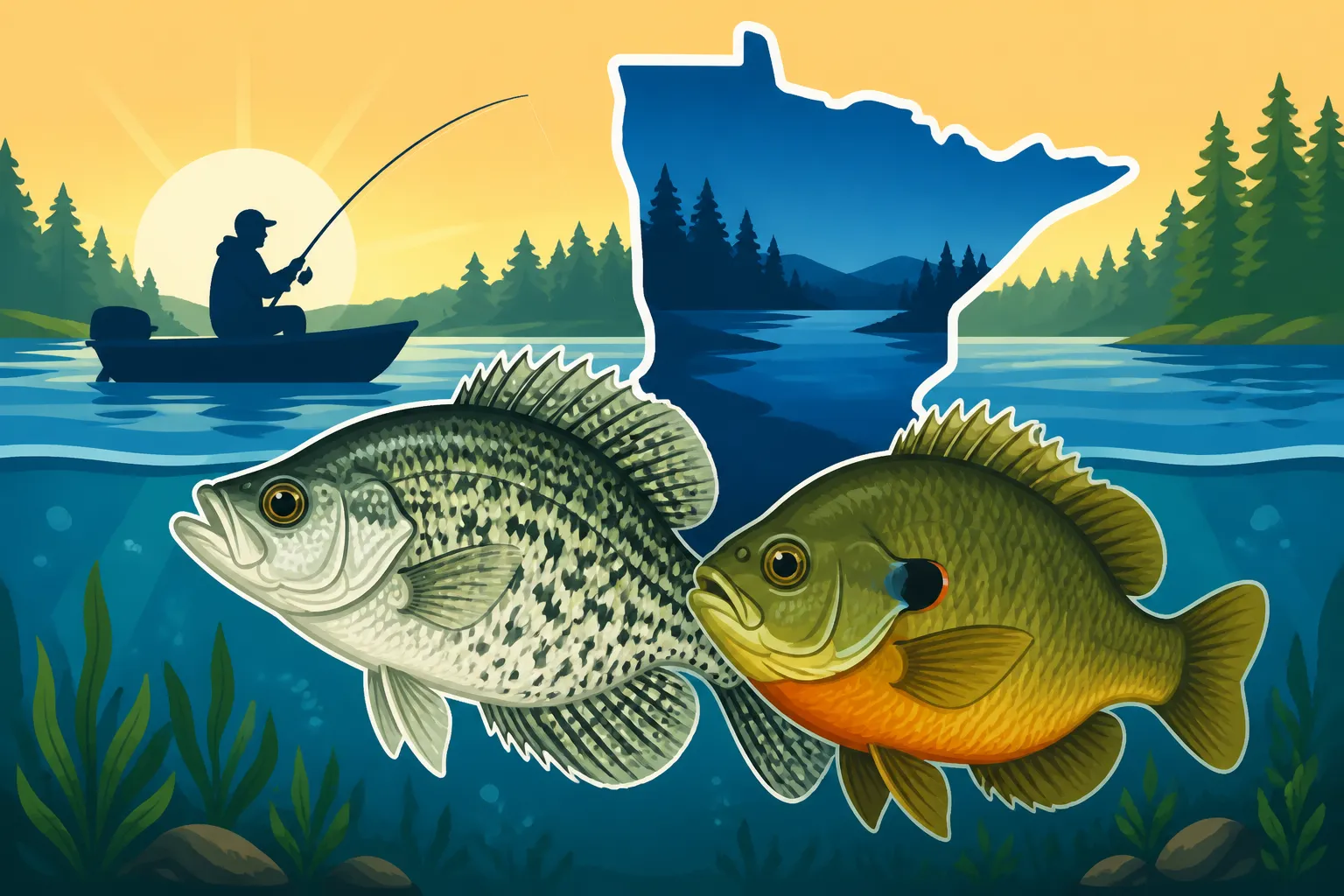
In Minnesota, both black crappies and white crappies are considered "crappies" under the fishing regulations. This means that, for regulatory purposes, there is no distinction between the two species when it comes to daily or possession limits, or any length restrictions. If a regulation states "Crappie," it applies to both black and white crappies. So, you don't need to worry about identifying which specific type of crappie you've caught when it comes to keeping them; just focus on the overall crappie limit for that particular body of water. They both taste fantastic in a fry pan!
Typical Daily & Possession Limits for Crappies
As mentioned, the statewide daily and possession limit for crappies is 10. This is what you'll encounter on the vast majority of lakes. However, it's those special regulations on designated waters where things change significantly. You might find lakes with a reduced daily limit of 5 crappies, or even 3 crappies. These reductions are often a response to observed declines in crappie numbers or size quality, a proactive measure by the DNR to rebuild or protect a specific fishery. Imagine you're fishing on Big Fish Lake, known for its jumbo crappies. The DNR might implement a lower limit there, say 5 fish, to ensure those big fish continue to thrive. Conversely, on a lake with a very abundant, but perhaps smaller, crappie population, they might keep the statewide limit or even experiment with a higher one if they deem it beneficial for overall ecosystem health.
Crappie Length Limits and Protected Slots
Beyond just the number of fish you can keep, some lakes have implemented length limits for crappies. These can come in two primary forms:
- Minimum Length Limits: This means crappies must be at least a certain length (e.g., 9 or 10 inches) to be kept. This is less common for crappies than for other species, but it does exist on some specific waters to protect younger fish and allow them to mature and spawn.
- Protected Slot Limits: These are more common and often a bit more complex. A protected slot limit means fish within a certain size range must be immediately released. For example, a lake might have a crappie regulation stating: "Daily limit of 5, only one crappie over 12 inches." This means you can keep five crappies, but if you catch one that's 12.5 inches, it must be part of that one fish allowed over the limit. Or, a slot could be "No crappies between 10-12 inches may be kept." This allows anglers to keep smaller fish (under 10 inches) and larger trophy fish (over 12 inches), but protects that middle-size range crucial for reproduction and growth. These regulations are designed to manipulate the age structure of the population, often aiming to produce more larger fish over time. It’s a sophisticated management tool that requires anglers to be vigilant and measure their catch accurately.
Sunfish Limits Explained
Sunfish, particularly bluegills, are often the first fish many Minnesotans catch, and for good reason! They're abundant, eager biters, and excellent table fare. But just like crappies, these seemingly endless populations can be vulnerable to overharvest, leading to a decline in the average size of fish in a lake.
Bluegill, Pumpkinseed, Green Sunfish: Are They All the Same?
Yes, for regulatory purposes in Minnesota, bluegill, pumpkinseed, green sunfish, and even hybrids of these species are all lumped together under the general term "sunfish." So, when the regulations state "Sunfish," it applies to any of these species you might encounter. This simplifies things for anglers, as you don't need to be an ichthyologist on the water to determine if you're holding a bluegill or a pumpkinseed before deciding whether to keep it. They all count toward that cumulative sunfish limit for the body of water you're fishing.
Common Sunfish Daily & Possession Limits
The statewide daily and possession limit for sunfish is 20. This is a generous limit, reflecting the general abundance of sunfish in many Minnesota lakes. However, just like crappies, many lakes have special regulations for sunfish, often with significantly reduced limits. You'll frequently see daily limits of 10 sunfish, and on some lakes, even as low as 5. These reduced limits are a direct response to the issue of "panfish stunting," where decades of anglers keeping the largest bluegills from a lake led to populations dominated by small, less desirable fish. By reducing the limit, the DNR aims to protect those larger, faster-growing individuals, allowing them to remain in the population, spawn, and pass on their "big fish" genes.
Consider a lake like Lake Osakis, which has historically been known for its panfish. The DNR might implement a lower sunfish limit there to help maintain the quality of the fishery. On the other hand, a smaller, less-pressured lake might retain the statewide 20-fish limit.
Sunfish Length Limits and Why They're Important
While less common than reduced daily limits, some lakes do have length limits or protected slots for sunfish. For example, a regulation might state: "Daily limit of 10 sunfish, only 5 over 7 inches." This means you can keep ten sunfish total, but only five of them can be longer than 7 inches. This type of regulation specifically targets the larger, older sunfish, trying to strike a balance where anglers can still take a mess of fish for a meal, but the really big ones are largely protected to ensure they contribute to future generations and provide trophy opportunities.
These length limits are particularly important for sunfish because of their life history. Larger sunfish often grow faster and are more efficient at eating aquatic insects and small invertebrates, helping to keep their own population and other fish populations in balance. Protecting them isn't just about catching a bigger fish; it's about fostering a healthier lake ecosystem. It's a proactive approach to prevent the widespread stunting that has plagued panfish fisheries in other states.
Practical Tips for Staying Compliant & Ethical Angling
Understanding the regulations is one thing, but putting them into practice on the water requires a bit of diligence and ethical consideration. It's not just about avoiding a ticket; it's about being a responsible steward of our natural resources.
Measuring Your Catch Accurately
When length limits or protected slots are in place, accurate measurement is absolutely crucial. Don't eyeball it! Most anglers carry a readily accessible measuring board or tape, often affixed to their boat or tackle box. Here's how to measure correctly:
- Lay the fish flat: Place the fish on its side, belly down, on a flat surface.
- Close the mouth: Gently close the fish's mouth.
- Tail squeeze: The Minnesota DNR measures fish to the total length, which means from the tip of the snout to the end of the tail, with the tail squeezed together. Some regulations in other states measure to the fork, but in Minnesota, it's always total length with the tail pinched.
- Read the measurement: Read the length at the furthest tip of the tail.
Having a clear, easy-to-read measuring device is a small investment that can save you a lot of trouble. Imagine the frustration of catching a beautiful 11-inch crappie on a lake with a 10-12 inch protected slot, only to find you mis-measured and kept a fish you shouldn't have. Accuracy is your best friend.
Catch and Release Best Practices for Panfish
Even if you're planning to keep fish, you'll inevitably catch some that are too small, outside a slot, or simply more than you want for your meal. Practicing proper catch and release is essential to ensure these fish survive to be caught another day. Panfish are generally hardy, but a few simple steps can dramatically increase their survival rate:
- Handle with care: Minimize handling the fish as much as possible. Avoid touching their gills or eyes.
- Wet hands: Always wet your hands before touching a fish. Dry hands can remove the protective slime coat, making the fish susceptible to disease.
- Quick removal: Use needle-nose pliers or a hook remover to quickly extract the hook. If the fish is deeply hooked, it's often better to cut the line as close to the hook as possible rather than tearing the fish's insides trying to remove it.
- Support the fish: If you must take a photo, support the fish horizontally, especially larger panfish, to avoid damaging internal organs. Get the shot quickly and return it to the water.
- Revive if necessary: For exhausted fish, hold them gently in the water, facing into a slight current, until they swim off on their own.
Our guide on Catch and Release Best Practices in Minnesota delves deeper into these techniques for all species.
Avoiding Common Violations
The vast majority of violations happen not out of malice, but out of misunderstanding or carelessness. Here are a few common pitfalls to watch out for:
- Not checking lake-specific rules: This is by far the most frequent mistake. Always, always verify the regulations for the specific lake you're fishing before you drop a line.
- Miscounting fish: It's easy to lose track when the bite is hot. Consider using a clicker counter or a simple tally system to keep an accurate count of your kept fish.
- Misunderstanding possession limits: Remember, the possession limit applies to all fish you have on hand, not just what you caught today. If you have fish from yesterday in your cooler, they count toward today's possession limit.
- Filleting fish on the water: While convenient, filleting fish on the water makes it impossible for a conservation officer to verify the species, size, and count of your catch. Many regulations require you to keep fish in a measurable state until you've left the lake. Check the specific rules for your area, but generally, it's safest to wait until you're back on shore, or even at home, to fillet your catch. When filleting, ensure that a piece of skin sufficient to identify the species and, if applicable, the length is left on each fillet until you've reached your final destination.
Planning Your Trip: Before You Go
A successful and compliant fishing trip begins long before your boat hits the water or your auger drills the first hole. A little pre-trip preparation can make all the difference, ensuring you have a fun, stress-free, and legal day on the lake.
Essential Resources: The DNR Fishing Regulations Booklet
While the internet is a fantastic tool, nothing beats having a physical copy of the current year's Minnesota Fishing Regulations booklet. These free booklets are available at nearly every bait shop, sporting goods store like Fleet Farm or Cabela's, and all DNR offices across the state. They contain a wealth of information, from statewide limits to lake-specific regulations, season dates, and even information on Aquatic Invasive Species (AIS) Rules for Boaters. Keep one in your tackle box, another in your vehicle, and even download the PDF version to your phone or tablet. This way, you're always just a flip of a page or a tap away from confirming any rule or regulation. It’s a habit every responsible Minnesota angler should adopt.
Understanding Possession vs. Daily Limits
We touched on this earlier, but it bears repeating because it's a point of confusion for so many. The daily limit is what you can harvest in one calendar day (midnight to midnight). The possession limit is the total number of fish you can have at any given time, regardless of when or where they were caught.
Let’s run through an example:
- Statewide crappie daily limit: 10
- Statewide crappie possession limit: 10
Scenario A: You go fishing on Monday, catch 7 crappies, and bring them home. Your possession is now 7.
Scenario B: You go fishing on Tuesday, catch another 5 crappies. You can only keep 3 more crappies today to reach your possession limit of 10. If you keep 5, your total possession would be 12, which is over the limit.
Scenario C: You go fishing on Wednesday, catch 10 crappies. You can keep these 10 crappies, but you must first consume or give away the 10 crappies you had in possession from Monday's trip to stay within the 10-fish possession limit.
It’s a subtle but critical difference. Always manage your cooler and freezer inventory to stay within that possession limit. If you plan on multiple days of fishing and want to keep fish from each outing, you'll need to make sure your previously caught fish are either consumed or legally gifted to another person to free up space in your possession limit. For more details on what this means for other species, you can check out our article on Minnesota Possession Limits Explained.
Here's a handy table summarizing common panfish limits you might encounter:
| Species | Statewide Daily Limit | Statewide Possession Limit | Common Special Daily Limit Reductions (Examples) | Common Special Length Regulations (Examples) | How to Verify Specific Lake Rules |
|---|---|---|---|---|---|
| Crappies | 10 | 10 | 5, 3 | Only 1 over 12", No harvest 10-12" | MN DNR LakeFinder, Regulations Booklet |
| Sunfish | 20 | 20 | 10, 5 | Only 5 over 7", No harvest 8-10" | MN DNR LakeFinder, Regulations Booklet |
By familiarizing yourself with these general rules and making a habit of checking lake-specific regulations, you’ll not only avoid potential fines but also contribute to the long-term health and vitality of Minnesota's incredible panfish fisheries. Tight lines, and happy fishing!
Disclaimer
Please note that fishing regulations are subject to change by the Minnesota Department of Natural Resources (DNR). While this guide provides current information based on available data, it is the angler's responsibility to verify the most up-to-date regulations before heading out on the water. Always consult the official Minnesota DNR website or the most recent Minnesota Fishing Regulations booklet for the definitive rules.