Lake Vermilion Walleye Limit & Slot
Heading up to Lake Vermilion for a weekend of walleye fishing should be the highlight of your summer, but the stress of navigating lake-specific regulations can quickly dampen the mood. Nobody wants to end a great day on the water with a conservation officer handing them a ticket because they misunderstood a slot limit. This guide provides a detailed breakdown of the Lake Vermilion walleye limit and slot rules to keep you legal and focused on the bite.
Understanding the 2026 Walleye Limits on Lake Vermilion
When you pull your boat away from the dock at a resort in Cook or Tower, you need to have a clear understanding of the numbers. Lake Vermilion is managed as a premier walleye destination, and as such, the Minnesota Department of Natural Resources (DNR) applies special regulations that differ from the statewide standard. For 2026, the daily bag limit for walleye on Lake Vermilion is 4 fish. This is a critical distinction because many other lakes in the state allow for a 6-fish limit.
It is incredibly easy to fall into the habit of thinking about the statewide rules, especially if you spent the previous weekend on a different body of water. However, if you are caught with five walleyes in your livewell on Vermilion, you are looking at a significant fine and the confiscation of those fish. This 4-fish limit is designed to balance the high fishing pressure this lake receives with the need to maintain a healthy, sustainable population of "eater" sized fish.
Beyond the daily catch, you must also consider the Minnesota Possession Limits Explained rules. Your possession limit is the total number of fish you can have at any one time, whether they are in your boat, in your cooler, or processed in the freezer at your cabin. On Lake Vermilion, your possession limit is also 4 walleyes. If you go out on Saturday and keep your 4 fish, you cannot keep any more fish on Sunday unless you have consumed some of your previous day's catch. This is a common point of confusion for folks staying at a cabin for a week; you cannot stack up 4 fish every single day.
| Regulation Category | 2026 Lake Vermilion Walleye Rule |
|---|---|
| Daily Bag Limit | 4 Walleyes |
| Total Possession Limit | 4 Walleyes |
| Protected Slot (Must Release) | 20 inches to 26 inches |
| "One Over" Allowance | Only 1 fish over 26 inches allowed in possession |
| Season Opening Date | May 9, 2026 |
Why Lake Vermilion Has Special Regulations
You might wonder why the DNR singles out Vermilion for these tighter restrictions. The answer lies in the lake's unique geography and its reputation. Spanning nearly 40,000 acres with hundreds of islands and bays, Vermilion is a complex ecosystem. Because it is such a high-draw destination, the "harvest pressure"—the total weight of fish removed from the lake—is much higher than on a random small lake in central Minnesota.
The 4-fish limit ensures that the harvest is spread out among more anglers. It also helps protect the "year classes" of fish. By limiting the harvest, the DNR ensures there are enough fish reaching maturity to spawn and replenish the lake naturally. If you are interested in how this compares to other big water, you might want to look at the Mille Lacs Lake Fishing Rules & Limits to see how different management strategies are applied to different ecosystems.
Managing Your Daily Catch
A realistic scenario many anglers face is the "early limit" problem. Imagine you hit a hot bite near Piney Island at 7:00 AM and have your 4 walleyes by 8:30 AM. Under Minnesota law, once you have reached your limit, you can continue to fish, but you must practice immediate catch and release. You cannot "cull" fish. Culling is the act of replacing a smaller fish in your livewell with a larger fish caught later. Once a fish is placed in a livewell or on a stringer, it is considered part of your bag limit.
This is why many veteran Vermilion anglers will release a 14-inch fish early in the morning if they are confident they can find 17-inchers later. However, it is a gamble. We have all had those days where we release a legal "eater" early on, only to have the bite shut off completely, leaving us with an empty frying pan at dinner time. Understanding the Minnesota Walleye Limit & Size Rules for the specific lake you are on is the first step toward a stress-free trip.
Navigating the Lake Vermilion Walleye Slot Limit
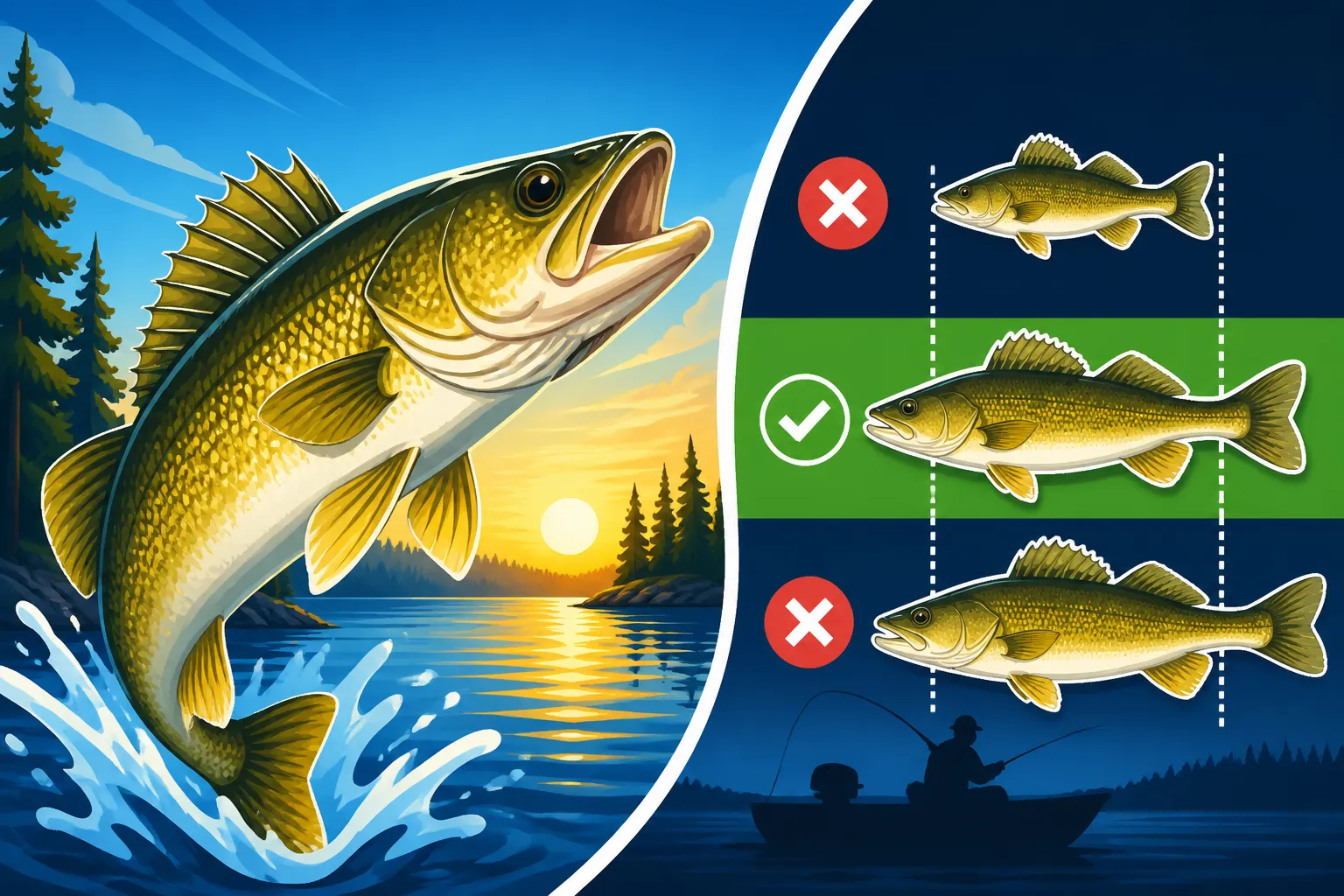
The "slot limit" is perhaps the most discussed topic at the bait shops in Tower. On Lake Vermilion, there is a protected slot for walleye: all fish between 20 and 26 inches must be immediately released. This rule is designed to protect the "prime" spawning fish. These are the females that produce the highest quality and quantity of eggs. By keeping these fish in the water, the lake can sustain its population even during years when environmental conditions aren't perfect for spawning.
When you hook a fish that looks like it's right on the edge—say, around 19.5 or 20.5 inches—the pressure is on. Taking an accurate measurement is vital. A fish that is 19.75 inches is a legal trophy for the frying pan. A fish that is 20.25 inches must go back. There is no "close enough" when it comes to the Minnesota Slot Limits: Which Lakes & Why policies. Conservation officers use standardized bump boards, and if your fish touches that 20-inch mark on their board, you are in violation.
The One Over 26 Inches Rule
While the 20-to-26-inch fish are strictly off-limits for harvest, the regulations do allow for the possession of one walleye over 26 inches. This is often referred to as the "trophy exception." If you happen to land a 28-inch monster, you are legally allowed to keep it as part of your 4-fish limit.
However, there is a strong cultural push toward Catch and Release Best Practices in Minnesota among the Vermilion community. Most modern anglers choose to take a high-quality photo and a couple of quick measurements for a replica mount, rather than keeping a fish that has survived long enough to reach that size. A 26-inch walleye is likely 10 to 12 years old. Keeping it removes a decade of survival experience and genetics from the lake. If you do choose to keep your "one over," remember that it counts as one of your four fish for the day and your total possession.
Identifying Your Catch
On Lake Vermilion, you might also run into walleye look-alikes. Sauger are present in the system, and while they look similar, they have different regulations. Knowing How to Identify a Walleye vs Sauger is essential because sauger do not fall under the same slot limit as walleye on Vermilion. Sauger usually have distinct dark blotches on their dorsal fin and lack the white tip on the lower tail fin that walleyes possess.
If you accidentally misidentify a 22-inch walleye as a sauger and put it in the livewell, you are still legally responsible for having a walleye in the protected slot. Most experienced anglers on the lake follow a simple rule: if you aren't 100% sure, let it go. The health of the Lake Vermilion Walleye & Muskie fishery depends on anglers being diligent about these identifications.
Practical Tips for a Successful Walleye Outing
To ensure you stay within the Lake Vermilion Walleye Limit & Slot regulations, you need the right tools on your boat. A high-quality, flat "bump board" is much more accurate than a flexible tailor’s tape or a sticker on the side of your boat. When measuring a walleye, the mouth should be closed and pressed firmly against the head of the board, and the tail should be pinched to reach its maximum length.
Even a slight bend in the fish's body can make a half-inch difference, which could be the difference between a legal keeper and a protected fish. I always recommend measuring fish twice if they are close to the slot. If you are fishing in a tournament or during a high-traffic weekend like the Minnesota Walleye Opener 2026, expect to see DNR patrols. Having a clear, easy-to-read measuring device shows the officer you are making a good-faith effort to follow the rules.
Catch and Release Best Practices for Slot Fish
Because you will likely be releasing several fish in that 20-to-26-inch range, you should be prepared for proper catch and release. This is especially important during the heat of July and August when water temperatures rise. Deep-water walleyes (those caught in 30 feet of water or deeper) can suffer from barotrauma, where their swim bladder expands as they are pulled to the surface.
If you plan on Night Fishing for Walleye in Minnesota or targeting deep reefs in the Big Bay area, try to bring the fish up slowly. If a fish is "bloated" and cannot submerge when you release it, it will likely die and become seagull food. Using a "fizzing" needle is an option, but it requires skill. The better approach is to target shallower structure when possible or use a weighted descending device to get the fish back down to depth quickly.
Dealing with Deep-Hooked Fish
Occasionally, a walleye will swallow a hook deep in its throat or gills. If this happens to a fish in the protected slot, the law is very clear: you must still release it. It is a heart-wrenching experience to put a fish back that you know might not survive, but the law does not allow for exceptions for "mortally wounded" fish.
To prevent this, many anglers have moved away from traditional J-hooks when using live bait and have transitioned to circle hooks or specialized Walleye Fishing Techniques: Complete Minnesota Guide methods like slow-death rigs. These setups tend to hook the fish in the corner of the mouth, making for a much easier release. If a fish is deep-hooked, don't try to rip the hook out. Cut the line as close to the hook as possible; the fish's stomach acids can often break down the hook over time, giving it a much better chance at survival than a torn esophagus would.
Common Questions About Fishing Lake Vermilion
A common question for newcomers is whether they need a special stamp or permit to fish Vermilion. While you do not need a specific "Lake Vermilion Stamp," you absolutely must have a valid Minnesota Fishing License: Cost, Types & How to Buy (2026). You can purchase these online or at several local retailers in the area, such as the Y-Store or Fortune Bay Resort Casino.
Another point of confusion is the use of multiple lines. In Minnesota, you are generally limited to one line per angler during the open water season. If you are caught trolling with two rods, you are in violation, regardless of whether you have any fish in the boat. This is one of the most common Minnesota Fishing Regulations Changes for 2026 topics that people overlook.
Comparing Vermilion to Other Major Lakes
It helps to put Vermilion's rules in context with other "Big Five" lakes in Minnesota. While Vermilion has a 4-fish limit and a 20-to-26-inch slot, a lake like Upper Red Lake Walleye Limit & Slot might have a completely different set of rules based on its specific population booms.
For instance, Leech Lake Walleye Limit & Slot regulations often change year-to-year based on the forage base (like perch and ciscoes). Always check the specific "Special Regulations" section of the DNR handbook before your first cast. The rules for Lake Vermilion are generally stable, but the DNR has the authority to make emergency adjustments if they see a drastic decline in fish numbers or a spike in harvest.
Seasonal Considerations
The time of year you visit will dictate where the fish are, but the rules remain the same. During the spring, many fish are found in the shallower, darker waters of the West End or near spawning inlets. As summer progresses, the bite moves to the deep mud flats and rock humps of the East End. Regardless of whether you are Spring Crappie Fishing in Minnesota and happen to catch a walleye, or you are specifically targeting them in the fall, the 4-fish limit and the 20-to-26-inch slot apply year-round.
Even if you are participating in Free Fishing Weekends in Minnesota, where a license might not be required for certain residents, the size and bag limits are still strictly enforced. Being a responsible angler means more than just catching fish; it means respecting the rules that ensure your kids and grandkids will be able to enjoy the "Lake of the Sunset Glow" just as much as we do today.
Disclaimer
This guide is intended for informational purposes and reflects regulations for the 2026 season. Fishing regulations can change due to DNR emergency orders. Always consult the official Minnesota Fishing Regulations handbook or the DNR website before heading onto the water to ensure you have the most current information.