How Many Crappie Can You Keep in Minnesota?
You’ve finally found a school of slabs, the bite is on fire, and your bucket is starting to fill up, but suddenly that nagging doubt creeps in: is the limit on this specific lake ten fish or five? Getting slapped with a hefty fine or having your gear confiscated ruins a great day on the water. This guide breaks down exactly how many crappie you can keep in Minnesota, explaining the statewide rules and the often-confusing special regulations.
Understanding the Statewide Crappie Limit in Minnesota
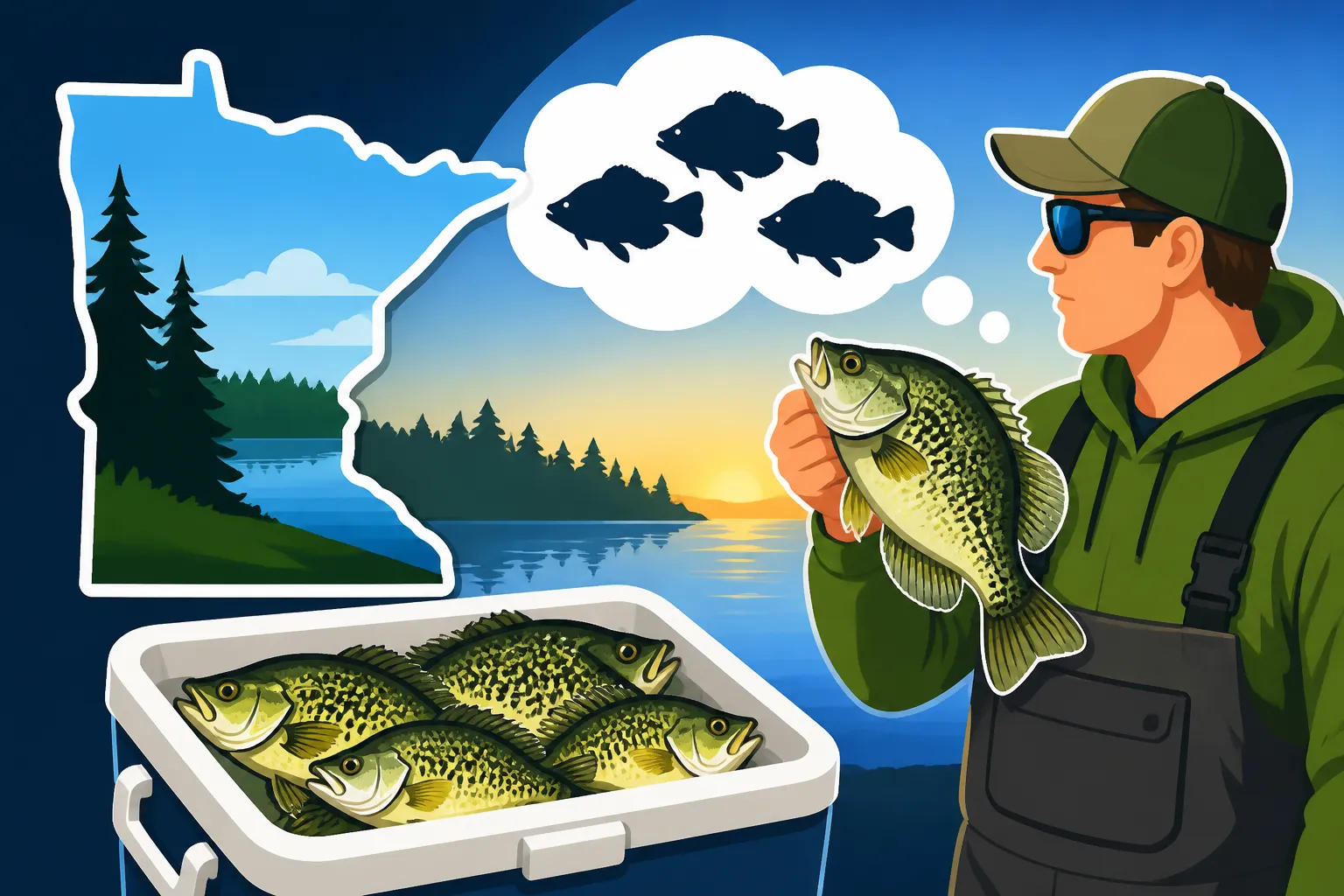
For the vast majority of the 10,000+ lakes in our beautiful state, the rules are fairly straightforward, but they carry nuances that even seasoned anglers sometimes trip over. As of the current 2026 regulations, the statewide daily and possession limit for crappie is 10 fish. This applies to both black and white crappies in combination. If you catch six black crappies and four white crappies, you have reached your legal limit for the day. It sounds simple enough, but the legal definition of "possession" is where many folks find themselves in hot water with a conservation officer.
The Magic Number: What Is the Daily and Possession Limit
In Minnesota, the daily limit and the possession limit for crappie are the same number: 10. This means you cannot have more than 10 crappies in your physical possession at any given time, whether you are on the water, in your truck, or at home in your freezer. I’ve talked to so many people who think they can catch 10 on Friday, 10 on Saturday, and 10 on Sunday, ending the weekend with 30 fish in the cooler. Under Minnesota law, that is a major violation. To stay legal, you must consume some of your catch before you can go out and harvest more. For a deeper dive into how these numbers are tallied, check out Minnesota Fishing Limits: Bag & Possession (2026).
The "in combination" rule is also vital. In some states, different species of the same family have separate limits. Not here. Whether you are fishing a murky river for white crappies or a crystal-clear northern lake for black crappies, that total number cannot exceed 10. This limit is designed to balance the high demand for these delicious panfish with the biological reality of how fast they can grow and reproduce in our northern climate.
Daily vs Possession: Knowing the Difference
The distinction between a daily limit and a possession limit is the most common point of confusion I see at the bait shop. A daily limit is the number of fish you can "take" in a single calendar day. A possession limit is the total number of fish you are allowed to have in your name. In Minnesota, because these numbers are identical for crappie, your "at-home" inventory is just as important as what is in your livewell. If you have five bags of two crappie fillets each in your freezer, you are technically at your limit and cannot legally keep a single fish today.
This is a point of frustration for families who like to have a big fish fry later in the season. However, the rule is in place to prevent "over-harvesting" where individuals might slowly deplete a local population by taking their limit day after day. If you find yourself confused about how much you can legally store, you should read more on Minnesota Possession Limits Explained. It covers the legalities of gifted fish and how to properly label your catch if you are sharing a freezer with other anglers.
Exceptions and Special Regulations: When the Limit Changes
While the statewide limit is 10, there is a massive movement across Minnesota to improve the size quality of our panfish. This has led to the implementation of "Special Regulations" on hundreds of individual lakes. On these specific bodies of water, the limit is often reduced to 5 crappies. This is part of a broader management strategy to ensure that "slabs"—those legendary 12-to-14-inch fish—actually have a chance to grow. If everyone takes 10 fish every time the bite is hot, the average size in a lake can plummet in just a few seasons.
Quality Sunfish and Crappie Initiative
The Minnesota DNR has been very aggressive with the Quality Sunfish and Crappie Initiative over the last few years. The goal is simple: by reducing the harvest pressure, we allow more fish to reach maturity and larger sizes. You will often see signs at the boat ramp or at the entrance to public fishing piers stating that the crappie limit is 5. These regulations are not meant to be a nuisance; they are a response to the fact that modern electronics and increased fishing pressure have made it easier than ever to "clean out" a school of fish.
Before you drop a line, it is your responsibility to know if the lake you are on is part of this initiative. You can find a complete list of these waters in the Minnesota Fishing Regulations PDF: Where to Find It. Common lakes in the metro and popular vacation spots like the Brainerd area are frequently added to this list. If you are fishing a lake with a 5-fish limit, you cannot have more than 5 crappies from that lake in your possession, even if you plan to go to a different lake later that day where the limit is 10.
Border Water Rules
If you are fishing the rivers or lakes that border Wisconsin, North Dakota, South Dakota, or Canada, the rules change again. For example, on the Mississippi River pools that border Wisconsin, the limits are often synchronized between the two states to make enforcement easier. However, these limits may differ from the inland Minnesota statewide rule. On some border waters, you might be allowed a different number of lines or have a different possession total.
Specifically, when fishing the Rainy River or Lake of the Woods, you must be extremely careful. The regulations there are often tailored to manage the unique pressure of those world-class fisheries. For anyone planning a trip to the northern border, checking the Minnesota Crappie & Sunfish Limits for those specific zones is a must. Never assume the "standard 10" applies when you are within sight of another state or country.
| Water Body Type | Standard Daily Limit | Standard Possession Limit | Common Special Regs |
|---|---|---|---|
| Inland MN Lakes | 10 | 10 | 5 fish on "Quality" lakes |
| Border Waters (WI) | Check Pool Rules | Check Pool Rules | Often 10 or 15 |
| Quality Initiative Lakes | 5 | 5 | Strictly enforced size/count |
| North Dakota Border | 10 | 20 (Check specific year) | Often differs from inland |
Identifying Your Catch: Black vs White Crappie
To the untrained eye, a crappie is just a crappie. But being able to tell the difference between a Black Crappie and a White Crappie is actually quite helpful, especially since they often occupy different parts of the lake. While the limit treats them as one "group," understanding their biology helps you become a better angler and ensures you are respecting the resource.
Visual Cues for Identification
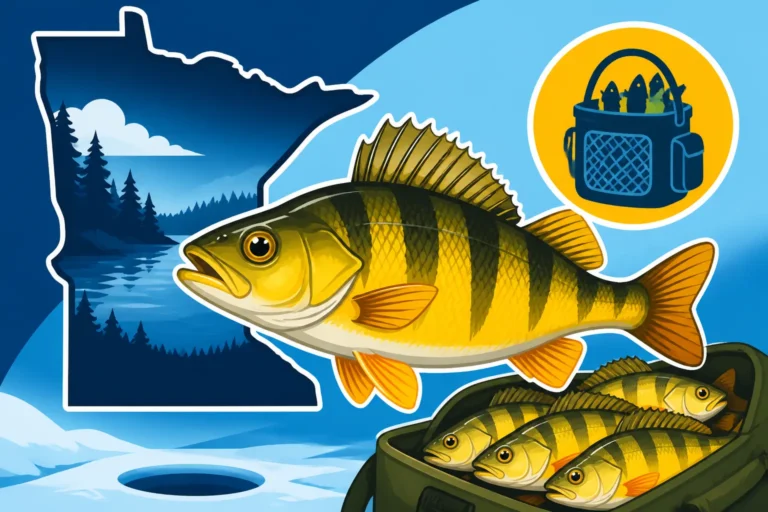
The easiest way to tell them apart isn't actually their color, as water clarity can make a black crappie look pale or a white crappie look dark. Instead, look at the pattern and the fins. Black crappies have irregular, dark speckles scattered across their sides with no clear pattern. White crappies, on the other hand, usually have their spots arranged in 7 to 9 vertical bars. If you see stripes, it’s likely a white crappie.
Another foolproof method is counting the dorsal spines (the prickly bits on the top fin). Black crappies typically have 7 or 8 spines, while white crappies usually have 5 or 6. This distinction is important because white crappies tend to handle turbid, muddy water better than black crappies. If you are fishing a river backwater, you are more likely to run into whites. If you want to know which lakes hold the biggest versions of each, take a look at the Best Crappie Lakes in Minnesota.
Habitat and Range in Minnesota
Black crappies are the "standard" across most of Minnesota's glacial lakes. They love clear water and heavy submerged vegetation like coontail or cabbage weeds. White crappies are more common in the southern half of the state and in our larger river systems like the Minnesota or the St. Croix. Understanding these habitat preferences helps you target them during different times of the year. For instance, Spring Crappie Fishing in Minnesota often involves finding the warmest water in shallow bays, regardless of the species.
Knowing which species is dominant in your local lake can also help you understand the health of the fishery. White crappies often grow faster but don't live quite as long as black crappies. In some southern Minnesota lakes, the populations can fluctuate wildly based on spawning success. By practicing selective harvest—keeping the mid-sized fish and releasing the true trophies—you help maintain that balance.
Ethical Harvesting and Best Practices
Just because you can keep 10 crappies doesn't always mean you should. As a lifelong Minnesota angler, I’ve seen lakes that used to produce 14-inchers every day get reduced to "potato chip" lakes where you can't find anything over 8 inches. This happens when the largest, most aggressive fish are removed from the gene pool too quickly.
Why Size Matters for Conservation
Crappies are notorious for "stunting" if the population becomes too high or if the large predators are removed. However, the opposite problem is more common in high-pressure lakes: over-harvest of the "slabs." When an angler keeps their limit of 10-to-12-inch fish every day, the lake loses its breeding giants. I always encourage people to keep enough for a meal—maybe four or five nice 10-inchers—and let the 14-inch "wall hangers" go back to spawn.
If you are unsure about the impact of keeping your limit, you can read about What Is the Sunfish Limit on My Lake? to see how similar panfish species are being managed. The philosophy is the same: protecting the top-tier fish ensures the future of the sport. Many of the most successful anglers I know have switched to a "limit of five" mentality even on lakes where ten is legal, simply to ensure their grandkids can catch big fish there too.
Handling and Releasing Crappie Safely
Crappies are often called "papermouths" for a reason. Their mouth membranes are incredibly thin and tear easily. If you plan on releasing a fish, whether because it’s too small or because you've already reached your limit, handling is everything. Avoid using a landing net with coarse mesh that can split their fins or rub off their protective slime coat. Use a rubberized net or, better yet, unhook them while they are still in the water.
If a fish is hooked deep, don't yank it out. Cut the line. The fish has a much higher chance of survival if the hook is left to rust out than if its throat is mangled. During the winter months, be careful about keeping fish out of the water for too long; their eyes and gills can freeze in seconds. To brush up on your release technique, visit Catch and Release Best Practices in Minnesota.
Minnesota Fishing Regulations Disclaimer
This guide is intended for informational and educational purposes only. While we strive to provide the most accurate and up-to-date information regarding Minnesota fishing regulations, rules can change due to emergency DNR orders, mid-season adjustments, or lake-specific conservation efforts. Always consult the official Minnesota Department of Natural Resources (DNR) Fishing Regulations handbook and check for posted signs at public water accesses before you begin fishing. You are legally responsible for knowing the specific regulations for the body of water you are currently fishing.