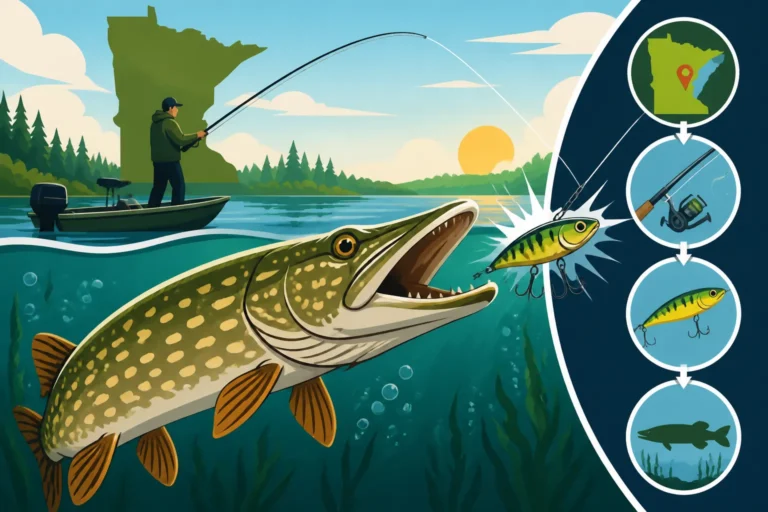
Best Northern Pike Fishing Tactics in Minnesota
There's nothing quite like the thrill of a northern pike absolutely crushing your lure or charging a big sucker under a tip-up. But if you've spent any time on Minnesota's waters, you know these toothy critters can be incredibly elusive, leading to frustrating days without a single flag or a follow. This comprehensive guide is here to cut through the confusion, offering proven tactics and essential insights to help you consistently hook into Minnesota's powerful northern pike, whether you're chasing hammer handles or true gators.
Understanding Northern Pike Behavior in Minnesota Waters
To consistently catch northern pike in Minnesota, you first need to understand their mindset and habits. These aren't just random, aggressive predators; they're creatures of habit, driven by water temperature, forage availability, and spawning instincts. Knowing where they should be at any given time of year is half the battle.
Seasonal Movement Patterns
Pike aren't static. Their location in a lake or river shifts dramatically throughout the year, largely dictated by the water temperature and where their primary food sources are hiding. If you're out looking for them and coming up empty, chances are you're fishing in the wrong neighborhood.
In the spring, right after ice-out, northern pike are often found in shallow, warmer bays and along emerging weed lines. This is their spawning period. Once they've completed the spawn, they'll hang around these shallower, food-rich areas for a bit to recover. Think about those northernmost bays or shallow points that warm up first under the spring sun. These are prime locations during the post-spawn. As the water continues to warm towards the official Minnesota Fishing Seasons & Opener Dates (2026), they'll start to spread out, but those early season spots can be golden.
As summer progresses and the water warms significantly, pike tend to move towards deeper weed edges, submerged humps, rock piles, and points that offer both cooler water and ambush opportunities. They still love weeds, but often the thicker, deeper cabbage beds or coontail will hold the bigger fish. Look for areas where a shallow flat suddenly drops into deeper water, creating a distinct "edge." These transitions are key. You'll find them holding just off these edges, waiting for unsuspecting perch or ciscoes to swim by.
Fall sees a resurgence of activity as water temperatures drop. Pike become incredibly aggressive, trying to pack on calories before winter sets in. They'll often move back shallower, targeting large baitfish migrating from deeper summer haunts. This is a fantastic time for trophy pike, as they're actively feeding and willing to chase bigger baits. You might find them cruising along weed lines that were too warm in summer or around large schools of baitfish.
Come winter, when the lakes are frozen solid, pike still follow similar patterns, albeit through a hole in the ice. They'll gravitate towards distinct structures like weed edges, points, and deep breaklines where they can ambush passing baitfish. Often, the deepest parts of expansive weed flats can be particularly productive. For more specific details, consider reading about Ice Fishing for Northern Pike (Tip-Ups) tactics.
Preferred Habitats and Forage
Northern pike are ambush predators through and through. Their ideal habitat is anything that offers cover from which they can launch a surprise attack. This usually means thick weed beds, submerged timber, fallen trees, and even large rock formations.
In terms of vegetation, they absolutely adore dense patches of coontail and cabbage. These weeds provide excellent cover and also attract the smaller baitfish that pike prey upon. When you're scouting a new lake, always look for these distinct weed types. Sometimes, even seemingly sparse weeds can hold a hidden gator. They're also quite fond of areas where different types of habitat converge – a rocky point meeting a weed line, for instance, or a sandy flat transitioning into a deep drop-off. For more help identifying these fish, check out our guide on Northern Pike in Minnesota: Identification & Where to Catch.
Their diet is pretty diverse, but they are opportunistic feeders. Their primary forage often includes yellow perch, ciscoes (tullibee), suckers, various minnows, and even smaller panfish like crappies and bluegills. They're not above eating their own kind or even the occasional duckling, demonstrating their top-of-the-food-chain status. Knowing what local baitfish are prevalent in a specific lake can give you a huge advantage when selecting your lures. If a lake is known for its abundant cisco population, for example, a larger, silver-sided swimbait or crankbait mimicking a cisco can be incredibly effective.
Essential Gear and Tackle for Minnesota Pike
You wouldn't bring a butter knife to a sword fight, and you shouldn't bring ultralight tackle when you're hunting Minnesota gators. Northern pike are powerful fish with a mouthful of razor-sharp teeth, and having the right gear is crucial for both landing them and protecting your equipment.
Rods, Reels, and Line
For northern pike, you're generally going to want gear that can handle a bit of a fight. Forget those flimsy panfish setups; we're talking about robust, reliable equipment here.
Rods: A medium-heavy to heavy power rod, typically 6'6" to 7'6" in length, with a fast action tip, is ideal. The heavy power gives you the backbone to cast larger lures and control a strong fish, while the fast action provides sensitivity for detecting subtle bites and quick hook sets. For casting big bucktails or heavy swimbaits, a longer rod (7' to 7'6") can help with casting distance and leverage. When you're considering new rods, don't be afraid to splurge a little on a quality one that will stand up to the abuse. You can find a great selection of durable rods on Amazon. While many articles focus on Best Walleye Rods & Reels, the principles of a strong backbone and sensitive tip apply here too, just scaled up for a bigger, toothier fish.
Reels: For most pike applications, a sturdy baitcasting reel is preferred, especially when throwing larger, heavier lures. It offers better line control and cranking power. Look for a reel with a good drag system and a retrieve ratio around 6.4:1 or higher for quickly taking up slack and battling a charging fish. If you prefer spinning gear, opt for a larger spinning reel (3000-4000 series) with a smooth drag and strong bail. Make sure it balances well with your chosen rod.
Line: Braided line is almost a must for pike fishing. Its zero-stretch properties offer superior sensitivity and hook-setting power, and its strength is unmatched. A 30-50 lb test braided line is a good starting point. However, direct tie to braid isn't enough due to those sharp teeth. You absolutely need a leader. A 50-80 lb fluorocarbon leader, 12-18 inches long, can work for less aggressive fish or clear water, but for guaranteed bite-offs, a steel or titanium leader is the safer bet. These leaders prevent the pike's teeth from cutting your main line, saving you countless lures and heartbreaking lost fish. Snap swivels are also incredibly helpful for quick lure changes, just ensure they are heavy-duty.
Lures and Baits for Aggressive Pike
Pike are not usually finicky when they decide to strike, but presenting the right bait can make all the difference. Their aggressive nature means they often respond well to loud, flashy, or erratic presentations. For an even broader look at options, explore our guide on Best Lures & Baits for Minnesota by Species.
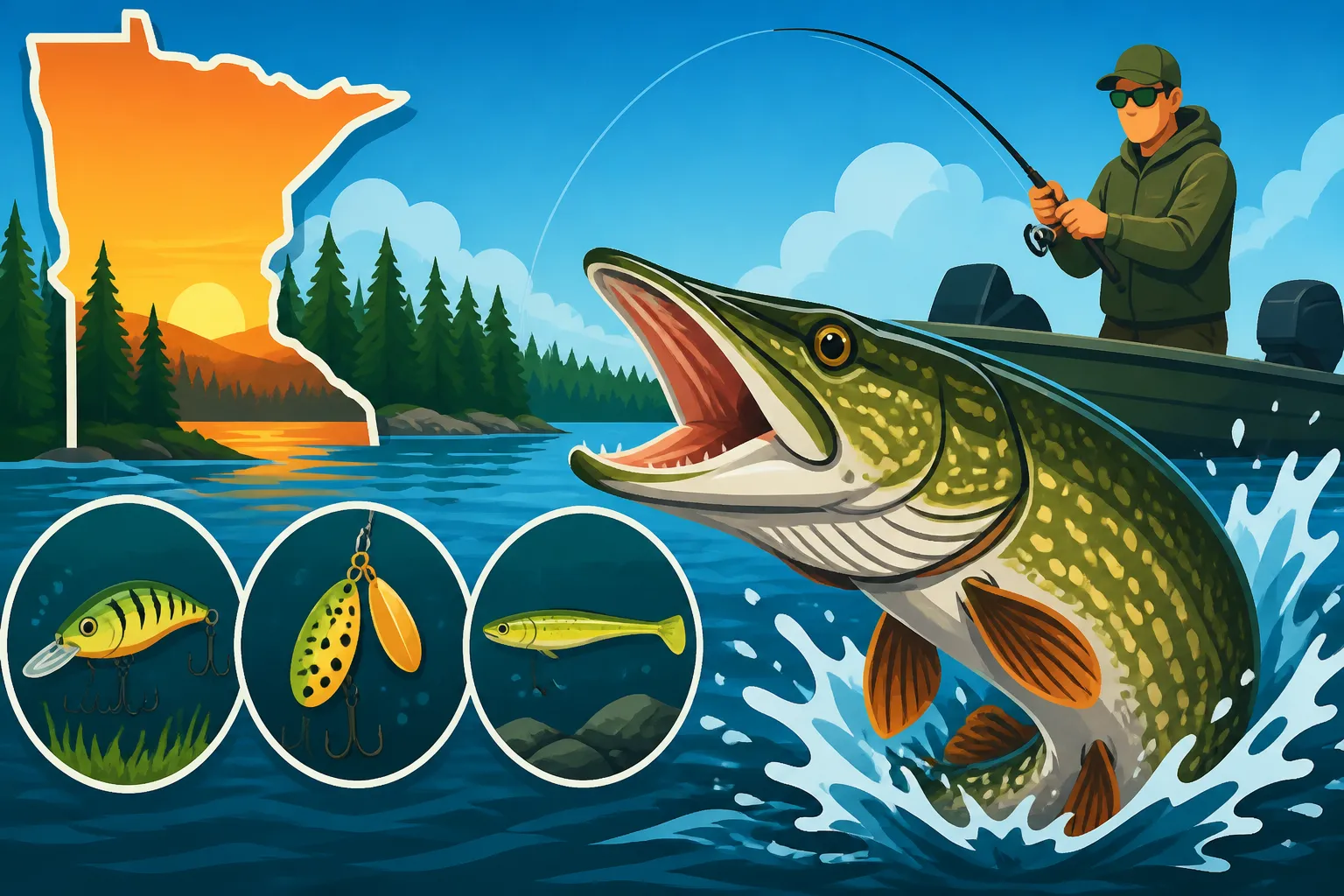
Spoons: Classic metal spoons are pike killers. Think the venerable Daredevle or Doctor Spoon in red and white, five of diamonds, or bright orange. Their wobbling action is irresistible to a hungry pike. Cast them out, let them flutter, and retrieve with a varied speed, adding in occasional twitches or pauses. They're especially effective around weed edges or over submerged structure.
Large Spinners: Big inline spinners like the Mepps Musky Killer or Blue Fox Vibrax Musky Buck are fantastic for covering water and creating a lot of flash and vibration. These are often used for muskie as well, but pike don't discriminate. Retrieve them steadily, focusing on areas where pike might be ambushing baitfish.
Crankbaits: Chunky, aggressive crankbaits that dive to different depths are also excellent. Think large lipped crankbaits like a Rapala Super Shad Rap or Storm ThunderStick, particularly in perch, cisco, or firetiger patterns. For shallower presentations, a lipless crankbait can be deadly when ripped through the weeds. Choose crankbaits based on the depth you expect the pike to be holding.
Soft Plastics: While traditionally more associated with bass, large soft plastic swimbaits, paddle tails, and even oversized tube jigs can entice pike, especially when fished on a heavy jig head. Brands like Keitech or Storm WildEye Swim Shads offer realistic profiles and actions. Jig them aggressively or retrieve them steadily, mimicking a wounded baitfish.
Live Bait: Sometimes, nothing beats a juicy live bait. Large suckers or shiners, rigged under a bobber or on a quick-strike rig, are incredibly effective, especially for larger, more wary pike. Present them near weed edges, over humps, or in ambush points. The natural movement and scent of live bait are often too much for a pike to resist. You can often find a good selection of live bait at local Minnesota bait shops. While not directly pike-related, our article on Best Live Bait for Walleye (Leeches, Minnows, Crawlers) gives you a good sense of bait presentation concepts.
| Lure Type | Best Season | Target Depth | Key Action/Tip |
|---|---|---|---|
| Spoons | Spring, Fall | Shallow to Mid-Depth | Erratic wobble, varied retrieve, pause & drop |
| Large Spinners | Spring, Summer, Fall | Shallow to Mid-Depth | Steady retrieve, flash & vibration |
| Crankbaits | All seasons | Variable (shallow to deep) | Match forage, varied retrieve, deflection |
| Soft Plastics | Summer, Fall | Mid-Depth to Deep | Swim action, jigging, slow retrieve |
| Live Bait | All seasons | Variable (under bobber/rig) | Natural movement, slow drift or static presentation |
Top Tactics for Open Water Pike Fishing
Now that you've got the gear, let's talk about putting it to good use. Open water pike fishing in Minnesota can be an incredibly rewarding experience, offering diverse techniques depending on the conditions and the fish's mood.
Casting and Retrieving
Casting is arguably the most common and versatile method for catching northern pike. It allows you to cover a lot of water and explore different types of structure.
When you're out on the lake, start by fan casting areas known to hold pike. This means casting in a fan-like pattern, covering water from left to right (or vice-versa) in front of your boat or from shore. Focus on weed edges, points, submerged humps, and areas where baitfish are schooling. These are classic ambush points where pike lie in wait.
The key to success with casting is varying your retrieve speed and adding pauses or twitches. Sometimes, a pike wants a fast, aggressive retrieve that triggers a reaction strike. Other times, a slow, deliberate retrieve with tantalizing pauses will draw them out of cover. Don't be afraid to experiment! A common tactic is "rip-jigging" with a spoon or a heavy swimbait – letting it sink, then ripping it up quickly, allowing it to flutter back down. This erratic action often mimics a wounded baitfish, irresistible to a hungry pike.
Always pay attention to where you get bites or see follows. If you catch a pike in a specific depth or near a certain type of weed, replicate that pattern. Remember, pike are often schooling in groups, so where there's one, there are often more.
Trolling for Trophy Pike
While casting is great for active fish and smaller areas, trolling is an incredibly effective technique for covering vast expanses of water and finding those elusive, larger trophy pike. This method is particularly useful in bigger lakes like Leech Lake or Lake of the Woods, where pike might be spread out over deeper flats or along extensive breaklines.
For trolling, you'll want to use large crankbaits or heavy spoons that can reach desired depths. Lures like the Buchertail Depth Raider or large Rapala Deep Husky Jerks are excellent choices. Match the lure size and color to the local forage base. If the lake has a strong cisco population, go with silver, blue, or white patterns. If perch are the primary food source, a perch-colored crankbait can be deadly.
When you're trolling, use your boat's electronics to your advantage. Look for significant structural elements like deep humps, extensive breaklines, or even schools of baitfish. A good fish finder can show you the depth of the thermocline (if present) and help you target the right depth range where pike are comfortable. Even if you're not using cutting-edge sonar like How to Use Garmin LiveScope for Walleye, basic sonar can reveal valuable depth contours.
Vary your trolling speed. Pike often prefer speeds between 2.5 and 4.5 mph, but sometimes a slower or faster presentation is what they're looking for. Make wide turns; this causes your outside lures to speed up and your inside lures to slow down, often triggering strikes. You can also deploy planer boards to spread your lines out, covering a wider swath of water and preventing tangles.
Ice Fishing Strategies for Minnesota Northern Pike
When Minnesota's lakes freeze over, the chase for northern pike doesn't stop; it just moves indoors (or into a portable shelter!). Ice fishing for pike is a popular winter pastime, offering unique challenges and rewards.
Tip-Up Techniques
Tip-ups are the quintessential tool for ice fishing northern pike. They allow you to present large live baits passively over an extended period, covering a wider area than you could by jigging a single hole.
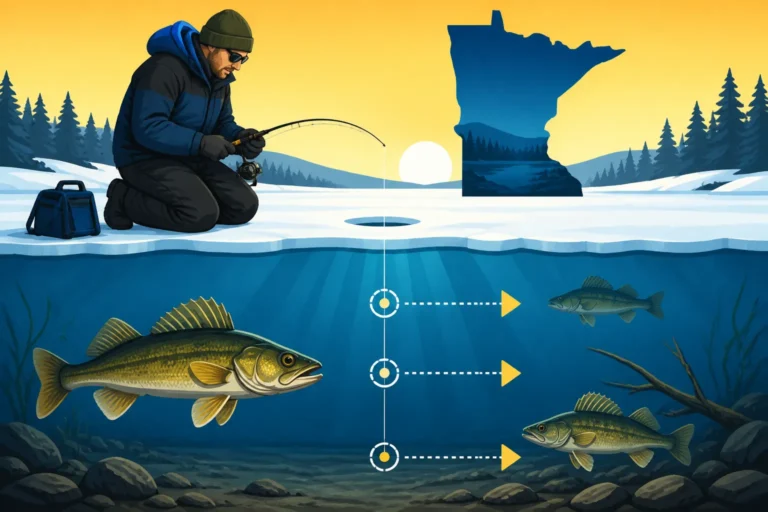
The key to successful tip-up fishing is strategic placement and bait presentation. Pike often patrol distinct underwater highways along weed edges, breaklines, or around submerged timber. Set your tip-ups along these features, spreading them out to cover different depths and sections of the structure. For instance, if you're fishing a weed line that drops from 10 to 20 feet, you might place some tip-ups at 12 feet, others at 15, and a few right on the edge of the deeper water.
For bait, large suckers or golden shiners are tough to beat. Use a quality quick-strike rig that features two treble hooks to ensure a good hookset without deep-hooking the fish, making for easier and healthier release. Hook one treble near the dorsal fin and the other near the tail for a natural, horizontal presentation. Suspend your baitfish just above the weed tops or a few feet off the bottom, allowing it enough room to swim freely and attract attention. You'll want to have a good ice auger to drill enough holes for your spread, perhaps an electric one like the StrikeMaster Lithium 40V Auger for efficiency.
When a flag flies, don't rush! Let the pike run with the bait for a few seconds (often 5-10 seconds) to ensure it has fully committed and turned the bait in its mouth before setting the hook with a firm, sweeping motion.
Jigging for Pike Through the Ice
While tip-ups excel at passive presentations, jigging offers an active and engaging way to target pike through the ice. This technique is especially effective when pike are cruising or when you want to draw them in from a distance.
You'll need heavier ice fishing rods for jigging pike, typically medium-heavy to heavy power, similar to your open water casting rods, but shorter. Pair them with a reliable spinning reel.
The lures for jigging pike are generally larger and more aggressive. Big jigging spoons, like a Northland Tackle Puppet Minnow or Johnson Silver Minnow, in sizes from 1/2 oz to 1 oz or more, are fantastic. Heavy bucktail jigs or large tube jigs can also be deadly.
The retrieve for jigging pike is often aggressive. Drop your lure to the desired depth, then use sharp lifts and drops, creating a lot of flash and vibration. Let the lure flutter back down on a semi-slack line, as strikes often occur on the fall. Don't be afraid to pound the bottom a few times to stir up sediment, which can attract curious pike. You can even combine this with a deadstick presentation—setting up a second rod in a nearby hole with a live minnow on a simple hook to tempt less aggressive fish.
Using a good flasher or fish finder is invaluable for ice fishing pike. A Vexilar or MarCum unit allows you to see your lure, the baitfish, and any pike that approach, giving you real-time feedback on their interest and allowing you to adjust your presentation accordingly.
Conservation and Best Practices
As Minnesota anglers, we have a responsibility to protect our precious natural resources. Practicing good conservation habits ensures that future generations can enjoy the thrill of pike fishing just as much as we do today.
Handling and Release
Northern pike are incredibly hardy, but their sharp teeth and aggressive nature mean proper handling is essential, especially if you plan to release them.
Always come prepared with the right tools. A good pair of long-nosed pliers or forceps is non-negotiable for hook removal. A jaw spreader can also be helpful to safely access deeply set hooks, but use it carefully to avoid damaging the fish's jaw. Have a large, rubberized landing net ready to safely bring the fish into the boat or onto the ice.
When you land a pike, minimize its time out of the water. Handle the fish gently but firmly. If you plan to take a photo, do it quickly and hold the fish horizontally, supporting its belly. Avoid holding large pike vertically by the jaw, as this can cause internal damage. Wet your hands before touching the fish to protect its slime coat, which is vital for its health. For pike with deep-set hooks, cut the line if you can't easily remove the hook without causing excessive damage. A hook left in a pike will often rust out. Remember to be aware of Northern Pike Limits by Zone which vary across Minnesota's different fishing zones, and plan your catch and release strategy accordingly.
Aquatic Invasive Species Prevention
One of the biggest threats to Minnesota's waters is the spread of aquatic invasive species (AIS). As anglers, we play a crucial role in preventing their spread. Every time you move your boat, gear, or even bait bucket from one body of water to another, you risk transporting harmful invasives.
The mantra is simple: Clean, Drain, Dry.
- Clean: Inspect your boat, trailer, and all fishing gear for any aquatic plants or animals. Remove everything you find. This includes weeds caught on your prop, mud on your trailer, or even tiny snails on your anchor.
- Drain: Before leaving any access, drain all water from your boat, livewell, bait buckets, and portable ice houses. This includes bilge water, minnow water, and any other standing water.
- Dry: Allow your boat and gear to dry thoroughly for at least five days before launching into another body of water. If you can't dry it completely, wash it with high-pressure, hot water (120 degrees F or higher).
Understanding and following all Aquatic Invasive Species (AIS) Rules for Boaters is not just a suggestion; it's the law, and it's vital for protecting Minnesota's pristine lakes and rivers for generations to come.
Disclaimer
Fishing regulations can change. Always consult the latest Minnesota Department of Natural Resources (DNR) fishing regulations booklet before heading out on the water. This article is intended for informational purposes only and does not supersede official regulations. Stay safe and have fun!