How to Catch Sauger Through the Ice in Minnesota
Catching fish through the ice in Minnesota can be an incredibly rewarding experience, but sometimes, the focus on walleye means we overlook other fantastic species like sauger. These feisty, delicious fish offer a thrilling fight and a tasty reward, yet many anglers feel unsure how to specifically target them beneath a sheet of ice. This comprehensive guide will break down everything you need to know to successfully catch sauger through the ice in Minnesota, from understanding their behavior to the best gear and techniques.
Understanding Sauger: Distinguishing Them and Their Icy Habitat
Many anglers mistake sauger for their more famous cousin, the walleye, and while they share some similarities, understanding their unique characteristics and preferred habitats is key to catching them specifically. Sauger tend to be a bit smaller, generally running between 10 to 18 inches, though you can certainly find larger ones. Their skin has a distinctive blotchy pattern and, crucially, they lack the prominent white tip on the lower lobe of their tail fin that walleye possess. If you're wondering how to properly identify your catch, check out our guide on how to Identify a Walleye vs Sauger.
Sauger vs. Walleye: Subtle Differences That Matter
While both are members of the perch family and share a similar elongated body shape, distinguishing between a sauger and a walleye is important for adhering to specific regulations and tailoring your fishing approach.
Sauger have distinct dark spots on their dorsal fin, whereas walleye typically have a more uniform, often clear, dorsal fin. Beyond appearance, their behaviors differ. Walleye are often found roaming over structure like reefs and points, but sauger are more bottom-oriented. They prefer deeper, often murkier waters with soft, silty or sandy bottoms, shying away from bright light. This means your typical walleye spot might not be the prime sauger territory. Knowing these differences can dramatically improve your success rate when specifically targeting sauger.
Preferred Icy Environments for Sauger
When the lakes freeze over, sauger don't drastically change their preferences. They're still going to be found hugging the bottom in those deeper basins and along the breaks leading into them. Think about areas with a consistent depth, especially those deep mud flats or channel edges in larger rivers like the Mississippi or even some of the deeper sections of vast lakes such as Lake of the Woods or Lake Pepin. They thrive in low-light conditions, so overcast days or even late afternoon into evening can be prime times.
Unlike walleye, which might suspend more actively over structure, sauger are almost always right on the bottom. Look for depressions, submerged humps that rise slightly from a deep flat, or areas where current brings in food. They often congregate in these spots, making them excellent targets once you find a school.
Essential Gear for Targeting Ice Sauger
Having the right equipment can make all the difference, especially when you're trying to coax a bite from a finicky sauger beneath a few feet of ice. You don't need a boatload of specialized gear, but some intentional choices will set you up for success.
Rods, Reels, and Line Selection
For sauger, you want a rod with a sensitive tip but enough backbone to handle a decent fight. A medium-light to medium power ice rod, typically 28 to 32 inches long, is a good starting point. This length gives you control in an ice house but also allows for decent hooksets. Pair it with a small spinning reel in the 500-1000 size range. A smooth drag is more important than massive line capacity.
As for line, 4 to 6-pound test monofilament or fluorocarbon is generally ideal. Monofilament offers a bit more stretch, which can be forgiving with aggressive bites, while fluorocarbon is nearly invisible underwater and has excellent abrasion resistance, which is great if you're fishing near rocks or heavy cover. Some anglers opt for a braid main line with a fluorocarbon leader for increased sensitivity and strength. Consider checking out our guide on the Best Ice Fishing Rods for Walleye & Panfish, as many of those recommendations cross over perfectly for sauger.
Lures and Bait: Sauger's Favorite Meals
Sauger aren't usually terribly picky, but they do have preferences. Small jigs, typically 1/8 to 1/4 ounce, are a staple. Think jigging spoons like a Northland Forage Minnow or a Rapala Jigging Rap. These lures mimic small baitfish and can be worked effectively near the bottom. Tipping your jig with live bait, such as a minnow head or a whole small minnow, is often the secret sauce. Deadsticking a small shiner or fathead minnow on a plain hook or small jig is also incredibly effective, especially when paired with an active jigging rod.
Here's a quick reference for popular sauger baits and lures:
| Lure Type | Best Use Case | Tips for Sauger |
|---|---|---|
| Jigging Spoons | Active presentation, attracting fish from a distance | Work close to the bottom, sharp snaps followed by pauses. |
| Jigging Raps | Mimic dying baitfish, good for subtle bites | Lift and drop gently, allow to settle on bottom. |
| Plain Hook + Minnow | Deadsticking, subtle presentation, finicky fish | Use a small, lively minnow, set just off the bottom. |
| Jig + Minnow Head | Combines flash of jig with natural scent/attraction | Fish actively, jigging and pausing to entice strikes. |
| Soft Plastics | Finesse presentation, vertical jigging | Small paddle-tail or minnow profiles, tipped with scent. |
You can often find great deals on a variety of these essential sauger lures and baits on Amazon. Stocking up on a few different sizes and colors will ensure you're ready for whatever the sauger are biting on that day.
Electronics: Flashers and Sonar for Pinpointing Sauger
If there's one piece of gear that truly shines for ice fishing sauger, it's a flasher or modern sonar unit. Because sauger hug the bottom so tightly, being able to see your lure and any fish directly below it is invaluable. A traditional flasher, like a Vexilar FLX-28 or a Humminbird Ice Helix, will show you real-time returns of your bait and any fish entering your cone angle. This allows you to present your lure precisely where the sauger are.
More advanced units, like those with forward-facing sonar, can show you fish moving into your area before they are directly under your hole, giving you a huge advantage. Understanding how to read a flasher is crucial, as sauger might appear as a faint signal right on the bottom line. Learning to distinguish that subtle separation between the bottom and a fish is a game-changer. These electronics help you avoid fishing unproductive water and allow you to react instantly when a sauger moves in for a look.
Proven Tactics for Icy Sauger Success
Once you've got your gear dialed in, it's time to talk tactics. Catching sauger through the ice isn't always about aggressive jigging; sometimes, patience and subtle movements are key.
Mastering the Art of Jigging for Sauger
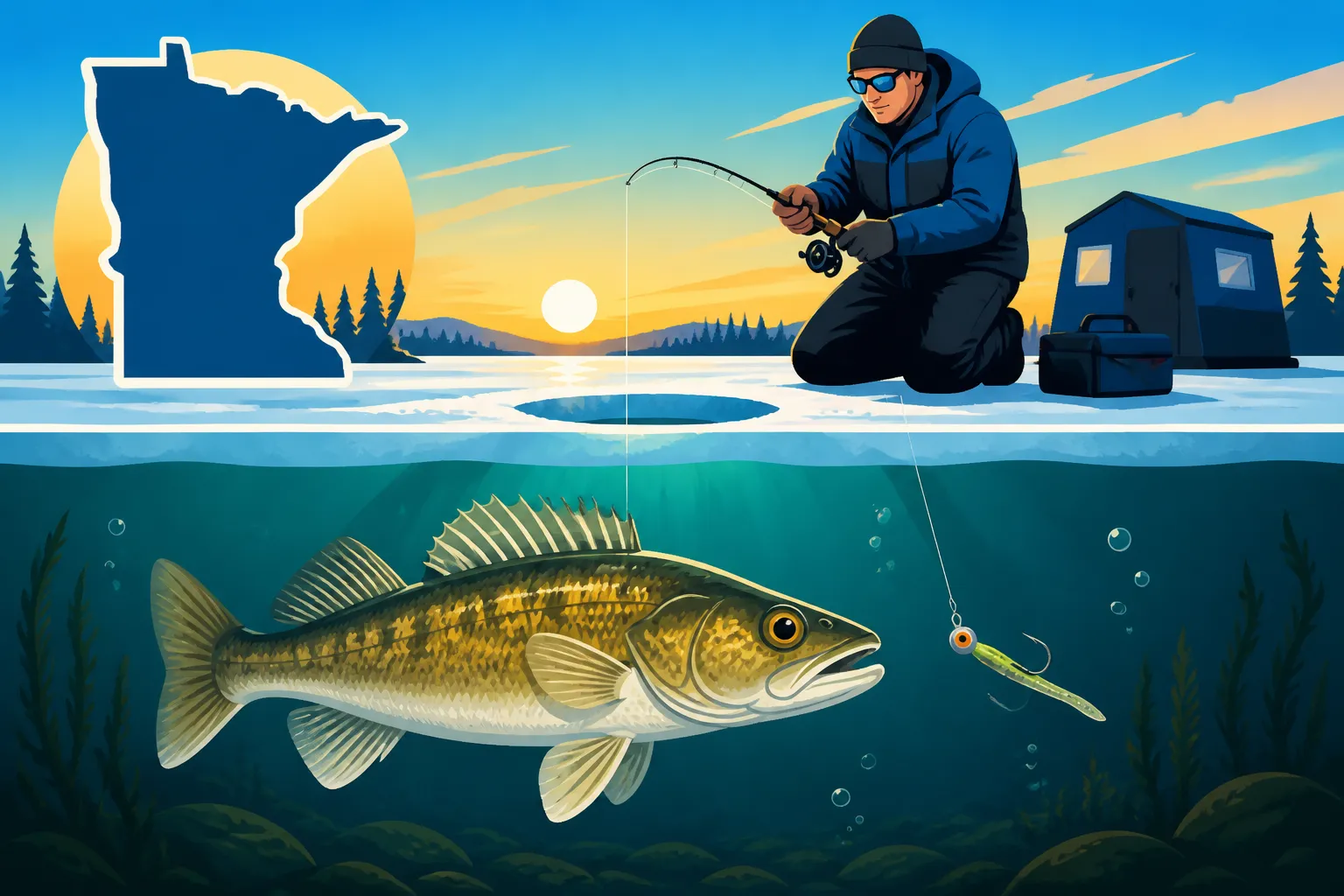
Jigging for sauger is a delicate dance. Remember, these fish are usually right on the bottom, so your presentation needs to be there too. Start by dropping your jig or spoon all the way to the bottom. Once it hits, give it a few sharp lifts – maybe 6 to 12 inches – and then let it fall back down. The key is to let it tap the bottom or sit just an inch or two above it. Sauger are often attracted to the puff of sediment stirred up by your lure.
Experiment with your retrieve. Sometimes a slow, subtle quiver is best, other times a more aggressive snap. Pay close attention to your flasher; if you see a mark rise off the bottom, slightly lift your lure to meet it. When you feel a bite, it might be a light tap or a sudden weight. Unlike walleye, which often hit on the fall, sauger frequently pick up the bait when it's resting or being slowly lifted.
The Power of Deadsticking and Tip-Ups
Deadsticking, which involves setting up a second rod with a relatively still presentation, is incredibly effective for sauger. Often, a sauger will ignore your actively jigged lure but pick up a motionless minnow. A simple bobber rig with a small hook and a lively minnow set a few inches off the bottom is all you need. Place this rod in a rod holder, watch the bobber, and let the sauger do the work. This method is also fantastic for catching a variety of other species, so you might end up with more than just sauger!
Tip-ups are another excellent choice, especially if you're targeting sauger in deeper basins where they roam in schools. Set your tip-ups with a small shiner or chub minnow suspended just off the bottom. When the flag flies, don't rush! Give the fish a few seconds to fully take the bait before setting the hook. This technique allows you to cover more ground, especially when fishing multiple holes, which is permitted in Minnesota, generally up to two lines per angler for ice fishing, but always check current Minnesota Fishing Limits: Bag & Possession (2026) and How Many Lines Can You Use Ice Fishing in Minnesota? for specifics.
Reading the Ice: Best Times and Conditions
Sauger generally prefer stable weather conditions. Drastic barometric pressure changes can put them down. Overcast days or periods of low light – early morning, late afternoon, and even after dark – are often the most productive. Remember, they have light-sensitive eyes, similar to walleye eyes, so they're more active when the sun isn't blazing.
On particularly bright, sunny days, sauger will often retreat to the deepest, darkest parts of a lake. This is where your electronics become indispensable, allowing you to locate these deeper sanctuaries. Don't be afraid to drill many holes, especially along deep breaks and flats, to find those active schools. The more holes you drill, the more ground you cover, and the better your chances of intersecting a roaming school of sauger.
Finding the Best Minnesota Lakes for Ice Sauger
Minnesota offers some phenomenal opportunities for catching sauger through the ice, especially in specific regions and lakes known for healthy populations.
Top Sauger Lakes in Northern Minnesota
Northern Minnesota is a prime destination for ice sauger. Massive bodies of water like Lake of the Woods are legendary for both walleye and sauger. On Lake of the Woods, focus on the deeper, mud-bottomed basins, especially in areas like the Big Traverse or the Rainy River portions. The Rainy River itself, particularly during early ice, can be a fantastic spot for sauger as they move into wintering holes.
Other northern lakes such as Red Lake, Lake Vermilion, and even Rainy Lake also hold good populations of sauger in their deeper areas. When fishing these larger systems, using a reliable GPS with lake contours is highly recommended to pinpoint those critical deep-water breaks and flats.
Sauger Hotspots in Central and Southern Minnesota
While perhaps not as famous for sauger as the northern giants, central and southern Minnesota still offer great opportunities. The Mississippi River, particularly its larger pools, is a fantastic sauger fishery. These river sauger often relate to current seams and deeper holes along the main channel. Focus on current breaks behind wing dams or along deep river bends. You'll often find them mixed in with walleye and even yellow perch here.
Lake Pepin, a natural lake on the Mississippi River, is another excellent choice, offering vast expanses of deep water where sauger thrive. Smaller, deeper lakes with a good forage base can also hold sauger, though their populations might not be as robust as in the larger, riverine systems. Always check the Minnesota Department of Natural Resources (DNR) lake finder for specific regulations and population data before heading out. Our guide to Yellow Perch & Sauger in Minnesota provides more details on identifying where to find them.
Remember to always prioritize safety on the ice, checking ice conditions regularly. Our article on Minnesota Ice Fishing & Shelter Rules will give you a rundown of everything you need to know to stay safe and legal on the frozen water.
Disclaimer
Fishing regulations can change frequently. Always consult the latest Minnesota Department of Natural Resources (DNR) fishing regulations booklet or website before heading out on the water to ensure you are in compliance with current laws. This guide is for informational purposes only and does not constitute legal advice.