Ice Fishing for Northern Pike (Tip-Ups)
There is a specific kind of frustration that comes with standing on a frozen Minnesota lake in the middle of January, staring at a stationary flag while your toes slowly go numb. We have all been there—wondering if we set the depth wrong or if the northern pike have simply moved on. This guide solves those mysteries by providing a masterclass in ice fishing for northern pike using tip-ups, ensuring your winter days are filled with flags and heavy fish.
The Allure of the Flag: Why Minnesota Pike and Tip-Ups are a Perfect Match
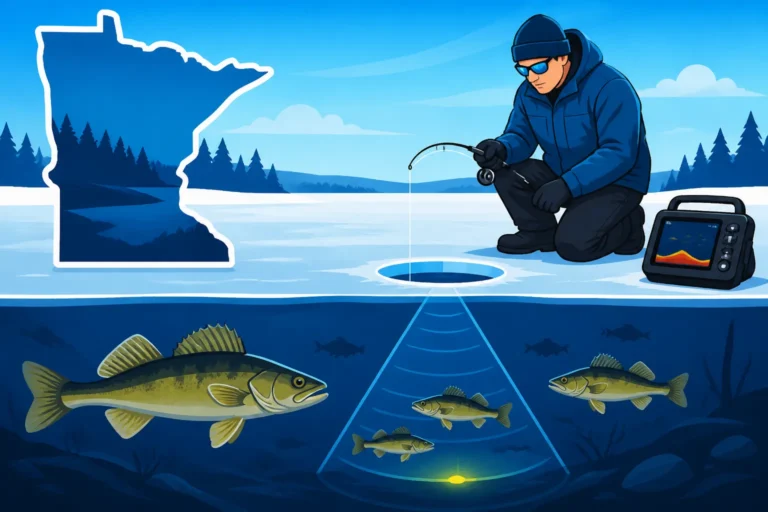
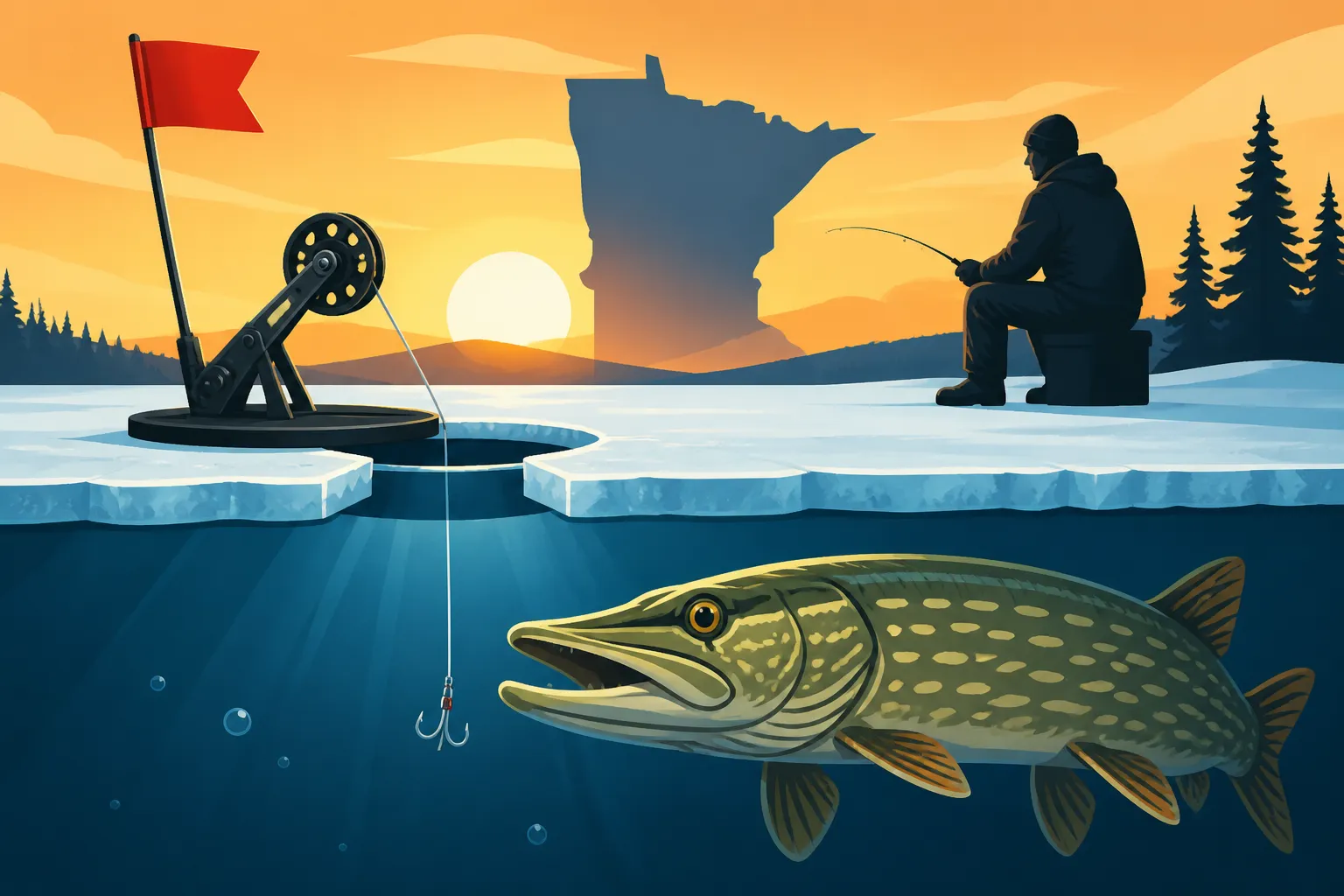
There is nothing quite like the visual of a bright orange flag popping against a stark white horizon. In Minnesota, tip-up fishing is more than just a technique; it is a cultural staple of our winters. While jigging for walleye requires constant attention and a delicate touch, tip-up fishing for pike allows you to cover vast areas of a lake while enjoying the social side of the sport. It is the ultimate "set it and forget it" method that suddenly transforms into high-drama action the moment a fish strikes.
The Thrill of the Run
When a northern pike hits a bait under a tip-up, the initial strike is often violent and followed by a sustained run. Because pike are "slash and grab" predators, they often T-bone a baitfish and then swim several yards before stopping to turn the prey head-first for swallowing. Watching the spool of your tip-up spin rapidly—a "screamer"—is one of the most heart-pumping moments in all of ice fishing. It requires patience and nerves of steel to wait for that second run before you commit to the hookset.
In many ways, the tip-up acts as a silent sentry. You might be a hundred yards away, sitting in a warm fish house or grilling brats on the ice, when a "Flag!" shout echoes across the bay. The sprint to the hole, the careful clearing of the slush, and the first touch of the line to feel the weight of a living thing on the other end is a sequence of events that never gets old. For many of us, this is the core of what makes a Minnesota winter bearable.
Pike Behavior in Frigid Waters
Unlike some species that become lethargic or "shut down" when the water temperature drops, northern pike remain active predators throughout the winter. They are built for the cold, and their metabolism, while slower than in July, still demands a significant amount of protein. In the early winter months, pike are often found in the remaining green weeds, hunting the perch and sunfish that linger there. As winter progresses and oxygen levels in shallow bays drop, they often move toward deeper structure or "secondary" breaks.
Understanding this movement is key to your success. A pike in February might be less willing to chase a fast-moving jig, but it will rarely pass up a large, oily dead bait suspended perfectly at its eye level. This is where the tip-up shines. It allows for a static, natural presentation that mimics a dying or easy meal, which is exactly what a trophy northern pike is looking for when the ice is three feet thick.
Social Fishing at Its Best
Let’s be honest: one of the best parts of Minnesota Ice Fishing & Shelter Rules allowing for multiple lines is the ability to socialize. Tip-up fishing is perfectly suited for groups. Because you aren't tied to a single hole with a sensitive rod in your hand, you can set your spread and then gather with friends. It’s the perfect way to introduce kids or newcomers to the sport because the "visual" of the flag is so intuitive.
When you are out with a group, the tactical spread becomes a team effort. You can cover different depths, different types of structure, and different bait presentations simultaneously. This communal approach doesn't just make the day more fun; it makes you a more effective angler. You can find many of the necessary communal supplies and even basic tip-up kits on Amazon to get your group started without breaking the bank.
Essential Gear for Success: Beyond the Basic Tip-Up
While the concept of a tip-up is simple—a frame, a spool, and a flag—the quality of your gear can make the difference between a landed trophy and a tangled mess. Minnesota winters are brutal, and cheap equipment often fails when the temperature drops below zero. Plastic components become brittle, and low-quality grease in the spool can freeze solid, creating enough resistance to make a pike drop the bait.
Choosing the Right Tip-Up Style
There are several styles of tip-ups on the market, but the most popular in the Northland is the "wooden lath" or "cross-style" tip-up. Brands like Beaver Dam have been the gold standard for decades because they use high-quality components and freeze-proof grease. Another popular option is the "thermal" or "round" tip-up. These are designed to fit perfectly over a standard 8 or 10-inch hole, sealing it off from the cold air.
Thermal tip-ups are a lifesaver on sub-zero days. By insulating the hole, they prevent the water from skimming over with ice, which ensures that the line can move freely when a fish strikes. If you are using traditional wooden tip-ups on a cold day, you’ll need to check them frequently to "clear the skim" or use a hole sleeve. You can often find a wide variety of Best Tip-Ups for Pike Fishing options on Amazon, where reviews from other cold-weather anglers can help you decide between thermal and traditional models.
Rigging Your Line for Toothly Predators
Standard monofilament is generally a poor choice for the main line on a tip-up. Instead, most veteran pike anglers use a heavy-duty braided nylon or Dacron line, usually in the 20 to 40-pound test range. This line is much easier to handle with gloves on and doesn't have the "memory" or coil issues that mono has in the cold. It also provides a better grip when you are hand-lining a heavy fish toward the hole.
At the end of your main line, the leader is critical. Pike have razor-sharp teeth that will slice through braid or mono in a heartbeat. You have two main choices: steel leaders or heavy fluorocarbon. Steel is the traditional choice and is virtually bite-proof, but it can be stiff and highly visible in clear water. Many modern anglers prefer 30 to 80-pound fluorocarbon leaders. Fluoro is nearly invisible underwater and offers enough abrasion resistance to survive a pike's maw while providing a more natural presentation.
Essential Accessories for the Ice
Beyond the tip-up itself, you need a few specialized tools to handle Minnesota pike. A long-handled hook remover or needle-nose pliers are non-negotiable; you do not want your fingers anywhere near a pike’s mouth. A sturdy ice skimmer is also essential for keeping your holes clear. For those targeting truly large fish, a "jaw spreader" can help keep the fish's mouth open safely while you work to remove the hook, which is better for both you and the fish.
Don't forget about your own comfort. A good pair of waterproof, insulated gloves is vital because your hands will inevitably get wet when you pull a fish out of the hole. Some anglers also swear by "tip-up lights"—small LED devices that clip onto the flag and blink when it's triggered, which is a game-changer for Night Fishing for Walleye in Minnesota or early morning pike sessions.
Tactical Tip-Up Placement: Finding the Green Weeds and Drop-Offs
Location is the most important variable in ice fishing. You can have the best bait and the most expensive gear, but if you are set up over a barren mud flat when the pike are on a rocky point, you won’t see a single flag. In Minnesota, pike are structure-oriented fish. They are ambush predators, meaning they want to hide in cover and wait for a meal to swim by.
Locating Mid-Winter Pike
In the early ice season, pike are almost always associated with the last remaining green weeds. Look for bays or flats that had thick cabbage or coontail in the autumn. As long as those weeds are still green and producing oxygen, they will hold baitfish, and where there are baitfish, there are northern pike. As the winter drags on and those weeds die and begin to rot (consuming oxygen in the process), the pike will migrate toward the "first break" or the edge of the deep water.
A great strategy is to look for "funnels." These are areas where a point extends out toward an island or where two deep basins are separated by a shallow saddle. Pike use these underwater highways to move between feeding and resting areas. If you can position your tip-ups along these travel corridors, you increase your chances of intercepting a cruising fish.
The "Spread" Strategy
When you are allowed two lines per person, a group of three anglers can have six tip-ups in the water. This allows you to create a "grid" or a "spread" to "search" for the fish. A common mistake is to huddle all the tip-ups in one small area. Instead, try "stair-stepping" your depths. Put one tip-up in 6 feet of water on top of the weed flat, one at 12 feet on the edge of the drop-off, and one at 18 feet at the base of the break.
| Depth Category | Recommended Structure | Target Bait Presentation |
|---|---|---|
| Shallow (4-8 ft) | Green weed beds / Cabbage | High in the water column (2 ft off bottom) |
| Mid-Depth (10-15 ft) | Primary drop-offs / Points | Mid-column (4-5 ft off bottom) |
| Deep (18-25 ft) | Base of breaks / Basin edges | Large dead bait near the bottom |
This "stair-step" approach helps you identify the "active" depth for the day. Once two or three flags pop at the 12-foot mark, you can move your other lines to that same depth to maximize your efficiency. This is a classic example of Best Northern Pike Fishing Tactics in Minnesota that works on almost any lake in the state.
Reading the Depth Map
Before you even step onto the ice, you should be studying a contour map of your chosen lake. Apps like Navionics or a dedicated GPS unit are invaluable. You are looking for "sharp" breaks—where the contour lines are close together. These indicate a steep drop-off, which pike love. Also, look for "inside turns" or small pockets in a weed line. These are natural ambush points where a pike can tuck away and watch for perch moving along the edge.
If you are fishing a new lake, start by looking at the public access points and finding the nearest major structure. Often, the most pressured spots are popular for a reason, but the biggest pike are frequently found on the structures that require a bit more walking or snowmobiling to reach. Taking the time to scout these remote spots can lead to a Minnesota State Record Muskie encounter—or at least a pike of similar proportions.
Bait Selection and Presentation: Making Them Bite
The debate between live bait and dead bait is as old as the sport itself. In the world of Minnesota pike fishing, both have their place, but the timing of the winter often dictates which will be more effective. Pike are visual hunters, but they also have a highly developed sense of smell, which is why your bait choice matters so much.
Live Bait vs. Dead Bait
Live bait, such as large suckers or "shiners," offers the advantage of movement. A struggling sucker sends out vibrations that can be felt by a pike’s lateral line from a long distance. This is often the best choice in the early winter when pike are more aggressive. However, on a tip-up, a very active sucker can sometimes trigger the flag itself, leading to "false flags" that can be incredibly annoying.
Dead bait, on the other hand, is a powerhouse for trophy pike. Large ciscoes, smelt, or even herring (which you can sometimes find at specialty bait shops or even Amazon for preserved versions) are incredibly oily. As they sit in the water, they release a scent trail that acts like a dinner bell. For lazy, large-bodied pike in the dead of winter, an easy, stinky meal is often more attractive than a fish they have to chase.
Hooking Strategies for Solid Sets
How you hook your bait determines how the fish will be hooked. For live suckers, most anglers use a "quick-strike rig." This consists of two small treble hooks on a leader. One hook goes near the dorsal fin, and the other near the tail. This ensures that no matter how the pike grabs the fish, there is a hook in its mouth. This allows you to set the hook almost immediately after the flag pops, which is much better for Catch and Release Best Practices in Minnesota as it prevents the fish from swallowing the hook deeply.
For dead bait, a similar quick-strike rig works, but you often want to hang the bait horizontally. A "dead" fish floating at a weird angle looks unnatural and might cause a wary pike to refuse it. Use a specialized rig that balances the bait so it looks like it's just suspended in the water column.
Fine-Tuning the Depth
A common question is: "How far off the bottom should my bait be?" Pike almost always hunt "up." Their eyes are positioned on the top of their heads, meaning they see things silhouetted against the ice above them better than things below them. A good rule of thumb is to set your bait about 1 to 2 feet off the bottom or just above the tops of the weeds.
If you are fishing in 15 feet of water and the weeds are 4 feet tall, you want your bait at the 10-foot mark. This keeps it visible and out of the "tangle zone" of the vegetation. Use a "depth finder" (a simple lead weight on a clip) to find the bottom, then pull up the desired amount of line and mark it with a small bead or a piece of colored thread on your tip-up line so you can quickly reset it to the exact same depth after a strike.
Managing the Flag: From Strike to Harvest
When that flag finally pops, the game changes from a waiting game to a tactical exercise. Your actions in the first 60 seconds after a flag goes up will determine whether you land the fish or end up with an empty hook.
Approaching the Tip-Up
The instinct is to run full tilt toward the flag. Resist this. Not only is running on ice dangerous, but the heavy thumping of boots on the ice can actually spook a fish that is still hovering near the hole. Approach the tip-up quietly and look at the spool. Is it turning? If the spool is spinning rapidly, the fish is on its "first run." Do not touch the tip-up yet.
Wait for the spool to stop. This usually means the pike has stopped to turn the bait in its mouth. Once the spool begins to turn again—the "second run"—that is your cue. Carefully lift the tip-up frame out of the hole, being careful not to put any tension on the line.
The Art of the Hand-Line Hookset
Because you aren't using a rod, the hookset is done by hand. Feel the line between your thumb and forefinger. When you feel the steady "thump-thump" or a heavy weight pulling away, give the line a sharp, firm upwards pull. You don't need to "swing for the fences" like you’re on a bass boat; a short, snappy tug is usually enough to drive the hooks home.
Once the fish is hooked, the fight is a "hand-to-hand" battle. Do not wrap the line around your fingers; if a large pike decide to run, it can cut you or even pull you toward the hole. Use a "hand-over-hand" motion, letting the line slip through your fingers if the fish makes a powerful surge. Keeping a steady pressure is key—if you give a pike slack, it will often shake its head and throw the hook.
Safe Handling and Catch and Release
When the fish’s head appears in the hole, this is the most common time for the line to break or the hook to pull. If the fish is a "keeper" according to the Minnesota Northern Pike Limits by Zone, you can use a gaff (carefully) or simply reach down and grip the fish behind the gill plates. If you plan to release the fish, never touch the gills themselves.
Keep the fish in the water as much as possible. In sub-zero temperatures, a pike’s eyes and gills can freeze in seconds. Take a quick photo, remove the hooks with your pliers, and get that fish back down the hole. A healthy release ensures that our Minnesota Fish Species: Identification Guide continues to include trophy-sized northerns for the next generation of anglers.
Regional Highlights: Best Places in Minnesota for Tip-Up Pike
Minnesota is blessed with thousands of lakes, but some stand head and shoulders above the rest when it comes to producing consistent pike action and the occasional monster.
Big Water Giants
If you are looking for a fish that will barely fit through a 10-inch hole, head to the "Big Three." Lake of the Woods Fishing Guide is perhaps the premier pike destination in the lower 48, especially in late March during the "pre-spawn" window. The fish here reach massive proportions, and the vast flats are perfect for tip-up spreads. Similarly, Mille Lacs Lake Fishing Guide and Upper & Lower Red Lake Fishing Guide offer incredible numbers of "medium" pike with the ever-present chance at a 40-inch-plus trophy.
On these large lakes, the wind can be a major factor. Make sure your tip-ups are heavy enough or anchored so they don't blow away, and consider using "wind-tip-ups" that actually use the breeze to provide a jigging motion to your bait.
Metro Pike Gems
You don't have to drive five hours north to find great pike fishing. The Twin Cities metro area has some fantastic "action" lakes. Lake Minnetonka is a pike factory, with miles of weed edges that are perfect for tip-ups. Similarly, Lake Waconia and Prior Lake offer great opportunities for suburban anglers to get their "flag fix" after work or on a Saturday morning. Just be aware of the high pressure on these lakes and try to find "off-the-beaten-path" weed beds.
Boundary Waters Adventures
For the truly adventurous, a winter trek into the Boundary Waters Canoe Area Wilderness (BWCA) offers a pike fishing experience like no other. These lakes see almost no winter pressure, and the pike can be incredibly aggressive. You’ll have to haul your gear in by sled, so light-weight tip-ups and a manual auger are the name of the game. The silence of the wilderness combined with the sudden "snap" of a flag is an experience every Minnesota angler should have at least once.
Northern Pike Fishing Tips for Minnesota Anglers
To wrap things up, here are a few "pro-tips" that can help you turn a slow day into a memorable one:
- Check Your Bait: Don't let your bait sit for three hours without checking it. Every 45 minutes, lift your tip-up and "jig" the line a few times. This can puff up a bit of silt on the bottom and catch a nearby pike's attention.
- Scent Matters: If you are using dead bait, use a knife to make a few small nicks in the side of the fish. This helps the oils and scent escape faster.
- Vary Your Spread: If everyone else is fishing the 10-foot weed edge, try going shallower or deeper. Sometimes the biggest pike "hover" just outside the main group of fish.
- Keep Your Holes Dark: Some anglers believe that a bright shaft of light coming through a cleared hole can spook wary fish. Try leaving a thin layer of slush or using a hole cover to keep the underwater environment natural.
- Be Prepared for Bycatch: Don't be surprised if your pike tip-up gets hit by a large walleye or even a roaming muskie. Always have your How to Fillet a Northern Pike (Remove Y-Bones) skills ready, but also be prepared to release a "surprise" fish that might be out of season.
By following these tactics and respecting our Minnesota Spearing License & Legal Species and angling laws, you’ll find that tip-up fishing for northern pike is one of the most rewarding ways to spend a winter day. Whether you are on a frozen pond in the south or a massive border lake in the north, the thrill of the flag is a universal Minnesota experience.
Disclaimer
The information provided in this guide is for educational and entertainment purposes only. Fishing regulations in Minnesota, including bag limits, size restrictions, and season dates, are subject to change by the Minnesota Department of Natural Resources (DNR). Always check the most current Minnesota Fishing Regulations booklet before heading out on the ice. Ice conditions are never 100% safe; always use caution, check ice thickness frequently, and never fish alone on new or questionable ice. We are not responsible for any accidents or legal issues that may arise from the use of this information.