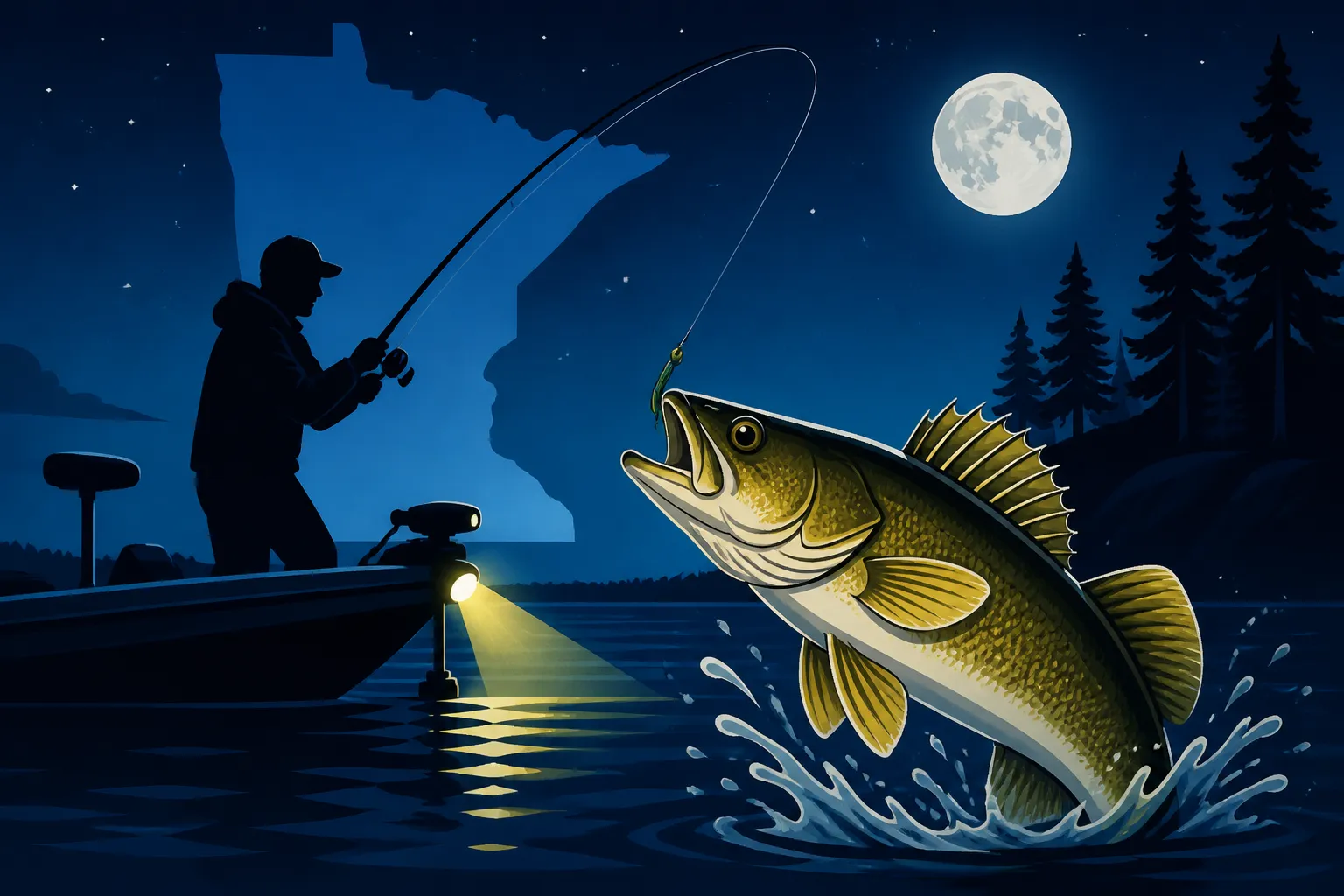
Night Fishing for Walleye in Minnesota
We have all been there: the sun is beating down on a glass-calm Minnesota lake in mid-July, the sweat is stinging your eyes, and your sonar shows plenty of fish that simply refuse to nudge. It is the dreaded "midday slump," and it can turn a promising fishing trip into a long, hot boat ride. This guide is designed to solve that specific frustration by teaching you how to master night fishing for walleye in Minnesota, unlocking a world where the big fish move shallow, the crowds disappear, and the bite becomes electric.
Understanding Walleye Biology and Behavior at Night
To catch walleye after the sun goes down, you first have to understand what makes them tick. These fish are essentially the vampires of the freshwater world. While we struggle to see our own feet in the dark, walleye are entering their peak hunting hours. This biological advantage is the primary reason why night fishing is so productive on our clear-water lakes.
The Tapetum Lucidum Nature’s Night Vision
The most distinctive feature of a walleye is its "glassy" eye. This isn't just for show; it is caused by the tapetum lucidum, a specialized layer of tissue behind the retina that reflects light back through the photoreceptors. This essentially gives the walleye a "second chance" to see an image in low-light conditions. When you are out on a lake like Mille Lacs or Leech Lake, the fish are seeing your lures with incredible clarity while the baitfish are essentially swimming blind.
Because of this extreme sensitivity, walleye often find bright daylight uncomfortable. In very clear lakes, they will hunker down in deep water or thick weeds during the day. Once the sun hits the horizon, their biological clock flips. Understanding Walleye Eyes: Why They Bite at Night & Low Light is the foundation of becoming a successful night angler. It explains why a lure that looks dull to you might be glowing like a neon sign to a hungry predator.
Migration Patterns From Deep Basins to Shallow Flats
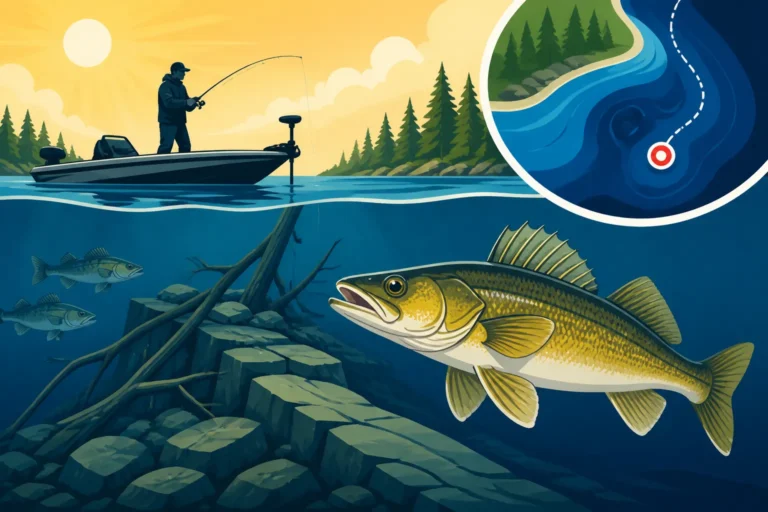
One of the biggest mistakes anglers make at night is staying in their daytime spots. If you spent the afternoon jigging in 30 feet of water, do not expect those fish to stay there. As the light fades, walleye undergo a massive horizontal migration. They move from the deep, cool basins up onto shallow rock piles, weed edges, and sand flats to hunt.
Imagine a dinner bell ringing at 9:00 PM. The perch, shiners, and crayfish move into the shallows to hide, but the walleye follow them right into the kitchen. I have caught trophy-sized walleye in as little as three feet of water on the Mille Lacs Lake Fishing Guide: Walleye, Bass & More during the midnight hours. They become much more aggressive in these shallows because they know they have the tactical advantage. If you aren't casting toward the shore or the tops of reefs, you are missing the bulk of the active fish.
Feeding Windows Why Dusk and Dawn Aren't Always the Peak
While "golden hour" is famous for a reason, the true night bite often happens in waves. Many people pack up as soon as it gets truly dark, thinking the action is over. In reality, there is often a lull right after sunset followed by a massive "moonlight bite." On lakes with high clarity, the feeding window might stay open all night long, especially during a full moon.
I’ve found that the best windows often align with moonrise or when the moon is directly overhead. During these times, the extra bit of ambient light helps walleye silhouette baitfish against the surface. If you are struggling, check a solunar calendar. You might find that the biggest fish of the night doesn't show up until 1:00 AM. Patience is your best friend when the sun goes down; the fish are there, they are just waiting for the right environmental trigger to strike.
Essential Gear for Nighttime Success
Fishing in the dark presents a unique set of challenges. Everything is harder to find, knots are harder to tie, and safety becomes your number one priority. You cannot just wing it with your daytime gear and expect a smooth experience. You need a system that emphasizes organization, visibility, and sensitivity.
Safety First Lighting and Navigation
Before you even think about your lure selection, you need to ensure your boat is legal and safe. Minnesota law requires 360-degree white lights and red/green bow lights to be on when you are away from the dock. Beyond the legalities, you need personal lighting. I always recommend a high-quality LED headlamp. You can find several reliable options on Amazon that offer both white and red light modes. Red light is crucial because it preserves your natural night vision while allowing you to tie lures or unhook fish.
Navigation is another beast. Even if you know your home lake like the back of your hand, it looks completely different at 2:00 AM. Using a high-quality GPS with updated lake maps is non-negotiable. I rely heavily on my electronics to navigate around hazardous rock piles. If you are just starting out, check out this guide on the Best Fishing Gear for Beginners in Minnesota (By Budget) to see how to prioritize your spending for safety and efficiency.
Rod and Reel Setups for Sensitivity
At night, you lose your sense of sight, which means your sense of touch has to compensate. You won't always see your line twitch or your bobber go under. You need a rod that transmits every vibration of your lure directly into your hand. For night walleyes, I prefer a medium-light, fast-action graphite rod. The fast action ensures a solid hookset, while the graphite construction allows you to feel a walleye "breathing" on your bait.
Pair this with a high-quality spinning reel and a braided line with a fluorocarbon leader. Braid has zero stretch, which is vital for feeling those subtle night bites. If you're looking for recommendations, the Best Walleye Rods & Reels guide breaks down the top choices for our local waters. Remember, when you can't see the fish strike, your rod is your only connection to the underwater world. Make sure it's a good one.
Organizing Your Boat for Darkness
A messy boat is a dangerous boat at night. I have seen more than one trip ended early by someone stepping on a stray treble hook or tripping over a net in the dark. Before the sun sets, take ten minutes to clear the deck. Store away any tackle boxes you aren't using and make sure your landing net is in a dedicated, easy-to-reach spot.
I also suggest prepping your lures ahead of time. I like to have three or four rods rigged with different options—a shallow crankbait, a slip bobber, and a jig—so I'm not fumbling with scissors and line in the dark. If you do need to buy extra storage bins or organizers, checking out the fishing department on Amazon can give you some great ideas for keeping your gear secure. A little preparation goes a long way when you're operating by headlamp.
Top Strategies and Techniques for After-Dark Walleyes
Now that you're geared up and the sun has dipped below the pines, it's time to actually catch some fish. Night fishing techniques for walleye generally fall into three main categories: casting, bobbering, and trolling. Each has its time and place depending on the structure you are fishing.
Shallow Water Cranking with Minnow Baits
This is arguably the most exciting way to catch night walleyes. When the fish move into three to eight feet of water on sand flats or rock edges, they are looking for an easy meal. Casting shallow-diving minnow baits—like the classic original floating Rapala or a Smithwick Rogue—is incredibly effective. You want a lure that has a wide, enticing wobble at very slow speeds.
The key here is the "slow roll." You aren't burning the lure back to the boat like you might for bass. You want just enough speed to keep the lure moving and vibrating. Often, the strike will feel like a sudden weight on the line rather than a violent hit. This technique is a staple for anyone learning How to Catch Walleye at Night. It allows you to cover water quickly and find where the active schools are holding.
Slip Bobbering Over Rock Piles
If you find a concentrated group of fish on a specific rock pile or a transition from weeds to gravel, it is time to slow down. Slip bobbering is a deadly effective night tactic because it allows you to suspend a lively leech or minnow right in the strike zone. Use a lighted bobber so you can easily track its movement across the water.
There is nothing quite like the sight of a glowing red or green bobber slowly sliding beneath the black surface of the lake. It is a visual thrill that never gets old. To get the most out of this, you need to know exactly how deep the water is and set your bobber stop accordingly. For a detailed breakdown of the terminal tackle involved, check out How to Set Up a Slip Bobber Rig Step by Step. It’s a patient man’s game, but on lakes like Leech or Winnibigoshish, it’s often how the biggest fish are caught.
Trolling Shallow Flats and Shorelines
When the walleye are scattered across massive flats, trolling is your best bet. Long-lining shallow-running crankbaits 100 to 150 feet behind the boat is a classic Minnesota move. The goal is to keep your lures away from the boat's shadow and engine noise, which can spook fish in shallow water.
Using an electric trolling motor is a massive advantage here because it's silent. If you are moving at 1.0 to 1.5 mph, you are in the "sweet spot." Many anglers will troll the very same shorelines where people were swimming just a few hours earlier. For more on how to manage your speeds and depths, the guide on Trolling Crankbaits for Walleye: Speed & Depth is an essential read. It’s all about precision; a change of 0.2 mph can sometimes be the difference between an empty livewell and a limit.
Best Minnesota Locations for Night Fishing
Not all lakes are created equal when it comes to the night bite. While you can catch a walleye at night in almost any body of water, certain lakes in Minnesota are world-famous for their after-dark productivity. Generally, the clearer the water, the better the night fishing will be.
The Big Lakes Mille Lacs and Lake of the Woods
Mille Lacs is the undisputed king of the night bite in Minnesota. Because the water is so clear and the structure is so varied, the fish here are almost exclusively nocturnal during the summer months. The "mud flats" and the gravel bars are legendary. If you’re planning a trip, make sure to read up on Mille Lacs Lake Walleye Fishing Tips to understand the specific regulations and hotspots that define this fishery.
Lake of the Woods is another powerhouse, though it’s often more associated with the daytime "basin bite." However, during the fall and the shiner run, the night fishing near the mouth of the Rainy River can be world-class. If you're heading north, check out the Lake of the Woods Walleye Fishing Tips for a better understanding of how to tackle this "Inland Sea" after dark.
Metro Opportunities Minnetonka and White Bear
You don't have to drive four hours north to find great night fishing. In the Twin Cities metro, lakes like Minnetonka and White Bear Lake offer fantastic opportunities. These lakes are incredibly busy during the day with recreational boaters, which often pushes the walleye deep and keeps them tight-lipped. Once the jet skis go home and the lake calms down, the walleye move onto the weed points and docks.
Fishing the metro at night is a great way to avoid the crowds and find peace. Many metro anglers find success casting jigs or crankbaits around the various bridges and narrows where current is present. The Twin Cities Metro Fishing: Best Lakes Near Minneapolis & St. Paul guide highlights several other local gems where the night bite is often the best-kept secret of local sticks.
Clear Water vs Stained Water Dynamics
The water's color significantly dictates how you should approach night fishing. In clear lakes, the "bite window" is usually much narrower—often centered around total darkness. In stained or "tea-colored" lakes, like those found in the BWCA or the Arrowhead region, walleye may be more active during the day because the water naturally filters out the sun.
However, even in stained water, the night bite can be excellent; you just might need more "obnoxious" lures. Think vibrating blades, rattles, and bright "glow" finishes. Contrast is key. In clear water, a natural perch or shiner pattern works wonders. In stained water, you might want something that creates a lot of displacement and noise. Understanding the Seasonal Fishing Patterns in Minnesota will help you decide which lake to target based on the time of year and water clarity.
Choosing the Right Lures and Baits for the Dark
Selection is everything when visibility is low. You are no longer trying to perfectly mimic a baitfish's scales; you are trying to mimic its silhouette and its "heartbeat" (the vibrations it sends through the water).
The Power of Glow and Contrast
Glow-in-the-dark paint is not a gimmick; it’s a tool. Modern "super-glow" lures can stay bright for a long time and provide a beacon for walleye in the pitch black. I always keep a small UV flashlight (readily available on Amazon) in my pocket to "charge" my jigs and spoons every few casts.
However, don't overlook contrast. On a moonlit night, a solid black lure cast against the surface can actually be easier for a fish to see than a light-colored one. The black lure creates a sharp silhouette against the moonlit sky. Experiment with both. For a deep dive into what to pack, the Best Walleye Lures: Jigs, Cranks & Spinners guide has a dedicated section on nighttime colors and finishes.
Vibration and Sound Rattling Baits
Since walleye use their lateral line to detect movement, lures that vibrate or rattle are highly effective at night. Lipless crankbaits or "Rattlin' Raps" can be a game-changer when you need to call fish in from a distance. The sound mimics the clicking of crayfish or the frantic vibration of a wounded baitfish.
When you're trolling, lures with internal rattles can help fish home in on the bait from several feet away. This is especially important in the aforementioned stained water lakes. If you're not getting hits on "silent" lures, swap to something with a little noise. You'll often find that the fish strike these lures much more violently.
Live Bait Tactics for Finicky Fish
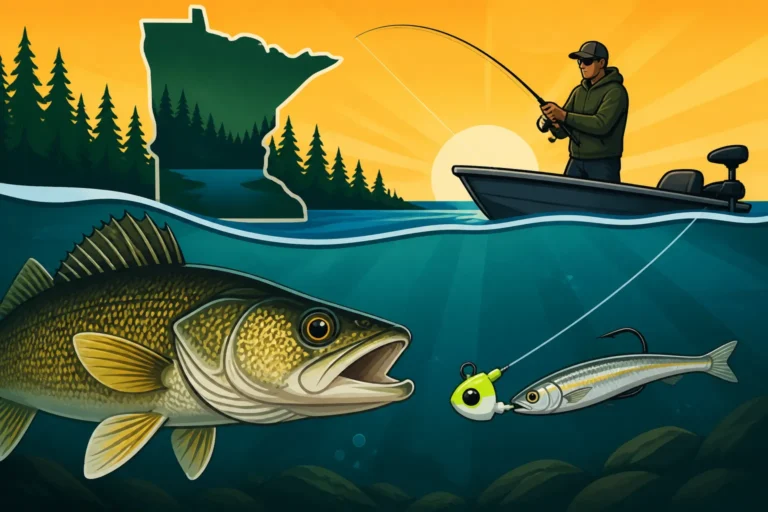
Sometimes, the "match the hatch" approach with live bait is the only way to go. At night, a jumbo leech on a simple hook and split-shot rig can be irresistible. Leeches are naturally active at night, and their undulating swimming motion sends out a specific vibration that walleye love.
If you’re using minnows, try a "shiner" or a large fathead. The key with live bait at night is to keep it moving slightly. Don't just let it sit dead on the bottom. Give it a little twitch every now and then to let the walleye know it's there. For those looking for a simple, effective setup, the Best Live Bait for Walleye (Leeches, Minnows, Crawlers) guide offers plenty of tips on how to keep your bait fresh and lively throughout a long night on the water.
| Technique | Ideal Depth | Best Lure/Bait | Pros | Cons |
|---|---|---|---|---|
| Casting Cranks | 3 – 8 Feet | Shallow Minnow Baits | Covers water fast; exciting strikes. | High risk of snagging in rocks. |
| Slip Bobbering | 8 – 15 Feet | Lit Bobber + Leech | Very precise; stays in strike zone. | Slow-paced; requires patience. |
| Shallow Trolling | 5 – 12 Feet | Rattling Crankbaits | Silent approach; finds schools. | Hard to manage multiple lines. |
| Jigging | 10 – 20 Feet | Glow Jig + Minnow | Great for vertical structure. | Hard to feel bites in wind. |
Navigating the Challenges and Ethics of Night Fishing
Fishing in the dark isn't just about catching; it's about being a responsible member of the angling community. The rules don't change just because the sun went down, and in some cases, you need to be even more diligent about how you handle yourself and the fish.
Managing Boat Traffic and Etiquette
While the lakes are generally quieter at night, you aren't always alone. If you see another boat's lights, give them a wide berth. Sound travels much further over water at night, so keep the loud music and shouting to a minimum. It’s a peaceful time for everyone; don't be the person who ruins it.
Most importantly, watch your "light pollution." Blasting a high-powered spotlight across the water can spook fish in the shallows and ruin the night vision of other anglers. Use your lights only when necessary for navigation or safety. When you are at the boat ramp, be efficient. Have your boat ready to launch or load before you get on the ramp so you aren't blocking others in the dark.
Handling and Releasing Fish in the Dark
It can be tempting to keep every fish you catch when you're on a hot night bite, but remember your Minnesota Fishing Limits: Bag & Possession (2026). Keeping track of your count is harder in the dark, so use a tally or a dedicated spot in the livewell.
When it comes to catch and release, be extra careful. It is much easier to accidentally drop a fish or let it flop around on a dry carpet in the dark. Use a rubberized net to protect their slime coat and try to keep the fish in the water as much as possible while unhooking. For a refresher on the best way to ensure a fish survives to be caught again, look over the Catch and Release Best Practices in Minnesota. A trophy walleye is too valuable to be caught only once.
Dealing with Changing Weather Conditions
Night weather in Minnesota can be unpredictable. A clear, calm night can turn into a lightning storm or a fog bank in a matter of minutes. Always check the radar before you head out and have a weather app handy on your phone. If you're ordering gear, consider a waterproof phone mount from Amazon so you can keep an eye on the weather while you fish.
Fog is particularly dangerous at night. If you find yourself in heavy fog, slow down to a crawl. Use your GPS to navigate back to the landing and keep your ears open for other engines. Safety always trumps one last cast. If the wind picks up, remember that walleye love a "walleye chop," but it can make boat control in the dark a nightmare. Don't be afraid to call it a night if conditions become sketchy.
Minnesota Fishing Regulations Disclaimer
Fishing regulations in Minnesota are subject to change annually and can vary significantly by lake and season. Always consult the most recent Minnesota DNR Fishing Regulations booklet or website before heading out. Pay close attention to special experimental regulations, slot limits, and sanctuary areas that may be in effect for specific bodies of water. The information provided in this guide is for educational purposes and reflects general knowledge and local expertise but does not replace official state laws. Anglers are responsible for knowing and following all current licensing and harvest rules to ensure the sustainability of our natural resources.