How to Catch Walleye at Night
The struggle is real when you’re out on a beautiful Minnesota lake during the day, the sun is shining, and yet the walleye seem to have lockjaw. It can be incredibly frustrating to put in the time and effort only to come up empty-handed while watching others clean fish. But here's a little secret that can turn your luck around: walleye often become incredibly active after dark. This guide will walk you through everything you need to know about how to catch walleye at night, transforming those slow daytime trips into exhilarating evening successes.
Why Walleye Love the Night and Why You Should Too
Many anglers pack up their gear as the sun dips below the horizon, but that's precisely when the walleye's world lights up. Understanding why they thrive in low-light conditions is the first step to conquering the night bite. It's not just a preference; it's a profound biological advantage.
The Walleye's Predatory Advantage in Low Light
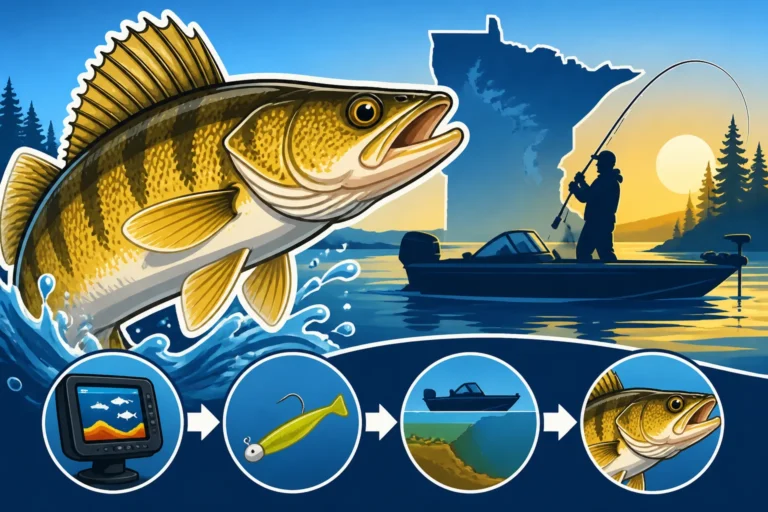
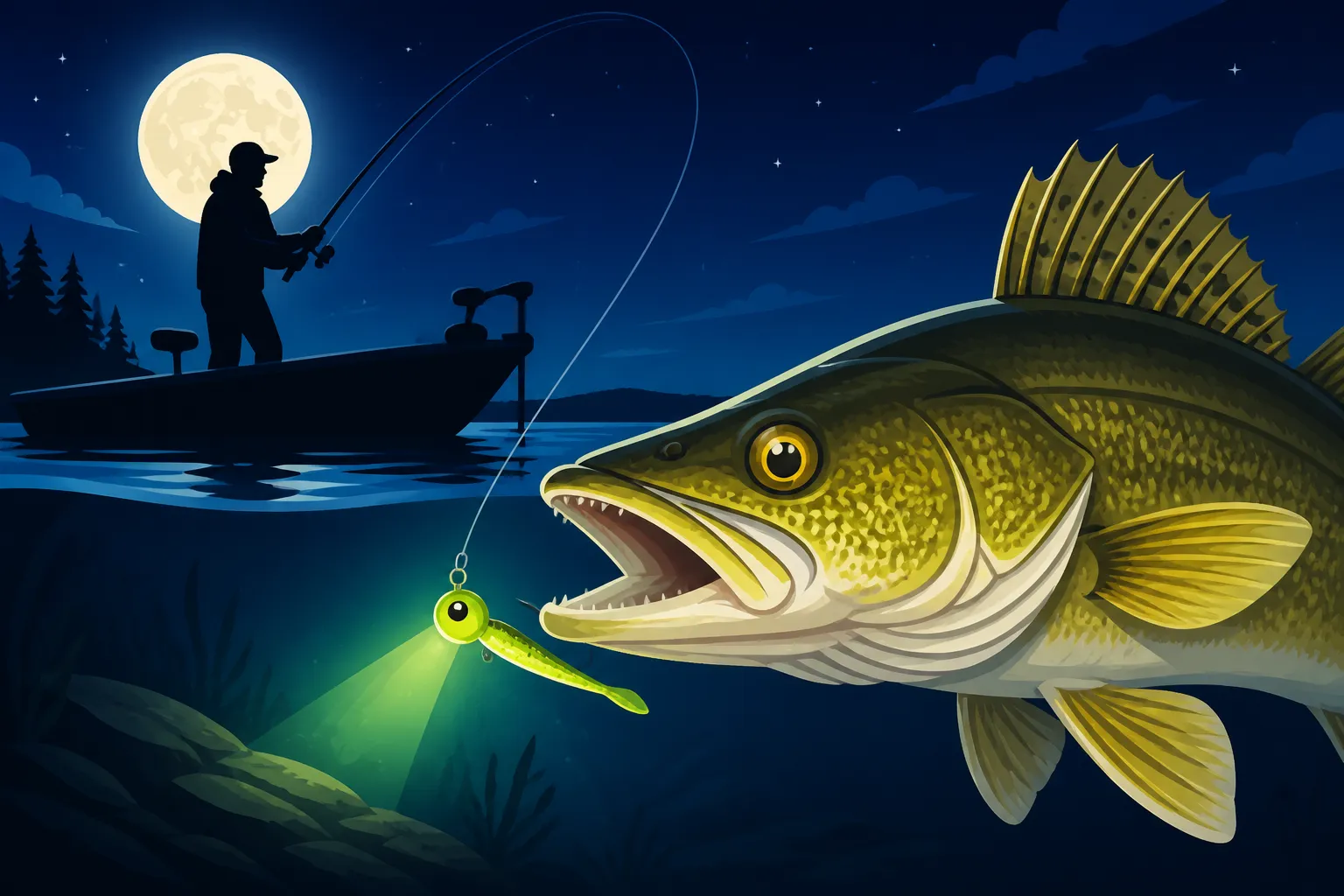
Let's talk about the walleye's incredible eyes for a moment. They possess a special reflective layer behind their retina called the tapetum lucidum. This is the same reason why cat eyes glow in the dark! What it does is enhance their night vision, allowing them to gather more light and see exceptionally well in dim conditions. While we humans are fumbling around in the gloom, a walleye's vision is optimized to spot baitfish outlines against the subtle ambient light from the moon or stars, or even just residual light from the distant shore.
Imagine being a baitfish, like a shiner or a perch, swimming around in the darkness. You’re relying on your lateral line and a bit of instinct, but a walleye, with its superior eyesight, has a distinct predatory advantage. This means they can hunt more effectively and aggressively at night than they can during the bright, clear conditions of midday. If you've ever felt like walleye just "disappear" during a sunny afternoon, it's often because they've retreated to deeper, darker water where their eyes are less sensitive, only to emerge when conditions favor them. It's truly a game-changer when you understand this fundamental truth about their biology.
Reduced Pressure and Increased Activity
Beyond their incredible vision, the night offers another significant benefit for walleye: peace and quiet. During the day, particularly on popular lakes like Mille Lacs or Lake of the Woods, there's a constant parade of boats, jet skis, and recreational activity. All that noise and disturbance can push walleye into deeper, less accessible areas, making them wary and harder to catch.
When darkness falls, the recreational traffic usually subsides dramatically. The lake becomes calmer, the boat ramps empty out, and a profound stillness settles over the water. This reduction in pressure makes walleye bolder. They feel more secure moving into shallower water, venturing onto weed lines, rocky points, and even flats where they wouldn't dare to cruise during daylight hours. For us anglers, this means you can often target them in more accessible spots with less competition. It’s not uncommon to find a once-bustling bay teeming with feeding walleye after midnight, offering some of the most serene and productive fishing experiences you can have in Minnesota.
Essential Gear for Night Walleye Angling
Fishing at night requires a few specific adjustments to your gear, not just for success, but for safety and comfort. You'll need to think beyond your typical daytime setup.
Lighting and Safety First
When the sun goes down, your ability to see clearly goes with it. This isn't just about spotting bites; it's about navigating safely, tying knots, and handling fish without incident. A reliable headlamp is your absolute best friend. Look for one that has a red light option. White light can instantly destroy your night vision, making it harder to see subtle glowing bobbers or navigate dark waters. A red light, on the other hand, preserves your eyes' adaptation to the dark. Many excellent models can be found easily on Amazon, often with multiple light settings.
Beyond personal lighting, if you're in a boat, proper navigation lights are non-negotiable and legally required after dark. Ensure your bow (red/green) and stern (white) lights are fully functional before you even think about heading out. Always wear a PFD (Personal Flotation Device), even if you're a strong swimmer. The unexpected can happen quickly in the dark, and a PFD can be a literal lifesaver. A whistle, a marine radio or fully charged cell phone, and an anchor are also crucial safety items. Always let someone know your float plan – where you're going and when you expect to return.
Rods, Reels, and Line for the Dark
Since you won't have the luxury of visual cues for detecting subtle bites, sensitivity in your rod setup becomes paramount at night.
- Rods: Opt for a medium-light to medium-heavy spinning rod, typically 6'6" to 7'6" in length, with a fast or extra-fast action. Graphite rods are generally more sensitive than fiberglass. You want to feel every little tick, thump, or sponginess that indicates a walleye has picked up your bait.
- Reels: A smooth, reliable spinning reel in the 2500-3000 series is ideal. Make sure the drag system is in perfect working order. When a big walleye strikes in the dark, you need confidence that your reel can handle the fight without issues. A smooth retrieve is also important for feeling faint bites.
- Line: Many anglers prefer a braided main line (10-20 lb test) due to its zero stretch and incredible sensitivity. Since braid is visible to fish, especially in clearer water, always tie on a fluorocarbon leader (8-12 lb test). Fluorocarbon is virtually invisible underwater and offers good abrasion resistance. For certain techniques like slip bobber fishing, a high-visibility monofilament main line can be helpful for tracking your line, but you'd still want a fluorocarbon leader for stealth. For more in-depth advice, check out this guide on the Best Fishing Line for Walleye (Braid vs Mono vs Fluoro).
Lures and Baits Tailored for Night Bites
The traditional wisdom often suggests bright colors for night fishing, but it's more nuanced than that. While some fluorescent colors can be effective under moonlight or artificial light, vibration, sound, and scent often play a more critical role after dark.
- Glow-in-the-Dark Jigs and Plastics: These are fantastic, especially for vertical jigging or working a slip bobber. The glow creates a visual target that walleye can easily hone in on. Brands like Northland Fishing Tackle or Lindy Tackle offer excellent glow jigs. You can "charge" them with a bright flashlight for maximum effect. Pair them with scented soft plastics like Berkley Gulp! or PowerBait for added appeal.
- Rattling Crankbaits: Lures that produce a strong vibration and internal rattles are incredibly effective. Walleye rely heavily on their lateral line to detect vibrations in the water, and a noisy crankbait acts like a dinner bell. Classic choices like Rapala Shad Raps or Berkley Flicker Shads in darker, more natural patterns or even black and silver can be killer.
- Live Bait: Minnows (shiners, fatheads), leeches, and nightcrawlers are always top contenders for walleye, day or night. For night fishing, a lively leech under a slip bobber is incredibly hard for a walleye to resist. Their natural movement and scent are often enough to draw strikes. You can find excellent live bait options at local bait shops across Minnesota. If you're looking for more details on this, you can learn about the Best Live Bait for Walleye (Leeches, Minnows, Crawlers).
Top Nighttime Walleye Tactics & Presentations
Once you've got your gear sorted, it's time to talk tactics. The key to night fishing for walleye is often slowing down, being methodical, and letting the fish come to you, or presenting your bait in a way that maximizes its appeal in the dark.
Slip Bobber Fishing Under the Stars
This is, hands down, one of the most effective and enjoyable ways to catch walleye after dark, especially if you're shore fishing or trying to stay quiet in a boat. A properly rigged slip bobber allows you to present live bait at a precise depth over structure.
The magic truly begins when you rig up a lighted slip bobber. These come with a small battery and LED, or you can attach a light stick to a standard slip bobber. This little glow on the surface is your visual cue for a bite – when it dips, you know it's time to set the hook! Common baits include a lively leech, a shiner minnow, or a half nightcrawler threaded on a plain hook or small glow jig. Focus your efforts along weed edges, rocky points, or break lines where walleye will move up to feed. Cast your rig out, let it settle, and watch that bobber like a hawk. If the wind is light, you can often let your boat or kayak drift slowly along a contour, covering water stealthily. For a deeper dive into this technique, read our guide on How to Use a Slip Bobber for Walleye & Crappie.
Trolling Crankbaits After Dark
While slip bobber fishing is fantastic for precision, trolling crankbaits is how you cover water and find active fish, especially on larger lakes. The key to successful night trolling is maintaining a consistent speed and choosing lures with a strong, predictable action.
- Lure Selection: As mentioned, rattling crankbaits are excellent. Think about lures that dive to the depth where you expect walleye to be. Darker, natural colors can often be just as effective as bright ones, as the silhouette and vibration are what the walleye key in on. Shallow-diving cranks for weed tops and rock humps, or deeper runners for deeper contours.
- Speed and Depth: Slower speeds (typically 1.0-2.0 mph) are often best at night, giving walleye more time to track and commit to the lure. Use a trolling motor to maintain speed quietly. Pay close attention to your electronics, if you have them, to monitor your depth and stay on structure. You can use leadcore line to get lures down deeper without added weight, allowing them to maintain their natural action. For more on this, check out Trolling for Walleye: Crankbaits & Leadcore.
- Planer Boards: For wider coverage, especially on calm nights, consider using planer boards to spread your lines away from the boat. This allows you to present multiple lures at different depths and distances, mimicking a school of baitfish.
Jigging and Live Bait Rigs in the Gloom
When walleye are concentrated on specific pieces of structure, like a rock pile, a deep break, or the edge of a submerged island, jigging or presenting live bait on a bottom bouncer or Lindy Rig can be incredibly effective.
- Vertical Jigging with Glow Jigs: Drop a glow jig tipped with a minnow, leech, or scented soft plastic directly over the structure. Use short, sharp lifts and drops, allowing the jig to flutter and then settle. Pay close attention on the fall, as many bites occur as the bait descends. Feel for any unusual weight or resistance. This technique demands a sensitive rod and feel. You can find excellent glow jigs and soft plastics, like those from Johnson or Rapala, on Amazon. Our guide on Jigging for Walleye: Jig & Minnow Basics offers great starting points.
- Live Bait Rigs: A classic Lindy Rig or a plain hook with a split shot and minnow/leech can be deadly when walleye are sluggish or suspending slightly off the bottom. Use your trolling motor to slowly drift or crawl along the contours of the structure. The goal is to keep your bait just off the bottom, allowing it to move naturally with the boat's motion. This slow, subtle presentation often coaxes bites from wary night feeders.
Where to Find Walleye When the Sun Goes Down
Locating walleye at night is often about understanding their movements from their daytime holding areas to shallower feeding grounds. The best spots are usually those with access to deep water nearby.
Shallow Reefs, Points, and Weed Lines
As darkness falls, walleye often move out of their deeper, daytime haunts and migrate to shallower structure to feed on baitfish that have also moved up.
- Reefs and Rock Piles: Submerged reefs and rock piles that top out in 8-15 feet of water, especially those surrounded by deeper water, are prime targets. Walleye will cruise the edges and tops of these structures, ambushing unsuspecting baitfish. A good example might be some of the distinct rock humps on Lake Winnibigoshish.
- Points and Inside Turns: Any topographical point that extends into the lake, or an inside turn along a shoreline, creates a funneling effect for baitfish and offers walleye ambush points. These areas provide easy access to deeper water for escape and a quick meal. Think of a prominent point on Cass Lake that drops quickly into 20+ feet.
- Weed Lines: The deep edge of healthy green weed beds (typically cabbage or coontail) is a consistent walleye magnet at night. Baitfish take cover in the weeds, and walleye will patrol these edges, picking off prey. Target the 10-20 foot range, depending on the lake's clarity and weed growth. These spots can be particularly good on lakes like Lake Vermilion.
River Mouths and Current Areas
If you're fishing a lake with significant river inflow, or if you're on a river system itself, river mouths and areas with current can be incredibly productive for night walleye.
- Concentrated Baitfish: River mouths often attract large schools of baitfish, which are then preyed upon by walleye. The current also brings nutrients and oxygen, making these areas desirable for both predator and prey.
- Current Seams: Walleye will often sit just outside or in the slower seams of current, waiting for baitfish to be swept past them. Fishing these current breaks with jigs or crankbaits can be very effective. The Rainy River, for instance, is famous for its walleye run, and night fishing in current can be phenomenal.
- Shoreline Access: Many river systems or river mouth areas offer excellent shore fishing opportunities after dark, allowing anglers without boats to get in on the action. For more on fishing without a boat, consider our guide on Shore & Bank Fishing in Minnesota (No Boat).
The "Green Light" Phenomenon
This is a specific tactic that can be incredibly effective on calm, clear nights, especially on lakes with less current. The idea is to use a submersible green fishing light (readily available from brands like Hydro Glow or Green Blob on Amazon) to create your own localized feeding frenzy.
Here’s how it works:
- Deployment: Anchor your boat over a good piece of structure – a flat, a deep weed edge, or a point in 15-25 feet of water.
- Attraction: Deploy the green light into the water. The specific wavelength of green light penetrates water effectively and attracts plankton.
- Food Chain Reaction: The plankton attracts small baitfish (shiners, minnows, perch), which then congregate around the light source.
- Walleye Arrival: Finally, the walleye move in to feed on the concentrated baitfish. It can take anywhere from 30 minutes to an hour for the full effect to kick in, so patience is key.
- Fishing: Once the baitfish are swarming, present your live bait (leeches or minnows on small jigs or plain hooks) or small glow jigs around the edges of the light field, or just outside the brightest zone. Walleye will often lurk in the dimmer areas, darting into the light to grab an easy meal. This method allows you to bring the fish to you, which is a fantastic advantage in the dark.
Here's a quick comparison of popular night walleye tactics:
| Technique | Primary Bait/Lure | Ideal Conditions | Pros | Cons |
|---|---|---|---|---|
| Slip Bobber | Live Minnow, Leech, Crawler | Calm, light wind | Precise depth control, visual bite | Limited water coverage |
| Crankbait Trolling | Rattling Crankbaits | Moderate chop, larger areas | Covers large amounts of water | Can be noisy, requires boat control |
| Vertical Jigging | Glow Jigs, Scented Plastics | Over distinct structure, calm | Direct presentation, sensitive | Requires precise boat positioning |
| Live Bait Rigging | Minnow, Leech on Lindy Rig | Slow drifts over contours | Natural presentation, effective for wary fish | Slow presentation, less active approach |
| Green Light Fishing | Live Minnow, Leech, Small Jigs | Calm, clear water, no current | Attracts fish to you, exciting visual | Takes time to set up, requires specific gear |
No matter which tactic you choose, remember that patience and stealth are your best friends after dark. The quiet of the night often amplifies every subtle sound and movement, so try to keep noise to a minimum. Getting out on the water at night opens up a whole new world of angling opportunities, and once you experience that first powerful night bite, you'll wonder why you ever went home at sunset. For more general insights into angling, check out our Walleye Fishing Techniques: Complete Minnesota Guide.
Minnesota's fishing opportunities are boundless, and understanding the nuances of how to fish in varying conditions is key to consistent success. Embracing the night bite is one such powerful tool in your angler's arsenal, allowing you to catch Walleye in Minnesota (Step by Step) during times when others are sleeping.
Disclaimer
Fishing regulations can change frequently. Always consult the latest Minnesota Department of Natural Resources (DNR) fishing regulations handbook before heading out on the water. This article is intended for informational purposes only and does not constitute legal advice.