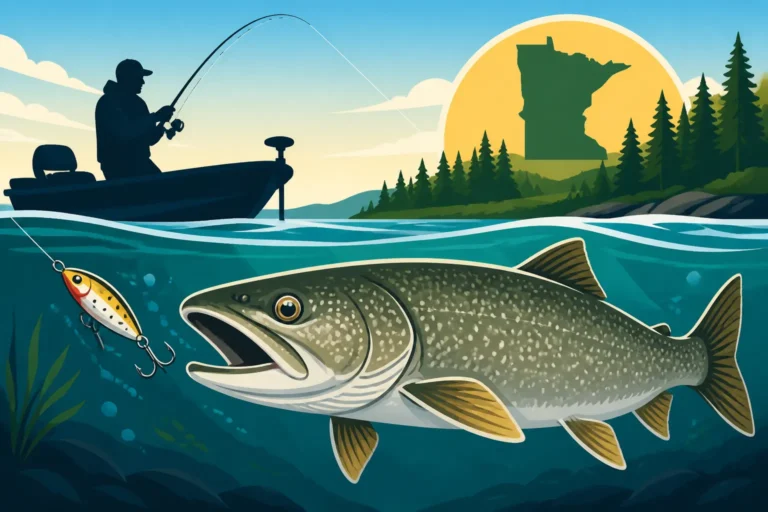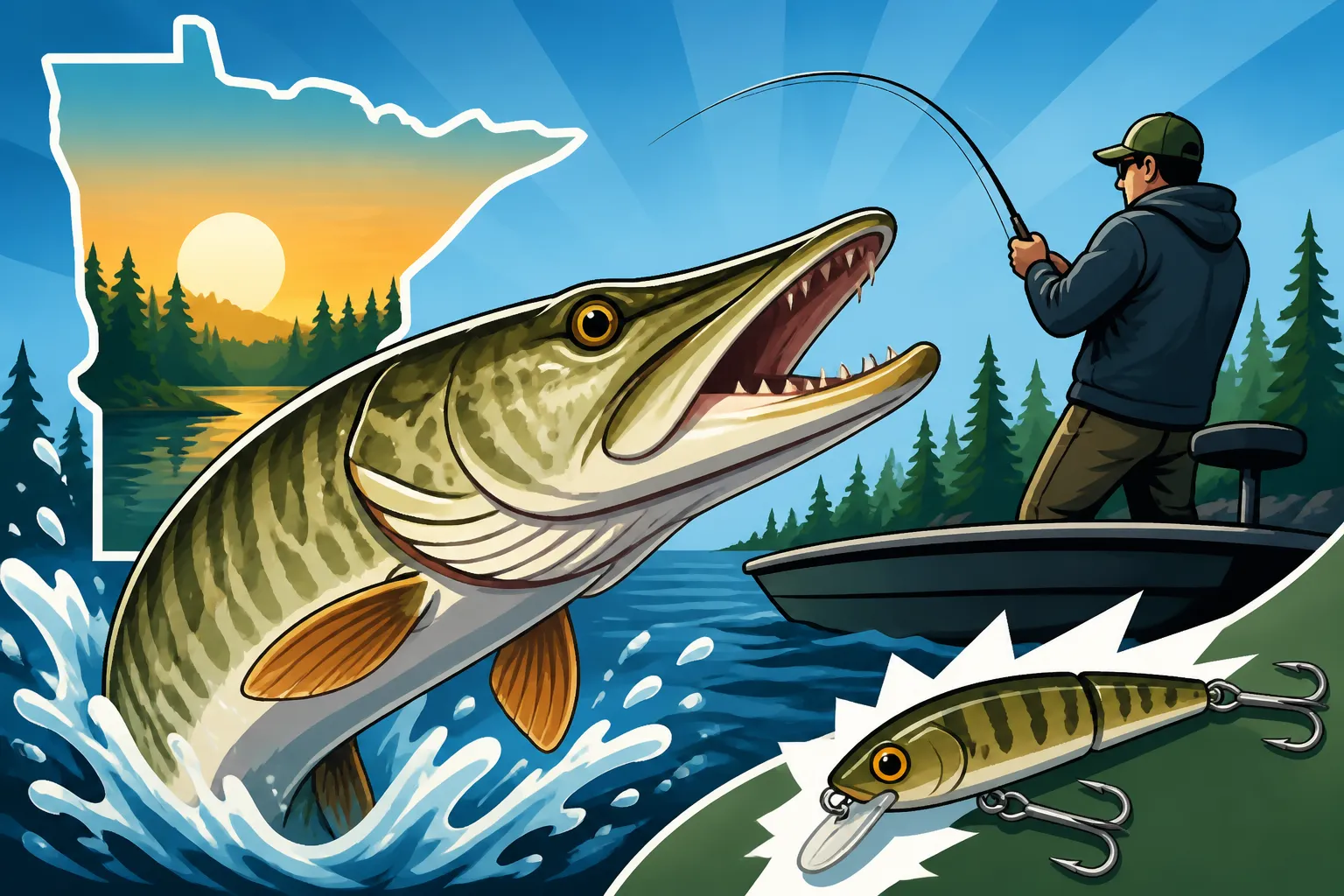
Muskie Fishing Tips for Minnesota Anglers
Landing a muskie in Minnesota can feel like chasing a phantom, especially when you've put in countless hours on the water without a follow, let alone a strike. It's a sport that tests patience, skill, and sometimes, your sanity. This guide is here to cut through the myths and give you practical, actionable advice on becoming a more effective muskie angler in the Land of 10,000 Lakes.
Understanding Minnesota's Muskie Challenge
Muskie fishing in Minnesota isn't just a hobby; for many, it's a way of life, albeit a challenging one. These apex predators demand respect and a deep understanding of their habits. Ignoring the realities of muskie behavior often leads to frustration, but embracing the challenge makes the eventual reward that much sweeter.
The "Fish of 10,000 Casts" Reality
You’ve probably heard the old adage: the muskie is the "fish of 10,000 casts." While that might feel like an exaggeration on some days, there's a kernel of truth to it. Muskie are notoriously elusive. They don't strike out of hunger nearly as often as they do out of aggression, territoriality, or curiosity. This means you could be presenting the perfect bait, in the perfect spot, and they might still just follow it to the boat without committing. It’s part of their mystique and why dedicated anglers spend years chasing them. The mental game is as important as the physical casting. You have to stay focused and believe that the next cast, or the one after that, is the one that will finally connect.
Many anglers new to the pursuit often get disheartened after a few trips without success. It's crucial to understand that this is normal. Even seasoned pros experience long stretches between catches. The key is persistence and a willingness to learn from every follow, every flash, and even every blank day. It's not just about catching; it's about the hunt, the strategy, and the brief, explosive encounter with one of freshwater's most magnificent creatures. If you want to dive deeper into what makes these fish so captivating, check out our guide on Muskie Fishing in Minnesota: The Fish of 10,000 Casts
Key Muskie Habits and Habitats in Minnesota
Muskie are ambush predators, meaning they love to lurk in areas where they can hide and dart out to surprise their prey. In Minnesota, this typically translates to specific types of structure and cover. You'll often find them patrolling weed lines, especially cabbage and coontail, where smaller baitfish congregate. Submerged rock reefs, expansive sand flats, and rocky points are also prime locations, particularly during certain times of the year when muskie are looking for cooler, deeper water or spawning grounds. Understanding these preferences is vital for narrowing down your search.
Their movements are also heavily influenced by water temperature, forage availability, and spawning cycles. For instance, in spring after the ice-out, they'll often be found in shallower, warmer bays sunning themselves or recovering from the spawn. As summer progresses, they'll often retreat to deeper, cooler water, relating to offshore structures or thermoclines. Fall sees a return to shallower feeding binges as they bulk up for winter. Recognizing these seasonal patterns will dramatically improve your chances of success. They also have a strong preference for clear water lakes, though they can be found in stained systems too, often using the low light to their advantage.
Essential Gear for Minnesota Muskie Anglers
You wouldn't bring a butter knife to a sword fight, and you shouldn't bring ultralight tackle to a muskie hunt. These fish are powerful, aggressive, and demand robust gear that can handle their size and strength. Investing in the right equipment isn't just about catching more fish; it's about safely landing and releasing these giants.
Rods, Reels, and Line: Building Your Arsenal
When it comes to muskie fishing, heavy-duty is the name of the game. Your rod should be a stout, fast-action baitcasting model, typically ranging from 7'6" to 9'6" in length. Shorter rods are better for accurate casting in tight quarters, while longer rods offer more leverage for powerful hook sets and controlling large lures or fighting big fish. A common choice is an 8'6" heavy power rod, which provides a good balance for most situations. Brands like St. Croix, with their Mojo Musky series, or Thorne Bros. Custom Rod & Tackle are highly regarded by Minnesota anglers for their durability and performance.
Pair your rod with a high-quality baitcasting reel designed for muskie. Look for models with a strong drag system, a large line capacity, and a fast retrieve ratio. A strong drag is crucial for tiring out powerful fish without breaking your line, and a fast retrieve helps keep tension on the line and execute quick figure-8s. Examples include the Shimano Tranx or Abu Garcia Revo Toro Beast. These reels might seem pricey, but they're an investment that will last many seasons. When buying, remember that reputable online retailers like Amazon often have a wide selection and competitive prices, making it easier to find specialized muskie gear.
For line, braided superline is the undisputed champion. Its no-stretch properties offer superior sensitivity and hook-setting power, and its incredible strength can withstand sharp muskie teeth (though a leader is still essential). Opt for 80-100 lb test braid. While it might seem overkill, it's necessary to prevent break-offs from powerful strikes or snags, and allows you to horse a big fish quickly for a safe release. Always attach a heavy fluorocarbon or wire leader (100-150 lb test) to prevent bite-offs, as their razor-sharp teeth will easily sever braid.
Lures That Trigger Bites
Muskie lures are often as impressive as the fish themselves, designed to create maximum commotion and visual appeal. There's a vast array of options, each suited to different conditions and angler preferences. Bucktails are arguably the most iconic and consistent muskie lure. These spinning baits, often adorned with flashabou or deer hair, create a massive vibration and flash in the water, mimicking fleeing baitfish. Double-bladed bucktails, like those from Musky Mayhem Tackle (think the "Cowgirl") or Mepps, are particularly popular. They are fantastic for covering water quickly and drawing reaction strikes.
Jerkbaits and glide baits are another essential category. These lures, such as a Drifter Tackle Hellhound or a Phantom Lures Softail, require specific rod movements to impart an erratic, wounded-fish action. They can be incredibly effective when retrieved slowly or paused, often drawing strikes from finicky fish. Topwater baits, like the Bucher TopRaider or Whopper Plopper, offer some of the most exciting strikes in muskie fishing, as you watch a giant explode on your lure on the surface. These are excellent in low light conditions or when muskie are active in shallower water. For a full breakdown of what works, consider our article on Best Muskie Lures Bucktails, Jerkbaits, Topwater
Crankbaits and dive-and-rise baits are also in the mix, particularly for trolling or when fish are holding deeper. Large crankbaits from brands like Rapala (Deep Rattlin' Fat Rap) or Grandma Lures can dive to significant depths, appealing to muskie relating to offshore structure. Swimbaits, both hard and soft plastic, offer a realistic profile and action, often fooling pressured fish. Having a diverse selection in your tackle box, readily available through retailers like Amazon, allows you to adapt to changing conditions and muskie moods.
Here's a quick overview of popular muskie lure types:
| Lure Type | Action/Presentation | Ideal Conditions | Key Benefit |
|---|---|---|---|
| Bucktails | Spin, vibrate, flash quickly | Searching, active fish, varied depths | High vibration, cover water quickly |
| Jerkbaits | Erratic darting, stop-and-go | Finicky fish, precise targeting | Mimics wounded prey, unique presentation |
| Topwater | Surface commotion, splashing, gurgling | Low light, shallow water, calm conditions | Exciting visual strikes, draws attention |
| Crankbaits | Diving, wobbling, steady retrieve | Trolling, deep water, specific depth ranges | Covers depth, consistent action |
| Glide Baits | Side-to-side sash, slow retrieve | Cooler water, subtle presentation | Natural movement, less aggressive trigger |
Handling and Safety Equipment
Landing a muskie safely—for both the fish and yourself—requires specialized tools. A high-quality, large muskie net is non-negotiable. Look for models with a rubberized, knotless mesh to protect the fish's slime coat and reduce tangles. Frabill and Beckman are popular choices for their robust construction and spacious hoops. The net needs to be big enough to fully engulf a fish that could easily exceed 40 or even 50 inches. You can find excellent nets like these on Amazon, often with fast shipping to get you ready for your next trip.
Next, you'll need long-nosed pliers or jaw spreaders for hook removal. Muskie have incredibly sharp teeth, and reaching into their mouth with bare hands is a recipe for disaster. Tools like Dr. Slick Release Pliers or similar heavy-duty models allow you to safely extract hooks without endangering your fingers. Bolt cutters are also a critical piece of gear. In instances where a hook is deeply embedded or the fish is too stressed, you can quickly cut the hook, minimizing trauma to the fish.
Finally, consider a pair of heavy-duty fish handling gloves, such as Lindy Fish Handling Gloves, especially if you plan on holding the fish for a quick photo. These offer protection from teeth and gill rakers. Always have a measuring board handy to quickly measure your catch before release. Remember, the goal is always a quick and safe release, minimizing the fish’s time out of water. This commitment to conservation helps ensure healthy muskie populations for future generations of anglers.
Advanced Techniques for Targeting Minnesota Muskie
Catching muskie consistently goes beyond simply casting and reeling. It involves mastering specific techniques, understanding seasonal movements, and learning to interpret the subtle clues the water provides.
Mastering the Figure-8 and Boat-Side Strikes
The "figure-8" is perhaps the most famous and crucial muskie technique, often making the difference between a follow and a catch. Many muskie will follow a lure all the way to the boat, either out of curiosity or aggression, only to turn away at the last second. This is where the figure-8 comes in. As your lure approaches the boat, without lifting it from the water, immediately sweep your rod tip in a large "figure-8" pattern beside the boat. Keep the lure moving in continuous, wide turns, varying the depth slightly. The sudden, erratic movement can trigger a reactive strike from a following muskie that was otherwise hesitant.
The key to a successful figure-8 is to keep your eyes peeled for a follower from the moment your lure hits the water. Be ready to initiate the pattern as soon as the lure is within reach. Maintain eye contact with the lure and any fish behind it, guiding it smoothly. Don't be afraid to make wide, sweeping turns, extending the figure-8 out to the side of the boat to give the fish more room to commit. Sometimes, a simple "L" shape turn, pushing the lure deeper and then out, is all it takes. Practice this technique even when you don't have a follow; it needs to be second nature. This skill alone can significantly increase your muskie catch rate, turning nearly misses into epic memories. Learn more about the Muskie Figure-8 Technique
Seasonal Strategies for Success
Muskie behavior changes dramatically throughout the year, so your tactics need to adapt accordingly. In the spring after the ice melts, muskie will often be found in shallow, warmer bays and flats, recovering from the spawn. Target these areas with smaller bucktails, glide baits, or even crankbaits fished slowly. As the water warms, they become more active, moving towards deeper weed lines and emerging structure. This is when they start to respond well to faster retrieves. The Muskie Season & Limit in Minnesota also begins later than many other species, typically in early June to protect the spawning fish.
Summer fishing usually means targeting deeper structure. As the sun beats down, muskie will often seek out cooler, oxygenated water. Look for them on offshore humps, deep weed edges, rock reefs, and steep breaks. Trolling large crankbaits or even bucktails can be effective for covering vast expanses of water. When casting, focus on defined structure with larger, more aggressive presentations. Early morning, late evening, and cloudy days are often the most productive.
Fall is arguably the best time to target trophy muskie in Minnesota. As water temperatures drop, these fish go on a feeding binge, trying to pack on weight for the lean winter months. They'll often move back shallower, cruising weed lines and rock structures, but they're usually looking for a much bigger meal. This is the time to throw truly massive baits: oversized bucktails, huge soft plastics, big jerkbaits, and large crankbaits. Fishing right up until the hard water forms can be incredibly productive, rewarding persistent anglers with the fish of a lifetime. Many dedicated anglers plan their entire year around the fall muskie bite.
Reading Water and Spotting Prime Muskie Lies
One of the biggest differences between an average angler and a consistently successful muskie hunter is the ability to "read the water." This means more than just looking at a lake map; it's about understanding why muskie would be in a particular spot and how they might use the available cover and structure. Start by looking for transitions – where one type of bottom or cover meets another. A weed line meeting a rocky drop-off, a sand flat transitioning to gravel, or a submerged timber patch near a deep channel are all potential muskie magnets. These areas provide both ambush points and access to different food sources.
Pay close attention to subtle clues: baitfish activity, areas of denser or healthier weeds, or even changes in water clarity. If you see schools of ciscoes or perch flickering on your electronics, there's a good chance a predator isn't far behind. Use your electronics (fish finders, side imaging) to identify submerged structure that isn't visible from the surface. A lone rock pile on a featureless flat, a deep weed bed extending further than others, or even a sunken tree can be a muskie's preferred "lie." These fish often relate to singular, prominent features in an otherwise monotonous area. Understanding how to interpret these signs and combine them with seasonal patterns is key to finding where muskie are actively feeding or resting. For instance, some of the best muskie fishing can be found on lakes like Leech Lake Muskie Fishing or Lake Vermilion Walleye & Muskie because they offer diverse and abundant structures these fish prefer.
Conservation and Best Practices for Muskie
Muskie are long-lived, slow-growing fish, making them particularly vulnerable to overfishing and improper handling. Due to their "10,000 casts" nature, many anglers practice catch and release exclusively. Responsible angling practices are paramount to ensure these magnificent fish continue to thrive in Minnesota's waters for generations to come.
Catch and Release Principles
The vast majority of muskie caught in Minnesota are released, and for good reason. It can take a muskie over a decade to reach trophy size, and releasing these large, breeding fish is essential for maintaining healthy populations. The goal is to minimize stress and physical harm to the fish. First, land the fish as quickly as possible to avoid over-exhaustion. Fighting a fish to complete exhaustion drastically reduces its chances of survival. Once landed, keep the fish in the water as much as possible. A large, rubberized net helps contain the fish while you prepare for hook removal.
When removing hooks, use your long-nosed pliers or jaw spreaders. If the hooks are deeply embedded or the fish is thrashing excessively, consider cutting the hooks with bolt cutters rather than trying to pry them out. This causes less damage to the fish's mouth and gills. For photographs, be quick. Support the fish horizontally with two hands, one under the head and one under the tail, and hold it over the water. Never hold a large muskie vertically by the jaw; this can cause severe damage to its internal organs and spine. Once photos are done, gently revive the fish by holding it upright in the water, allowing water to flow over its gills until it swims away under its own power. You can learn more about general responsible practices in our Catch and Release Best Practices in Minnesota guide.
Understanding Minnesota Regulations
Minnesota has specific regulations for muskie, including season dates and size limits, which are designed to protect the species. These regulations can vary by lake and often change from year to year based on population assessments by the Minnesota Department of Natural Resources (DNR). It's crucial to consult the most current Minnesota fishing regulations guide before you hit the water. This guide will detail the statewide muskie season opener and closing dates, as well as minimum size limits. For example, some lakes might have a 40-inch minimum, while others, like Lake of the Woods, might have a much larger 54-inch minimum to protect trophy-class fish.
There are no possession limits on muskie; if you keep one, that's your limit. However, due to their incredible growth rates and the dedication required to catch them, nearly all muskie anglers choose to release their catch. Always double-check any special regulations for the specific lake you plan to fish, as these can supersede general statewide rules. Staying informed ensures you're fishing legally and contributing to the sustainability of Minnesota's world-class muskie fishery. We keep tabs on these changes in articles like Minnesota Fishing Regulations Changes for 2026 and specifically for muskie in Muskie Season & Limit in Minnesota.
Disclaimer
Fishing regulations and conditions in Minnesota can change. Always consult the latest Minnesota Department of Natural Resources (DNR) regulations before heading out on the water. This guide is for informational purposes only and does not constitute legal advice.