Best Smallmouth Bass Fishing Tactics in Minnesota
If you've ever spent a beautiful Minnesota day on the lake, casting for what you hoped would be a feisty smallmouth bass, only to come up empty-handed or with just a few dinks, you know the frustration. These "bronzebacks" are legendary for their fighting spirit, but they can be incredibly elusive, especially on new water or when conditions are tough. This comprehensive guide is here to unravel the mysteries of smallmouth bass fishing in Minnesota, sharing tactics that work and demystifying their behavior so you can consistently put more of these hard-fighting fish in your boat or from shore.
Understanding Minnesota Smallmouth Bass Behavior
Before you even think about what lure to tie on, it's crucial to understand the fish you're chasing. Smallmouth bass in Minnesota are creatures of habit, yet those habits can shift dramatically with the seasons and even day-to-day weather changes. Knowing why they are where they are is half the battle.
Where to Find Them: Rocky Structures and Clear Water
Smallmouth bass are quite particular about their real estate. Unlike their largemouth cousins who love to hide in dense weeds, smallmouth prefer hard, rocky bottom structures and clear water. Think about it: they are ambush predators, and rock piles, points, ledges, and humps offer perfect cover to dart out and grab unsuspecting prey. In Minnesota, this means looking for lakes with a good mix of these features. Lakes like Mille Lacs Lake are famous for their vast rock reefs and clear water, making them prime smallmouth territory. You'll often find them congregating around submerged boulders, rocky shorelines, sharp breaks, and even man-made structures like rip-rap or bridge pilings. The clearer the water, generally the better, as they rely heavily on their eyesight to hunt.
When you're out there, pay close attention to any transitions in the bottom composition. A spot where sand meets rock, or where a smooth bottom suddenly drops off into a boulder field, can be a smallmouth magnet. These areas provide current breaks, ambush points, and often hold baitfish. They might not always be in plain sight, sometimes holding on the deep side of a rock pile or suspended just off a prominent point. Your electronics are your best friend here, helping you identify these key structural elements.
Seasonal Movements: Spring Spawning to Fall Feeding Frenzy
Smallmouth bass go through distinct seasonal patterns in Minnesota, much like other popular game fish. Understanding these cycles is critical for knowing where to target them throughout the year.
Spring: Post-Spawn Recovery and Shallow Feeding
As the ice retreats and water temperatures begin to climb into the upper 50s and low 60s Fahrenheit, smallmouth bass move towards shallower, protected bays and flats to spawn. After the spawn, which typically occurs from late May to early June in many parts of Minnesota, they need to recover. They'll often stay relatively shallow, feeding aggressively to regain energy. During this time, look for them around transitional areas between spawning flats and deeper water, or along rocky points leading into bays. They’re still very catchable, but you might find them a bit more spread out. This is a fantastic time to use suspending jerkbaits or spinnerbaits to cover water and locate active fish.
Summer: Deep Water Dwellers and Thermocline Tactics
Once summer truly sets in and water temperatures rise into the high 60s and 70s, smallmouth bass typically move to deeper, cooler water. They'll relate to offshore structures like deep humps, main lake points, and extended rock reefs. Often, they'll hold just above or within the thermocline if the lake has one, using it as a comfort zone. Here, they'll school up, making them a bit harder to find but incredibly rewarding once you do. This is when vertical presentations like drop-shot rigs, tube jigs, and football jigs really shine. Don't be afraid to fish depths of 20 to 40 feet, especially during the heat of the day. Our guide on How to Catch Smallmouth Bass on Mille Lacs often highlights these deep summer patterns.
Fall: Aggressive Feeding Before Winter
As autumn arrives and water temperatures begin to drop into the 60s and then 50s, smallmouth bass enter an aggressive feeding period. They know winter is coming and they need to pack on the pounds. You'll often find them moving shallower again, frequenting the same rocky points and main lake structure they used in summer, but now they might be more concentrated and actively chasing baitfish. This can be one of the best times of year to catch trophy-sized smallmouth. Crankbaits, jerkbaits, and swimbaits become incredibly effective as they aggressively pursue forage. They’ll continue this pattern until water temperatures dip into the low 40s, at which point they'll retreat to their deepest wintering holes, often large rock piles or deep basins, and become far less active.
Their Diet and Aggression: What Makes Them Tick
Smallmouth bass are opportunistic predators with a diverse diet, and their aggressive nature is what makes them such a blast to catch. Understanding what they eat and how they react to prey can help you choose the right lure.
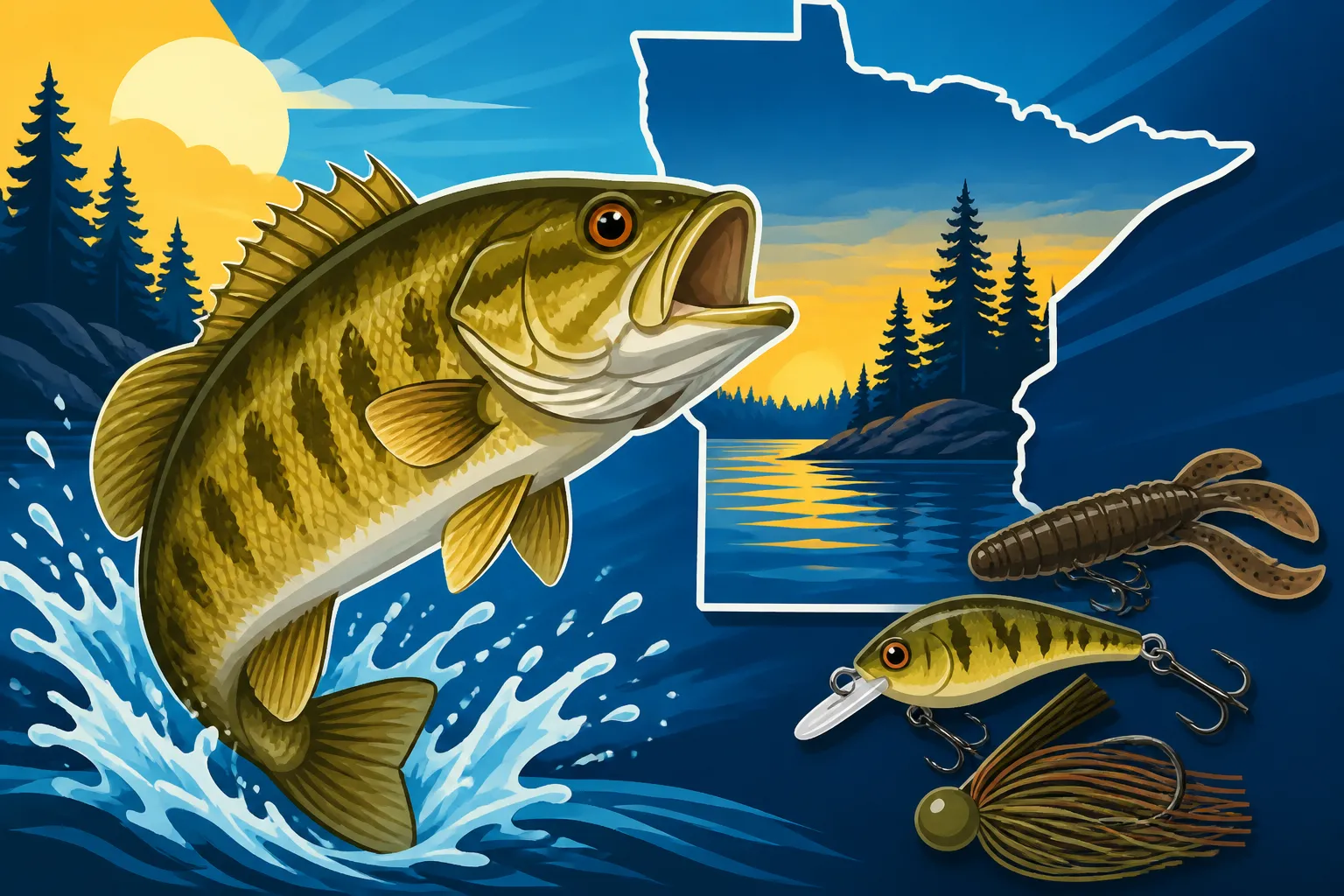
Their primary diet consists of crayfish, various baitfish (like shiners, perch, and ciscoes), and aquatic insects. This varied menu explains why so many different lure types can be effective. A crankbait mimicking a fleeing shiner, a tube jig imitating a crayfish, or a topwater frog representing a struggling insect can all trigger a strike. What truly sets smallmouth apart is their predatory instinct and willingness to chase. They're not just looking for an easy meal; they're often enticed by a frantic, erratic presentation that screams "wounded prey."
This aggressive nature is why techniques like Topwater Bass Fishing in Minnesota can be so thrilling. When a smallmouth explodes on a popper or walking bait, it's an unforgettable experience. Even when they're a bit sluggish, a perfectly presented lure with a subtle action can still provoke a reaction strike. They're known for their powerful runs and aerial acrobatics, often jumping clear of the water in an attempt to throw the hook. It's this combination of diverse diet and feisty attitude that makes smallmouth bass one of Minnesota's most sought-after game fish.
Top Techniques and Lures for Smallmouth Bass
Now that we know a bit more about what makes them tick, let's dive into the actual fishing! There’s a vast arsenal of tactics and lures that can entice a bronzeback, and knowing which to use when is key.
Casting Artificials: Jerkbaits, Crankbaits, and Topwaters
For covering water and targeting active fish, artificial lures are often your best bet. These baits are designed to mimic baitfish or other prey and provoke aggressive strikes.
Jerkbaits: The Suspended Aggressor
Jerkbaits are phenomenal for smallmouth, especially in cooler water (spring and fall) or when fish are suspended. Their erratic, darting action, followed by a pause, perfectly imitates a wounded baitfish. Brands like Rapala (the X-Rap is a classic) or Lucky Craft make some incredible jerkbaits. The key is the retrieve: a series of sharp jerks followed by a pause of varying duration. Sometimes they want a quick, aggressive retrieve; other times, a long, agonizing pause is what triggers the bite. Many anglers find a good selection of these specialized lures on platforms like Amazon.
- Scenario: You're fishing a clear, rocky point in early summer, and your electronics show fish suspended 10-15 feet down, but they're not biting a vertical presentation.
- Tactic: Cast a suspending jerkbait past the fish, then "rip, rip, pause" it through the strike zone. On the pause, the bait hangs tantalizingly, often when the smallmouth will commit. Experiment with the length of your pauses; sometimes they want a 5-second hang, other times just a quick 1-second twitch.
Crankbaits: Diving for Dollars
Crankbaits are fantastic for covering a lot of water quickly and are especially effective in areas where smallmouth are actively feeding on baitfish. They come in various shapes and sizes, from shallow-diving models to deep-diving plugs that can reach 20 feet or more. For smallmouth, look for models that mimic perch, crawfish, or shiners. They’re excellent for trolling or casting along rocky shorelines, points, and across humps. The vibration and flash they create can draw strikes from a distance.
- Scenario: It's late summer, and you're covering an expansive rock flat or a long, tapering point. You want to find where the schools are holding.
- Tactic: Tie on a medium-diving crankbait (like a Bandit 200 series or a Strike King 5XD for deeper fish). Make long casts, reeling steadily to get the bait to its maximum depth. Let it occasionally tick off the rocks, which often triggers a reaction strike. If you feel a "thump," you've likely found them.
Topwater Baits: Explosive Surface Action
There’s nothing quite like a smallmouth exploding on a topwater lure. These baits are best used in low-light conditions (dawn, dusk, cloudy days) or when fish are actively feeding on the surface in warmer water. Poppers, walk-the-dog baits (like Heddon Super Spook), and prop baits are all excellent choices. The key is to create a commotion that mimics a struggling or fleeing creature on the surface.
- Scenario: You’re out on a calm summer morning, and you see baitfish skipping on the surface or smallmouth busting on schools.
- Tactic: Cast a walk-the-dog bait like a Zara Spook near the disturbance or along a shallow rocky bank. Use a rhythmic twitch-twitch-pause retrieve to make the bait "walk" side-to-side. Be patient; the strike can come out of nowhere and be incredibly violent.
Soft Plastics and Finesse Tactics: Drop-Shot and Tubes
When smallmouth are finicky, pressured, or holding deeper, finesse tactics with soft plastics often out-produce aggressive presentations.
Drop-Shot for Smallmouth Bass: The Subtle Approach
The drop-shot rig is arguably one of the most effective ways to catch deep, inactive, or pressured smallmouth. It presents a soft plastic bait horizontally, suspended off the bottom, keeping it in the fish's strike zone for an extended period. This technique is especially lethal in clear water and on deep structure.
- Setup: Tie a hook (often a specialized drop-shot hook or an octopus hook) directly to your main line, leaving a tag end. To this tag end, tie a drop-shot weight. The distance between the hook and weight determines how high off the bottom your bait will sit.
- Bait: Small, slender worms, minnow imitations, or tiny creature baits work best. Colors like green pumpkin, natural shad, or transparent smoke are often winners.
- Scenario: You’ve located a school of smallmouth on a deep rock pile (25-35 feet), but they’re not responding to jigs or crankbaits. Your fish finder shows them hugging the bottom or suspended just a few feet up.
- Tactic: Drop your rig directly onto or slightly past the fish. Let the weight hit bottom, then gently shake your rod tip to impart action to the bait. The key is minimal movement. The bait quivers in place, making it irresistible to cautious smallmouth. This is a deadly technique, particularly for big bronzebacks on lakes like Leech Lake or Lake Vermilion.
Tube Jigs: Crayfish Imitations Extraordinaire
Tube jigs are classic smallmouth baits for a reason: they perfectly mimic crayfish, a primary forage. The hollow body with tentacles creates a lifelike profile and subtle action when dragged, hopped, or vertically jigged along the bottom. They're especially effective on rocky bottoms where crayfish thrive.
- Setup: Insert a lead jig head into the tube. Match the jig head weight to the depth and current. For depths up to 20 feet, a 1/4 oz to 3/8 oz is common.
- Colors: Green pumpkin, watermelon, brown, and natural crawfish patterns are go-to colors.
- Scenario: You're fishing a rocky flat or a hard-bottomed point, and you want to imitate a crayfish skittering along.
- Tactic: Cast the tube out, let it sink to the bottom, then use short hops and drags of your rod tip to crawl it along. When it lands, let it sit for a few seconds; many bites happen on the pause. Alternatively, vertically jig it over deep structure, allowing it to flutter down like a dying crayfish.
Live Bait Options: When to Go Natural
While artificials are exciting, sometimes live bait is simply unbeatable, especially when fish are lethargic or highly pressured.
Leeches and Minnows: Classic Bass Baits
Leeches are a smallmouth delicacy, particularly in late spring and early summer. They offer a natural, subtle movement that can entice even the most wary fish. Rig them on a plain hook under a slip bobber or on a small jig head. Minnows (like shiners or fatheads) are also excellent, either fished on a jig, under a bobber, or on a slip sinker rig.
- Scenario: You’re in a tough bite situation, perhaps after a cold front, and the smallmouth aren’t chasing lures.
- Tactic: Rig a lively leech on a small #1 or #2 octopus hook, fished slowly on a Lindy Rig or under a small float. Let the leech do the work. For minnows, try a lively shiner on a 1/8 oz jig head, slowly retrieved along rocky edges. The natural scent and action can often trigger a bite when nothing else will.
Crayfish: The Real Deal
If you can find live crayfish, they are absolute smallmouth magnets. They’re a natural part of the bass’s diet and often irresistible. Rig them by hooking them through the tail or the very edge of their carapace (back shell).
- Scenario: You’ve found a rock garden absolutely loaded with crayfish, and you suspect the smallmouth are keyed in on them.
- Tactic: Use a small egg sinker above a swivel, with a short fluorocarbon leader and a small worm hook. Hook the crayfish through the tail and slowly crawl it along the bottom. Be prepared for a savage strike!
Key Gear and Equipment for Success
Having the right tools for the job can make a world of difference. Smallmouth fishing requires a blend of sensitivity, power, and durability in your tackle.
Rod, Reel, and Line Selection
Choosing the right rod, reel, and line is crucial for detecting subtle bites and fighting these acrobatic fish.
Rods: Sensitivity Meets Power
For most smallmouth applications, a medium to medium-heavy spinning rod (6'6" to 7'3") with a fast action is ideal. This combination offers enough backbone to set the hook and fight larger fish, while the fast tip provides the sensitivity needed to feel light bites and work finesse baits effectively. For heavier presentations like larger jerkbaits or crankbaits, some anglers opt for a medium-heavy baitcasting setup. If you're looking for quality, St. Croix Rods, a Minnesota-based company, offers excellent options that many local anglers swear by. You'll find a wide array of options at local tackle shops or online at retailers like Amazon.
Reels: Smooth Drag is Key
Pair your rod with a quality spinning reel in the 2500-3000 size range. Look for a smooth drag system, which is paramount when fighting a powerful, jumping smallmouth. A good gear ratio around 6.0:1 provides versatility for various retrieves. For baitcasters, a 6.8:1 to 7.3:1 ratio works well for covering water.
Line: Balancing Strength and Stealth
This is where things get interesting. Most smallmouth anglers use braided line as their main line (8-15 lb test) for its sensitivity and strength. However, smallmouth often feed in clear water, and braid can be too visible. The solution is to tie on a fluorocarbon leader (6-12 lb test). Fluorocarbon is nearly invisible underwater, offers good abrasion resistance against rocks, and has less stretch than monofilament, enhancing feel. For drop-shotting, some prefer straight fluorocarbon for its sink rate and sensitivity. Our guide on Best Fishing Line for Walleye (Braid vs Mono vs Fluoro) offers more insights that are also highly applicable to bass fishing.
Essential Tackle Box Additions
Beyond the rods and reels, a well-stocked tackle box is your best friend on the water.
Hooks, Weights, and Swivels
You'll need a variety of hooks: offset worm hooks for soft plastics (sizes 1/0 to 3/0), drop-shot hooks (sizes 1 to 2), and small octopus hooks for live bait. For weights, an assortment of bullet weights (1/8 to 1/2 oz) for Texas rigging, and various drop-shot weights (1/8 to 1/4 oz) are crucial. Don't forget barrel swivels to prevent line twist when using spinning presentations, especially with live bait.
Pliers, Clippers, and a Landing Net
These are non-negotiables. A good pair of needle-nose pliers or multi-tools is essential for removing hooks safely, especially from deeply hooked fish. Line clippers for quick knot tying, and a decent landing net with rubber mesh (to protect the fish's slime coat) are vital. Remember, many smallmouth fisheries benefit from catch and release, and proper handling ensures the fish's survival. Consider checking out our tips on Catch and Release Best Practices in Minnesota.
Boat and Electronics for Smallmouth Hunting
While you can certainly catch smallmouth from shore, a boat significantly expands your options, and electronics can be a game-changer.
Choosing the Right Vessel
Any stable boat that can safely navigate Minnesota's lakes will work, but for serious smallmouth fishing, a boat with a good casting deck and an electric trolling motor is a huge advantage. Options range from dedicated bass boats to multi-species rigs. For many Minnesota anglers, a versatile aluminum V-hull from brands like Lund or Alumacraft, equipped with a powerful Minn Kota trolling motor, fits the bill perfectly. These boats offer stability and maneuverability for navigating rocky areas and allow you to precisely position yourself on structure. If you’re considering an upgrade, our overview of Best Fishing Boats for Minnesota can help you weigh your options.
Fish Finders and Mapping
Modern fish finders are indispensable for smallmouth fishing. Look for units with detailed mapping (like Navionics or LakeMaster charts) to identify contours, humps, and drop-offs. Down imaging and side imaging capabilities help you visualize submerged rock piles, timber, and even individual fish. Forward-facing sonar, like Garmin LiveScope, has revolutionized smallmouth fishing, allowing you to see fish in real-time and present your bait directly to them. Even a basic unit with good 2D sonar and GPS will dramatically increase your success rate compared to fishing blind. Learning to read your electronics can be the difference between a few bites and a banner day.
Advanced Tips for Tricky Situations
Even with the right gear and knowledge, smallmouth can sometimes be tough. Here are some advanced tips for those challenging days.
Dealing with Cold Fronts and Pressure Changes
Ah, the dreaded cold front. It's a universal truth in fishing that a sudden drop in temperature or a spike in atmospheric pressure can shut down the bite. Smallmouth, like many other fish, often become lethargic and move deeper or tighter to cover.
Slow Down and Downsize
When a cold front hits, the first rule is to slow way down. Aggressive retrieves that worked yesterday might spook fish today. Switch to finesse techniques: a painstakingly slow retrieve with a drop-shot rig or a tube jig can often coax a bite. Downsize your baits and lighten your line. Instead of a 4-inch tube, try a 3-inch. Instead of 10 lb fluorocarbon, go to 8 lb. The goal is to make your presentation as subtle and natural as possible. Fish are likely not actively chasing; they're looking for an easy, non-threatening meal.
Target Deeper Water and Steep Breaks
Smallmouth will often retreat to deeper, more stable water during a cold front. Focus on steep breaks, the deep side of humps, or the base of rock piles where they can feel secure and find consistent temperatures. They might not be as active on top of the structure, but rather tucked into crevices or voids where they feel protected. Look for vertical presentations that keep the bait in their face for longer, giving them time to decide to strike without expending much energy.
Fishing Busy Lakes and Educated Fish
Minnesota lakes, especially popular ones near urban centers or famous destinations, can see a lot of fishing pressure. Smallmouth in these waters can become "educated" and incredibly wary of typical presentations.
Think Outside the Box and Go Stealthy
When fish are pressured, you need to present something they haven't seen a hundred times. This might mean trying unconventional colors for your soft plastics, or experimenting with entirely different lure types. For example, if everyone is throwing green pumpkin tubes, try a black or purple tube, or even something with a subtle flash. Stealth is also paramount. Use your electric trolling motor to approach spots quietly, make long casts to avoid spooking fish, and keep your boat as far away from the active fishing zone as possible. If you're on a particularly busy lake, consider fishing during off-peak hours, like early mornings or late evenings, when boat traffic is minimal.
Night Fishing for Walleye in Minnesota: A Parallel Approach
While this guide focuses on smallmouth, the concept of fishing during off-peak hours and targeting fish when they're less pressured applies universally. Many anglers find great success targeting smallmouth at night, similar to how they approach Night Fishing for Walleye in Minnesota. Under the cover of darkness, smallmouth become less wary and will often move shallower, feeding more aggressively than during the day when boat traffic and bright sun might keep them pinned deep. Topwaters and shallow crankbaits can be incredibly effective after dark.
Reading the Water and Adapting Your Approach
One of the most valuable skills in smallmouth fishing, or any fishing really, is the ability to "read the water" and adapt on the fly. No two days are ever exactly alike.
Look for Key Indicators
Pay attention to everything around you: water clarity, wind direction, cloud cover, baitfish activity, and even what other anglers are doing (and not catching!). A strong wind blowing into a rocky shoreline might concentrate baitfish, making that side of the lake a prime target. If you see birds diving, it often indicates active baitfish, and aggressive smallmouth might not be far behind. If you're consistently getting bites on a specific type of structure, like a gravel hump, try to replicate that pattern on other similar spots around the lake.
Don't Be Afraid to Change
The biggest mistake an angler can make is sticking with a presentation that isn't working because "it worked last week." Be willing to change lures, techniques, depths, and even locations frequently until you find what the fish want that day. Start with a high-percentage tactic, but if after 15-20 minutes you're not getting bites, switch it up. Try a different color, a different retrieve speed, or a completely different lure type. Sometimes, just a slight tweak to your presentation can make all the difference between a frustrating day and a memorable one. Learning to quickly discern these patterns is what separates good anglers from great ones.
Smallmouth Bass Lure and Technique Summary
Here's a quick overview of some top smallmouth bass tactics and when to use them.
| Lure Type | Best Conditions | Retrieve/Action | Key Target Zones |
|---|---|---|---|
| Jerkbait | Cooler water (spring/fall), suspended fish, clear water | Jerk-jerk-pause, erratic darting action | Rocky points, humps, sharp breaks, suspended over depth |
| Crankbait | Active fish, covering water, moderate to warm water | Steady retrieve, occasional deflections off structure | Rocky flats, main lake points, trolling runs |
| Topwater | Low light, calm water, warm water, active surface feeding | Walk-the-dog, popping, splashing | Shallow rocky banks, areas with baitfish activity |
| Tube Jig | Rocky bottom, crayfish imitation, moderate water | Hop, drag, slight shake along the bottom, vertical jig | Rock gardens, gravel flats, ledges, deep structure |
| Drop-Shot Rig | Finicky fish, deep water, clear water, pressured fish | Minimal shaking, slight lifts, keeping bait suspended | Deep humps, rock piles, steep breaks, subtle contours |
| Live Bait | Tough bite, cold fronts, pressured fish | Slow drift, suspended under bobber, light jig head crawl | Any smallmouth habitat, especially where fish are lethargic |
Disclaimer
Fishing regulations, seasons, and limits can change. Always consult the latest Minnesota Department of Natural Resources (DNR) fishing regulations booklet or their official website before heading out on the water. This guide is for informational purposes only and should not be considered a substitute for official regulations.