Where to Catch Whitefish in Minnesota
Catching whitefish in Minnesota can sometimes feel like trying to find a needle in a haystack, especially for anglers used to targeting more aggressive species like walleye or northern pike. These deep-water dwelling fish are notoriously finicky, often requiring specialized techniques and knowledge of their specific haunts. If you've spent hours staring at a bobber with no luck or felt frustrated by their subtle bites, you're not alone. This comprehensive guide is here to demystify whitefish fishing, helping you pinpoint the best lakes and techniques to successfully land these delicious and challenging fish in the Land of 10,000 Lakes.
Understanding Minnesota Whitefish: The Elusive Deep-Water Dwellers
Before we dive into where to catch whitefish, it's crucial to understand what makes them tick in Minnesota's diverse waters. Often overlooked by many anglers, whitefish are a fascinating and economically important species, especially in the northern parts of the state. They’re known for their delicious, flaky meat, but their pursuit demands patience and a nuanced approach.
The Life and Habits of Whitefish
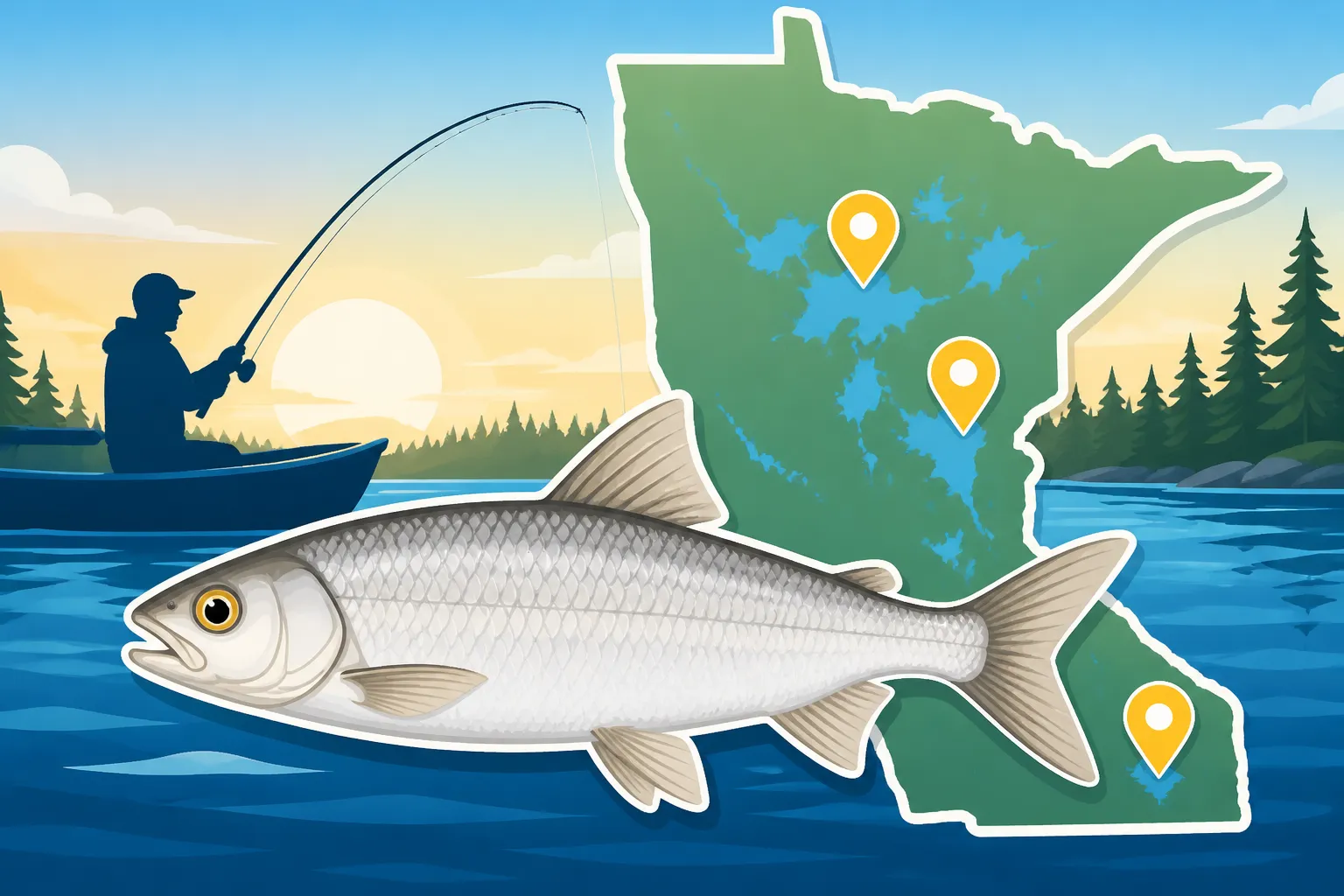
Minnesota is home to several species of whitefish, primarily the Lake Whitefish and various forms of Cisco, often locally referred to as Tullibee. While distinct, their fishing methods often overlap due to similar habitat preferences. These fish thrive in cold, oxygen-rich waters, making deep lakes their preferred domain. They are primarily plankton feeders, sifting microscopic organisms from the water column, which contributes to their finicky nature and makes them different from typical predatory fish.
During most of the year, whitefish inhabit the cooler, deeper sections of lakes, often suspended over vast expanses of open water or congregating near deep structural elements like humps, reefs, and sharp drop-offs. Their metabolism slows in cold water, making their bites incredibly subtle, sometimes just a faint tick on your line. Understanding this behavior is your first step to success. They also have relatively small, downward-facing mouths, adapted for bottom-feeding or sifting, which dictates the size and type of baits and lures you'll need. To delve deeper into identification and biology, check out our guide on Whitefish & Tullibee (Cisco) in Minnesota.
Why Whitefish Are a Challenge to Anglers
Many anglers find whitefish frustrating for a few key reasons. First, their primary diet of plankton means they don't often chase large, flashy lures designed for predators. You're trying to mimic a tiny meal in a vast underwater world. Second, their tendency to suspend in the water column, rather than sticking tight to the bottom or structure, makes them harder to locate consistently without the right electronics. They can be here one minute, gone the next.
Finally, their extremely light bite requires sensitive gear and keen attention. It's not uncommon to think you're snagged on the bottom only to find a whitefish delicately mouthing your bait. This combination of deep-water habitats, specialized feeding, and subtle takes means that successfully targeting whitefish is a true test of an angler's skill and patience. But the reward, both in terms of the fight and the table fare, is absolutely worth the effort.
Premier Minnesota Whitefish Lakes and Regions
Minnesota boasts several exceptional fisheries for whitefish, primarily concentrated in the northern and northeastern parts of the state where deep, cold-water lakes are abundant. Knowing the right body of water is perhaps the most critical component of your whitefish quest.
Lake Superior: The North Shore Giants
When it comes to sheer size and the potential for trophy whitefish, Lake Superior is in a league of its own. The Minnesota waters of Superior, particularly off the North Shore, offer fantastic opportunities for both boat and shore anglers during different seasons. Here, whitefish can grow to impressive sizes, often exceeding 5 pounds.
- Key Areas: Look for deep water near shore, especially around river mouths and rocky points from Duluth all the way up to Grand Marais. Areas like the Apostle Islands (though mostly Wisconsin, the principles apply to MN waters), and deep bays can hold good numbers.
- Seasonal Approach: In spring and fall, whitefish move into shallower waters (30-60 feet) to spawn or feed, making them more accessible to shore anglers or those with smaller boats. During summer, they retreat to depths of 80-200+ feet, requiring downriggers and specialized trolling gear. Ice fishing on Lake Superior is extremely challenging and often dangerous due to unpredictable ice conditions, but sometimes accessible in protected bays or harbors. Our North Shore Fishing: Lake Superior & Tributaries guide offers more regional insights.
Major Inland Lakes: Deep-Water Sanctuaries
Beyond Lake Superior, many of Minnesota's large, deep, clear-water inland lakes are prime whitefish territory. These lakes provide the cold, oxygenated environments whitefish need to thrive.
- Lake of the Woods: This immense northern lake is famous for its walleye, but it also holds a significant population of whitefish, particularly in its deeper basin areas and around the Northwest Angle. During ice fishing season, many anglers target whitefish alongside walleye. The deeper spots, often 40-70 feet, around mud flats and rock reefs are productive. If you're planning a trip, our Lake of the Woods Fishing Guide provides comprehensive information.
- Lake Vermilion: Nestled in the Boundary Waters Canoe Area (BWCA) region, Lake Vermilion is a complex lake with numerous islands, deep basins, and varied structure. Whitefish here are often found in the deeper sections, especially during the colder months. This lake is known for its excellent multi-species fishing, and whitefish are a prized bonus catch. Learn more in our Lake Vermilion Fishing Guide.
- Rainy Lake: Sharing its waters with Ontario, Rainy Lake is another vast, deep northern lake with a healthy whitefish population. Similar to Lake of the Woods, they are often targeted during the ice fishing season or by anglers using downriggers in the summer. Deep rock reefs and major basin transitions are good places to start. For more details, see our Rainy Lake Fishing Guide.
- Upper Red Lake: While most famous for its incredible walleye fishery, Upper Red Lake also has whitefish, particularly in its deeper basin areas. This lake has undergone significant ecological changes, and while walleye are the star, whitefish can be found, especially during peak ice fishing season when anglers are exploring deeper holes.
Lesser-Known Gems and Northern Lakes
Don't overlook the myriad of other deep, clear lakes scattered across northern Minnesota. Many smaller, less-pressured lakes in regions like the Iron Range, Itasca County, and even parts of the Brainerd Lakes Area can hold good numbers of whitefish. These often require a bit more local knowledge or exploring with your electronics.
A good rule of thumb is to look for lakes with depths exceeding 40-50 feet and good water clarity. Lakes known for healthy lake trout populations are also often good candidates for whitefish, as they share similar cold-water habitat requirements. Checking lake maps on apps like Navionics or Lakemaster is a great way to identify potential whitefish waters. For general lake information, our Best Fishing Lakes in Minnesota guide can give you a starting point.
Mastering Whitefish Fishing Techniques
Whitefish can be incredibly challenging, but with the right techniques, you can turn a frustrating pursuit into a rewarding experience. The approach often varies significantly depending on the season, with ice fishing being a particularly popular and effective method.
Ice Fishing: The Prime Season
Ice fishing is arguably the most consistent and popular way to target whitefish in Minnesota. The fish are concentrated, and modern electronics give you a distinct advantage.
- Finding the Fish: This is 90% of the battle. Whitefish will often suspend anywhere from a few feet off the bottom to halfway up the water column, especially over deep flats (40-70 feet typically, but can be shallower or deeper depending on the lake and time of year). A good flasher or forward-facing sonar is absolutely essential. Brands like Vexilar, Humminbird, and Garmin offer excellent options for discerning those subtle marks. Look for groups of fish, or even single "ghost" marks that might be a big whitefish. To learn more about these crucial tools, check out Best Ice Fishing Flashers: Vexilar vs Humminbird vs Garmin.
- Jigging and Deadsticking: Whitefish respond well to small, subtle presentations.
- Jigging: Use tiny jigs (1/16 to 1/8 ounce) tipped with a single wax worm, a couple of maggot, or a small piece of minnow. Popular jig styles include small tungsten jigs (often used for panfish), jigging spoons (like a Northland Forage Minnow or Swedish Pimple), or even small plastic grub bodies. The key is a very light jigging motion – often just a slight quiver or a slow lift-and-drop. Sometimes, simply holding the bait perfectly still a foot or two above a fish you see on your flasher is all it takes.
- Deadsticking: This is a fantastic complementary technique. Set up a second rod in a rod holder (if legal, check regulations for How Many Lines Can You Fish in Minnesota?) with a similar small bait, but keep it motionless. Often, whitefish will ignore an actively jigged bait only to pick up the stationary one.
- Bait Selection: Live bait is usually king. Wax worms, maggots (eurolarvae), and small emerald shiners are all excellent choices. For artificials, small glow-in-the-dark jigs or spoons are often effective, especially in stained water or low light. For more specific ice fishing tactics, consult our guide on How to Catch Whitefish Through the Ice in Minnesota and Ice Fishing in Minnesota: Complete Beginner-to-Pro Guide.
Open Water Techniques
Catching whitefish in open water is typically more challenging for the recreational angler, mainly because they are spread out and require boat control in deep water.
- Trolling with Downriggers: This is the most effective open-water technique, especially in larger lakes like Lake Superior or Lake of the Woods. Downriggers allow you to present small lures or baits at precise depths where whitefish are schooling. Small spoons, flies, or tiny crankbaits can be trolled slowly.
- Vertical Jigging: If you can locate schools of whitefish over deep structure or suspended over flats with your boat's electronics, vertical jigging with light spoons or jigs can be effective. This is often done while drift fishing or using a very precise spot-lock on a trolling motor to stay directly over the fish.
- Netting (Commercial/Tribal): While not a recreational fishing technique, it's worth noting that many whitefish are harvested commercially or tribally through gill netting, highlighting their abundance in certain waters but also their difficulty to catch by hook and line.
Optimal Time and Conditions
Whitefish are cold-water fish, so they are generally more active during cooler periods.
- Early Ice/Late Ice: These are often prime times during the hardwater season, as fish are more active and less pressured.
- Low Light: Like many fish, whitefish can be more aggressive during dawn, dusk, or even through the night, especially during ice fishing season.
- Cloudy Days: Overcast conditions can also encourage whitefish to roam more widely and feed actively.
Essential Gear for Whitefish Success
Having the right tackle can make all the difference when pursuing these subtle biters. You don't need a huge arsenal, but specialized, sensitive gear will greatly increase your chances. Many of these items are readily available online through retailers like Amazon, ensuring you can get equipped no matter where you live.
Rods, Reels, and Line
Sensitivity is paramount when whitefish fishing.
- Rods: Opt for ultra-light to light action rods, both for ice fishing and open water jigging. For ice fishing, a 24-30 inch ultra-light graphite rod with a fast or extra-fast tip is ideal. Look for models designed for panfish or finesse walleye fishing. This kind of sensitive tip will telegraph those incredibly subtle bites. Many reputable brands offer such rods. For open water jigging, a 6' to 7' light or medium-light spinning rod with a fast action tip works well.
- Reels: Pair your sensitive rod with a small, smooth spinning reel (500 to 1000 size for ice fishing, 1000 to 2000 size for open water). A smooth drag system is important, as whitefish can make powerful runs, especially larger ones.
- Line: This is crucial.
- Ice Fishing: 2-4 lb fluorocarbon line is often preferred for its near invisibility and minimal stretch, which helps with bite detection. Some anglers use a very thin, low-stretch braided line (4-6 lb test) with a 2-4 foot fluorocarbon leader for added sensitivity.
- Open Water: Similar principles apply, with 4-6 lb fluorocarbon or a braided main line with a fluorocarbon leader being excellent choices for jigging. When trolling with downriggers, a heavier main line (10-15 lb monofilament or braid) is common, with a fluorocarbon leader of 6-10 lb test to the lure.
Lures and Baits
As mentioned, small is key.
- Jigs: 1/16 to 1/8 ounce tungsten jigs, small lead tear-drop jigs, or horizontal jigs are excellent. Colors vary, but glow, white, chartreuse, and natural browns or silvers are consistently good. Our guide to Best Tungsten Jigs for Panfish can provide some crossover ideas.
- Spoons: Tiny jigging spoons (1/8 to 1/4 ounce) like Northland Forage Minnows, Swedish Pimples, or Bay de Noc Swedish Stingers are effective. Again, glow and silver finishes are popular.
- Live Bait: Wax worms, spikes (maggots), and small minnows (emerald shiners, fatheads) are consistently top producers. Always check bait regulations for the specific lake you're fishing.
Electronics and Accessories
Modern electronics are game-changers for whitefish.
- Fish Finder/Flasher: Absolutely essential, especially for ice fishing. A quality flasher like a Vexilar FLX-28 or a Humminbird Ice Helix, or even forward-facing sonar like Garmin LiveScope, will show you fish, your bait, and how the fish are reacting. This real-time feedback is invaluable for detecting subtle bites and adjusting your presentation. To choose the right unit, check out Best Ice Fishing Flashers: Vexilar vs Humminbird vs Garmin.
- Portable Shelter: For ice fishing, a portable shelter (flip-over or hub style) from brands like Clam or Otter offers protection from the elements, allowing you to focus on those light bites. See Best Ice Shelters: Clam vs Otter (Flip vs Hub) for comparisons. You can find many great options for ice shelters and accessories on Amazon.
- Rod Holders: When deadsticking, a good rod holder ensures your rod is stable and perfectly positioned to detect the lightest tap.
- Ice Auger: A reliable ice auger is crucial for drilling multiple holes quickly, allowing you to stay mobile and search for active fish. Whether you prefer an electric auger or a gas-powered one, make sure it's sharp and ready. Our Best Ice Augers for Minnesota: Electric vs Gas guide can help you pick the right one.
- Pliers/Forceps: Whitefish have soft mouths, and small hooks can be tricky to remove without damaging the fish. Small needle-nose pliers or hemostats are very handy.
The Whitefish Challenge
Catching whitefish is a truly rewarding experience for the dedicated angler. It forces you to slow down, pay attention to the details, and hone your sensitivity. While they may not offer the same aggressive fight as a pike or the widespread abundance of panfish, the pursuit of whitefish connects you to a unique part of Minnesota's aquatic ecosystem and rewards you with some of the finest eating fish our state has to offer. So, gear up, hit those deep, cold waters, and embrace the challenge!
Disclaimer
Fishing regulations, seasons, and limits can change frequently. Always consult the most current Minnesota Department of Natural Resources (DNR) fishing regulations handbook or website before heading out on the water. This guide is for informational purposes only and does not supersede official regulations.