Lake Sturgeon in Minnesota: Rainy River Giants
There’s a unique thrill that comes with chasing Minnesota's truly giant fish, but the excitement can quickly turn to frustration when you’re not sure about the specific rules for these incredible creatures. Many anglers are drawn to the mystery and sheer size of the lake sturgeon, yet navigating the regulations and mastering the techniques to successfully catch and release these prehistoric marvels can feel overwhelming. This comprehensive guide is here to demystify lake sturgeon fishing in Minnesota, particularly focusing on the legendary Rainy River, so you can confidently pursue these river monsters while adhering to conservation efforts.
The Magnificent Lake Sturgeon: Minnesota's Ancient Giants
When you think about fishing in Minnesota, your mind probably jumps to walleye, muskie, or perhaps some feisty bass. But lurking in the depths of certain rivers and lakes are true titans that predate dinosaurs: the lake sturgeon. These fish are unlike anything else you’ll encounter in our waters, embodying a remarkable story of survival and resilience.
A Glimpse into Prehistoric Waters
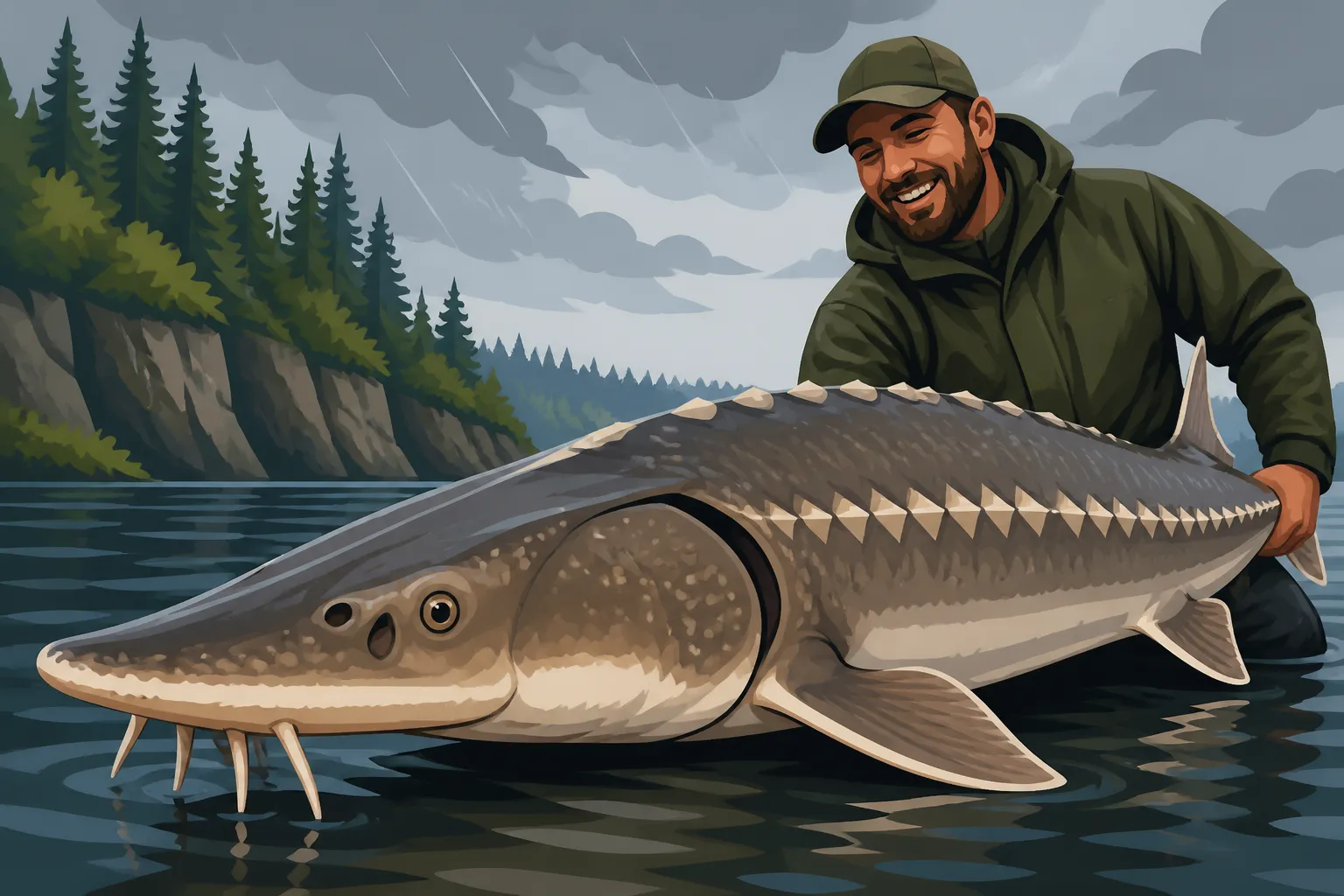
Imagine a fish that looks like it swam straight out of the Jurassic period. That's the lake sturgeon. They possess a unique, cartilaginous skeleton and are armored with five rows of bony plates, called scutes, instead of scales. Their elongated bodies, shovel-like snouts, and barbels (sensory whiskers) near their mouths are perfectly adapted for rooting around on the bottom, vacuuming up invertebrates and small fish. They are true bottom feeders, relying on those sensitive barbels to find food in murky currents. Catching one isn't just a fishing experience; it's like holding a living fossil, a connection to an ancient aquatic world that few other species offer.
What truly sets them apart, beyond their appearance, is their incredible longevity and slow growth. Lake sturgeon can live for over 100 years, with some specimens documented to be well over 150! They don't even reach sexual maturity until they're often 15-20 years old, spawning infrequently, sometimes only every 3-7 years. This slow life cycle makes them incredibly vulnerable to overfishing and habitat destruction, which is why strict conservation efforts are so vital for their continued existence in Minnesota. Their impressive size, with some reaching over 70 inches and exceeding 100 pounds, is a testament to decades, even a century, of undisturbed life in our waters.
Identifying Lake Sturgeon vs. Other Bottom Dwellers
It's crucial to correctly identify a lake sturgeon, not just for the thrill of the catch but for legal reasons. While you might occasionally hook a large catfish or a common carp while fishing the bottom, a sturgeon's appearance is distinct. Catfish, especially flatheads, can grow quite large and also feed on the bottom, but they have smooth skin, whisker-like barbels around their mouth, and a more typical fish shape. Carp are also large bottom feeders, but they have prominent scales and different mouthparts.
The key features of a lake sturgeon are those five rows of bony scutes running down its back and sides, a pointed snout, and a mouth positioned on the underside of its head, perfect for suction feeding. They lack the typical scales of most fish. Their coloration is usually a drab olive or gray-brown on the back, fading to a lighter belly. There are no other fish in Minnesota waters that look quite like them. If you're ever unsure, take a quick photo while keeping the fish submerged, and reference a reliable guide like the Minnesota Fish Species: Identification Guide. Misidentifying a fish and accidentally keeping a protected species can lead to serious penalties, so it's always better to be safe and informed.
Where to Find These Giants: Prime Sturgeon Waters in Minnesota
While their numbers are slowly recovering in several areas, certain Minnesota waterways stand out as prime destinations for encountering lake sturgeon. For serious sturgeon anglers, one river reigns supreme.
The Legendary Rainy River: Minnesota's Sturgeon Mecca
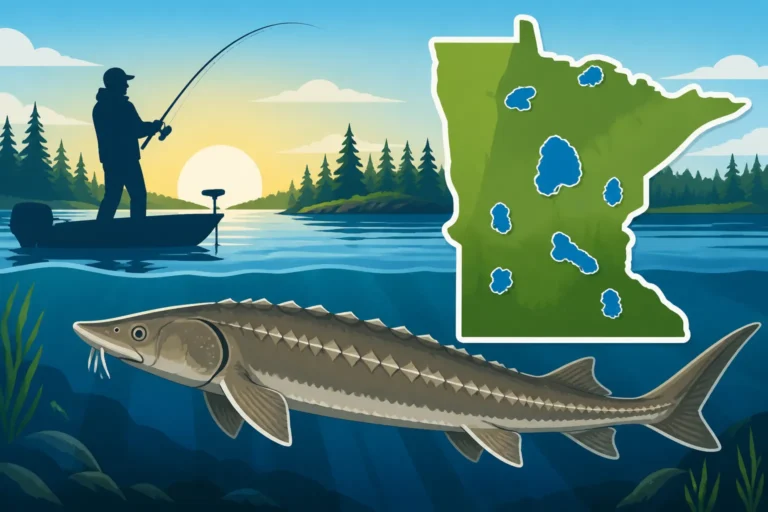
When Minnesotans talk about lake sturgeon, the conversation almost immediately turns to the Rainy River. This incredible border water, forming a significant portion of the international boundary with Ontario, is undeniably the place to target these majestic fish. Flowing from Rainy Lake into Lake of the Woods, the Rainy River provides ideal habitat for sturgeon throughout much of the year, particularly during their spring and fall migrations.
What makes the Rainy River so special? It's a combination of factors. The river itself offers a diverse underwater landscape, with deep holes, varying current speeds, gravel bars for spawning, and plenty of forage. The connection to the vast expanse of Lake of the Woods means sturgeon have ample space to roam, grow, and find food, returning to the river annually. During the peak seasons, typically early spring after ice-out and throughout the fall, massive numbers of sturgeon concentrate in the river, making it one of the most reliable places to target them. Specific stretches of the river, especially around tributaries and points where the current changes or deep holes form, become hotspots. Towns like Baudette often serve as excellent access points, with numerous fishing guides and bait shops catering specifically to sturgeon anglers. For those planning a trip, researching specific sections of the river, perhaps near the mouth of tributaries or pronounced bends, can greatly increase your chances.
Other Notable Sturgeon Habitats
While the Rainy River holds the crown, lake sturgeon populations are making a comeback in other significant Minnesota waterways, thanks to dedicated conservation efforts by the DNR. You can find smaller, but still impressive, populations in parts of the St. Croix River, which forms another border water with Wisconsin. These sturgeon spend much of their lives in the Mississippi River system, migrating into the St. Croix for spawning and feeding.
Additionally, some Lake Superior tributaries occasionally see lake sturgeon, though these are typically much rarer and often smaller in size. The lower reaches of some rivers flowing into Lake Superior might hold a few fish, but it's not a primary fishery for them. Occasionally, anglers might encounter sturgeon in the main stem of the Mississippi River, especially in the pools below major dams, but these encounters are less common and often require specialized knowledge of specific deepwater habitats. The key takeaway is that while other areas hold promise, the Rainy River remains the undisputed champion for consistent, quality lake sturgeon fishing in Minnesota. The ongoing efforts to restore their populations are a testament to their value as an ancient, iconic species.
Understanding Lake Sturgeon Regulations in Minnesota (2026)
Fishing for lake sturgeon in Minnesota isn't like casting for sunfish. Due to their long lifespan, slow reproduction, and past overharvesting, these fish are incredibly vulnerable. The regulations governing their pursuit are meticulously designed for conservation, and understanding them is paramount for any angler.
The Importance of Conservation: Catch and Release Mandates
Most lake sturgeon fishing in Minnesota is strictly catch-and-release. This isn't just a suggestion; it's a legal requirement aimed at protecting and restoring these magnificent populations. Because sturgeon take so long to mature and reproduce infrequently, losing even a few adult fish can have a significant negative impact on their recovery efforts. Anglers play a vital role in their survival by practicing careful catch-and-release.
It's common for anglers to get frustrated with complex regulations, especially when they just want to enjoy their time on the water. However, with lake sturgeon, every rule serves a critical purpose. The goal is to allow these ancient fish to continue their life cycle, ensuring future generations of anglers can also experience the thrill of catching a true river giant. The long-term vision is to bring sturgeon populations back to healthy, sustainable levels across their historic range in Minnesota. This means that while you might dream of a sturgeon mount for your wall, the real trophy is ensuring these fish thrive.
Season Dates, Size Limits, and Tags
Minnesota's lake sturgeon regulations are quite specific, often varying by body of water. For the Rainy River and Lake of the Woods, which is the most popular sturgeon fishery, there are distinct seasons. Generally, there's a spring season, often from mid-May through mid-June, which is catch-and-release only. Then, after a summer closure, the fall season usually opens from early July through late April of the following year. Within this extended fall season, there are often very specific windows for harvest, typically only a few weeks in the fall, where anglers with a valid Lake Sturgeon tag can keep one fish within a very strict size slot. This is a critical point: you must have a special tag in your possession to harvest a lake sturgeon, and even then, it's usually only one per season and within a tight size window.
The size limits for harvest are usually quite large, for example, 45 to 50 inches or over 75 inches, designed to protect the breeding stock and very large, old fish. However, these specific regulations are subject to change year to year, so you absolutely need to consult the current Minnesota Fishing Regulations PDF for the most up-to-date details. You can find information on how to obtain a Lake Sturgeon Regulations & Tag in Minnesota on the DNR website. It's not always easy to keep up, but knowing the rules is your responsibility as an ethical angler.
Here's a generalized table of typical Lake Sturgeon regulations in Minnesota for the Rainy River/Lake of the Woods zone, but remember to always verify with the current year's DNR regulations:
| Regulation Aspect | Rainy River / Lake of the Woods Zone (Typical) | Other Waters (e.g., St. Croix River) |
|---|---|---|
| Spring C&R Season | Mid-May to Mid-June (Catch & Release Only) | Varies, check specific regulations |
| Fall Season | Early July to Late April (next year) | Varies, check specific regulations |
| Harvest Opportunity | Very limited, specific fall dates (e.g., Oct 1-7), MUST have Lake Sturgeon Tag | Usually Catch & Release Only; harvest extremely rare/restricted |
| Harvest Limit | 1 per calendar year (with tag, if season open) | 1 per calendar year (with tag, if season open) |
| Harvest Size Slot | Example: 45-50 inches or >75 inches (check annually) | Example: 40-45 inches or >75 inches (check annually) |
| Tag Required? | YES, for any harvest attempt | YES, for any harvest attempt |
How to Properly Measure and Release a Lake Sturgeon
Given that almost all sturgeon fishing is catch-and-release, knowing how to properly handle these giants is arguably more important than how to catch them. These fish are incredibly robust but can be harmed by improper handling.
- Keep it Wet: The absolute golden rule is to keep the sturgeon in the water as much as possible. Their internal organs are not designed to support their massive weight out of water, which can cause severe damage. If you must lift it for a quick photo, ensure you have multiple people supporting its body evenly.
- Use a Large Net or Tail Rope: A large muskie net can work for smaller sturgeon, but for true giants, a specialized sturgeon cradle net or a tail rope (which you can run through the water to support the tail while the head remains submerged) is ideal. Never gaff a sturgeon.
- Minimize Handling: Reduce the time the fish is out of the water to bare seconds for a photo, if absolutely necessary. Avoid dragging it onto sharp rocks or rough surfaces.
- Remove Hooks Carefully: Use long-nose pliers or hook removers to quickly and gently remove the hook. Since circle hooks are often recommended (and sometimes required), they usually hook in the corner of the mouth, making removal easier. If a hook is deeply embedded and cannot be removed without causing further harm, cut the line as close to the hook as possible. The hook will eventually rust out.
- Measure Respectfully: To measure, lay the fish alongside a tape measure in the water. If you are attempting a harvest (with a valid tag and during the specific season), measure accurately from the tip of the snout to the tip of the tail.
- Revive if Necessary: After handling, hold the sturgeon upright in the water, facing into the current, until it regains its strength and swims away on its own. It's often helpful to gently move it back and forth to force water over its gills.
Practicing good Catch and Release Best Practices in Minnesota not only ensures the survival of the individual fish but also contributes to the health of the entire fishery. It's the mark of a truly responsible angler.
Gear Up: Tackle for Taming a River Monster
You wouldn't bring a butter knife to a sword fight, and you certainly shouldn't bring panfish gear when targeting lake sturgeon. These fish are powerful, heavy, and will put your tackle to the ultimate test. Investing in the right equipment is not just about increasing your chances of landing a fish; it's about doing so efficiently and safely for the fish.
Rods, Reels, and Line Built for Battle
Sturgeon fishing demands heavy-duty gear, plain and simple. Think of what you'd use for saltwater bottom fishing or catfishing, and then step it up a notch.
- Rods: You'll want a heavy to extra-heavy power rod, typically 7 to 9 feet in length. A longer rod provides better leverage for casting heavy weights and fighting large fish, especially in strong current. Look for rods with a moderate-fast action, which offers enough backbone to set the hook and control the fish, but enough flex to absorb powerful runs. Popular brands known for robust fishing rods include Ugly Stik (their GX2 series offers great value for heavy applications), Daiwa, and Penn. Many anglers opt for specialized 'catfish' or 'heavy saltwater' rods.
- Reels: Matching that heavy rod requires an equally stout reel. A large spinning reel (sizes 8000-10000) or a heavy-duty baitcasting reel (like a conventional reel in the 30-50 size range) is essential. These reels need excellent drag systems, as a sturgeon can make powerful, sustained runs, especially in current. Look for reels from reputable brands such as Shimano, Penn, or Daiwa that are designed for heavy-duty saltwater or big game freshwater use. A smooth, consistent drag is crucial to prevent line breaks and fish exhaustion.
- Line: For main line, braided line is the way to go. Its minimal stretch offers incredible sensitivity, allowing you to feel subtle bites even with heavy weights in current, and its superior strength (50-80 lb test) is essential for battling these giants. While braid is tough, it's also highly visible and can be abrasive against a sturgeon's mouth, so it's always paired with a heavy monofilament or fluorocarbon leader. A 60-100 lb test monofilament or fluorocarbon leader, about 2-3 feet long, provides abrasion resistance and a bit of stretch, acting as a shock absorber. This also offers a "break point" for snags, minimizing the loss of expensive braided line.
Essential Rigs, Hooks, and Bait
Getting your bait to the sturgeon and ensuring a solid, fish-friendly hookup requires specific terminal tackle.
- Rigs: The most common and effective rig for sturgeon fishing is a simple sliding sinker rig, also known as a Carolina rig. This consists of a heavy no-roll sinker (3-8 ounces, depending on current) threaded directly onto your main line, followed by a bead to protect your knot, then a heavy-duty barrel swivel. To the other end of the swivel, you tie your leader and hook. This allows the fish to pick up the bait and move away without immediately feeling the weight of the sinker, giving you a better hook set.
- Hooks: Circle hooks are highly recommended, and in some areas, mandatory, for sturgeon. They are designed to hook fish in the corner of the mouth, minimizing deep hooking and making release easier, which is paramount for catch-and-release fisheries. Use large, strong, heavy-gauge circle hooks, typically in sizes 5/0 to 9/0. Brands like Gamakatsu, Owner, or Mustad offer excellent options. Avoid treble hooks entirely.
- Bait: Sturgeon are opportunistic bottom feeders with an excellent sense of smell. While they'll eat a variety of things, some baits are consistently more effective.
- Nightcrawlers: A large gob or "wad" of multiple nightcrawlers (4-6 at a time) threaded onto the hook is a classic and very effective bait. The scent trail and wriggling action are irresistible.
- Cut Bait: Pieces of oily, fresh cut bait like sucker, cisco, or even shad can be deadly, especially for larger fish. A 1-2 inch square piece is usually sufficient, ensuring it stays on the hook in current.
- Prepared Baits: Some anglers have success with commercially prepared sturgeon or catfish baits, often in a dough or highly scented "chunk" form, like those offered by Big River Bait Co. or Catfish Charlie. These are designed to disperse a strong scent trail in the water.
- Regardless of your choice, ensure your bait is fresh and presented effectively on the bottom. Remember, sturgeon are not sight feeders in the same way walleye are; scent is crucial. If you're looking for more general bait information, check out our guide on Best Live Bait for Walleye (Leeches, Minnows, Crawlers), although the preferred baits might differ for sturgeon.
Mastering Sturgeon Fishing Techniques
Lake sturgeon fishing is a game of patience, proper presentation, and understanding the river. It's less about constant casting and more about setting up strategically and letting the river do its work.
Locating Sturgeon: Reading the River
Sturgeon are creatures of habit, often frequenting specific types of river structure. Your ability to read the water and identify these holding areas is key to success.
- Deep Holes and Eddies: Sturgeon prefer deeper water, especially in rivers with strong currents. Look for deep holes carved out by the current, often found on the outside bends of rivers or downstream from significant obstructions. Eddies, where the current slows or reverses, provide a resting place for sturgeon and allow food to settle, making them prime feeding zones.
- Current Seams: The transition zone between fast and slow-moving water is a classic ambush point for many fish, including sturgeon. These seams allow them to hold in slightly slower water while still being close to the main current that carries food downstream.
- Structure: Submerged logs, rock piles, bridge pilings, or other bottom structure can create current breaks and attract baitfish, which in turn attract sturgeon.
- Confluence Zones: Where a smaller tributary meets a larger river, it can create unique current dynamics and deposit more food, making these areas productive.
- Electronics are Your Friend: Modern fish finders with good 2D sonar and especially side imaging can be invaluable for identifying deep holes, subtle current breaks, and even marking individual sturgeon on the bottom. A portable flasher or fish finder is a great tool for understanding the bottom contour and depth.
Before dropping a line, spend some time observing the river. Look for changes in current, depth transitions, and any visible structure. Local knowledge, whether from guides, bait shop owners, or other anglers, can also provide invaluable insights into current hotspots.
Anchoring and Presenting Your Bait
Once you've identified a promising spot, the next challenge is to effectively present your bait.
- Anchoring Strategy: You'll need a stout anchor system to hold your boat securely in the river's current. A good mushroom anchor or a river anchor (like a box anchor) with plenty of rope is essential. Position your boat slightly upstream of the suspected sturgeon holding area, allowing your bait to drift naturally into the zone. Using two anchors (one off the bow, one off the stern) can help you hold your position more precisely, especially in strong winds or current.
- Casting and Presentation: Cast your rig upstream and slightly cross-current from your boat. Allow the heavy sinker to take the bait quickly to the bottom, then let it "settle" into the target zone. The goal is to keep your bait stationary on the bottom, allowing its scent to disperse and attract sturgeon. Avoid letting your line sweep downstream too far, which can lead to snags and make detecting bites difficult. Keep your rod tip slightly elevated to keep as much line as possible out of the strong current, minimizing drag and improving sensitivity.
- Patience is a Virtue: Sturgeon fishing is not a fast-paced activity. You're waiting for a fish to locate your bait by scent, often in deep water and strong current. It's common to let your bait soak for 30 minutes to an hour, or even longer, before checking it or moving. Bring a good book, some snacks, and enjoy the river scenery. The bites are often subtle at first – a gentle tap or a slight bend in the rod tip – before a more deliberate pull signals a fish has committed.
The Fight and Landing Process
Once a sturgeon takes your bait, the real excitement begins. Be prepared for a powerful, often prolonged battle.
- The Bite: Unlike the aggressive strike of a walleye or bass, a sturgeon bite can be a slow, deliberate affair. You might feel a gentle pull, then a steady weight, or a series of rhythmic taps as the sturgeon mouths the bait. Resist the urge to set the hook immediately. Let the fish fully commit and begin to move away, allowing the circle hook to do its job and set itself in the corner of the mouth.
- The Fight: Once hooked, a sturgeon will make powerful, often long, runs, especially when it feels the current aiding its escape. Keep steady pressure on the fish, using your rod's backbone and your reel's drag to slowly gain line. Avoid "horsing" the fish, which can pull the hook or exhaust the fish unnecessarily. Maintain a low rod angle to keep the fish's head down, especially if it tries to jump (though sturgeon rarely jump). The fight can last anywhere from 10 minutes for smaller fish to well over an hour for a true giant.
- Safe Landing: As the fish tires and approaches the boat, prepare for a safe landing. Use a large, knotless rubberized net if the fish fits, or a specialized sturgeon cradle. For very large fish, it's often best to guide them alongside the boat, keeping them in the water as much as possible. A tail rope can be invaluable for controlling the tail while supporting the body for unhooking and measuring. Never lift a large sturgeon by the head or tail alone, as this can cause spinal damage. Always have a plan for how you will handle and release the fish before you even hook it. This preparation is key to ensuring the fish's survival after release, a core tenet of responsible Lake Sturgeon Fishing in Minnesota: The Fish of 10,000 Casts (though that title is for muskie, the principle applies).
Best Times to Pursue Lake Sturgeon
Understanding the seasonal movements and daily habits of lake sturgeon can dramatically increase your chances of success. These ancient fish respond to environmental cues, especially water temperature and current, much like other species.
Seasonal Hotspots and Migration Patterns
Lake sturgeon exhibit distinct seasonal patterns, particularly in river systems like the Rainy River, which serves as a spawning and feeding ground connected to a large lake.
- Spring (Post-Spawn Opener): The period immediately following ice-out, typically late April through May, and continuing into early June, is often considered the peak time for sturgeon on the Rainy River. This is when sturgeon migrate upriver from Lake of the Woods to spawn. After spawning, they are often hungry and actively feeding as they disperse, making them more susceptible to baits. The Rainy River opener for sturgeon usually coincides with this window, making it a highly anticipated time for many anglers. Water temperatures in the 40s to 50s (Fahrenheit) are often prime.
- Summer (Deeper Water): As water temperatures rise in July and August, sturgeon activity can slow down. They tend to retreat to deeper, cooler holes in the river or move back into the cooler depths of Lake of the Woods. While still catchable, they may be less concentrated and less aggressive, requiring more patience. This is often the time when regulations may shift, or a temporary closure may occur to protect fish during warmer water stress.
- Fall (Feeding Frenzy): As water temperatures begin to cool in September and October, sturgeon activity picks up again significantly. They enter a pre-winter feeding frenzy, trying to pack on calories before the lean months under the ice. This autumn migration often brings large numbers of fish back into the river, providing another excellent opportunity for anglers. The cooler water also means less stress on the fish during catch and release. This fall window often includes the limited harvest season for those with a sturgeon tag.
- Winter (Ice Fishing): While not as widely popular as open water sturgeon fishing, some dedicated anglers do target sturgeon through the ice, particularly in parts of Lake of the Woods and certain sections of the Rainy River. This requires specialized heavy ice fishing gear and a good understanding of deepwater sturgeon hangouts.
For specific dates, always consult the Minnesota Fishing Seasons & Opener Dates (2026) provided by the DNR.
Daily Factors: Time of Day and Weather
Unlike walleye, which are notoriously light-sensitive, lake sturgeon are primarily bottom feeders that rely on scent and touch. This means they aren't as strictly bound by dawn and dusk feeding windows, but daily conditions can still play a role.
- Time of Day: Sturgeon can be caught throughout the day. Many anglers find early mornings and late afternoons to be productive, as these are often periods of increased activity for various aquatic life. However, if you're on a good spot with feeding fish, they can bite at high noon just as readily. Patience and persistence are key, regardless of the time.
- River Flow and Clarity: Current is a significant factor. Moderate to strong currents are generally good, as they carry scent downstream and bring food to the sturgeon. However, extremely high or low water levels can scatter fish or make them less active. Water clarity can also play a role; while sturgeon don't rely heavily on sight, extremely turbid water from heavy rains might temporarily reduce their feeding efficiency or make it harder for them to locate baits. After a heavy rain event, waiting for the water to settle and clear slightly can often improve fishing.
- Weather: Overcast days might encourage more widespread feeding, but sturgeon are less affected by bright sunshine than many other species. Wind can be a factor, not for the fish directly, but for the angler's ability to anchor effectively and feel subtle bites. A calm, stable weather pattern is generally preferable for angler comfort and effective bait presentation.
Respecting the Resource and Enhancing the Experience
Fishing for lake sturgeon is a privilege, and with that comes a responsibility to protect these remarkable fish for future generations. Beyond simply following the rules, adopting an ethical approach enhances your own experience and contributes to the overall health of the fishery.
Angler Ethics and Best Practices
True conservation goes beyond the letter of the law; it embodies a spirit of respect for the resource.
- Minimize Stress: Every interaction with a fish causes some stress. For long-lived, slow-growing species like sturgeon, minimizing this stress is critical. This means using appropriate heavy tackle to shorten the fight time, keeping the fish in the water as much as possible, and handling it gently. If a sturgeon feels lethargic upon release, take extra time to revive it by holding it upright in the current.
- No Unnecessary Photos: While it's tempting to get that perfect hero shot with a massive sturgeon, prioritize the fish's well-being. If you do take a photo, keep it brief (seconds, not minutes), ensure the fish is well-supported horizontally with two hands (or more people for larger fish), and never hold it vertically by the tail. Get back in the boat or into the water with the fish for a truly respectful shot.
- Clean Up Your Act: Discarded fishing line, hooks, and trash are dangerous to wildlife, including sturgeon. Always pack out everything you pack in. Even small pieces of line can become entanglement hazards. This is part of the broader Aquatic Invasive Species (AIS) Rules for Boaters as well, reminding us to be stewards of all our waterways.
- Report Poachers: If you witness illegal fishing activity, such as keeping over-limit fish, fishing out of season, or improper handling that harms fish, report it to the Minnesota DNR. Protecting these vulnerable populations is a shared responsibility.
Local Resources and Guides
For those new to sturgeon fishing, or even experienced anglers looking to maximize their chances, leveraging local expertise can make a world of difference.
- Hire a Local Guide: Especially on the Rainy River, hiring a reputable fishing guide for a day or two is one of the best investments you can make. Guides have intimate knowledge of current regulations, real-time hotspots, preferred baits, and safe handling techniques. They provide the right equipment and often put you on fish faster than you could on your own. Many guides in the Baudette or International Falls area specialize in sturgeon fishing.
- Visit Bait Shops: Local bait shops are often a goldmine of information. They typically know what's biting, what baits are working, and can provide localized tips that aren't in any regulation booklet. Support these local businesses; they are vital to the angling community.
- Consult the DNR: The Minnesota Department of Natural Resources (DNR) website is your official source for all regulations, advisories, and conservation efforts. Before any fishing trip, double-check the current Rainy Lake Fishing Regulations (2026) and especially the sturgeon-specific rules to ensure you are fully compliant. They also provide valuable scientific data on sturgeon populations and management.
Common Mistakes to Avoid When Targeting Sturgeon
Even experienced anglers can make mistakes when venturing into a new type of fishing, and sturgeon fishing has its own unique pitfalls. Being aware of these common errors can save you frustration and, more importantly, protect the fish.
Underestimating Their Size and Power
This is perhaps the most frequent mistake made by new sturgeon anglers. Thinking a heavy bass rod will suffice is a recipe for disaster.
- Long Fights and Fish Mortality: Using tackle that is too light for a large sturgeon means the fight will be unduly prolonged. A 40-minute fight for a 60-inch sturgeon is acceptable; an hour and a half is not. Extended fights exhaust the fish to the point where they may not recover after release, even if they swim away. Their large size and powerful musculature, combined with strong river currents, require heavy gear to bring them in relatively quickly.
- Broken Tackle and Lost Fish: Light lines and reels with insufficient drag will inevitably lead to broken lines, bent hooks, and lost fish. Not only is this disappointing for the angler, but a fish swimming off with a hook and several yards of line attached can be detrimental to its health. Invest in the robust gear recommended earlier; it's a small price to pay for a successful, ethical catch.
- Personal Safety: A large sturgeon can easily pull an unprepared angler off balance, especially from a smaller boat or while fishing from shore. Heavy rods can snap, and hooks can fly back at high speeds if the line breaks under extreme tension. Always be aware of your surroundings and the power you're dealing with.
Ignoring Regulations and Best Practices
The sheer joy of hooking into a monster can sometimes make anglers forget the rules, but with lake sturgeon, the consequences are severe, and rightly so.
- Legal Consequences: Fishing for sturgeon out of season, keeping an undersized or oversized fish, or possessing a sturgeon without the proper tag can result in substantial fines, confiscation of gear, and loss of fishing privileges. These are not minor infractions; they are taken very seriously by the DNR. Always have your Minnesota Fishing License: Cost, Types & How to Buy (2026) and any required tags readily accessible.
- Harm to the Fishery: Beyond legal penalties, ignoring proper handling techniques directly harms the very resource you are trying to enjoy. Poor catch-and-release practices contribute to post-release mortality, directly impacting the recovery of these vulnerable populations. Every fish that dies due to improper handling is a step backward for the entire sturgeon fishery.
- Reputation and Ethics: The angling community, especially those dedicated to conservation, holds ethical behavior in high regard. Being known as an angler who disregards rules or harms fish can tarnish your reputation. Be a steward of the resource, not a detractor. The DNR is a great resource, but always remember that the ultimate responsibility lies with you to know and follow the Minnesota Fishing Limits: Bag & Possession (2026) for all species, especially protected ones like sturgeon.
By understanding and avoiding these common pitfalls, you'll not only have a more successful and enjoyable sturgeon fishing experience but also contribute positively to the long-term health and survival of these incredible Minnesota giants.
Disclaimer
Fishing regulations can change frequently. Always consult the most current Minnesota Department of Natural Resources (DNR) regulations and advisories before heading out on the water. This guide is for informational purposes only and should not be considered a substitute for official DNR publications.