Crappie Size: How Big Do They Get in Minnesota?
There's nothing quite like the thrill of reeling in a beautiful crappie, whether it's for a tasty shore lunch or the sheer joy of the fight. But let's be honest, we've all seen those photos of monstrous crappies online and wondered, "Do they really get that big here in Minnesota?" It can be frustrating to consistently catch smaller panfish when you dream of those elusive slabs. This guide will dive deep into crappie sizes in Minnesota, exploring what factors influence their growth and how you can increase your chances of finding those truly impressive fish.
Understanding Crappie Growth in Minnesota
When we talk about crappie size, it's not just about one simple number. Crappies, like all fish, grow at different rates based on a multitude of factors. Minnesota is home to both black and white crappies, and understanding their individual characteristics is key to appreciating their potential size.
Black Crappie vs White Crappie Size Differences
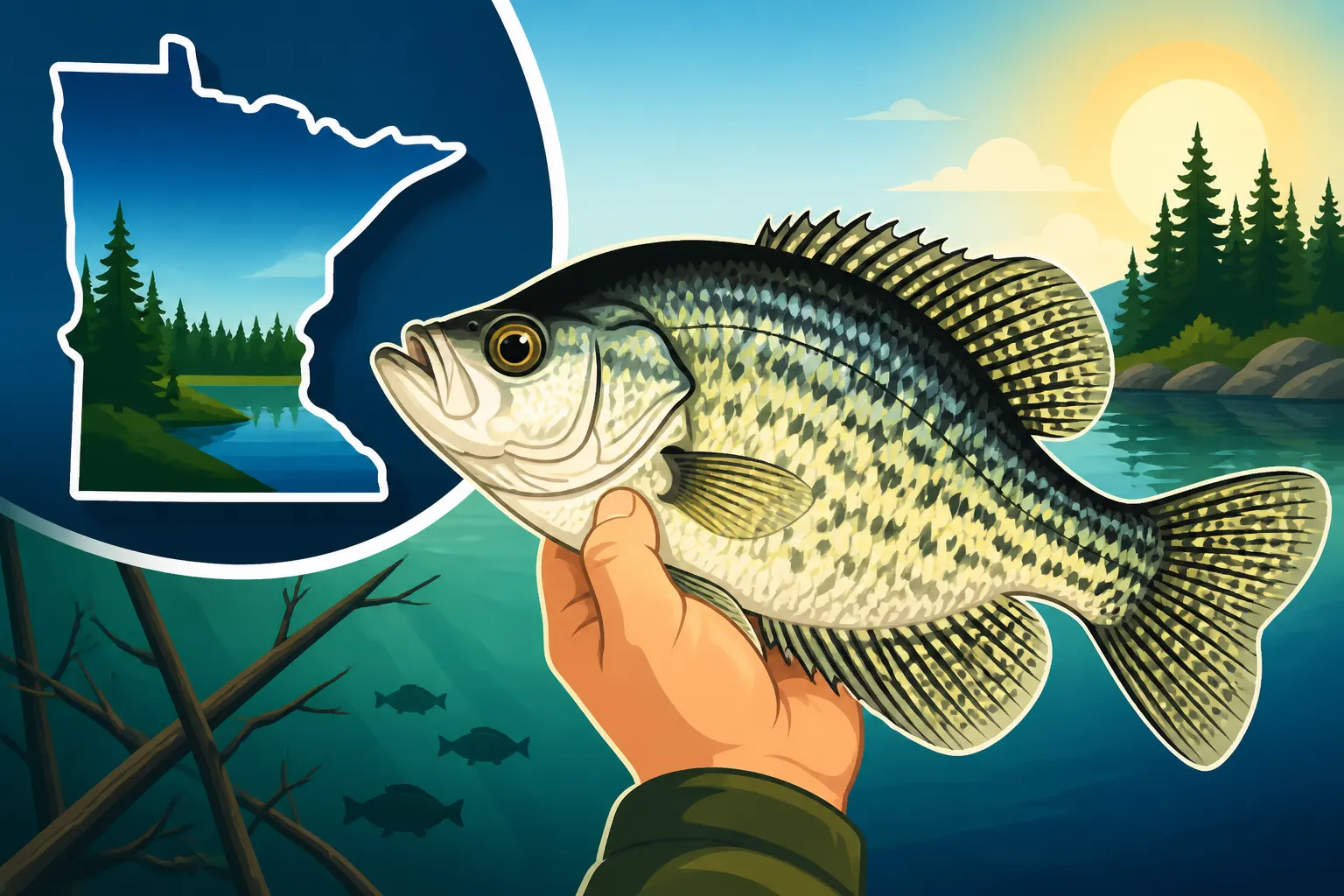
Minnesota is blessed with both black and white crappies, and while they might look similar at first glance, there are distinct differences in their typical size and growth patterns. Generally speaking, black crappies tend to be a bit more robust and rounder in body shape, often reaching impressive weights for their length. White crappies, on the other hand, are usually more elongated and slender. In terms of maximum size, both species can grow quite large, but black crappies often dominate the "trophy" conversation in many Minnesota lakes, especially in the northern parts of the state where they thrive in clear, cool waters.
For instance, a 12-inch black crappie might weigh significantly more than a 12-inch white crappie due to its deeper body. While both are fantastic sportfish and excellent table fare, if you're chasing sheer mass, you'll often find black crappies filling that niche. Anglers frequently report encountering impressive black crappies in lakes with diverse forage and good habitat, like those found in the Brainerd Lakes Area or further north. Knowing the difference, and recognizing their distinct patterns and markings, can also help you predict what kind of fight you're in for.
Crappie Lifespan and Growth Stages
Crappies don't just pop out of the egg as giants; they go through various growth stages over their lifespan, which can range from 5 to 10 years, sometimes even longer in ideal conditions. In their first year, crappies are relatively small, often only reaching a few inches in length. This is a critical period for survival, as they are prey for many larger fish. As they mature, their growth rate often accelerates, especially if food is abundant and competition is low.
By the time a crappie reaches 3 to 5 years old, it's usually a respectable "keeper" size, often in the 8-10 inch range. The real "slabs" – those 12-15 inch or even larger crappies – are typically older fish, perhaps 6 to 9 years old. These older, larger fish have survived numerous seasons, outsmarted countless anglers, and found consistent food sources. Factors like water temperature, nutrient availability, and even the genetics of the specific crappie population in a lake all play a role in how quickly and how large these fish grow. It’s a testament to their resilience when you pull in one of these older, larger individuals.
Average Crappie Sizes Across Minnesota Waters
Minnesota is the Land of 10,000 Lakes, and with that many bodies of water, you can bet there's a huge variation in crappie size from one lake to the next. What's considered a "big" crappie in a small metro pond might be just average in a large northern lake.
Statewide Averages and Regional Variations
On average, a common crappie caught in Minnesota typically falls within the 8 to 11-inch range. These are the fish you'll often fill your bucket with for a delicious meal. However, this is just an average, and specific regions of Minnesota can tell a very different story. For instance, many lakes in Northern Minnesota, known for their vast, pristine waters and abundant forage, tend to produce larger crappies more consistently. Think of lakes in the Park Rapids Area or those up near Baudette. These areas often have colder water, which can lead to slower but ultimately larger growth over a longer lifespan.
In contrast, some smaller, shallower lakes, especially in Central or Southern Minnesota, might have crappies that grow faster initially due to warmer water and rich food sources, but they might not reach the same maximum sizes as their northern counterparts, often because their lifespans can be shorter due to environmental factors or higher fishing pressure. It's a regional mosaic, and what you expect from a crappie can shift dramatically depending on which part of the state you're casting your line.
Specific Lake Examples for Bigger Crappies
If you're truly hunting for those trophy crappies, certain lakes in Minnesota consistently produce larger fish. These aren't secrets among dedicated crappie anglers, but they do require some effort and sometimes specific techniques. For example, lakes like Upper Red Lake have become renowned for their jumbo crappies, especially through the ice. Anglers routinely pull out crappies exceeding 12-14 inches there. Other northern giants like Lake of the Woods also hold fantastic crappie populations, with many fish reaching impressive sizes, especially in specific bays or backwaters.
Closer to the central part of the state, many of the lakes that comprise the "Best Crappie Lakes in Minnesota" lists, such as Lake Winnibigoshish (Winnie) or Leech Lake, are well-known for their healthy crappie populations and the potential for a true slab. While you might still catch plenty of 9-inchers, these larger systems provide the habitat and forage base for crappies to really pack on the pounds and grow old. It’s always worth checking specific lake reports from the DNR or local bait shops for the most up-to-date information on crappie sizes in a particular body of water before planning a trip dedicated to chasing true giants.
Factors Influencing Crappie Size
Why do some lakes consistently produce huge crappies while others seem to only yield smaller ones? It's not just luck; it's a complex interplay of environmental conditions, food availability, and population dynamics. Understanding these factors can help you choose the right lakes and even the right spots on those lakes to find bigger fish.
Forage and Food Availability
Think of it like this: if you want to grow big, you need to eat well. The same applies to crappies. Lakes with abundant and diverse forage are going to produce larger, healthier crappies. Crappies primarily feed on zooplankton when they are young, but as they grow, their diet shifts to larger prey, including aquatic insects, small minnows, and the fry of other fish species. Lakes teeming with smaller baitfish like shiners, emeralds, or various minnow species provide the high-protein diet necessary for crappies to pack on weight and length.
Conversely, in lakes where the forage base is scarce or dominated by less nutritious options, crappies will grow much slower and rarely reach trophy sizes. It's a fundamental principle of fisheries biology – a rich pantry leads to plump residents. This is why many of the top crappie lakes are also excellent walleye or pike lakes; they simply have a robust aquatic food web that supports larger predators and panfish alike. When planning your trips, researching the primary forage of a lake can give you a significant advantage.
Water Quality and Habitat
The health of the water body itself plays a monumental role in crappie growth. Good water quality, characterized by appropriate pH levels, dissolved oxygen, and minimal pollution, is essential for fish health and vigorous growth. Crappies are particularly sensitive to low oxygen levels, especially during winter months under thick ice, which can lead to winterkill events in shallower lakes. Lakes with stable, healthy ecosystems generally support robust crappie populations.
Beyond water quality, the availability of diverse habitat is crucial. Crappies love structure – sunken brush piles, fallen trees, deep weed lines, rock reefs, and even man-made cribs. These areas provide cover from predators, ambush points for feeding, and crucial spawning grounds. A lake that offers a variety of these structural elements, allowing crappies to move between deep and shallow water as seasons change, will typically harbor bigger fish. For example, finding those submerged timber areas on Lake Vermilion can be key to unlocking some truly impressive crappies. Without suitable places to hide, feed, and spawn, crappie populations can become stressed, leading to stunted growth.
Fishing Pressure and Population Density
This is a big one for crappies, particularly in popular lakes. High fishing pressure can significantly impact the average size of crappies in a lake. When anglers consistently remove the larger, older fish, it leaves a population dominated by smaller, younger fish. While this can sometimes lead to an abundance of crappies, it often means the average size decreases, and truly trophy-sized fish become rare. Many smaller, easily accessible lakes around the Twin Cities metro area experience this phenomenon.
Population density also plays a role. In some lakes, crappies can overpopulate, leading to intense competition for food. When there are too many crappies in a given area, the available food source gets stretched thin, and growth rates for all fish slow down. This "stunted" population often results in a lake full of small crappies that never seem to get bigger than 6 or 7 inches. Fisheries managers sometimes implement special regulations, like reduced bag limits or slot limits, to help counteract these issues and promote a healthier size structure, which we'll talk about next.
Minnesota's Crappie Fishing Regulations and Size Limits
Navigating fishing regulations can sometimes feel like trying to untangle a bird's nest of fishing line. But understanding the rules, especially around crappie size and possession, is crucial for both compliance and responsible angling. The Minnesota DNR constantly monitors crappie populations and adjusts regulations to ensure sustainable fisheries for future generations.
Statewide Daily Bag and Possession Limits
For most of Minnesota's waters, the statewide daily bag limit for crappies is 10, with a possession limit of 20. This means you can keep up to 10 crappies in a single day, and you can have no more than 20 crappies in your possession at home or at your cabin, including any you've already caught on previous days. This seemingly simple rule is one of the most important for managing crappie populations, especially concerning the "How Many Crappie Can You Keep in Minnesota?" question many anglers have.
However, it's absolutely vital to remember that these are general statewide rules. Many, many lakes in Minnesota have special regulations that supersede these general limits. It's not uncommon to find a specific lake where the crappie limit might be lower, perhaps 5 per day, or have a protected slot limit. Always, always check the current Minnesota DNR Fishing Regulations handbook or the official DNR website for the specific lake you plan to fish. Getting caught unaware of a special regulation can lead to hefty fines and loss of fishing privileges.
Special Regulations and Slot Limits
Beyond the standard bag and possession limits, Minnesota employs various special regulations, with slot limits being particularly common for crappies on certain lakes. A slot limit is designed to protect a specific size range of fish, often the larger, sexually mature individuals, to enhance spawning success and promote a healthy population size structure. For example, a regulation might state, "All crappies between 10-12 inches must be immediately released." This means you can keep crappies under 10 inches and over 12 inches, but nothing in that protected slot.
These regulations are usually put in place on lakes where fisheries biologists have identified a need to protect larger fish from overharvest or to encourage faster growth among smaller crappies by reducing competition. You might find a lake with a reduced bag limit, say 5 crappies, with perhaps only one over 12 inches allowed. This helps spread the harvest and ensures some of the bigger breeding stock remain in the lake. While it can sometimes feel restrictive, these rules are vital tools for maintaining good crappie fishing for years to come. Knowing the specific rules, like those detailed in the "Minnesota Crappie & Sunfish Limits" guide, for your chosen lake is paramount.
| Crappie Type | Average Length (Inches) | Average Weight (Pounds) | Potential Trophy Length (Inches) | Potential Trophy Weight (Pounds) | Typical Lifespan (Years) |
|---|---|---|---|---|---|
| Black Crappie | 8-11 | 0.5 – 1.0 | 12-15+ | 1.5 – 3.0+ | 7-10 |
| White Crappie | 7-10 | 0.4 – 0.8 | 11-14+ | 1.0 – 2.5+ | 5-8 |
Targeting Trophy Crappies: Tips for Bigger Catches
Catching a truly big crappie in Minnesota isn't always easy. It requires a combination of knowledge, skill, and sometimes a little bit of luck. But with the right approach, you can significantly improve your odds of landing that slab you've been dreaming about.
Locating Larger Crappies
Big crappies aren't always in the same places as the smaller ones. While young crappies might school in large numbers, often suspended over deeper water or along broad weed flats, trophy crappies tend to be more solitary or found in smaller groups, often relating to very specific, denser structure. Look for key areas like deep brush piles, extensive fallen timber, old submerged road beds, or sharp breaks where a shallow flat drops into much deeper water. These are the kinds of spots where big crappies can ambush prey and find refuge from predators and heavy fishing pressure.
During different seasons, their location will shift. In spring, during the "Crappie Spawn in Minnesota: When and Where," big crappies will move to shallow, protected bays with dark bottoms or emergent vegetation. As summer progresses, they'll often retreat to deeper, cooler water, sometimes suspended over the deepest parts of the lake or congregating around thermal clines. During ice fishing season, they might be found in deep basins, but often also relate to softer bottom areas with dying vegetation or subtle humps. Precision electronics, like side imaging or forward-facing sonar, can be incredibly useful for pinpointing these elusive fish, especially in large lakes like Lake of the Woods.
Effective Baits and Techniques
To tempt a trophy crappie, you often need to present something a little different or in a more enticing way. While small jigs and minnows will always catch crappies, larger crappies often prefer a slightly bigger meal. Consider using larger minnows, like fatheads or shiners, on a slip bobber rig, especially when you're targeting specific brush piles. Small crankbaits or even small swimbaits can also be effective when crappies are aggressively feeding on baitfish. For ice fishing, try jigging spoons or larger tungsten jigs, like those mentioned in the "Best Lures for Ice Fishing Crappie" guide, tipped with a waxworm or a small soft plastic.
The presentation itself is key. For a really big crappie, a slow, methodical retrieve is often more effective than an aggressive jigging motion. They're not always as frantic as their smaller counterparts. Employ techniques like deadsticking or very subtle lifts and drops. Experiment with different colors and sizes until you find what they're keying into. Sometimes, simply using a slightly heavier line and a stronger hook can make all the difference when a true monster decides to bite. If you're looking for more general panfish tactics, remember to check out "Crappie & Panfish Fishing Techniques" for a broader overview.
Conservation and Catch-and-Release for Big Crappies
Catching a giant crappie is a fantastic experience, and deciding what to do with it is an important consideration. While crappies are delicious, keeping every large crappie you catch can negatively impact the lake's population dynamics over time. Those large, older crappies are often the best breeders, contributing significantly to future generations. Practicing catch-and-release for some of your biggest crappies, especially those pushing or exceeding 12-14 inches, is a fantastic way to help ensure a healthy fishery.
If you do decide to release a big crappie, handle it with care. Minimize its time out of the water, support its body horizontally, and use a net to safely land it. If it’s hooked deep, consider cutting the line rather than trying to remove the hook, especially if the fish is bleeding. These simple practices help ensure that the fish has the best chance of survival and can continue to grow and spawn, contributing to more trophy crappies for everyone. Remember, a thriving crappie population means more fantastic fishing days for all of us.
Disclaimer
Fishing regulations, season dates, and limits in Minnesota are subject to change. Always consult the latest official Minnesota Department of Natural Resources (DNR) fishing regulations before heading out on the water. This guide is for informational purposes only and does not constitute legal advice.