Casting vs Trolling for Walleye: When to Use Each
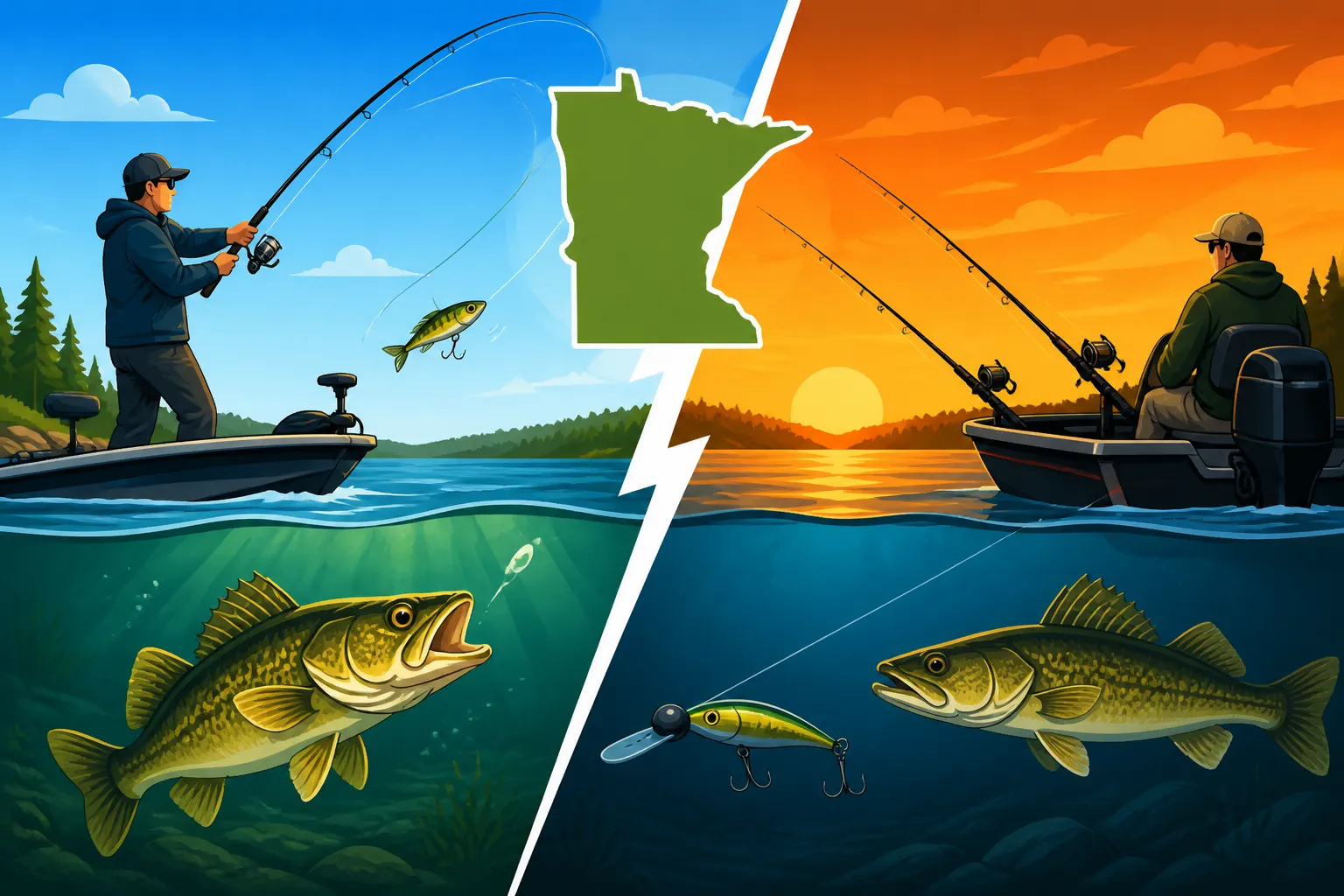
Many Minnesota anglers find themselves staring at a vast expanse of water like Mille Lacs or Lake Winnibigoshish, wondering if they should be methodically dragging lures behind the boat or aggressively firing casts at specific weed lines. This guide settles the debate by breaking down the environmental factors, seasonal shifts, and gear requirements that dictate whether casting or trolling will put more walleye in your livewell.
The Case for Casting for Walleye
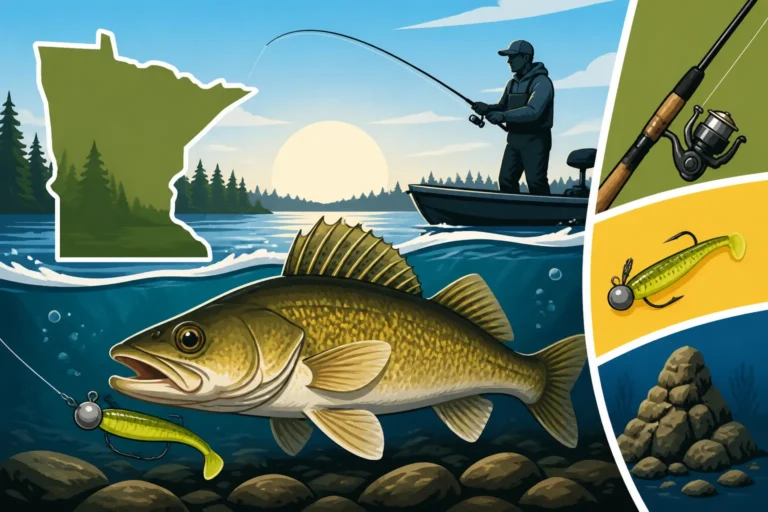
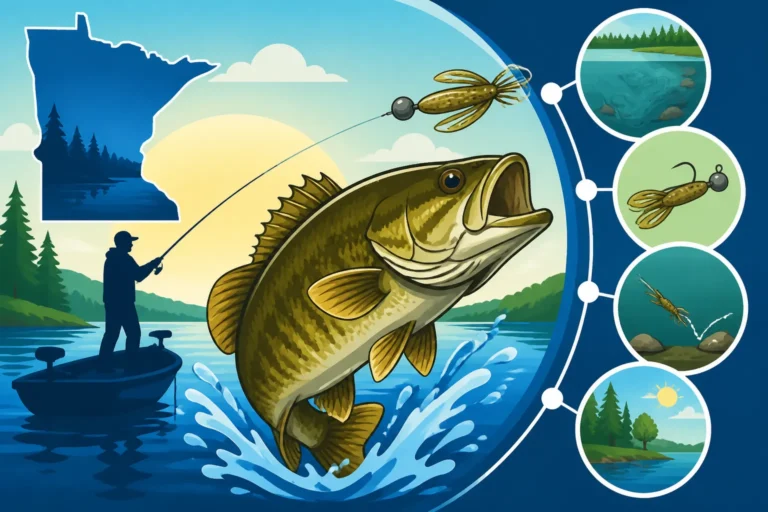
Casting is often the "thinking angler’s" approach. It requires a high level of focus and a physical connection to the lure that trolling simply cannot replicate. When you are casting, you are in total control of the cadence, the depth, and the presentation of your bait. In Minnesota, where we deal with a lot of varying structures—from the rock piles of Gull Lake to the dense cabbage of Lake Minnetonka—casting allows you to put a lure exactly where a walleye is hiding. It is about precision rather than volume, and for many of us, there is nothing more satisfying than feeling that sharp "thunk" on the end of the line and knowing exactly when to set the hook.
Precision Fishing in Heavy Cover
One of the primary reasons to choose casting over trolling is the presence of heavy cover. Walleye love to tuck themselves into "pockets" within weed beds or sit just on the edge of a sharp drop-off near submerged timber. If you try to troll through these areas, you will spend more time cleaning weeds off your hooks than actually fishing. By casting, particularly using Best Walleye Lures: Jigs, Cranks & Spinners, you can pick apart these small windows of opportunity. You can pitch a jig into a hole in the weeds, let it sink, and work it back with a hop-and-drop motion that triggers a reactionary strike from a fish that would never see a trolled lure.
In places like the Mississippi River or the St. Croix, casting is almost mandatory when you are working around wing dams or bridge pilings. You need to be able to place your lure in the "slack water" right behind a structural break where walleyes are waiting to ambush prey. This level of accuracy is impossible with 100 feet of line out behind a moving boat. You need to be able to feel the bottom, distinguish between a rock and a bite, and react instantly. This is where Walleye Fishing Techniques: Complete Minnesota Guide really highlights the importance of being an active participant in your presentation.
Targeting Specific Structure and Depth
When fish are "stacked" on a very specific piece of structure—like a lone rock hump in the middle of a 20-foot flat—casting is the most efficient way to stay on them. If you troll over a small spot, you might have your lures in the strike zone for ten seconds before you have to turn the boat around and set up your line again. By casting, you can anchor (either with a traditional anchor or a GPS-enabled trolling motor) and keep your bait in the "hot zone" for the entire duration of your retrieve.
This is particularly effective during the Minnesota Walleye Opener 2026, when fish are often concentrated in shallow, rocky areas near spawning grounds. Casting a shallow-running crankbait or a light jig allows you to work that specific depth without spooking the fish with the boat’s engine. You can sit in deeper water and cast into the shallows, bringing your lure down the "staircase" of the lake bottom. This natural movement mimics a dying minnow moving toward deeper water, which is a dinner bell for a hungry walleye.
The Emotional Thrill of the Thump
We cannot overlook the psychological aspect of casting. Trolling can sometimes feel like "waiting," whereas casting feels like "hunting." Every cast is a new opportunity to perfect your technique. You are constantly adjusting your retrieve speed, the weight of your jig, or the color of your plastic trailer. Many veteran Minnesota anglers prefer casting because it keeps them engaged with the water. You feel the lure ticking over rocks, you feel the vibration of the paddle tail, and you definitely feel the strike.
For those who are just starting out, casting provides an immediate feedback loop. If you get snagged, you learn about the bottom. If you catch a fish, you know exactly what move you made to trigger that bite. You can find many affordable rod and reel combos on Amazon to get started without a massive investment. The tactile sensation of casting a How to Jig for Walleye From a Boat setup is often what turns a casual hobbyist into a lifelong walleye fanatic. It is a more intimate way to fish, connecting you directly to the environment beneath the surface.
When Trolling Becomes the Ultimate Weapon
While casting is about the "micro" view, trolling is about the "macro." There are times on Minnesota's larger bodies of water where the fish are simply too scattered to target with individual casts. When walleyes are roaming the massive mud flats of Mille Lacs or the endless transitions of Lake of the Woods, you need to cover water. Trolling allows you to present multiple lures at once, at various depths, across miles of potential habitat. It is a game of statistics and efficiency, and when the bite is on, it can be the most productive way to fill a limit.
Covering Large Flats and Open Water
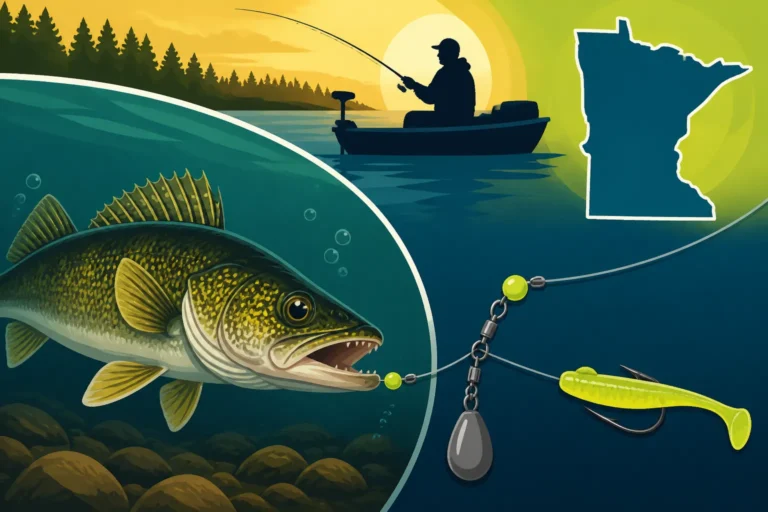
The sheer scale of some Minnesota lakes makes casting feel like trying to mow a hayfield with a pair of scissors. If the walleyes are spread out over a three-mile-long flat in 25 feet of water, you need to find them first. Trolling is the ultimate search tool. By moving at 1.5 to 2.5 miles per hour, you can cover a vast amount of territory while keeping your lures in the water. This is where Trolling for Walleye: Crankbaits & Leadcore comes into play, allowing you to reach depths and cover distances that casting simply cannot achieve.
Imagine you are fishing the "mud" on Mille Lacs. The fish might be in 30 feet of water, following schools of tullibee or perch. These fish are nomadic; they aren't tied to a single rock pile. By trolling crankbaits or spinner rigs, you are effectively "hunting" the school. Once you trigger a bite, you can mark that spot on your GPS, circle back, and often find a concentrated pod of fish. Trolling isn't just about catching; it's about scouting. It turns the lake from a mystery into a map.
Controlling Depth with Precision
One of the biggest advantages of trolling is the ability to maintain a perfectly consistent depth. If you know the fish are suspended 15 feet down over 30 feet of water, you can choose a lure and a lead length that puts your bait exactly at 15 feet and keeps it there for hours. When casting, your lure is constantly changing depth as it moves toward or away from you. Trolling provides a "zone of efficiency" that is unmatched.
Using tools like line-counter reels and depth charts (often found in apps or printed guides) allows you to be scientific about your approach. You can run one side of the boat with deep-diving cranks and the other with shallow runners until you figure out what the fish want. This systematic approach is why professional guides often rely on trolling to ensure their clients have a successful day. You can find specialized trolling gear like rod holders and line counters on Amazon to help automate this process, making it easier to manage multiple lines while navigating.
Efficiency in Locating Scattered Schools
In the heat of mid-summer, walleyes often become lethargic and spread out. They might not be aggressively feeding, but they will take a lure if it passes right in front of their nose. Trolling increases the probability of that "perfect pass" by a factor of ten. Instead of hoping a fish is within a 10-foot radius of your cast, you are dragging a "wall of lures" through the water column. This is especially true when following Mille Lacs Walleye Regulations (2026), where you want to maximize your time on the water to find those keeper-sized fish within the slot.
Trolling also allows you to use multiple techniques simultaneously. You can have a bottom bouncer with a nightcrawler harness running off the back while using leadcore to pull a crankbait deeper. This "buffet" approach helps you identify the "pattern of the day" much faster than casting a single jig. Once the pattern is established—say, purple chrome lures at 1.8 mph—you can switch all your rods to that setup and experience some of the best fishing of your life.
Seasonal Strategies for Minnesota Waters
The decision to cast or troll isn't just about the lake; it's about the calendar. In Minnesota, the water temperature and the biological cycle of the walleye dictate where they are and how they want to eat. Understanding these seasonal shifts is the key to knowing when to pick up the casting rod and when to fire up the kicker motor.
| Season | Primary Technique | Target Structure | Recommended Lure |
|---|---|---|---|
| Early Spring | Casting | Shallow Rocks/Points | 1/8 oz Jig & Minnow |
| Late Spring | Casting / Slip Bobbers | Weed Edges | How to Use a Slip Bobber for Walleye & Crappie |
| Summer | Trolling | Mud Flats / Deep Basin | Deep Diving Crankbaits |
| Late Summer | Trolling | Suspended Open Water | Leadcore & Spoons |
| Fall | Casting | Steep Drop-offs | Heavy Jigs or Blade Baits |
Spring Casting Patterns (Post-Opener)
Immediately following the opener, walleyes are usually in a post-spawn funk. They are often found in shallow water (4 to 12 feet) and are highly sensitive to boat noise. This is the prime time for casting. Using a light spinning setup and a jig tipped with a fathead minnow is the classic Minnesota approach. You want to stay back from the structure and "pitch" your lures into the rocks. This stealthy approach is vital because the water is often clear, and the fish are easily spooked.
During this time, you might also find success casting small jerkbaits along the new green weed growth. As the weeds start to poke up, walleyes will use them for cover. Casting allows you to work the very tops of these weeds without getting fouled. If you try to troll here, your lures will be constantly gummed up with "snot" and young vegetation. It’s a game of finesse, and Walleye Fishing Tips for Minnesota Anglers often emphasizes this transition from the spawning reefs to the first break lines.
Summer Trolling Dominance
As the water warms up in July and August, the fish move deeper. The metabolism of a walleye increases, and they are willing to chase down a moving target. This is when trolling reigns supreme. The fish often vacate the shallow bays and head for the main lake basins. On a lake like Leech Lake or Winnibigoshish, the "summer bite" is almost synonymous with trolling. Whether it’s pulling spinners over submerged humps or trolling crankbaits on the flats, you need to be moving.
This is also the time when "reaction bites" become important. A walleye might not be hungry, but if a shiny crankbait zips past at 2.5 mph, their predatory instinct kicks in. Trolling allows you to cover these deep-water haunts effectively. This is the period where many anglers invest in better electronics, often searching Amazon for the latest GPS mapping chips to help them stay on the contours of the deep-water breaks.
Fall Turnover and Transitional Tactics
When the leaves start to turn and the water temperature drops, walleyes undergo another major transition. They often move back toward steeper structures—places where deep water meets a sharp shelf. While you can certainly troll these edges, many experts go back to casting. Large "red-tail" chubs or heavy jigs worked vertically or cast along these steep drops can be incredibly effective. The fish are looking for a "big meal" to bulk up for winter, so your lure profile usually gets larger.
In the fall, the fish often congregate in very tight groups. You might find fifty walleyes sitting on a single point the size of a garage. Trolling over such a small spot is inefficient. Instead, you use your electronics to find the school, hover over them, and cast. This is the time for "power jigging" or using blade baits that create a lot of vibration. It's a high-energy way to fish that matches the urgency of the season before the lakes freeze over.
Gear and Technology Considerations
Your equipment often dictates which method you can realistically use. While you can cast with almost anything, effective trolling requires specific tools to be successful. Likewise, casting for hours with heavy, unbalanced gear will lead to a sore back and a short day on the water.
Boat Control and Electronics
The most important piece of gear for both methods is your boat's "brain"—the electronics. For casting, a high-quality bow-mount trolling motor with "Spot-Lock" or a similar GPS anchor feature is a game-changer. It allows you to stay on a precise spot regardless of the wind, freeing you up to focus entirely on your cast and retrieve. Without this, casting in a 15-mph Minnesota breeze is a constant battle with the oars or the motor.
For trolling, you need to know exactly how deep your boat is and what is beneath you. Side-imaging sonar is particularly helpful for trolling because it allows you to see fish off to the sides of the boat, helping you adjust your path to intercept them. If you see a school 40 feet to the right, you can steer the boat to drag your lures through them. This level of boat control is what separates the "lucky" anglers from the consistently successful ones.
Rod and Reel Setups for Each Method
Best Walleye Rods & Reels are not one-size-fits-all. For casting, you want a 6'6" to 7'0" medium-light or medium power rod with a fast action tip. This gives you the sensitivity to feel the bottom and the "backbone" to set the hook. You want a high-quality spinning reel loaded with 6-lb to 10-lb monofilament or a thin braided line with a fluorocarbon leader. Lightness is key here; you will be making hundreds of casts, so a heavy setup will wear you out.
Trolling requires something completely different. You need "trolling rods" that are usually 7'6" to 8'6" long with a moderate or "slow" action. These rods act like a giant shock absorber, soaking up the surge of the boat and the headshakes of a fish so the hooks don't pull out. You also need baitcasting reels with line counters. Without a line counter, you are just guessing how deep your lure is. Being able to say, "I have 125 feet of line out" is essential for repeating a successful pattern.
Lure Selection: Jigs vs. Crankbaits
While there is some crossover, your lure box will look different depending on your preferred style. Casting boxes are filled with jigs of various weights (1/16 oz to 3/8 oz), soft plastic swimbaits, and shallow-running minnow baits. You want lures that you can manipulate. Amazon is a great place to stock up on bulk packs of jig heads and plastics, which you will inevitably lose to rocks and northern pike.
Trolling boxes are dominated by deep-diving crankbaits (like Shad Raps or Flickershads), spinner rigs with Colorado blades, and heavy bottom bouncers. These are lures designed to "work themselves." A crankbait has a lip that makes it dive and wiggle as the boat moves; you don't need to do anything but hold the rod. A spinner rig relies on the constant forward motion of the boat to keep the blade spinning and the bait off the bottom.
Choosing Your Method Based on Lake Type
Minnesota is the land of 10,000 lakes, but they aren't all created equal. The geography of the lake often makes the choice between casting and trolling for you.
Weedy Metro Lakes vs. Deep Northern Reservoirs
In the Twin Cities metro, many of our lakes are relatively shallow and heavily weeded. Lake Minnetonka Fishing: Metro Trophy Water is a classic example. Here, the "weed line" is the most important feature. Because the weeds are so thick, trolling is often a nightmare. Casting jigs or "swim-jigs" along the edges of the milfoil and cabbage is the standard operating procedure. You need to be able to pick your way through the vegetation.
Contrast that with a place like Rainy Lake Fishing Guide, where you have massive basins, deep rocky reefs, and miles of open water. On these northern giants, trolling is often the only way to effectively find fish. The water is often stained, meaning the fish rely more on vibration and scent, making a moving spinner rig or a rattling crankbait the perfect choice. The "bigness" of the north often demands a trolling approach.
River Systems and Current Management
Rivers like the Mississippi or the Minnesota River present a unique challenge: current. In a river, the water is always moving, which means your lure is always "trolling" to some extent, even if the boat is stationary. However, casting is usually the preferred method for targeting specific river features like wing dams, log jams, or "seams" where fast water meets slow water.
You can "troll" in a river by "back-trolling"—pointing the boat upstream and moving slowly backward or holding position. This allows you to "walk" a jig or a three-way rig downstream into the faces of the walleyes, who are always facing into the current. This is a highly technical form of fishing that combines the precision of casting with the depth control of trolling. Knowing the Mille Lacs Lake Fishing Rules & Limits and other local regulations is important, as some rivers have specific rules about how many lines you can have in the water while moving.
Conclusion
Ultimately, the choice between casting and trolling comes down to the "vibe" of the day. If you want a relaxing day covering water, watching the scenery, and waiting for the rod to load up, trolling is your best bet. If you want a high-engagement, tactical experience where you are picking apart every rock and weed, grab your casting rod. Most successful Minnesota anglers do both, switching techniques as the sun moves across the sky or the wind changes direction. By mastering both, you ensure that no matter what the lake throws at you, you have the right tool to bring home a limit of Minnesota gold.
Disclaimer
The information provided in this guide is for educational and entertainment purposes only. Fishing regulations in Minnesota are subject to change annually; always consult the current Minnesota DNR Fishing Regulations handbook before heading out. Safety should be your primary concern; always wear a life jacket and be aware of weather conditions on large bodies of water. This post may contain affiliate links to products on Amazon, which help support our content at no additional cost to you.