Salmon Season & Limit in Minnesota
It can be incredibly confusing trying to keep up with all the different fishing regulations in Minnesota, especially when you're looking to target a specific species like salmon. It often feels like you need a law degree just to understand what's legal and what's not, and the frustration of wanting to hit the water but being unsure about the rules can really put a damper on your fishing plans. This guide is here to untangle the complexities, walking you through the salmon season and limits in Minnesota so you can fish with confidence and peace of mind.
Understanding Minnesota’s Salmon Fisheries
When we talk about salmon fishing in Minnesota, our minds immediately turn to the vast, cold waters of Lake Superior. While salmon aren't native to Minnesota's inland lakes in the same way walleye or northern pike are, they thrive in Lake Superior thanks to extensive stocking programs that have been in place for decades. These efforts have created a vibrant and exciting fishery, drawing anglers from all over to experience the thrill of battling a powerful salmon.
The Different Salmon Species You’ll Find
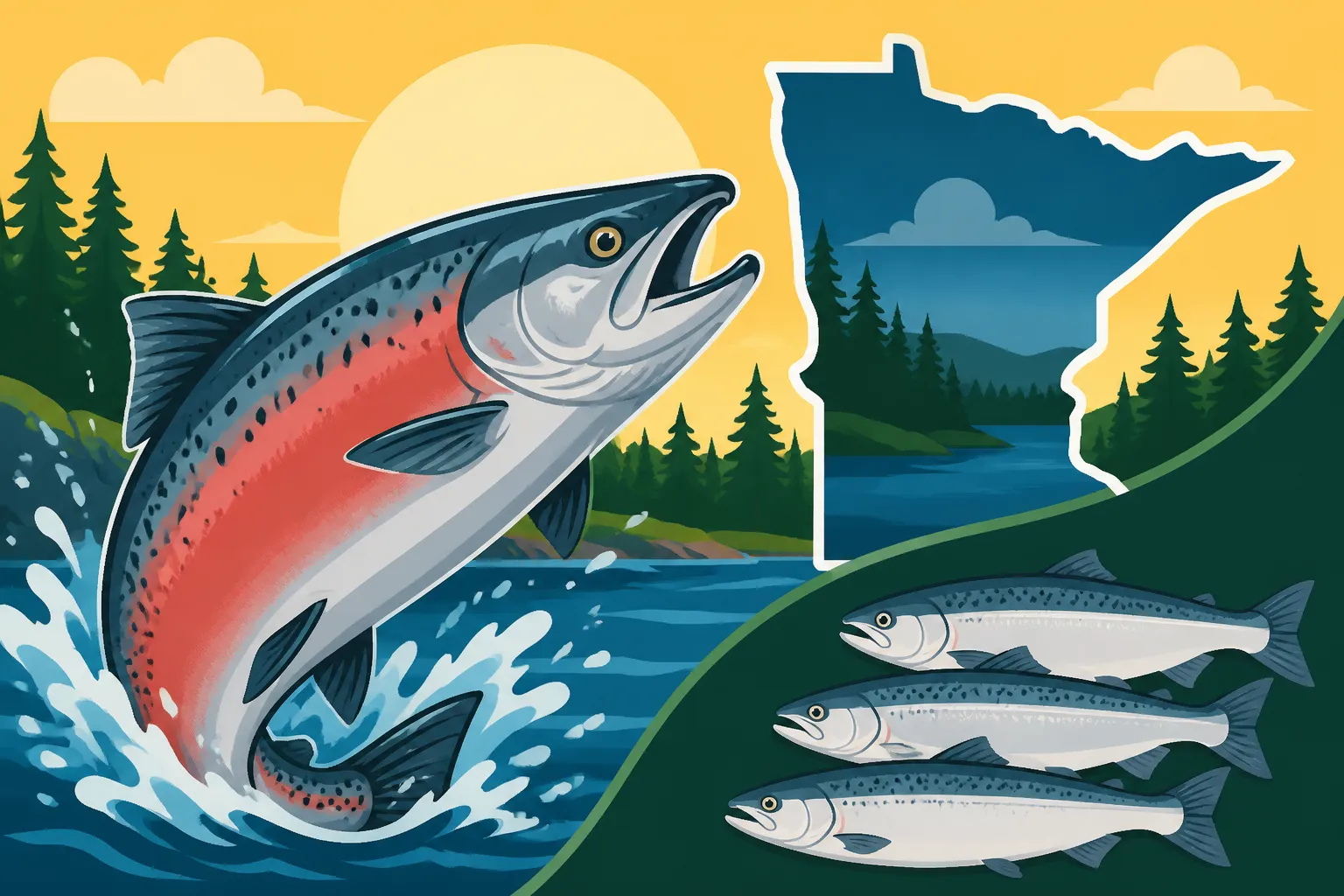
Lake Superior is home to several species of Pacific salmon, each with its own unique characteristics and appeal. The most commonly targeted are Chinook salmon, often called "Kings" for their impressive size and fighting ability, and Coho salmon, known for their aggressive strikes and acrobatic displays. You'll also encounter Pink salmon, sometimes referred to as "humpbacks" due to the distinctive hump males develop during spawning. Occasionally, Atlantic salmon, though less common, can also be found. These fish migrate into Lake Superior from its tributaries to feed and grow, providing excellent angling opportunities throughout the year, especially along the North Shore. Knowing which species you're targeting can sometimes influence your approach and, critically, the regulations you need to follow.
Why Regulations Are So Specific for Salmon
The regulations for salmon in Lake Superior are often more intricate than those for other species in inland Minnesota waters. This is largely due to the unique environment of Lake Superior itself, the interstate and international agreements involved, and the specific life cycles of these stocked fish. Managing a fishery that spans multiple states (Minnesota, Wisconsin, Michigan) and even a country (Canada) requires careful coordination. Additionally, salmon populations are heavily dependent on stocking, and regulations help ensure the sustainability of these programs and the health of the fishery. The Minnesota Department of Natural Resources (DNR) works tirelessly to balance angler opportunities with conservation needs, which is why the rules can seem a bit granular.
General Salmon Season and Limits
Navigating the salmon regulations can feel like a maze, but let's break down the general framework for Lake Superior, as this is where most of Minnesota's salmon fishing takes place. It's important to note that while there's a broad season, specific daily and possession limits vary by species and sometimes by location, particularly when considering tributaries.
Lake Superior General Season Overview
For Lake Superior, including its Minnesota waters, the season for salmon generally runs year-round. This is fantastic news for anglers, as it means you can pursue these exciting fish virtually any time of year, from the open water seasons to even some ice fishing opportunities in protected bays, though open-water fishing dominates the salmon pursuit. This continuous season allows for diverse angling experiences, whether you're trolling in the summer, casting from shore in the spring or fall, or even pier fishing. However, while the season might be open, the regulations regarding daily limits, possession limits, and size restrictions are always in effect and can change, so always double-check the latest Minnesota Fishing Seasons & Opener Dates (2026) published by the DNR.
Overall Daily and Possession Limits
When fishing for salmon in the Minnesota waters of Lake Superior, the general rule is often a combined daily limit for trout and salmon. This means that all species of salmon (Chinook, Coho, Pink, Atlantic) are typically grouped together with lake trout, brook trout, brown trout, and rainbow trout (including steelhead) for your total catch. The general combined daily limit for these species is usually 5, with no more than 3 being lake trout. The possession limit often mirrors the daily limit, meaning you can only have in your possession the same number of fish as the daily limit. This helps prevent overharvesting and ensures everyone gets a fair shot at these prized fish. It’s a good idea to understand Minnesota Fishing Limits: Bag & Possession (2026) for a full picture.
Specific Lake Superior Salmon Regulations (2026)
Now, let's get into the nitty-gritty details for each salmon species you're likely to encounter in the vast expanse of Lake Superior. These specifics are crucial for staying within the legal bounds and contributing to sustainable fishing practices.
Chinook Salmon (King Salmon)
Chinook salmon are the largest of the Pacific salmon species and a true prize for any angler. In the Minnesota waters of Lake Superior, Chinook salmon are part of the combined trout and salmon limit. As of 2026, the combined daily limit for trout and salmon remains at 5, with no more than 3 being lake trout. This means if you catch a Chinook, it counts towards that total of 5. There isn't typically a specific size limit for Chinook salmon in Lake Superior, but anglers are encouraged to release larger, mature females, especially during their spawning runs, to help maintain the population. Their season, like other salmon, is generally open year-round in Lake Superior itself.
Coho Salmon (Silver Salmon)
Coho salmon are abundant in Lake Superior and offer excellent angling, particularly during their spectacular runs into North Shore rivers in the fall. They are also included in the combined daily limit of 5 for trout and salmon, with the same restriction of no more than 3 being lake trout. Again, there are typically no specific length limits for Coho salmon in Lake Superior, meaning any legal-sized Coho counts towards your daily bag. Their season in the main lake is open all year. Many anglers enjoy pursuing Coho closer to shore or near river mouths as they stage for their spawning migrations. For more on these incredible fish, check out Salmon in Lake Superior (Coho, Chinook, Pink).
Pink Salmon (Humpback Salmon)
Pink salmon are smaller than Chinooks and Cohos but provide exciting action, especially during their biennial spawning runs. They're also included in the combined daily limit of 5 for trout and salmon, with no more than 3 lake trout. Similar to Chinook and Coho, there are no specific length limits for Pink salmon when caught in Lake Superior. These fish are known for their strong runs in odd-numbered years, so 2025 and 2027 would be prime times to target them. The season for Pink salmon in Lake Superior is also open year-round.
Atlantic Salmon and Other Occasional Catches
While not as common as their Pacific cousins, Atlantic salmon are occasionally caught in Lake Superior. These fish are also covered under the general combined trout and salmon limit. If you're lucky enough to hook an Atlantic salmon, it will count towards your 5-fish daily limit. Anglers might also stumble upon other species, or even different trout species like Lake Trout Season & Limit in Minnesota or Stream Trout Season & Limit in Minnesota, which share the same combined limits. It's truly a diverse fishery!
Here’s a quick summary of the general Lake Superior salmon and trout limits:
| Species Category | Daily Limit (Lake Superior) | Possession Limit (Lake Superior) | Size Restrictions | Season |
|---|---|---|---|---|
| All Salmon & Trout (Combined) | 5 (no more than 3 Lake Trout) | 5 (no more than 3 Lake Trout) | None specified for most salmon species; check for specific trout. | Year-Round |
Salmon Fishing in Lake Superior Tributaries
This is where things can get a little more specific and, frankly, a bit more challenging to track. When salmon run from Lake Superior into its tributary rivers and streams to spawn, the regulations often change dramatically to protect these vulnerable populations during their critical reproductive phase.
Special Rules for Rivers and Streams
Many of Minnesota's North Shore streams and rivers, from the Pigeon River down to the St. Louis River, are vital spawning grounds for salmon and various trout species. Because of this, these tributaries often have very specific, and sometimes shorter, open seasons for salmon and trout, as well as reduced daily and possession limits. For example, some streams might only be open for a few weeks in the spring or fall, or they might have catch-and-release only regulations during certain periods. This is crucial for sustaining the Trout Fishing in Minnesota: Streams & Lakes fishery, which heavily overlaps with salmon runs. It is absolutely essential to consult the current Minnesota DNR fishing regulations booklet or website for the specific stream or river you plan to fish before you even tie on a lure. The penalties for violating these regulations can be significant, and ignorance is rarely an excuse.
Gear Restrictions in Tributaries
Beyond seasons and limits, many Lake Superior tributaries also have specific gear restrictions, particularly during salmon and trout runs. These can include:
- Single Hook Only: Some streams may require single, barbless hooks to minimize harm to fish, especially those that are intended for release.
- Artificial Lures Only: Bait, such as worms, spawn, or minnows, might be prohibited to reduce incidental hooking mortality on non-target species or undersized fish.
- Weight Restrictions: Sometimes, the amount of weight you can use on your line is limited to prevent snagging.
These restrictions are put in place to ensure fair chase and to protect the fish during their sensitive spawning period. Always check the regulations for the specific tributary, as they can differ significantly from one stream to another, even those that are relatively close to each other along the North Shore Fishing: Lake Superior & Tributaries.
Other Important Considerations for Salmon Anglers
Beyond just the seasons and limits, there are a few other critical aspects every salmon angler in Minnesota needs to be aware of. These aren't just minor details; they're fundamental to legal and ethical fishing.
Fishing Licenses and Stamps
First and foremost, if you're 16 or older and fishing in Minnesota, you need a valid Minnesota fishing license. This applies whether you're chasing walleye on Mille Lacs or salmon in Lake Superior. You can find out more about the different types and how to get one in our guide on Minnesota Fishing License: Cost, Types & How to Buy (2026). For salmon and trout fishing in Lake Superior and its tributaries, you will also need a trout and salmon stamp. This stamp is an additional endorsement on your fishing license and helps fund trout and salmon management and stocking programs. Even if you plan on strictly practicing catch-and-release, the stamp is still required if you're targeting trout or salmon in designated trout waters, which includes Lake Superior and its tributaries. It's a small investment that makes a big difference in maintaining these fantastic fisheries. We've got a detailed breakdown on Minnesota Trout Stamp & Trout Regulations if you need more information.
Aquatic Invasive Species (AIS) Prevention
Lake Superior is a pristine natural resource, and protecting it from aquatic invasive species (AIS) is a shared responsibility. When you're fishing for salmon, especially if you're moving between different bodies of water or even just different spots along the North Shore, it's absolutely crucial to follow AIS prevention guidelines. This means cleaning, draining, and drying your boat and gear every time you leave the water. Even waders, boots, and nets can harbor tiny organisms that can spread invasives. Always remember to pull your drain plug when transporting your boat. For a complete guide on what you need to do, take a look at our article on Aquatic Invasive Species (AIS) Rules for Boaters. Staying compliant with AIS rules helps protect the waters we all love to fish for generations to come.
Catch and Release Best Practices
While keeping a few salmon for the dinner table is certainly part of the experience, many anglers practice catch and release, especially for larger fish or during certain seasons in tributaries. If you plan to release salmon, it’s vital to use best practices to maximize their survival. This includes minimizing handling, keeping the fish in the water as much as possible, using a knotless rubber net, and removing hooks gently. Consider using single, barbless hooks to make hook removal easier and less traumatic for the fish. A quick photo is fine, but get the fish back into the water swiftly and carefully. These fish are incredible fighters, and respecting them means ensuring they have the best chance to recover and continue their life cycle.
Disclaimer
Please remember that fishing regulations, including seasons and limits, can change. Always consult the official Minnesota Department of Natural Resources (DNR) fishing regulations booklet or their website for the most current and accurate information before heading out on the water. This article is intended as a general guide and should not be considered a substitute for the official regulations.