Yellow Perch Season & Limit in Minnesota
Navigating fishing regulations in Minnesota can sometimes feel like trying to untangle a particularly stubborn fishing line, especially when it comes to popular panfish like yellow perch. With rules that can vary from statewide to specific lakes, it's easy to get confused about what's legal to catch and keep. This comprehensive guide is here to help you cut through that confusion, giving you a crystal-clear understanding of the yellow perch season and limits across Minnesota, so you can focus on the joy of fishing.
Understanding Yellow Perch Regulations in Minnesota
Yellow perch are a beloved species in Minnesota, known for their feisty bites, vibrant colors, and delicious fillets. Because of their popularity and ecological importance as a forage fish for larger predators like walleye and northern pike, their populations are carefully managed by the Minnesota Department of Natural Resources (DNR). These regulations are designed to ensure sustainable fishing for generations to come, but they do require anglers to stay informed.
Statewide Yellow Perch Season
One of the great things about targeting yellow perch in Minnesota is the simplicity of their season. For most inland waters, yellow perch have a continuous open season. This means you can pursue these speckled beauties year-round, from the thick ice of winter to the warm waters of summer and into the crisp days of fall. You don't have to worry about specific opener dates or closed periods for yellow perch, unlike some other popular species.
However, even with a continuous season, it’s always wise to remember that fishing for any species, including catch-and-release, is prohibited in designated trout waters outside of an open trout season. While this rarely impacts general perch fishing, it's a good reminder that local exceptions always warrant a quick check. The continuous open season provides incredible flexibility for anglers, making yellow perch a reliable target whenever you get the urge to hit the water, whether it's for a quick evening bite or a full day on the lake. You can learn more about general fishing timelines by checking out our guide on Minnesota Fishing Seasons & Opener Dates (2026).
Statewide Yellow Perch Bag and Possession Limits
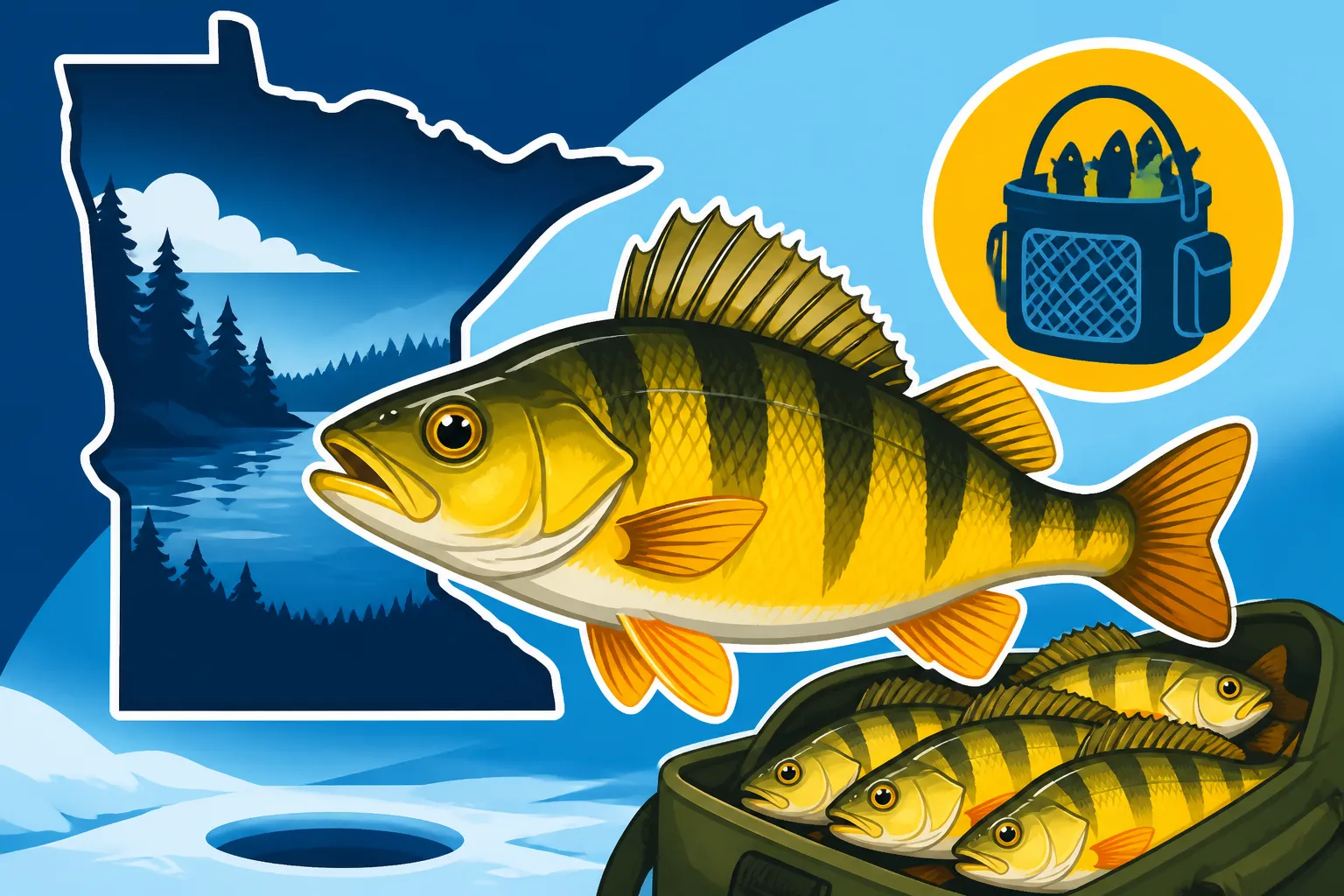
When it comes to how many yellow perch you can keep, Minnesota has clear statewide rules. For most waters, the daily bag limit for yellow perch is 20 fish per angler. This means that in any single day, you can harvest up to 20 yellow perch. Beyond the daily limit, there's also a statewide possession limit of 40 yellow perch. This possession limit refers to the total number of fish you can have in your actual possession at any given time, whether they are in your livewell, cooler, freezer at home, or even in your cabin at a resort.
Let's break down the difference with a real-world scenario. Imagine you go fishing on a Saturday and catch 20 yellow perch. You take them home, clean them, and put them in your freezer. On Sunday, you decide to go out again. You can catch another 20 yellow perch because your daily bag limit has reset. However, if you still had 20 perch in your cooler from Saturday, and you then caught 20 more on Sunday, your possession would be 40. If you then went out on Monday, you would need to have consumed or given away some of your Saturday and Sunday catch to reduce your possession below 40 if you planned to keep more fish that day. The key is that 40 fish is the maximum you can possess at any single moment, not a cumulative total over a long period. This distinction is crucial for responsible angling and avoiding potential issues. There is no statewide minimum size limit for yellow perch, allowing anglers to keep fish of all sizes. For a broader understanding of how these limits work for all species, check out our guide on Minnesota Possession Limits Explained.
Navigating Special Regulations for Yellow Perch
While the statewide regulations provide a good baseline, Minnesota is known for its diverse fisheries, and this often means specific lakes have unique regulations that supersede the general rules. It’s absolutely vital to remember that these special regulations are in place for a reason—usually to protect and enhance fish populations in that particular body of water.
Lake-Specific Perch Regulations
Some of Minnesota's most popular lakes, often those that experience significant fishing pressure or have unique ecological dynamics, will have their own tailored yellow perch regulations. These rules might include reduced bag limits, protected slot limits, or even special seasons. Missing these nuances can turn a great day of fishing into a costly mistake.
A prime example for 2026 is Mille Lacs Lake. This iconic Minnesota fishery has seen a significant change in its yellow perch limits. Starting Monday, February 9, 2026, and continuing through November 30, 2026, the daily and possession limit for yellow perch on Mille Lacs Lake will be reduced from 10 fish down to just five. This adjustment by the Minnesota DNR is a proactive measure to help maintain a healthy perch population for the future and to ensure the state stays within its allocated share of the harvestable surplus. Yellow perch are a critical part of the Mille Lacs ecosystem, serving as a primary food source for predators like walleye, so managing their numbers carefully benefits the entire lake. If you're planning a trip to this renowned lake, make sure you're up-to-date on all the specifics by consulting our Mille Lacs Lake Fishing Regulations (2026) guide.
While Mille Lacs has a clearly defined special regulation for yellow perch, other lakes might also have reduced panfish limits, which could include yellow perch, though specific details weren't found for all popular lakes like Upper Red Lake or Lake Winnibigoshish regarding perch explicitly. For instance, Lake Winnibigoshish does have a history of heavy angling pressure on yellow perch, which are important prey for walleye and northern pike. However, the special regulations explicitly mentioned for Winnie in recent years have largely focused on sunfish, not perch. The key takeaway is that the DNR consistently evaluates these fisheries, and regulations can change, so always check before you go.
Border Water Regulations
Fishing on Minnesota's border waters – those shared with neighboring states like Wisconsin, Iowa, North Dakota, South Dakota, or the Canadian provinces of Ontario and Manitoba – adds another layer of complexity. The general rule of thumb is that you must obey the fishing regulations of the state or province in which you are actively fishing. So, if you're casting your line from the Minnesota side of a border river, you follow Minnesota's rules. If your boat drifts into Wisconsin waters, you then adhere to Wisconsin's regulations.
This "invisible line" principle can be tricky. For Canadian border waters, if you're a Minnesota resident fishing with a Minnesota license, you can only fish the Minnesota portion of those waters. To fish the Canadian side, you would need a Canadian license and must comply with Canadian regulations and border crossing procedures. When it comes to possession limits on border waters, you must follow the regulations of your state of residency. Non-residents, on the other hand, must adhere to the bag limit rules of the state where they purchased their fishing license. This means that while fishing methods might change as you cross an imaginary line, your overall possession limit is tied to your licensing state. For a deeper dive into these specifics, our article on Border Water Fishing Rules (Minnesota-Ontario, Wisconsin) is an invaluable resource.
Essential Tips for Responsible Perch Angling
Being a responsible angler goes beyond just knowing the rules; it involves understanding why these rules exist and actively contributing to the health of Minnesota's fisheries. This means being mindful of your catch and staying current with the ever-evolving regulations.
Measuring and Identifying Your Catch
While there's no statewide size limit for yellow perch, accurate identification is always crucial. You wouldn't want to accidentally keep a different species that has stricter limits. Yellow perch are relatively easy to identify with their distinctive vertical bars, yellowish sides, and two separate dorsal fins. However, in some systems, they might be confused with white perch or even small walleye by novice anglers.
When size limits do apply to other species or in specific lakes, knowing how to properly measure a fish is vital. Generally, fish are measured from the tip of the snout to the tip of the tail, with the fish laid flat. It's a good practice to carry a measuring board or tape measure on your boat or in your tackle box. For yellow perch, while not legally required to measure them statewide, some conservation-minded anglers voluntarily release smaller fish to promote healthier populations and larger future catches. This voluntary practice supports long-term sustainability and increases your odds of hooking into those coveted jumbo perch.
Checking the Latest Regulations
This cannot be stressed enough: always, always, always consult the most current official Minnesota DNR fishing regulations before you head out. Fishing regulations are dynamic. They are not set in stone for years on end; instead, they are adjusted annually, and sometimes even mid-season, based on biological surveys, harvest data, and population health. The Mille Lacs Lake perch limit change for 2026 is a perfect example of this adaptive management.
You can easily access the most up-to-date regulations through the Minnesota DNR website, where you can often find a printable PDF version of the regulations booklet. Many bait shops and sporting goods stores also carry physical copies. Treat this document as your fishing Bible. A quick check can save you from fines and ensure you're contributing to sustainable fishing practices. For details on how to get your hands on this critical document, refer to our guide on the Minnesota Fishing Regulations PDF: Where to Find It.
Here’s a quick summary of the current yellow perch limits in Minnesota:
| Water Body | Daily Limit (2026) | Possession Limit (2026) | Season | Size Restrictions | Notes |
|---|---|---|---|---|---|
| Statewide | 20 | 40 | Continuous | None | Applies to most inland waters. |
| Mille Lacs Lake | 5 | 5 | Feb 9 – Nov 30 | None | Special regulation for 2026 to manage perch population. |
| Border Waters | Varies | Varies | Varies | Varies | Follow rules of the state/province being fished; residency for possession. |
| Other Lakes | Varies | Varies | Varies | Varies | Always check individual lake regulations via MN DNR. |
Penalties and Compliance
Ignorance of the law is never a valid defense, especially when it comes to fishing regulations. The Minnesota DNR takes its conservation efforts seriously, and anglers who fail to comply with fishing limits and regulations face significant consequences.
Consequences of Violating Perch Limits
The repercussions for overfishing or violating other fishing regulations in Minnesota can range from financial penalties to more severe actions. Expect hefty fines, which can quickly outweigh any perceived benefit of keeping extra fish. Beyond monetary costs, you could face confiscation of your fishing equipment, including rods, reels, and even your boat in serious cases. Perhaps most impactful for avid anglers, fishing privileges can be suspended. This means you could lose the ability to purchase a Minnesota Fishing License: Cost, Types & How to Buy (2026) for a certain period, effectively banning you from the waters you love.
These penalties aren't meant to be punitive for the sake of it, but rather to deter behavior that harms fish populations and the overall health of the ecosystem. Every fish taken over the limit contributes to overharvest, which can deplete populations, reduce spawning success, and negatively impact the forage base for other species. By understanding and adhering to the yellow perch season and limits, you're not just avoiding legal trouble; you're actively participating in the conservation efforts that keep Minnesota's "Land of 10,000 Lakes" a fishing paradise for everyone. So, consider using a clicker counter or a tally system to keep track of your catch throughout the day, especially on days when the bite is hot, to avoid accidentally exceeding your limit.
Disclaimer
Please note that fishing regulations can change frequently. While this guide provides the most up-to-date information for Minnesota Yellow Perch Season & Limit in 2026 based on available data, it is ultimately the angler's responsibility to verify all regulations with the official Minnesota Department of Natural Resources (DNR) before fishing. This content is for informational purposes only and should not be considered a substitute for the official DNR regulations booklet.