Rainy Lake Fishing Regulations (2026)
Navigating the fishing regulations for Rainy Lake can feel like deciphering an ancient riddle, especially with its unique status as a border water shared between Minnesota and Ontario. Many anglers get understandably confused about which rules apply where, what kind of license they need, and how to stay legal when crossing invisible lines on the water. This comprehensive guide will untangle the complexities of Rainy Lake's fishing regulations for 2026, focusing on the Minnesota side while acknowledging the vital cross-border considerations.
Understanding Rainy Lake's Unique Border Water Status
Rainy Lake isn't just any lake; it's an international boundary water, which means fishing here comes with a specific set of rules that often differ from typical inland Minnesota lakes. This dual jurisdiction can be a real head-scratcher, as you're essentially dealing with two sets of laws that sometimes harmonize and sometimes diverge significantly.
The Minnesota-Ontario Agreement
Because Rainy Lake forms part of the international border, both the Minnesota Department of Natural Resources (DNR) and the Ontario Ministry of Natural Resources and Forestry (MNRF) work together to manage its fisheries. This collaboration aims to ensure sustainable fish populations and provide consistent, albeit sometimes intricate, guidelines for anglers on both sides. For instance, sometimes a specific walleye slot limit might be identical on both sides, while a northern pike regulation could be wildly different. The goal is often to simplify things, but the reality is that you, the angler, still need to be acutely aware of which side of the lake you're on and whose rulebook you're following.
It's a delicate dance between conservation and recreation, balancing the needs of a thriving ecosystem with the desires of thousands of anglers who flock to this incredible fishery. The regulations are often adjusted based on scientific assessments, population trends, and public input from both sides of the border.
Who Needs What License?
This is where many anglers trip up. If you're fishing any part of Rainy Lake, regardless of which side you primarily intend to fish, you absolutely need a valid fishing license.
- For the Minnesota Side: If you are a Minnesota resident, you need a Minnesota fishing license. Non-residents planning to fish Minnesota waters of Rainy Lake must purchase a Nonresident Fishing in Minnesota: Licenses & Rules. If you're a Canadian resident, you still need a Minnesota non-resident license to fish on the U.S. side.
- For the Ontario Side: If you plan to fish in Canadian waters, even if you're launching from Minnesota, you must possess a valid Ontario fishing license and an Outdoors Card. This applies to everyone, including U.S. residents. You can't just cross the border and expect your Minnesota license to cover you.
- Reciprocal Agreements: While Minnesota and Ontario share a border, there isn't a blanket reciprocal fishing license agreement for Rainy Lake itself that allows you to fish both sides with a single license. You need the appropriate license for the waters you are actively fishing. This is different from some other border waters, so it’s crucial to understand for Rainy Lake. Always carry your license on you, along with a valid ID. For more general information on how to acquire your permit, you can refer to the guide on Minnesota Fishing License: Cost, Types & How to Buy (2026).
Key Rainy Lake Fishing Regulations for 2026 (Minnesota Side)
The Minnesota DNR sets specific rules for its portion of Rainy Lake, which are subject to annual review and potential changes. It's crucial to consult the most current Minnesota Fishing Regulations handbook or the DNR's official website, as these can be updated even mid-season. Always get the latest information!
Walleye & Sauger Regulations
Walleye is king on Rainy Lake, and its regulations are often the most scrutinized. For 2026, the Minnesota side of Rainy Lake has specific rules designed to protect the breeding stock and sustain the fishery.
- Season: The walleye and sauger season on Rainy Lake typically opens on the Saturday two weeks prior to the Saturday of Memorial Day weekend and remains open until the end of February the following year. Always confirm the exact date for When Is the Minnesota Walleye Opener 2026?.
- Possession Limit: The combined possession limit for walleye and sauger on the Minnesota side of Rainy Lake is 6, with no more than 4 being walleye. This means you can have 6 fish total, but only 4 of them can be the prized walleye. This isn't just about what you keep in your livewell for the day, but what you have in your possession, including fish at your cabin or in your freezer. You can learn more about general state limits by checking out Minnesota Walleye Limit & Size Rules.
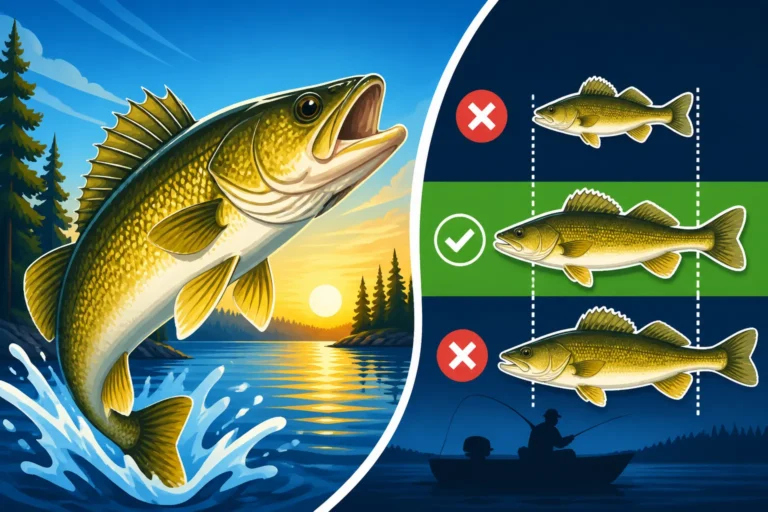
- Size Restrictions: The most important part here is often a protected slot limit. For 2026 on Rainy Lake (Minnesota portion), typically only one walleye over 19.5 inches may be in possession. This means if you catch a trophy walleye that's 28 inches long, you can keep it, but it counts as your "one over." Any other walleye you keep must be under 19.5 inches. This slot limit is designed to protect larger, spawning-size fish, allowing them to reproduce and maintain healthy populations.
Northern Pike Regulations
Northern Pike are abundant in Rainy Lake, offering exciting action for many anglers. The Minnesota regulations for pike on Rainy Lake are part of the broader statewide zoning system but with specific border water considerations.
- Season: Northern pike season on Rainy Lake is generally continuous, meaning it's open year-round.
- Possession Limit: For the Minnesota side of Rainy Lake, the possession limit for northern pike is 3.
- Size Restrictions: There is typically a protected slot limit for pike on Rainy Lake. For 2026, all northern pike from 29 to 40 inches must be immediately released. You are allowed to keep one pike over 40 inches, and up to two pike under 29 inches. This regulation promotes the growth of larger pike and helps manage their population dynamics. Understanding these nuances is key to staying compliant with Minnesota Northern Pike Limits by Zone.
Smallmouth & Largemouth Bass Regulations
Both smallmouth and largemouth bass offer fantastic fishing opportunities on Rainy Lake, especially during the summer months.
- Season: The bass season on Rainy Lake (Minnesota side) usually opens on the Saturday two weeks prior to the Saturday of Memorial Day weekend, coinciding with the walleye opener. It remains open through late February. However, it's vital to note that some areas, or even the entire lake, might have special early catch-and-release seasons. Always check the official DNR regulations. For general statewide dates, refer to Minnesota Bass Season (New 2026 Catch-and-Release).
- Possession Limit: The combined possession limit for smallmouth and largemouth bass on the Minnesota portion of Rainy Lake is typically 6.
- Size Restrictions: For 2026, usually only one bass over 17 inches is allowed in possession on Rainy Lake, with all bass from 14 to 17 inches needing to be immediately released. This slot aims to protect the prime breeding fish and allow for larger, healthier bass populations.
Crappie & Panfish Regulations
While walleye and pike often get the spotlight, Rainy Lake also holds excellent populations of black crappie and other panfish like bluegill and sunfish. These offer fantastic fishing, especially for families or those looking for a high-volume bite.
- Possession Limits: On the Minnesota side of Rainy Lake, the possession limit for crappie is generally 15. For sunfish (which includes bluegill and other sunfish species), the possession limit is typically 20. These limits are usually quite generous, reflecting healthy populations, but it's always good practice to only keep what you'll use. For general guidelines, see Minnesota Crappie & Sunfish Limits.
Lake Sturgeon Regulations
Rainy Lake and its connected waters, particularly the Rainy River, are renowned for their incredible lake sturgeon fishery. These ancient giants are a special fish, and their management reflects their slow growth and long lifespan.
- Season: The lake sturgeon season on Rainy Lake (Minnesota waters) has specific open periods, often broken into two segments: a catch-and-release season and a harvest season. These dates are very precise and change annually. For example, a catch-and-release season might run from early July to late September, followed by a shorter harvest season.
- Tag Requirement: To keep a sturgeon, even one that falls within a legal harvest slot, you must possess a valid Lake Sturgeon Tag in addition to your regular fishing license. These tags are limited and must be acquired beforehand.
- Size Restrictions: Sturgeon harvest regulations are very strict, typically allowing only one fish per year within a very specific size slot, such as 45 to 50 inches or over 75 inches, depending on the season segment. The intent is almost exclusively for catch-and-release, with very limited harvest opportunities for true trophy fish. Given their protected status and specific rules, it's imperative to consult the official Lake Sturgeon Regulations & Tag in Minnesota for the exact 2026 dates and size limits.
Here's a quick summary table for the Minnesota side of Rainy Lake for 2026. Please remember this is a summary and always consult the official Minnesota DNR regulations before fishing.
| Species | Season Opening (Typical) | Possession Limit (MN Side) | Size Restrictions (MN Side) |
|---|---|---|---|
| Walleye & Sauger | Sat. 2 weeks before Memorial Day | 6 (no more than 4 walleye) | Walleye: Only 1 over 19.5" allowed. Others under 19.5". |
| Northern Pike | Continuous (Year-round) | 3 | Release 29-40". One over 40" allowed. Two under 29" allowed. |
| Smallmouth Bass | Sat. 2 weeks before Memorial Day | 6 | Only 1 over 17" allowed. Release 14-17". |
| Largemouth Bass | Sat. 2 weeks before Memorial Day | 6 | Only 1 over 17" allowed. Release 14-17". |
| Black Crappie | Continuous (Year-round) | 15 | None |
| Sunfish | Continuous (Year-round) | 20 | None |
| Lake Sturgeon | Highly Variable | 1 (with valid tag) | Highly specific, check DNR for current slots and dates. |
Navigating Border Water Rules and Enforcement
Fishing Rainy Lake isn't just about knowing the Minnesota regulations; it's also about understanding the implications of its international border. Enforcement can be strict, and ignorance of the law is never a valid defense.
Possession Limits Across the Border
This is arguably the most confusing aspect for many anglers. If you catch fish on the Ontario side of Rainy Lake, those fish are subject to Ontario's possession limits and rules, regardless of where you ultimately take them to shore in Minnesota. Similarly, fish caught on the Minnesota side are subject to Minnesota's rules.
Imagine you're fishing near the buoy line that marks the international border. You catch three walleye on the Ontario side, adhering to their limits. Then, you decide to cross over to the Minnesota side and catch three more walleye, adhering to Minnesota's limits. If you then dock your boat in Minnesota, you would be in possession of six walleye. The key is that the Minnesota DNR will generally consider your total possession, wherever those fish were caught, when you are in Minnesota waters or on Minnesota soil. If Ontario's limit for walleye is, say, 2, and Minnesota's is 4 (no more than 1 over 19.5"), having 6 walleye (3 from ON, 3 from MN) could still put you over Minnesota's overall possession limit once you are fully on the Minnesota side.
The safest bet is to understand the most restrictive of the two countries' rules for the species you are targeting and adhere to that as your maximum possession. It is always wise to keep fish caught on the Canadian side separate and clearly marked, or better yet, process them immediately according to Ontario regulations before returning to Minnesota. Always check the specific Minnesota Possession Limits Explained to avoid any issues.
Bait, Lure, and Gear Restrictions
Border waters sometimes have unique restrictions on what you can use.
- Live Bait: There are often specific rules regarding the importation and use of live bait, especially minnows. You might not be able to transport live bait purchased in Minnesota into Ontario waters, and vice-versa. This is particularly important due to concerns about Aquatic Invasive Species (AIS) Rules for Boaters. Always confirm current bait regulations for both jurisdictions.
- Number of Lines: On the Minnesota side of Rainy Lake, you are generally allowed to fish with up to two lines in open water. However, if you venture into Ontario waters, you are typically only allowed to use one line unless you have a specific license or tag that permits otherwise. This discrepancy is a common point of confusion. For a deeper dive into statewide rules, check out How Many Lines Can You Fish in Minnesota?.
- Barbless Hooks: While not typically a Minnesota regulation, Ontario often encourages or requires barbless hooks for certain species or in specific zones. If you plan to fish Canadian waters, ensure your hooks comply with their regulations.
Checking Official Sources
The absolute best advice for anyone fishing Rainy Lake is to always consult the official, current fishing regulation guides for both Minnesota and Ontario.
- Minnesota DNR: You can pick up a physical copy of the Minnesota Fishing Regulations handbook at most bait shops, sporting goods stores, or DNR offices. It's also available as a printable Minnesota Fishing Regulations PDF: Where to Find It on the Minnesota DNR website.
- Ontario MNRF: The Ontario Fishing Regulations Summary is available online through the Ministry of Natural Resources and Forestry website and also in print at most Canadian bait shops and border crossings.
These guides will contain the most up-to-date information, including any emergency closures or special regulations that might arise during the season. Never rely solely on hearsay or old information. A few minutes of checking can save you a significant fine and a lot of headache.
Disclaimer
Please note that fishing regulations are subject to change. While this article aims to provide accurate information for 2026 based on current patterns and available knowledge, it is the angler's responsibility to consult the most recent official regulations published by the Minnesota Department of Natural Resources (DNR) and the Ontario Ministry of Natural Resources and Forestry (MNRF) before heading out on Rainy Lake. Always fish legally and ethically.