Lake Pepin Walleye Limit & Slot
You are out on the expansive, wind-swept waters of Lake Pepin, the bluffs of the Mississippi River rising majestically around you, and you finally hook into a heavy, head-shaking fish. But as that golden flash nears the boat, a familiar anxiety kicks in: is this fish legal to keep, or am I headed for a hefty fine? This guide provides a definitive look at the Lake Pepin Walleye Limit & Slot regulations to ensure your next outing is both successful and law-abiding.
Understanding the Border Water Regulations on Lake Pepin
Navigating the rules on Lake Pepin can feel like a bit of a balancing act because you are dealing with "Border Waters." Unlike an inland lake sitting entirely within Minnesota’s borders, Lake Pepin is a widening of the Mississippi River that serves as the boundary between Minnesota and Wisconsin. This means the Border Water Fishing Rules (Minnesota-Ontario, Wisconsin) apply here, and they are specifically designed to harmonize the conservation efforts of both state agencies. It’s a common frustration for folks to wonder if their Minnesota license is enough or if they need to double-check Wisconsin’s rulebook every time they cross the channel.
The good news is that Minnesota and Wisconsin have a reciprocal agreement. If you hold a valid Minnesota resident or non-resident license, you can fish the entirety of Lake Pepin, from shore to shore. However, you must still adhere to the specific regulations of the water body itself, which often differ from the general inland rules. For instance, while inland Minnesota lakes have specific "opener" dates, Lake Pepin often operates under different seasonal timelines. Understanding these nuances is the first step toward a stress-free day on the water.
One thing that often trips up anglers is the "land-bound" rule. While you can fish the Wisconsin side of the lake from a boat using your Minnesota license, you cannot step onto the Wisconsin shore to fish from a pier or the bank without a Wisconsin license. It sounds like a small detail, but it’s one that local conservation officers monitor closely. If you’re planning a shore-fishing trip, make sure you know exactly which state’s soil you’re standing on before you cast.
Required Licenses for Border Waters
Before you even hitch up the boat, you need to make sure your paperwork is in order. You can easily find out How to Get a Minnesota Fishing License Online through the DNR’s electronic licensing system. For Lake Pepin, a standard resident or non-resident angling license is your golden ticket. You don't need a special "Mississippi River" stamp, but you do need to have your license accessible—either as a paper copy or a digital image on your phone.
Interestingly, many veterans of these waters suggest carrying a backup. Electronics fail, batteries die, and cell service can be spotty near the high bluffs of Frontenac State Park. Having a physical copy tucked into your tackle box can save you a lot of headache if you’re approached for a check. If you’re fishing with kids, remember to check the age requirements, as Minnesota Fishing License for Kids & Youth rules apply even on these border stretches.
For those traveling from out of state to experience the legendary Pool 4 walleye run, the costs can vary. It’s worth looking into the Minnesota Fishing License: Cost, Types & How to Buy (2026) guide to see if a 24-hour or 72-hour license makes more sense for your trip than a full annual pass. Every dollar saved on the license is a dollar that can go toward more leeches or a new set of crankbaits at the local bait shop in Lake City.
The Importance of the Combined Possession Limit
One of the most confusing aspects of Lake Pepin is the concept of "combined possession." On this stretch of the Mississippi, walleye and sauger are often managed as a single group. This is because they occupy similar habitats and are frequently caught together using the same techniques. If you aren't sure how to tell them apart, you might want to study up on How to Identify a Walleye vs Sauger before you start filling the livewell.
The combined limit means that your total count of both species cannot exceed the legal maximum. You can’t take a full limit of walleye and then add a full limit of sauger on top of it. This rule is in place to prevent over-harvesting of the river’s apex predators. It’s also vital to remember that "possession" doesn't just mean what’s in your boat; it includes what’s in your cooler back at the cabin or in your freezer at home. For a deeper dive into this, check out Minnesota Possession Limits Explained to avoid an accidental over-limit violation.
Reciprocal Agreements with Wisconsin
The reciprocity between Minnesota and Wisconsin is a beautiful thing for anglers, but it does have its limits. While the fishing rules are largely the same on the water, the two states can occasionally have slight variations in how they handle things like live bait or the number of lines allowed. On Lake Pepin, the standard is usually two lines per angler, which is a luxury compared to the single-line rule on many Minnesota inland lakes during the summer.
However, don't let the extra line distract you from the primary goal: conservation. The Minnesota Fishing Regulations Changes for 2026 have emphasized that even on border waters, the goal is to maintain a healthy breeding population. By following the reciprocal rules, you’re participating in a multi-state effort to keep the Mississippi River one of the premier walleye destinations in the Midwest.
The Walleye and Sauger Slot Limit Breakdown
The "slot limit" is perhaps the most debated topic at any bait shop in Red Wing or Lake City. A slot limit is a tool used by biologists to protect fish within a certain size range—usually the "prime" spawners. On Lake Pepin, the slot is designed to ensure that the heavy hitters, those big females that produce the most eggs, stay in the system to keep the population booming. For 2026, the Lake Pepin Fishing Regulations (2026) continue to emphasize this protective window.
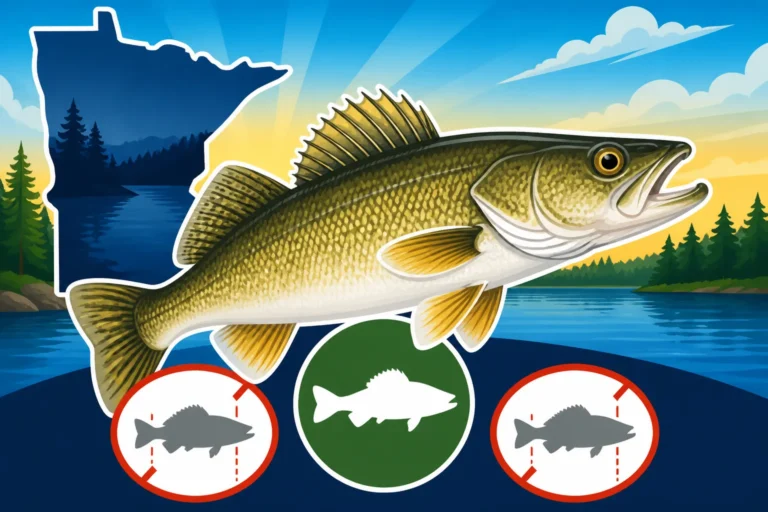
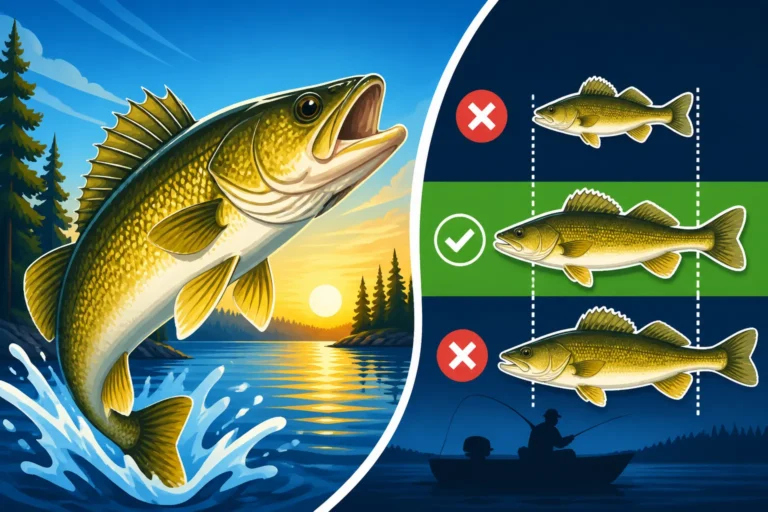
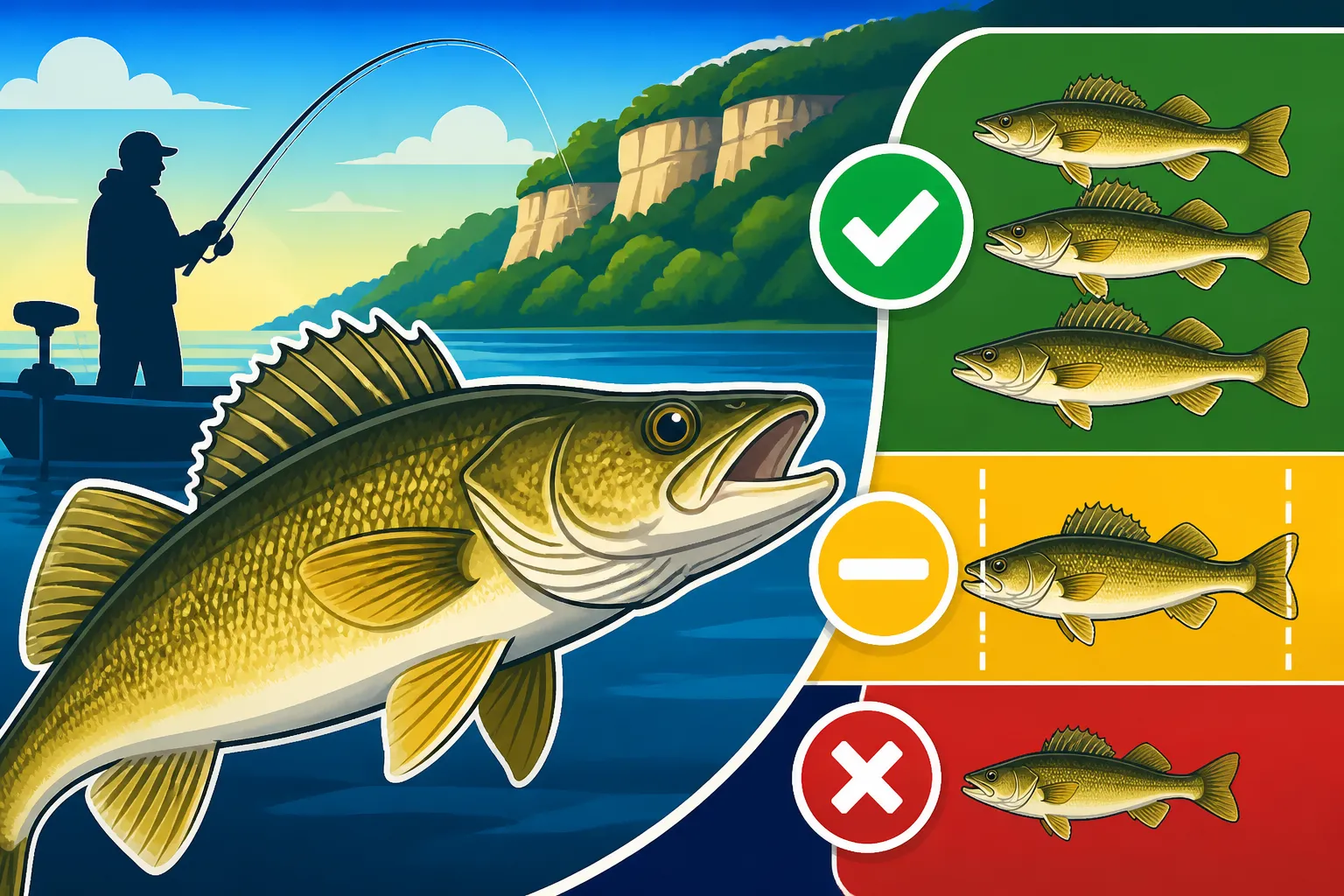
Typically, the regulation on Lake Pepin (Pool 4) involves a minimum size for walleye and a "protected slot" where fish must be immediately released. For example, you might be allowed to keep walleye that are 15 inches or longer, but any fish between 20 and 27 inches must go back. This allows you to keep a "wall hanger" over 27 inches (though most ethical anglers choose to release these too) and plenty of smaller "eaters" for a fish fry.
Understanding the Minnesota Walleye Limit & Size Rules is critical because the river is a dynamic system. High water years or poor spawning conditions can lead to temporary adjustments in these slots. Always check the current year’s posting at the boat ramp. If you catch a fish that falls right on the line—say, a 19.9-inch walleye when the slot starts at 20—the safe bet is always to let it swim. A tape measure can be subjective, but a conservation officer’s ruler usually isn't.
Size Minimums and the Protected Slot
The current size minimum for walleye on Lake Pepin is generally 15 inches. Anything smaller than that is considered a "short" and must be returned to the water immediately. This minimum ensures that every walleye has at least a chance to reach maturity before being harvested. When the fishing is hot and you’re catching dozens of 14-inchers, it can be tempting to "stretch" one, but it’s not worth the risk to the fishery or your wallet.
The "protected slot" usually covers the 20-inch to 27-inch range. These are the "teenagers" and "young adults" of the walleye world. They are fast-growing, healthy, and vital for the future of the lake. If you’re looking for a meal, the 15 to 19-inch fish are widely considered the Best Eating Fish in Minnesota Lakes anyway, as they have fewer accumulated toxins and firmer meat.
| Fish Species | Daily Limit | Size Minimum | Protected Slot (Must Release) |
|---|---|---|---|
| Walleye | 4 (Combined) | 15 Inches | 20" – 27" |
| Sauger | 4 (Combined) | None | None |
| Total Aggregate | 4 Total | N/A | See Above |
Daily Bag vs. Possession Limits
It’s easy to confuse the "daily bag limit" with the "possession limit." Your daily bag is what you can legally catch and keep in a single calendar day. On Lake Pepin, the combined walleye/sauger daily bag is typically 4 fish. If you go out on Saturday and catch 4, you’ve hit your daily bag. However, your possession limit—the total number you can have in your freezer—is also usually 4 for these species.
This means you cannot go out on Saturday, catch 4, eat them all for dinner, and then go out Sunday and catch 4 more. Well, technically you can do that because you no longer "possess" the Saturday fish once they are eaten, but you cannot have 8 fish in your house at any one time. If you’re on a multi-day trip staying at one of the Best Fishing Resorts in Minnesota, you need to be very careful about how many fillets are in the hotel fridge.
How to Measure Your Fish Accurately
To stay within the Minnesota Slot Limits: Which Lakes & Why guidelines, you need to know how to measure properly. The standard method used by the DNR is the "flat board, pinched tail" method. You lay the fish flat on a measuring board, close its mouth firmly against the headblock, and then squeeze the lobes of the tail together to reach the maximum possible length.
If you are using a flexible tape measure or measuring against a mark on your boat’s gunwale, you are likely getting an inaccurate reading. These methods don't account for the curve of the fish’s body and can lead to a fish being "shorter" in your eyes than it is on the officer’s board. Investing in a high-quality, aluminum measuring board is one of the best gear decisions you can make for river fishing.
Seasonal Considerations and Spawning Protections
One of the reasons Lake Pepin is so famous is the year-round season for walleye and sauger. Unlike the Minnesota Fishing Seasons & Opener Dates (2026) for inland waters, which usually see a closure from late February to early May, Pool 4 remains open. This creates a legendary "spring run" where anglers flock to the area below the Red Wing dam to catch fish staging for the spawn.
However, just because the season is open doesn't mean the rules are relaxed. In fact, conservation officers are often most active during the spring run because the fish are so concentrated and vulnerable. This is a time when the Lake Pepin Fishing Guide principles of "selective harvest" are most important. Keeping a limit of small males is generally fine, but taking large, egg-laden females can have a negative impact on the year-class.
As the water warms and the fish move out of the river and into the main lake (the actual "Pepin" part), the patterns shift. Summer fishing often involves trolling deep flats or humps. During this time, the Lake Pepin Walleye Limit & Slot remains the same, but the fish are often more stressed due to warm water temperatures.
Spring Spawning Run on Pool 4
The spring run usually kicks off in late March and runs through April. This is "jig and minnow" season. The focus is often on the deep holes and current seams near the head of the lake. While you’re out there, you’ll likely see plenty of sauger. If you’re wondering, Are Sauger Good to Eat?, the answer is a resounding yes—many river rats actually prefer the taste of sauger over walleye.
During the spring, it is vital to keep an eye on the weather and water levels. High, muddy water can make the fishing tough, but it also triggers the fish to move. If you’re targeting trophy walleye during this time, remember that the slot limit is your guide. Most of those 25-inchers you’ll catch are females full of eggs. Releasing them isn't just the law; it's an investment in the future of the river.
Winter Ice Fishing Limits
Ice fishing on Lake Pepin is a unique experience. The current of the Mississippi means that ice safety is always a concern, especially near the "lake" entrance and exit. However, for those who know the safe spots, the Minnesota Ice Fishing & Shelter Rules apply. The limits for walleye and sauger do not change just because the water is frozen.
A common mistake in winter is failing to keep fish fresh without freezing them solid if you intend to measure them later. A frozen fish can "shrink" slightly, or its tail can become brittle, making an accurate measurement difficult. If you’re using a "bucket" to store your catch, make sure you aren't accidentally exceeding your Minnesota Fishing Limits: Bag & Possession (2026) because you lost track of the count in the dark of your wheelhouse.
Catch and Release Best Practices for Trophy Walleye
If you hook a true monster—a fish well over the 27-inch mark—you have a decision to make. While you are legally allowed to keep one fish over the slot (depending on the specific year’s regulation), many choose to follow Catch and Release Best Practices in Minnesota. This involves keeping the fish in the water as much as possible, using a rubberized net to protect their slime coat, and taking a quick "hero shot" before letting them go.
In the deep water of Lake Pepin, "barotrauma" can be an issue. If you pull a walleye up quickly from 30 feet of water, its swim bladder may expand. Learning how to properly fizz a fish or using a weighted descent tool can help ensure that the trophy you just released actually survives to spawn another day.
Navigating Aquatic Invasive Species and Ethical Angling
Finally, being a responsible angler on Lake Pepin means more than just following the Lake Pepin Walleye Limit & Slot rules. It means protecting the water itself. The Mississippi River is a corridor for various species, including some we don't want. Aquatic Invasive Species (AIS) Rules for Boaters are strictly enforced in this region to prevent the spread of zebra mussels, Eurasian watermilfoil, and invasive carp.
When you leave Lake Pepin, you must drain all water from your livewell, bait well, and bilge. You must also remove the drain plug and leave it out during transport. These simple steps are the only way to keep our other Best Walleye Lakes in Minnesota from becoming infested. It only takes one person being lazy at the boat ramp to ruin a fishery for generations.
AIS Regulations for Mississippi River Boaters
The "Clean, Drain, Dry" mantra is the law of the land. Before you pull away from the ramp at Colvill Park or the Lake City marina, take five minutes to inspect your trailer. Zebra mussels love to hitch a ride on the roller assemblies or the motor's lower unit. If you're moving between different pools of the river, you should be even more diligent.
For a step-by-step guide on how to stay legal, refer to How to Decontaminate Your Boat (AIS). Remember, carrying invasive species—even unintentionally—can result in heavy fines. More importantly, it threatens the very fish we’re all trying to catch.
Responsible Harvesting and Conservation
Ethical angling is about more than just the letter of the law. It’s about the spirit of conservation. If the limit is 4, but you only need 2 for a meal, consider letting the others go. The Mississippi is a resilient system, but it isn't bottomless. By following the Minnesota Conservation vs Regular License philosophy of taking only what you need, you help ensure that Lake Pepin remains a world-class destination.
Always stay informed by checking the Minnesota Fishing Regulations PDF: Where to Find It on the DNR website. Rules can change, and being the angler who says, "I didn't know," is never a good look when the warden pulls up alongside your boat.
Minnesota Fishing Regulations Disclaimer
The information provided in this guide is for informational purposes only and does not constitute legal advice. While we strive to provide the most up-to-date details regarding the Lake Pepin Walleye Limit & Slot, fishing regulations are subject to change by the Minnesota Department of Natural Resources (DNR) and the Wisconsin DNR at any time. Always consult the official 2026 Minnesota Fishing Regulations handbook or the DNR website before your trip to ensure compliance with all current laws, including emergency closures or specific experimental slot limits. Safe and legal fishing is the responsibility of the individual angler.