How to Set Up Tip-Ups for Pike
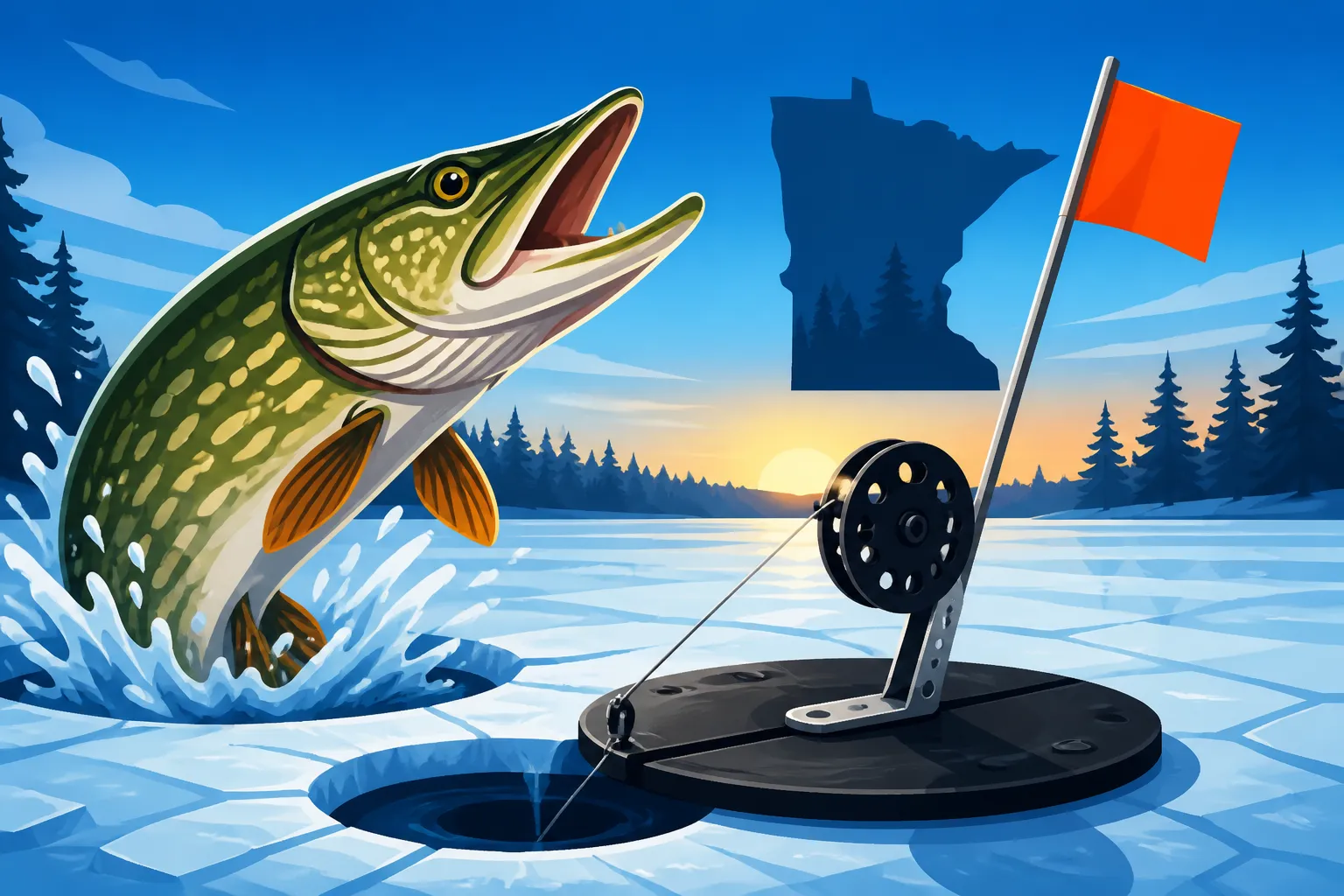
There is nothing quite like the adrenaline rush of sitting in a warm fish house, looking out the window, and seeing a bright orange flag pop against the stark white Minnesota snow. It is the ultimate game of patience that often rewards you with the hardest-fighting predator in our waters. This guide solves the mystery of the "flag-up" by showing you exactly how to rig and place tip-ups to target trophy northern pike with precision and confidence.
The Essentials of a Solid Tip-Up System
When you are staring down a February afternoon on Mille Lacs or Lake of the Woods, you quickly realize that your gear is the only thing standing between a successful day and a series of "flags" that result in nothing but empty hooks. A tip-up is more than just a piece of wood or plastic; it is a mechanical strike indicator that has to perform in some of the most brutal conditions on earth. Understanding how these devices work at a fundamental level will help you troubleshoot when things go wrong in the field.
Understanding the Spool and Trigger
The heart of the tip-up is the underwater spool and the trigger mechanism. Unlike a traditional rod and reel where you feel the bite, a tip-up relies on the pike grabbing the bait and swimming away, which turns the spool. As that spool rotates, it trips a wire—often called the "trip bar"—that releases the spring-loaded flag. If your trigger is too stiff, the pike will feel the resistance and spit the bait before the flag even flies. If it is too light, a large sucker minnow will trip the flag itself, leading to what we call "false flags."
Finding that sweet spot in trigger tension is an art form. I usually recommend testing the tension with the specific size of bait you plan to use before you drop it down the hole. You want the flag to stay down while the minnow swims naturally, but to pop the second a pike exerts any forward pressure. On many classic wooden models, you can adjust the sensitivity by slightly bending the trip wire or choosing the "light" or "heavy" side of the trip bar. It sounds simple, but when your fingers are numb, these small adjustments feel like brain surgery.
Why Performance Matters in Sub-Zero Temps
We have all been there: it is -15 degrees, the wind is howling across the ice, and you realize your tip-up spool is frozen solid. This is why the quality of your equipment is non-negotiable in Minnesota. High-quality tip-ups use specialized low-temperature lubricants that won't turn into glue when the mercury drops. If the spool doesn't spin freely, the pike will feel the "tug" of a frozen reel and drop the bait immediately.
I always tell people that the most frustrating part of winter fishing isn't the cold; it's the gear failure. You can find plenty of affordable options for Best Tip-Ups for Pike Fishing online, often on sites like Amazon where you can read reviews from other northern anglers. A good tip-up should have a smooth, consistent drag and a flag spring that doesn't lose its "pop" over time. If you notice your spools are getting sticky, a quick clean and a drop of synthetic cold-weather oil can save your entire weekend.
Comparing Wood vs. Plastic Frames
The debate between traditional wooden "stick" tip-ups and modern round plastic "thermal" tip-ups is as old as ice fishing itself. The wooden models, like the iconic Beaver Dam, are legendary for their durability and smooth operation. They sit on top of the ice and are easy to see from a distance. However, they don't offer any protection for the hole. If you aren't using a hole cover, the water will freeze around your line, which is a recipe for a lost fish.
On the flip side, round thermal tip-ups are designed to fit perfectly over a 10-inch hole. They have an insulated base that traps the heat coming up from the water, which significantly slows down ice formation. These are fantastic for those "bluebird" days when it’s sunny but bitterly cold. They also stack much better in a 5-gallon bucket. Regardless of which style you prefer, make sure you understand the Minnesota Ice Fishing & Shelter Rules regarding how many lines you can have out and how they must be marked with your identification.
Line and Leader Selection for Trophy Pike
Rigging for pike is not the same as rigging for walleye. You aren't looking for finesse here; you are looking for raw strength and abrasion resistance. A pike's mouth is a literal cave of razor-sharp teeth designed to shred anything that enters. If you go too light on your line or leader, you are essentially just feeding the fish your expensive lures.
The Base Line Why Heavy Dacron Wins
For your main line, forget about monofilament. You want a heavy, braided Dacron or a specialized PVC-coated tip-up line. Most Minnesota veterans prefer a 20lb to 30lb test Dacron line. The reason is twofold: first, it doesn't have the "memory" of mono, so it won't coil up like a Slinky when you pull it off the spool in the cold. Second, it is much easier to handle with your bare hands when you are pulling in a fish hand-over-hand.
Thin lines can actually cut your fingers when a 15-pound pike decides to make a run. Dacron provides a nice grip and is highly visible against the ice, which helps you see which way the fish is moving. You can easily find bulk spools of this line on Amazon or at local bait shops. Just make sure you leave enough room on the spool so it doesn't jam against the frame. A properly spooled tip-up is your first line of defense against a snapped leader.
Fluorocarbon vs. Steel Leaders
This is where the fishing community often splits. Traditionalists swear by steel leaders because they are 100% bite-proof. If a pike hits a steel leader, it isn't getting through. However, in clear Minnesota lakes, pike can be surprisingly line-shy. They see that thick black or metallic wire and decide to pass. This is where heavy fluorocarbon comes in. A 25lb to 40lb fluorocarbon leader is nearly invisible underwater but offers enough toughness to withstand those teeth for a short fight.
If you are fishing stained water like the Rainy River or parts of the Mississippi, steel is perfectly fine. But if you are on a clear lake like Mille Lacs, I’d lean toward the fluorocarbon. Remember that even with fluoro, you need to check for nicks and abrasions after every single bite. If the line feels "fuzzy" or has a visible scratch, cut it off and tie a new one. It is a small price to pay to ensure you don't lose a trophy. You can brush up on Best Gear for Ice Fishing Northern Pike in Minnesota to see which specific brands of leader material are holding up best this season.
To Swivel or Not to Swivel
A swivel is a critical component of a tip-up rig. It serves as the connection point between your Dacron main line and your leader material. More importantly, it prevents the minnow from twisting your line into a tangled mess as it swims in circles all day. I prefer a high-quality ball-bearing swivel in a size 10 or 12. It’s small enough to be unobtrusive but strong enough to handle the torque of a thrashing pike.
The swivel also acts as a "stop" for your sinker. Many anglers like to place a small egg sinker or a few split shots on the main line above the swivel. This keeps the bait at the desired depth without the weight being directly in the fish's face. When a pike grabs the bait, the line can slide through the weight, meaning the fish feels zero resistance as it starts its initial run. This "slip-sinker" mentality is a cornerstone of Ice Fishing for Northern Pike (Tip-Ups) and is a major factor in reducing dropped baits.
| Component | Recommended Type | Why It Matters |
|---|---|---|
| Main Line | 20-30lb Braided Dacron | Zero memory, easy on the hands, doesn't curl in cold. |
| Leader | 30lb Fluorocarbon | Invisible in clear water, high abrasion resistance. |
| Hook | Quick-Strike Rig | Higher hook-up ratio, safer for catch and release. |
| Swivel | Ball-Bearing Swivel | Prevents line twist from active bait minnows. |
| Sinker | 1/4 oz Egg Sinker | Keeps bait at depth while allowing line to slide freely. |
Mastering the Quick-Strike Rig
If you are still using a single large treble hook through the back of a minnow, you are likely missing more fish than you are catching. The "Quick-Strike Rig" changed the game for pike enthusiasts. It is designed to allow the angler to set the hook almost immediately after the flag flies, rather than waiting for the pike to turn the bait and swallow it.
The Philosophy of the Quick-Strike
A pike usually attacks a minnow from the side, t-boning it. Then, it swims a short distance before stopping to turn the bait head-first so it can swallow it. With a single hook, if you set the hook during that first run, you often just pull the bait out of the pike's mouth. If you wait too long, the fish swallows the hook, making it nearly impossible to release the fish safely.
The quick-strike rig uses two smaller hooks (usually trebles) spaced a few inches apart. One hook goes near the dorsal fin, and the other goes near the tail or the head. This means no matter how the pike grabs the bait, there is a hook in its mouth from the very first second. This is essential for following Catch and Release Best Practices in Minnesota because it almost always results in a hook in the corner of the mouth rather than the gut.
Building Your Own vs. Buying Pre-Made
You can certainly buy pre-made quick-strike rigs on Amazon or at any sporting goods store. They usually come with a bit of "flash," like a spinner blade or colorful beads, which can help attract pike in darker water. However, many of us enjoy the ritual of tying our own. By building your own, you can customize the length of the leader and the distance between the hooks based on the size of the suckers you are using that day.
To build one, you’ll need your leader material, two small #4 or #6 treble hooks, and some crimps or the ability to tie a solid snell knot. I like to add a single red bead in front of each hook just to give it a little "blood" look. Whether you buy or build, make sure the hooks are sharp. Pike have very bony mouths, and a dull hook will bounce right off. I always keep a small hook sharpener in my pocket because even hitting the edge of the ice hole can dull a point.
Hook Placement for a High Hook-Up Ratio
The way you bait your rig is just as important as the rig itself. For a quick-strike setup, I recommend placing one hook just behind the dorsal fin and the second hook near the tail. This causes the minnow to hang slightly "nose down" in the water. To a pike, this looks like a wounded baitfish struggling to stay upright—an irresistible dinner invitation.
When the flag pops, you don't need to wait five minutes. Walk over calmly, check to see if the spool is still spinning, and if it is, pick up the line until you feel the weight of the fish and give it a firm, short snap. You aren't trying to rip the fish's head off; you are just driving those small trebles into the jaw. This technique is a major part of How to Catch Northern Pike Through the Ice in Minnesota and will drastically increase your "flags to fish" ratio.
On-the-Ice Strategy: Where to Set Your Flags
You could have the most expensive tip-up rig in the world, but if you're set up over a barren mud flat, you’re just going to be cold and bored. Pike are "ambush predators." They like to hide in cover and wait for a meal to swim by. Finding that cover under two feet of ice is the secret to a multi-flag day.
Finding the Perfect Weed Edge
In early to mid-winter, the most productive spots are almost always the remaining green weeds. Pike cruise these edges looking for perch and sunfish that are hiding in the stalks. Look for "coontail" or "milfoil" beds in 8 to 15 feet of water. Use your flasher or an underwater camera to find where the weed wall ends and the open water begins.
Place your tip-ups right on that transition line. I like to set a line of flags that "zig-zag" across the weed edge. Put one deep in the weeds, one right on the edge, and one five yards out into the flat. This helps you figure out exactly where the fish are patrolling that day. If you’re fishing a new lake, checking a Minnesota Northern Pike Limits by Zone map can sometimes give you a hint about which areas of the lake hold the best populations.
Depth Placement The Three-Foot Rule
One of the biggest mistakes beginners make is dropping their bait all the way to the bottom. Pike have eyes on the top of their heads; they are designed to look up. If your bait is buried in the weeds or sitting in the silt on the bottom, the pike might swim right over it without ever seeing it.
A good rule of thumb is to set your bait about two to three feet off the bottom. If you are in heavy weeds, set it six inches above the top of the weed line. You want that sucker minnow to be silhouetted against the underside of the ice. A pike from ten feet away will see that movement and come charging in. If the water is particularly deep, say 20 feet, don't be afraid to set a bait only 5 or 10 feet down. Sometimes pike cruise the mid-water column looking for suspended baitfish.
Creating a Tip-Up Spread
If you are fishing with a group, you can cover a massive amount of real estate. Minnesota law allows each angler two lines (check for any 2026 updates in the Minnesota Fishing Regulations Changes for 2026 guide). If you have three people, that’s six flags. Don’t bunch them all together. Spread them out in a "grid" or a long line along a shoreline break.
This "spread" serves as a scout. When a flag goes off on the deepest set, move another tip-up into that depth zone. You are essentially using the fish to tell you where they are. It’s a proactive way to fish rather than just sitting and hoping. I’ve had days where we didn’t get a bite for three hours, moved the whole spread fifty yards toward a sunken rock pile, and had three flags fly simultaneously.
The Moment of Truth: Fighting and Landing Pike
Setting the hook is only half the battle. Bringing a 36-inch pike through an 8-inch hole using nothing but your hands is one of the most intense experiences in the sport. It requires a mix of finesse, timing, and a complete lack of fear regarding "ice burn" on your palms.
The Approach Stealth and Speed
When that flag goes up, don't run like a madman. The vibrations of your boots pounding on the ice can be felt by the fish below. Walk briskly but quietly. As you get close, look at the spool. Is it spinning? If the spool is dumping line at a high rate of speed, the fish is likely a "runner" and has the bait firmly in its mouth. If it's not moving, the fish might be sitting there "tasting" the bait.
Wait for the spool to start moving again. When it does, gently lift the tip-up out of the hole and set it aside. Pick up the line with two fingers. Do not wrap the line around your hands! If a big pike decides to bolt and the line is wrapped around your wrist, you’re going to have a very bad day. Just hold it lightly, feel for the weight of the fish, and when you feel that solid "thump," snap your wrists upward to set the hook.
Hand-Over-Hand Fighting Techniques
Fighting a fish on a tip-up is a tactile experience. You have to be your own drag system. When the fish pulls hard, let the line slide through your fingers with just enough tension to keep it tight. When the fish pauses, start pulling the line in hand-over-hand, coiling it neatly on the ice away from your feet (so you don't step on it and tangle it).
The most dangerous moment is when the fish sees the light of the hole. This almost always triggers a "head-shake" or a violent dive. Be ready to give back some line instantly. If you hold too tight during a head-shake, the hook will often tear out or the leader will snap. Patience is key. Let the fish tire itself out. Eventually, you’ll see its snout enter the bottom of the hole.
Safe Handling and Releasing
Once the pike’s head is in the hole, use a pair of long-nose pliers to grab the hooks. If it’s a trophy you plan to release, try to keep the fish in the water as much as possible. If you must lift it out for a photo, support its belly with one hand and hold the "gill plate" carefully with the other (avoiding the actual gills). Never hold a large pike vertically by its jaw, as this can damage its internal organs and spine.
For those looking to keep a few smaller ones for the frying pan, make sure you know How to Fillet a Northern Pike (Remove Y-Bones). They are delicious fish, but those Y-bones can be a nightmare if you don't know the trick. If you are releasing the fish, hold it in the hole for a moment until it regains its strength and swims away under its own power. This ensures that the Best Northern Pike Fishing Tactics in Minnesota remain sustainable for the next generation of ice anglers.
Minnesota Fishing Regulations Disclaimer
While this guide provides technical advice on tip-up setups, fishing regulations in Minnesota are subject to change annually and can vary significantly by lake or water body. Always consult the most recent Minnesota Department of Natural Resources (DNR) handbook before heading out. Pay close attention to specific "slot limits" and "possession limits" for the lake you are fishing, as penalties for violations can be severe. This guide is for informational purposes and does not replace official state laws.