How to Catch Smallmouth Bass on Mille Lacs
Staring out across the 132,000 acres of Mille Lacs Lake can feel incredibly daunting, especially when you are specifically hunting for the legendary "brown bass" that call these waters home. Many anglers spend their entire weekend burning fuel and casting into empty pockets because they don’t understand the complex rock transitions or seasonal movements of this massive inland sea. This guide solves that frustration by providing a deep, tactical roadmap to consistently catching trophy smallmouth bass on Mille Lacs.
Understanding the Mille Lacs Smallmouth Ecosystem
The transformation of Mille Lacs over the last two decades is nothing short of a biological phenomenon. Historically known as a premier walleye factory, the lake saw a massive shift in its ecosystem due to increased water clarity and the introduction of invasive species like zebra mussels and spiny waterfleas. This clearer water allowed sunlight to penetrate deeper, encouraging the growth of lush vegetation and providing the perfect habitat for smallmouth bass to thrive. Today, it is widely considered one of the top five smallmouth destinations in the entire country, often drawing comparisons to the Great Lakes.
Why Mille Lacs is a World-Class Smallmouth Fishery
The sheer average size of the fish here is what sets it apart from almost any other lake in the Midwest. In many Minnesota lakes, a four-pound smallmouth is the fish of a lifetime; on Mille Lacs, a four-pounder is a common occurrence, and five-to-six-pounders are caught every single day during the peak season. The abundance of high-protein forage, such as rusty crayfish and yellow perch, allows these fish to grow heavy and powerful. When you hook into a Mille Lacs smallie, you aren't just fighting a fish; you're battling a creature that has spent its life navigating heavy waves and competing with walleyes for the best rocky real estate.
The lake's structure is also a major factor. The southern third of the lake is dominated by massive rock reefs, gravel bars, and boulder fields. These areas, like the Graveyard or the Tundra, provide endless nesting sites and hunting grounds. Because the lake is relatively shallow compared to its surface area, the bass have a massive amount of "usable" water. Understanding this ecosystem is the first step in the Mille Lacs Lake Fishing Guide: Walleye, Bass & More that every serious angler should study before hitting the water.
The Transition from Walleye to Bass Capital
For years, the local economy and culture revolved strictly around walleye. However, as walleye populations fluctuated and regulations became more restrictive, the Mille Lacs Smallmouth Bass: World-Class Fishery began to take center stage. Anglers who used to focus solely on the "mud flats" in the center of the lake for walleye started noticing massive shadows on the rocky shorelines.
This transition has changed how people fish the lake. You’ll now see high-performance bass boats side-by-side with traditional multi-species deep-V hulls. The community has embraced the smallmouth, leading to a strong catch-and-release ethos that ensures the trophy potential remains high for the next generation. If you are coming from out of state, it’s important to check the Minnesota Fishing License: Cost, Types & How to Buy (2026) before you arrive, as the enforcement on this high-profile lake is quite diligent.
Seasonal Patterns for Mille Lacs Smallmouth
Success on Mille Lacs is entirely dependent on where the fish are in their seasonal cycle. Because the lake is so large, it warms up slowly in the spring and holds its heat late into the autumn. This means the "spawn" might happen much later than it does in smaller, shallower lakes just twenty miles away. You have to be willing to adapt your expectations based on the water temperature rather than the date on the calendar.
Spring Prespawn and the Spawn
When the ice finally leaves the lake—often in late April or early May—the smallmouth are hungry and moving toward the shallows. During the prespawn phase, fish congregate on the first major breaklines adjacent to their spawning flats. Look for depths of 8 to 15 feet. This is a prime time for search baits like jerkbaits or hair jigs. The fish are aggressive and looking to bulk up before the rigors of nesting.
As the water hits that magic 55-to-60-degree mark, the fish move onto the rocks to spawn. This is a sensitive time for the fishery. While it is thrilling to see five-pounders in three feet of water, many local anglers advocate for extreme care. In fact, the Minnesota Bass Season (New 2026 Catch-and-Release) rules often dictate how you can target these fish during this window. Always keep the fish in the water as much as possible and get them back to their beds quickly to protect the eggs from predators like bluegills.
Summer Peak: Rock Piles and Transitions
By late June and throughout July, the bass move off the shallowest rocks and begin to relate to deeper structure. This is the "glory days" of Mille Lacs fishing. The fish aren't just in one spot; they are scattered across the massive rock reefs like Myrin’s, Garrison, and the various "humps" found on the southern end.
During the heat of the summer, smallmouth love the "transition" zones—areas where the bottom changes from large boulders to smaller cobble or sand. They use these edges as highways to hunt for crayfish. You might find fish in 10 feet of water in the morning and 22 feet by mid-afternoon. If you're struggling to find them, checking out the Smallmouth Bass Season & Limit in Minnesota can give you a better idea of what to expect for keeping fish, though most trophy hunters on Mille Lacs stick to 100% catch and release.
Fall Feed: Deep Water and Massive Schools
As the water temperature begins to drop in September and October, the smallmouth begin their "wintering" migration. This is perhaps the most misunderstood time on the lake. The bass will often school up in massive numbers, but they move deep—sometimes 25 to 35 feet deep. They are looking for the warmest remaining water and the last of the season's baitfish schools.
Finding these schools requires a lot of time behind your electronics. You aren't looking for one or two fish; you're looking for a "forest" of arches on your screen. Once you find them, the action can be fast and furious. It’s not uncommon to catch twenty or thirty massive bass from a single spot without moving the boat. This is the time when heavy football jigs and deep-diving crankbaits shine. It's a different game than How to Catch Smallmouth Bass on a River, where the current dictates position. Here, it is all about depth and baitfish.
Top Techniques for Targeting Bronzebacks
Mille Lacs smallmouth are notoriously moody. One day they will smash a topwater plug with reckless abandon, and the next, they won't touch anything that isn't a tiny, motionless plastic. You need to have three or four rods rigged and ready to go at all times to figure out the "pattern of the hour."
Mastering the Drop-Shot Rig
If there is one technique that rules Mille Lacs, it is the drop-shot. Because the bottom is so rocky, a traditional jig often gets snagged and lost within minutes. A drop-shot keeps your hook and bait above the "snag zone" while allowing the weight to tick along the rocks. Use a 1/4 to 3/8 ounce weight depending on the wind, and a small 3-inch plastic like a fluke or a worm.
The key to a successful Drop-Shot for Smallmouth Bass on this lake is subtlety. You don't need to overwork the bait. Often, the movement of the boat or the underwater currents is enough to make the plastic dance. If you need to restock on high-quality fluorocarbon or specialty drop-shot hooks, you can easily find bulk packs on Amazon to save a bit of money before your trip. The clarity of the water means you should use 6lb or 8lb leader material—anything heavier and these wary giants will turn away.
Ned Rigs and Finesse Tactics
In recent years, the Ned Rig has become a staple for Minnesota anglers. It is essentially a small "nub" of a plastic on a light mushroom-style jig head. On Mille Lacs, this lure mimics a dying minnow or a small crayfish perfectly. When the bite gets tough, or when there is a high-pressure system moving through, the Ned Rig is often the only thing that will produce.
Work the Ned Rig slowly. Cast it out, let it sink to the bottom, and just "crawl" it. You aren't hopping it like a traditional jig; you want it to look like a bug scurrying across the gravel. Many anglers find that buying several different colors of Ned heads and plastics on Amazon allows them to match the hatch, whether the water is clear or slightly stained from a recent storm.
Power Fishing: Jerkbaits and Topwater
When the wind is blowing—which is almost always on Mille Lacs—power fishing becomes your best friend. A suspending jerkbait is a phenomenal tool for covering water and triggering reaction strikes. You want to use a "jerk-jerk-pause" cadence. On this lake, the pause is the most important part. Sometimes you need to let it sit for five or ten seconds. The bass will see it from a distance in the clear water and cruise over to investigate.
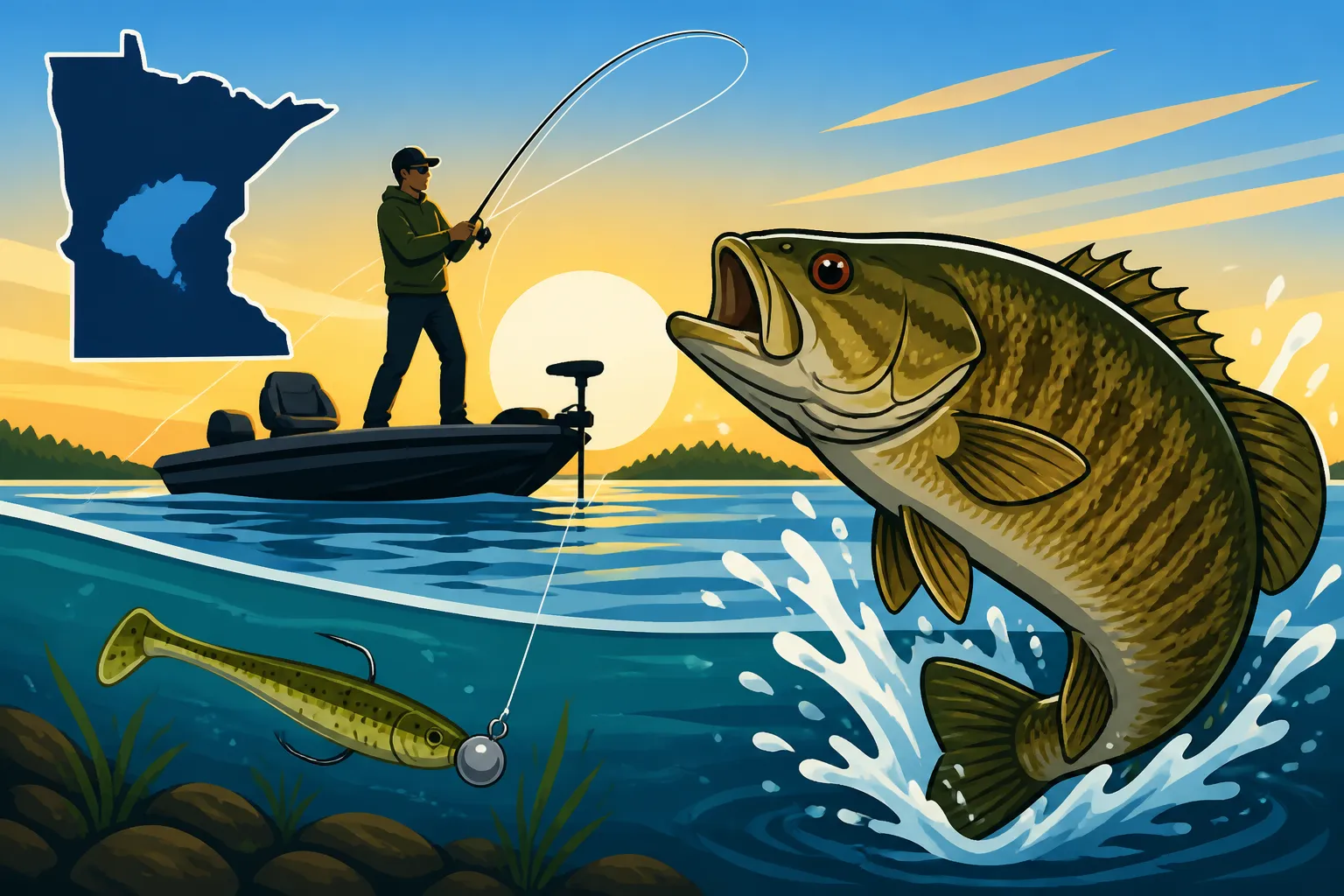
When the lake is calm, usually in the early morning or late evening, Topwater Bass Fishing in Minnesota comes into play. Walking baits or "poppers" can produce some of the most heart-stopping strikes you'll ever witness. A five-pound smallmouth launching itself three feet out of the water to crush a topwater lure is a sight you won't soon forget. It is an aggressive way to fish that targets the most active fish in the school.
Gear and Equipment for Big Water Bass
Mille Lacs is not the place for ultra-light panfish gear. You are dealing with powerful fish in an environment that can turn violent in a matter of minutes. Your equipment needs to be up to the task of both landing the fish and keeping you safe on the water.
| Equipment Type | Recommended Specs | Why It Matters |
|---|---|---|
| Spinning Rod | 7'0" to 7'6" Medium Light, Extra Fast | Sensitivity for drop-shots and long casts in clear water. |
| Baitcasting Rod | 7'2" Medium Heavy, Moderate Fast | Necessary for pulling fish out of weeds or throwing heavy jerkbaits. |
| Main Line | 10lb to 15lb Braided Line | Provides the strength to handle big fish and the thinness to cut through wind. |
| Leader Line | 6lb to 10lb Fluorocarbon | Essential for "stealth" in the gin-clear Mille Lacs water. |
| Electronics | Side Imaging / Live Sonar | Critical for finding rock-to-sand transitions and individual boulders. |
Rod and Reel Setups
For the majority of your fishing, a high-quality spinning reel is the way to go. You want a reel with a butter-smooth drag system because these smallmouth are famous for making long, powerful runs right as they get to the boat. I recommend a 2500 or 3000 size reel. If you're looking for a reliable setup without breaking the bank, checking out the highly-rated combos on Amazon can provide some great "bang for your buck" options that can survive the rigors of the lake.
Your rod choice is equally important. A longer rod (7'3" or 7'6") allows for much longer casts. Since the water is so clear, you often want to keep the boat far away from the fish to avoid spooking them. A rod with a "fast" or "extra-fast" tip will help you feel those light "ticks" when a bass picks up your lure in 20 feet of water.
Electronics and Boat Positioning
You simply cannot fish Mille Lacs effectively without decent electronics. You are looking for very specific things: "the juice." This might be a single large boulder sitting in a field of sand, or a small finger of rocks extending off a main reef. Side imaging allows you to scan these areas quickly without driving directly over the fish.
Boat positioning is the other half of the battle. The wind on Mille Lacs is legendary. A 10mph wind on a small lake is a breeze; a 10mph wind on Mille Lacs creates 2-foot rollers. Use your trolling motor to "Spot-Lock" on the upwind side of a reef and cast downwind. This allows your bait to move naturally with the current, which is how the bass expect their food to arrive.
Essential Lures and Baits
While we've touched on techniques, having the right "menu" in your tackle box is vital. Smallmouth are visual hunters, and on Mille Lacs, they are very "color conscious." If the sun is out, they might want something with glitter or "flash." If it's cloudy, they might prefer solid, dark silhouettes.
Soft Plastics and Tubes
The tube jig is a classic for a reason. It looks exactly like a crayfish, which is the primary food source here. I prefer 3.5-inch tubes in "Green Pumpkin" or "Watermelon Candy." When you're rigging these, make sure the jig head is heavy enough to stay on the bottom. If you feel your bait lifting up into the water column, you're losing the "strike zone."
Another sleeper bait on Mille Lacs is the "fluke" or soft plastic minnow. You can fish these on a weightless hook in the shallows or on a jig head in deeper water. Because the lake has a huge population of yellow perch, using a "perch" colored plastic can be incredibly effective. You can often find a wide variety of these Best Bass Lures for Minnesota Lakes in bulk quantities on Amazon, which is a lifesaver when the rocks start claiming your gear.
Hard Baits for Aggressive Bites
Beyond jerkbaits, don't overlook crankbaits. A medium-diving crankbait that hits the 8-to-12-foot range is perfect for "burning" over the tops of the reefs. The key is to make sure the lure is actually hitting the rocks occasionally. That "deflection"—when the lure hits a rock and darts off to the side—is often what triggers a following bass to finally commit.
In the fall, heavy "blade baits" or vibrating jigs (lipless crankbaits) are king. You can cast these a country mile and work them vertically or with a "yo-yo" retrieve. This mimics a dying shad or shiner, and the vibration can pull fish in from a long distance. Always keep a few of these in your bag, as they are the ultimate "search and destroy" tools for deep-water schools.
Regulations and Conservation
Mille Lacs is one of the most heavily managed lakes in the world. Because of its popularity and the delicate balance of its fish populations, the rules can change yearly, and sometimes even mid-season. Being an informed angler is part of being a successful one.
Catch and Release Ethics
While the Mille Lacs Walleye Regulations (2026) often get the most attention, the bass rules are equally important. For much of the year, Mille Lacs is a catch-and-release fishery for smallmouth, or has very restrictive harvest limits (often only one fish over a certain size, like 21 inches). Most locals and visiting pros choose to release every single bass they catch.
When handling these fish, especially during the summer heat, time is of the essence. Large bass are old—a 20-inch smallmouth on Mille Lacs could be 15 to 20 years old. If you must take a photo, have your camera ready before you even net the fish. Use a rubber-coated net to protect their slime coat, and never "hang" a heavy fish by its jaw, as this can cause permanent damage.
Licenses and Legalities
Before you back your boat down the ramp at Wealthwood or Cove Bay, ensure your paperwork is in order. You can easily find out How Much Is a Minnesota Fishing License? through the DNR website or at local bait shops like Reeds in Onamia. Remember that Mille Lacs is a "special regulation" lake, so even if the general state rule says one thing, Mille Lacs might have a different requirement.
Lastly, be aware of the "Invasive Species" laws. You must pull your drain plug and ensure your boat is clean and dry before leaving the access. The wardens on Mille Lacs are very strict about this to prevent the spread of zebra mussels to other pristine Minnesota waters. Taking five minutes to properly decontaminate your boat is a small price to pay for the privilege of fishing this incredible destination.
Disclaimer
The information provided in this guide is for educational and informational purposes only. Fishing regulations on Mille Lacs Lake are subject to change by the Minnesota Department of Natural Resources (DNR) at any time. Always check the most current official regulations and weather forecasts before heading out on the water. Fishing on large lakes involves inherent risks, and safety should always be your top priority.