How Many Sunfish Can You Keep in Minnesota?
If you have ever stood on a dock with a bucket of bluegills, second-guessing whether you are about to break a state law, you are not alone. Minnesota fishing regulations have become increasingly complex over the last few years, particularly with the rollout of the Quality Sunfish Initiative. This guide clarifies exactly how many sunfish you can legally keep, helping you avoid hefty fines while ensuring our lakes stay productive for generations.
Understanding the Minnesota Sunfish Limit Basics
For many of us who grew up fishing the Land of 10,000 Lakes, the rules seemed simpler back then. You went out, filled a bucket, and headed home for a massive fish fry. However, as fishing pressure has increased and technology has made it easier to find the "honey holes," the Minnesota Department of Natural Resources (DNR) has had to get more surgical with their management. To understand how many sunfish you can keep, you first have to understand the difference between the statewide standard and the lake-specific exceptions that are now found across the state.
The Statewide Daily and Possession Limits
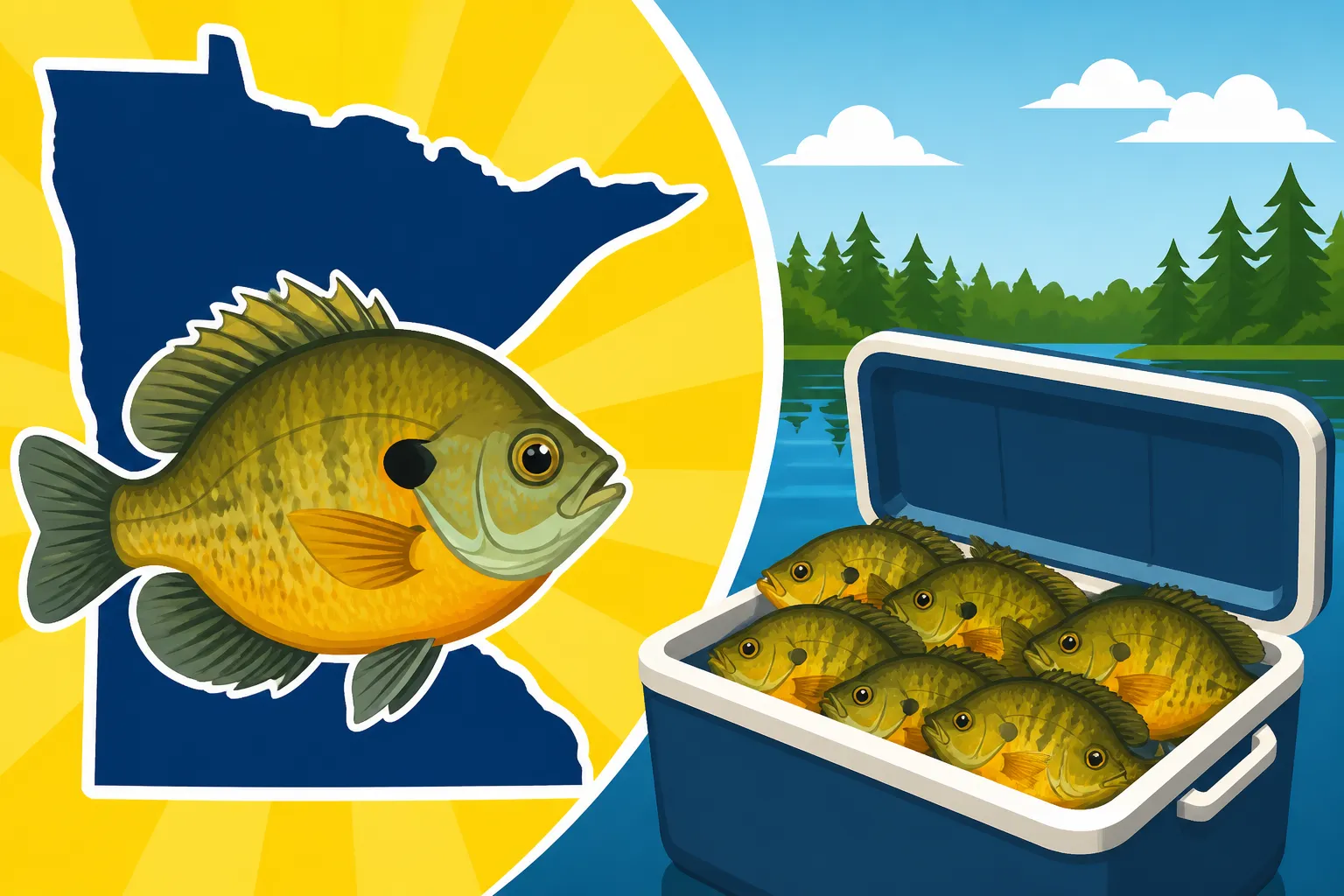
In most Minnesota waters, the standard daily limit for sunfish is 20 fish. This is the "default" rule that applies if there are no special regulations posted at the boat launch or listed in the official handbook. However, a common point of confusion is the distinction between a "daily" limit and a "possession" limit. In Minnesota, these numbers are usually the same for sunfish, meaning you can have 20 fish in your bucket at the end of the day, and you can have 20 fish in your freezer at home.
If you are planning a multi-day trip to a cabin in Brainerd or Alexandria, you cannot keep 20 fish on Friday and another 20 on Saturday if you still have the first batch in your cooler. Your total "possession"—which includes fish in your fridge, freezer, or vehicle—cannot exceed the limit for that species. If you’re just starting out and need to get legal before hitting the water, make sure you know how to get a Minnesota fishing license online to avoid any issues with a conservation officer at the access.
What Qualifies as a Personable Sunfish
When the DNR talks about "sunfish," they aren't just talking about the classic Bluegill. In Minnesota, the sunfish category is a "broad-brush" term that includes Bluegills, Pumpkinseeds, Green Sunfish, Orange-spotted Sunfish, Longear Sunfish, and their various hybrids. If you catch a mix of these, they all count toward that same 20-fish limit.
It is important to note that Crappies and Yellow Perch are tracked separately. If you are targeting a variety of panfish, you should check the latest Minnesota Crappie & Sunfish Limits to ensure you aren't over-harvesting one species while under-harvesting another. Knowing your species identification is critical because a bucket of 15 Bluegills and 10 Crappies is perfectly legal under statewide rules, but 25 Bluegills would put you in hot water.
The Quality Sunfish Initiative and Special Regulations
The biggest change in recent years is the Quality Sunfish Initiative. This program was born out of frustration from local anglers who noticed that while they were catching plenty of sunfish, the "jumbos" were disappearing. To combat this, the DNR has implemented reduced limits on hundreds of lakes across the state to protect the size structure of the population.
Reduced Limits for Bigger Fish
On many popular lakes, you will see the limit dropped from 20 fish down to 5 or 10 fish. The logic here is simple: if everyone takes 20 of the biggest "bull" sunfish out of a lake, the remaining small fish never get the chance to grow. By limiting the harvest to 5 or 10 fish, the state allows more large sunfish to stay in the system, which actually helps prevent "stunting"—a condition where a lake is overpopulated with tiny fish that never get big.
If you are fishing a lake with a 5-fish limit, that is your daily limit for that specific body of water. Even if you then move to a different lake with a 20-fish limit later that afternoon, you can still only have a total of 20 sunfish in your possession, and you must be able to prove where those 5 came from if they exceed the specific lake's lower threshold. You can find out more about these specific lake-by-lake rules in the Minnesota Fishing Regulations PDF: Where to Find It guide.
Identifying Lakes with Special Regulations
The DNR has made a concerted effort to sign these lakes clearly. When you pull up to a public access on a lake like Leech or Winnibigoshish, look for the yellow or bold-colored signs near the ramp. These signs will explicitly state if the limit is 5, 10, or the standard 20. If you are ever in doubt, the best resource is the LakeFinder tool on the DNR website or a reliable mobile app.
For those wondering, "What Is the Sunfish Limit on My Lake?", the answer often depends on recent management changes. For example, some lakes might have a 10-fish limit but allow you to keep more if they are under a certain size. However, for sunfish, the regulations are typically a flat numerical limit rather than a "slot limit" like you might see for Walleye. Always double-check before the first line hits the water, especially if you are fishing in high-traffic areas like the Twin Cities metro or the Brainerd Lakes area.
| Regulation Type | Daily Limit | Possession Limit | Common Locations |
|---|---|---|---|
| Statewide Standard | 20 | 20 | Most non-managed lakes |
| Quality Sunfish (Tier 1) | 10 | 10 | Select high-pressure lakes |
| Quality Sunfish (Tier 2) | 5 | 5 | Trophy-potential lakes |
| Border Waters | Varies | Varies | St. Croix, Mississippi, Rainy |
Legal Definitions and Best Practices for Harvest
Staying legal in Minnesota isn't just about the number of fish in your bucket; it is also about how you handle, transport, and count those fish throughout your trip. The DNR is very specific about what constitutes "possession" and how fish must be prepared for transport.
Daily vs. Possession Limits: Clearing the Confusion
I’ve seen many heated debates at the bait shop about this, but the law is actually quite clear. Your daily limit is the maximum number of a specific fish species you can "take" or kill in a single calendar day (from midnight to midnight). Your possession limit is the total number of that species you have in your hand, in your cooler, in your car, or in your freezer at home.
In Minnesota, for sunfish, the daily and possession limits are identical. This means if you have 20 sunfish in your freezer from a trip last weekend, you legally cannot keep a single sunfish today until you eat some of those 20. This is designed to prevent "hoarding" and to ensure the resource is shared among all anglers. To dive deeper into these nuances, read our breakdown of Minnesota Possession Limits Explained.
Handling and Transporting Your Catch Legally
Once you have caught your limit of sunfish, you need to get them home. Minnesota has strict rules about how fish are transported to prevent the spread of Aquatic Invasive Species (AIS) and to allow conservation officers to count and identify your catch. You cannot transport fish in a livewell full of lake water. You must drain your livewell and pull your plug before leaving the access.
Furthermore, if you fillet your fish at the lake, you must ensure they are processed in a way that they can still be identified and counted. For sunfish, this usually means leaving a 1-inch square patch of skin with scales on each fillet. This allows an officer to verify that the white meat in your bag is indeed a sunfish and not a protected species or a species with a different limit. Always practice Catch and Release Best Practices in Minnesota for any fish you don't intend to eat immediately, as it keeps the population healthy.
Why Sunfish Regulations Matter for Minnesota Conservation
It can be frustrating to see the limit drop from 20 to 5, but there is a very real, scientific reason for these changes. Sunfish biology is unique, and their social structure in a lake is easily disrupted by over-harvesting the largest individuals.
The Science of Stunting
In a healthy sunfish population, large "parental" males guard the nests. These big males actually produce hormones that prevent the smaller, younger males from maturing too early. When anglers come in and keep all the big 9-inch and 10-inch "bull" bluegills, that hormonal suppression disappears. The young males then mature at a tiny size (4 or 5 inches) and put all their energy into reproduction instead of growth. This leads to a lake full of thousands of tiny fish that will never reach a size worth keeping—a phenomenon known as stunting.
By adhering to the newer, lower limits, we are essentially protecting the "bodyguards" of the lake. Keeping the big males in the water ensures that the next generation of sunfish has the time and biological cues to grow into trophies. If you're looking to help the cause, consider focusing on How to Catch Bluegill: Easy Beginner Tactics that prioritize middle-sized fish for the frying pan while letting the true giants go back to do their job.
Protecting the Next Generation of Panfish
The future of Minnesota fishing depends on our ability to adapt to these new rules. While the 20-fish limit is still common, the trend is moving toward more conservative harvests. This is especially true on lakes that are easily accessible to the public. If you are teaching a child how to fish, this is a great opportunity to explain conservation. Show them that while it’s fun to bring home a meal, it’s even more important to make sure there are fish left for them to catch when they are adults.
For parents and mentors, remember that Minnesota Fishing License for Kids & Youth rules make it easy for the little ones to get involved, but they still have to follow the same daily and possession limits as adults. Their catch counts toward the total limit allowed for the group if they are fishing under an adult's limit, or their own limit if they are of age to have a license.
Minnesota Fishing Regulations Disclaimer
While every effort has been made to ensure the accuracy of the information provided in this guide, fishing regulations in Minnesota are subject to change by the Department of Natural Resources (DNR) at any time. Local lake ordinances, experimental regulations, and emergency orders may supersede statewide rules. Always consult the most current edition of the Minnesota Fishing Regulations handbook or the official DNR website before heading out on the water. The author and publisher of this content are not responsible for any legal issues or fines resulting from the use of this information. Always verify your specific lake's limits at the public access point.