How Many Walleye Can You Keep in Minnesota?
You are out on a glassy lake at 6:00 AM, the sun is just starting to burn through the fog, and suddenly your rod tips down hard. It’s a beautiful 17-inch walleye. But before you reach for the net, a shot of anxiety hits: are you actually allowed to keep this fish today? Between statewide rules, experimental slot limits, and lake-specific exceptions, figuring out how many walleye you can legally take home is a headache. This guide clarifies exactly what the current Minnesota walleye limits are, how to navigate complex lake-specific regulations, and how to stay on the right side of the law so your dream fishing trip doesn't end with a hefty fine.
Understanding the Minnesota Statewide Walleye Limit
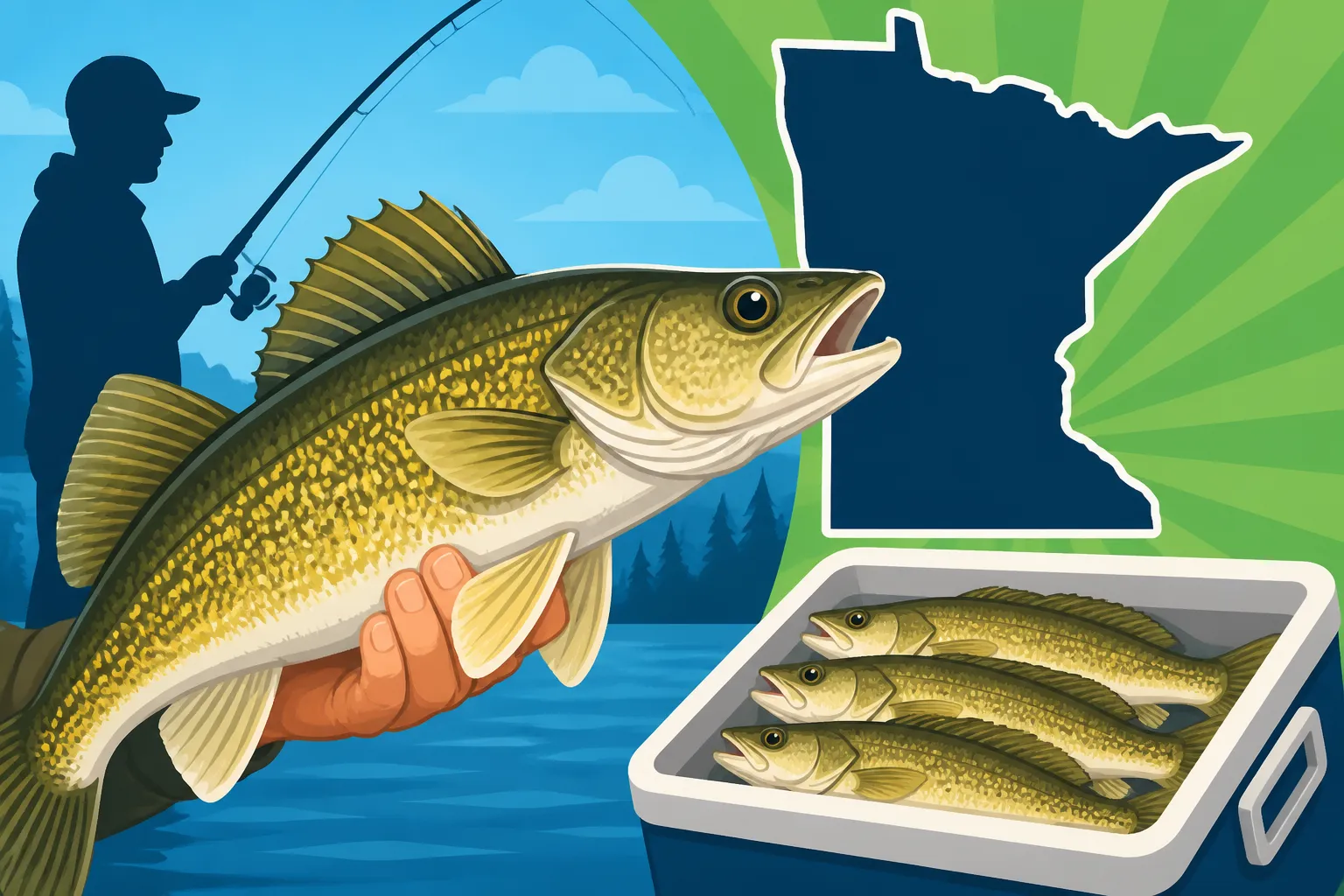
For most of us fishing the inland waters of the North Star State, the magic number is four. As of the current 2026 regulations, the general statewide daily and possession limit for walleye is four. This is a change that many veteran anglers remember from years past when the limit was six. The DNR moved to this four-fish limit to help sustain the pressure our lakes face, especially with the advancement of technology like forward-facing sonar.
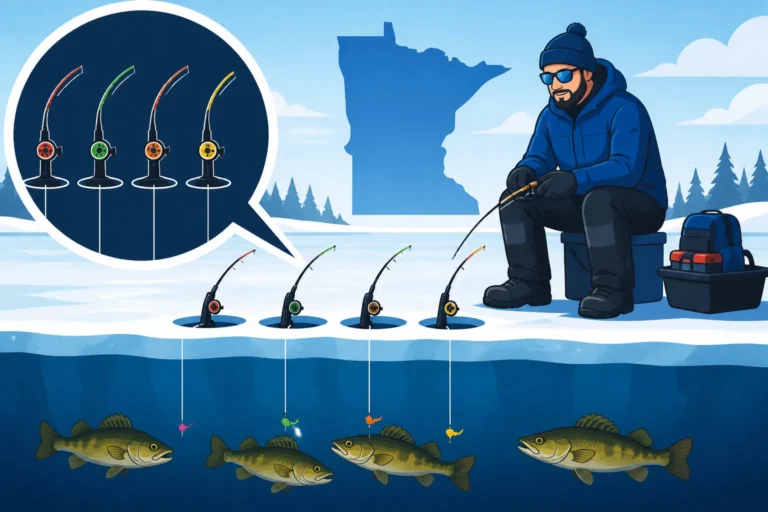
However, saying "the limit is four" is a bit of a simplification. When we talk about Minnesota Walleye Limit & Size Rules, we have to distinguish between "daily" and "possession." In Minnesota, your daily limit and your possession limit are the same number for walleye. This means if you catch your four fish on Saturday, you cannot go out on Sunday and catch four more unless you have already eaten the ones from Saturday. You can never have more than four walleye in your possession at any given time, whether that is in your livewell, your cooler, or your freezer back at the cabin.
Think about a hypothetical weekend at a resort near Brainerd. You go out Saturday evening and land four perfect eaters. You bring them back to the cabin. If you plan on fishing again Sunday morning, those fish from Saturday need to be consumed or gifted away (with the proper paperwork) before you drop your line back in the water. This is a point of confusion for many tourists who think the possession limit is a "per trip" total. It is not. It is a "total in your physical control" rule. This is a core part of the Minnesota Fishing Limits: Bag & Possession (2026) guidelines that every angler should memorize.
Possession Limits vs. Daily Bags: Avoiding the Freezer Trap
The concept of the possession limit is the single most common reason people get ticketed by Conservation Officers. Let's get into the weeds of why this matters. A possession limit isn't just about what's on your stringer; it includes every fish you have kept from any Minnesota water body that is still in your possession. If you have two walleyes in your freezer at home in the Twin Cities and you head up to Mille Lacs for the weekend, you are technically only allowed to keep two more fish to stay within your legal statewide possession limit of four.
The reality of a veteran angler’s life often involves "stocking up" for a big family fish fry later in the season. We all want that freezer full of gold. But under the Minnesota Possession Limits Explained framework, "stocking up" over the limit is poaching. It’s a hard pill to swallow for some, but it’s the only way the state can manage the sheer volume of people hitting the water.
There is also the "culling" or "high-grading" rule to consider. Once you have reached your daily limit and placed that fourth fish in your livewell or on your stringer, you are done keeping fish for the day. You cannot later catch a fifth, larger fish and "swap it out" by releasing one of the smaller ones from your livewell. Once a fish is reduced to possession and you've hit your limit, the law considers your "keep" capacity full. If you want to keep looking for a bigger one, you should release those smaller fish immediately until you find the one you want to keep.
Special Regulations on Iconic Minnesota Lakes
While the statewide limit is four, Minnesota is famous—or perhaps infamous—for its "special" and "experimental" regulations. These are specific rules for individual lakes designed to protect specific year-classes of fish or to manage high-traffic fisheries. If you are heading to a big-name destination, you must check the specific rules for that water body.
For example, Mille Lacs Walleye Regulations (2026) are almost always different from the rest of the state. Because Mille Lacs is managed so closely, the limit can change mid-season. Some years it is catch-and-release only; other years you might be allowed one fish within a very narrow "slot" (a specific length range). It’s frustrating to keep track of, but it’s the reason that lake remains a world-class destination.
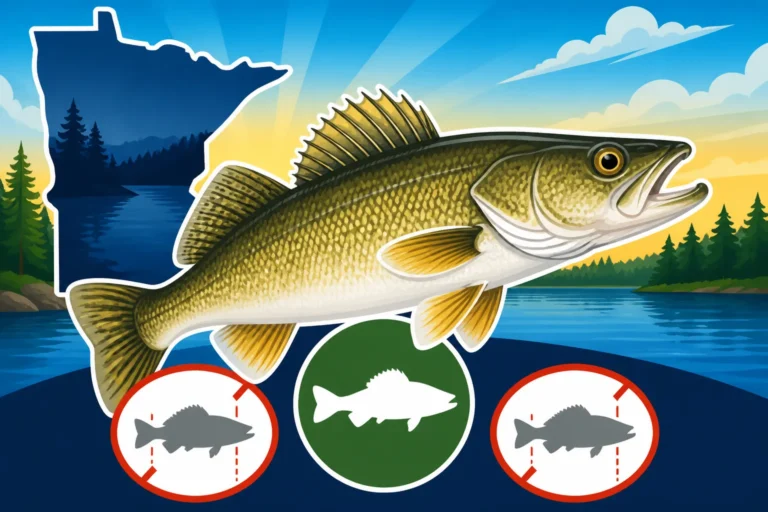
Similarly, if you head further north, you’ll find Upper Red Lake Walleye Limit & Slot requirements often allow for a higher bag limit than the statewide average—sometimes five fish—but with very specific rules about how many can be over a certain length. Then you have the border waters. If you are fishing the rainy river or the big lake up north, you need to be intimately familiar with the Lake of the Woods Walleye Limit & Slot rules, which vary depending on whether you are on the Minnesota side or the Ontario side.
| Lake Type | Typical Walleye Limit | Size Restrictions |
|---|---|---|
| Standard Inland Lakes | 4 Fish | Usually only one over 20 inches |
| Mille Lacs Lake | 0 to 1 Fish | Highly variable slot limits |
| Upper Red Lake | 4 to 5 Fish | Often a "protected slot" between 17-26 inches |
| Lake of the Woods | 6 Fish (Combined) | Aggregated with Sauger; specific length rules |
| Border Waters (WI/IA) | Variable | Check specific border agreements |
How to Properly Measure and Identify Your Catch
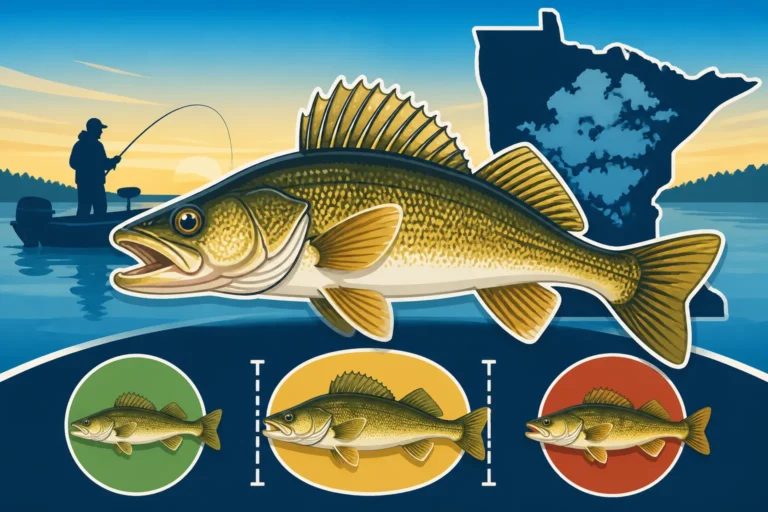
You cannot follow the limits if you don't know how to measure your fish correctly. In Minnesota, "total length" is the standard. This means you measure from the tip of the snout—with the mouth closed—to the tip of the tail. To get the maximum length, you are allowed (and encouraged) to squeeze the tail fins together to reach the furthest point.
Why does a quarter-inch matter? Because of the "one over" rule. On most Minnesota lakes, the four-fish limit includes a provision that you can only have one walleye over 20 inches in your possession. If you accidentally keep two fish that are 20.5 inches, you are over the limit. This rule is designed to protect the "spawners"—the large females that produce the next generation of fish. When you are looking at Minnesota Slot Limits: Which Lakes & Why, you'll realize that these rules aren't just there to annoy you; they are biological tools to ensure we have fish to catch ten years from now.
Identification is another hurdle. Many beginners confuse walleye with their cousin, the sauger. Sauger look very similar but have distinct black spots on their dorsal (top) fin and lack the white "tail light" on the bottom tip of the tail fin. On some lakes, like Lake of the Woods, walleye and sauger limits are combined (e.g., a 6-fish limit, but no more than 4 can be walleye). Knowing the difference is the difference between a successful trip and a ticket from a CO.
The Role of Conservation and Ethical Limits
As someone who has fished these waters for decades, I’ve seen the "good old days" and I’ve seen the lean years. Validating the frustration of ever-changing rules is important—it is genuinely hard to keep up. But we also have to recognize that our gear is better than it’s ever been. We have GPS, high-definition mapping, and sonar that can see a fish's pectoral fins.
This is why many of us practice "selective harvest." Just because you can keep four walleyes doesn't mean you must keep four walleyes every single time. Many local experts prefer to keep the 14-to-16-inch fish—often called "eaters"—because they taste better and are more plentiful. Releasing the 20-plus-inch fish, even if legal, helps the lake's health. We dive deep into this philosophy in our guide on Catch and Release Best Practices in Minnesota.
If you are fishing with a group or a family, remember that limits are individual. If you are in a boat with your spouse and two kids, and everyone has a valid Minnesota Fishing License: Cost, Types & How to Buy (2026), your "boat limit" is technically 16 fish (4 each). However, each person must be actively fishing to claim their limit. You can't catch 16 fish yourself and claim they belong to the kids who have been playing on their iPads the whole time. A Conservation Officer will see through that in a heartbeat.
Penalties and What to Expect from a CO Check
If you find yourself on the wrong side of the Minnesota Walleye Limit & Size Rules, the consequences are more than just a slap on the wrist. Fines in Minnesota for over-limit fish are calculated per fish. You will pay a base fine plus "restitution" for each illegal fish. For walleye, this restitution can be significant. Furthermore, if the violation is egregious enough, you could face the seizure of your fishing equipment, including your rods, reels, and in extreme cases, your boat and trailer.
When a Conservation Officer (CO) approaches your boat, they aren't there to ruin your day; they are there to protect the resource. Be polite, have your license ready, and be honest about what's in your livewell. If you aren't sure about a measurement, ask them to show you how they do it. Most officers appreciate an angler who is trying to do the right thing.
Always keep a copy of the current year's regulation handbook in your boat. If you don't have the paper copy, the DNR website has a PDF version that is easily searchable. Before you even launch the boat, check the signage at the public access. Most lakes with special regulations will have a large brown sign at the ramp detailing the specific Minnesota Walleye Limit & Size Rules for that body of water.
Final Thoughts for a Successful Outing
Fishing in Minnesota is a privilege, and part of that privilege is the responsibility of stewardship. Whether you are chasing "Walter" on a remote Boundary Waters lake or jigging for "eyes" on a metro lake near the Twin Cities, knowing how many walleye you can keep is the first step toward a stress-free day on the water. Stick to the statewide limit of four, double-check the signs for special slots, and always prioritize the health of the lake over a full freezer.
If you’re just getting started or planning your first big trip of the season, make sure you have all your paperwork in order. You can learn exactly How to Get a Minnesota Fishing License Online to save time at the bait shop. Once you have that piece of paper, the lakes are yours to explore—just keep your measuring tape handy and your count accurate.
Disclaimer
This guide is for informational purposes only and reflects regulations as of the 2026 season. Fishing regulations in Minnesota can change due to emergency DNR orders, mid-season adjustments, or tribal treaty agreements. Always consult the official Minnesota Department of Natural Resources (DNR) Fishing Regulations handbook or the official DNR website before heading out on the water to ensure you have the most current information for your specific location.