How to Catch Black Crappie in Minnesota (Step by Step)
Black crappies are easily among the most beloved game fish in Minnesota, but figuring out where a school is hiding can leave you scratching your head. One morning they are crammed into eighteen inches of water near pencil reeds, and by the next afternoon, a cold front blows through and sends them suspending fifteen feet down over a thirty-foot mud basin. If you have ever stared blankly at your sonar or watched your float sit motionless on a calm evening, you know the frustration. This step-by-step guide cuts through the guesswork, breaking down seasonal movements, rig setups, and precise tactics so you can consistently put slab black crappies in the livewell.
Season-by-Season Black Crappie Patterns in Minnesota
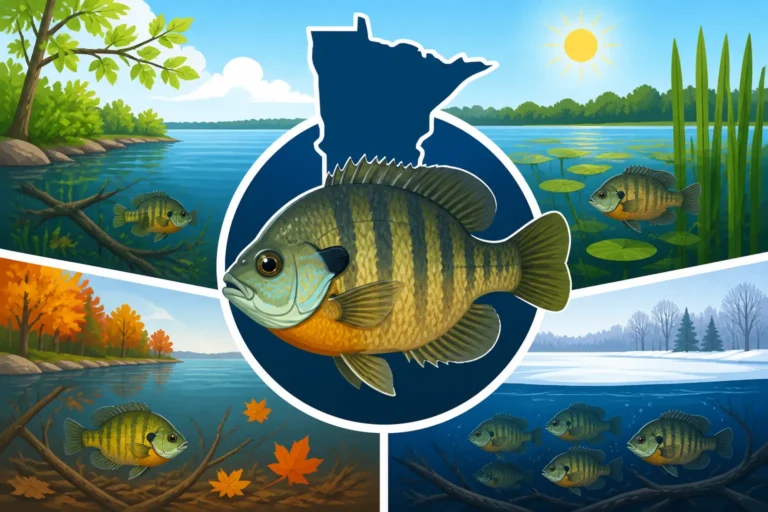
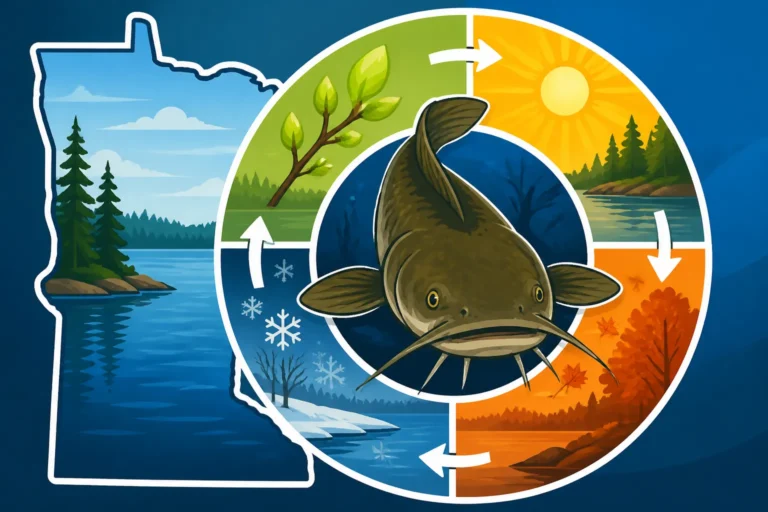
To catch black crappies consistently, you have to understand how dramatically their location shifts with the calendar. Minnesota’s extreme weather changes dictate crappie movement more than almost any other factor, sending them from shallow weed beds to deep open-water basins.
Spring Shallow Water Frenzy
When the ice finally melts and water temperatures hover between 50 and 65 degrees, black crappies begin their annual migration toward shallow bays, canal entrances, and dark-bottom marinas. These areas warm up faster than the main lake, drawing in baitfish and providing prime conditions for spawning. Look for standing pencil reeds, submerged brush, and green coontail beds in two to eight feet of water.
During early spring, fish can be surprisingly skittish. A heavy boot step on an aluminum boat floor or an overhead cast can spook an entire bay. Target these shallow zones early in the afternoon when the sun has had a chance to warm the upper water column. You can check Spring Crappie Fishing in Minnesota for deeper insights into timing these early thermal movements. Keep your distance, cast light rigs to the edges of cover, and work slowly.
Summer Deep Basin and Weedline Suspension
As water temperatures climb into the 70s, crappies leave the ultra-shallow spawning grounds. Some fish will stick around outer weedlines where cabbage and coontail thrive, but many mature black crappies pull out to deep water. They congregate in large schools, suspending in the water column over deep mud basins, drop-offs, and humps.
Summer crappie fishing is largely an exercise in electronics and vertical positioning. Crappies have eyes set near the top of their heads, meaning they almost always look up to feed. If a school is suspended at fourteen feet in twenty-five feet of water, drop your bait to thirteen feet. If you drop it to fifteen feet, right below them, they will rarely touch it. Cruising deep weed edges during early mornings and late evenings with a small swimbaits or a spinner setup can yield massive action.
Fall and Winter Hard-Water Holding Zones
When water temperatures drop in autumn, aquatic vegetation begins to die off and consume oxygen. Crappies abandon shallow weeds entirely and migrate toward their wintering basins. In late fall and throughout the hard-water season, black crappies congregate tightly over flat, muddy lake bottoms in twenty to forty feet of water.
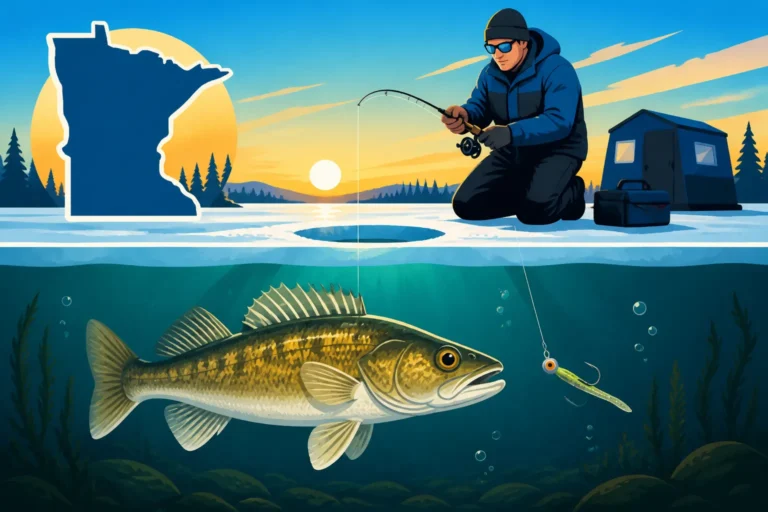
In the winter, these fish spend their time roaming in large, loose bands. They feed heavily on plankton, tiny aquatic insects, and young-of-the-year minnows. During ice season, mobility is crucial. Drilling a grid of holes across a basin and using your depth finder to track down suspended schools is often the difference between a limit of slabs and an empty bucket.
| Season | Primary Crappie Depth | Key Target Structure | Top Presentation |
|---|---|---|---|
| Spring | 2 – 8 Feet | Dark-bottom bays, pencil reeds, brush | Slip bobber with micro jig & minnow |
| Summer | 12 – 25 Feet (Suspended) | Outer cabbage edges, deep basin flats | Small swimbaits or vertical tungsten jigs |
| Fall | 18 – 30 Feet | Basin edges, deep drop-offs | Jigging spoons or live minnows on drop-shot |
| Winter | 20 – 40 Feet | Deep mud basins, open-water flats | Tiny tungsten jigs tipped with wax worms |
Essential Tackle, Rigging, and Gear Setups
You do not need a massive bass boat stuffed with specialized gear to catch crappies, but using refined, balanced tackle makes a dramatic difference. Black crappies have notoriously delicate, paper-thin mouth tissue, earning them the nickname “paper-mouths.” Using gear that is too stiff will tear hooks right out of their mouths.
Ultra-Light Rod, Reel, and Line Selection
A proper crappie rod needs a soft, forgiving tip paired with enough backbone down the blank to set a fine-wire hook. A 6’6″ to 7’0″ ultra-light or light power spinning rod with a fast action is ideal. The light tip absorbs sudden surges when a big slab lunges near the boat or ice hole, preventing torn tissue and lost fish.
Pair your rod with a 1000 or 2000 size spinning reel spooled with lightweight line. High-visibility 4-pound test monofilament is an excellent choice for bobber fishing because it allows you to spot subtle line movement when a fish bites and swims toward you. If you prefer braided line for extra casting distance, run a 6-pound braid main line connected to a 4-pound fluorocarbon leader to keep your line invisible in clear water. You can easily stock up on bulk spools of clear fluorocarbon on Amazon before heading out on your trip.
Live Bait vs. Micro-Plastics Rigging
Both live bait and artificial lures have their place on Minnesota crappie waters, and knowing when to switch is key.
* Live Minnows: Small fatheads, crappie minnows, or small golden shiners are unbeatable when the water is cold or when fish are lethargic following a cold front. Hooking a minnow through the lips or just behind the dorsal fin keeps it lively under a float.
* Waxworms and Spikes: Essential for hard-water fishing or early spring crappies that are picking off tiny aquatic invertebrates.
* Micro-Plastics: Small 1.5-inch to 2-inch paddle tails, curly-tail grubs, and straight-tail plastics offer incredible versatility. They allow you to cover water quickly without wasting time rebaiting after every strike.
When fish are aggressive in warm water, micro-plastics will out-fish live bait every day of the week. Keeping a multi-pack array of plastic tails in neon, chartreuse, and natural shades handy—which you can grab in bulk multi-packs on Amazon—ensures you are prepared for shifting water clarity.
Slip Bobbers and Electronics Tactics
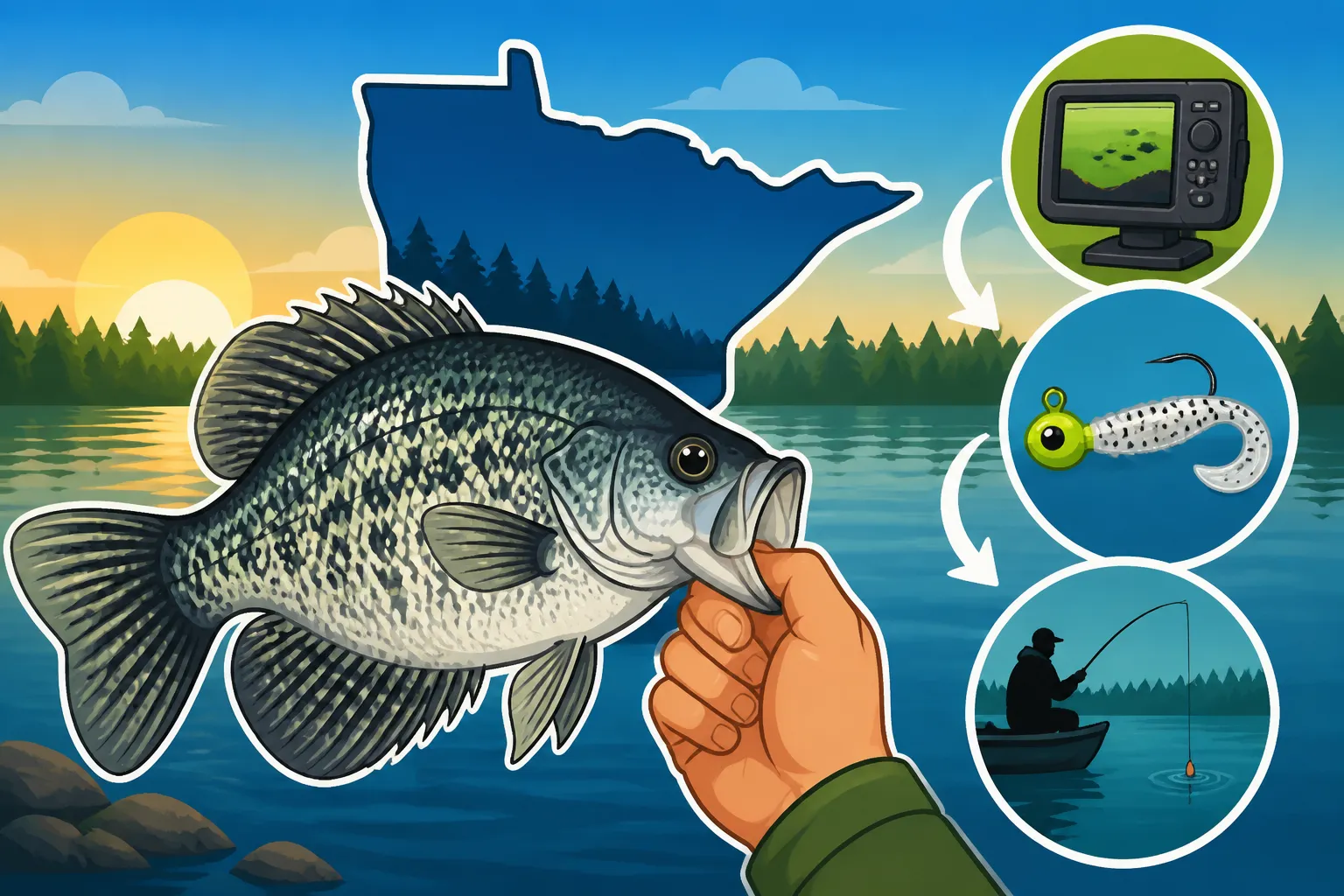
The slip bobber rig is arguably the most lethal weapon in a crappie angler’s arsenal. It allows you to suspend a light bait at a precise depth indefinitely, right above the fish’s strike zone. A complete setup includes a knot stop, a small bead, a streamlined foam or balsa float, a tiny split shot, and a 1/32-oz or 1/16-oz jig head. Reviewing How to Use a Slip Bobber for Walleye & Crappie will help you hone the exact weighting required to make your float register even the softest up-bites.
For open-water basin fishing and ice angling, electronics are game-changers. Modern forward-facing sonar and traditional flashers allow you to pinpoint the exact depth of suspended crappies. Instead of guessing, you can drop your bait directly to their eye level and observe how they react to your jigging cadence in real time.
Step-by-Step Tactical Breakdown for Catching Slab Crappies
Once you have chosen your gear and identified the right season, execute this tactical three-step process on the water.
Step 1: Locating High-Probability Crappie Structure
Start by studying a lake contour map before launching your boat or driving onto the ice. Look for sharp drop-offs adjacent to shallow, muddy bays in the spring, or broad deep basins in summer and winter.
- In Spring: Drive slow along the northern shores of the lake. Northern shorelines catch the most direct sunlight and warm up first. Scan the shallow water visually or with side-imaging sonar for wood piles, fallen trees, dock pilings, and scattered green vegetation.
- In Summer: Cruise along the primary drop-off, scanning outer weed edges in ten to fifteen feet of water. If the weedlines are empty, move out over the lake basin and watch your sonar for scattered clusters of dots holding six to fifteen feet below the surface.
- In Winter: Target the deepest holes in small-to-medium lakes, or broad mud flats in large lakes. Search for basin areas that settle between twenty and thirty-five feet deep.
Step 2: Presenting the Bait at the Correct Depth
Once you mark fish or identify prime structure, positioning your bait accurately is critical.
- Set Your Depth: Check your depth finder or drop a lead depth-finder weight to measure exact bottom depth. Adjust your slip-bobber knot so your bait rests roughly six inches to two feet above the level where fish are showing on sonar.
- Cast Beyond the Target: If fishing shallow cover, cast your bobber rig past the brush pile or weed edge and slowly reel it into the target zone. Splashing a heavy bobber directly on top of a shallow crappie school will send them scattering.
- Utilize the Wind: Allow the wind and natural drift to push your float across weed tops or along dock lines. The subtle bobbing motion created by small waves often triggers strikes without requiring extra rod movement.
- Ice Fishing Drop: When ice fishing, drop your jig down quickly until it sits two feet above the highest mark in the school. Do not drop through the school, as a descending lead head can spook the entire pod.
Step 3: Triggering Strikes from Finicky Fish and Landing Them Safely
When crappies inspect your bait without eating, refine your movement and hookset strategy.
- Imitate Struggling Prey: If using plastics, impart tiny, sharp twitches with your rod tip, then pause completely. Crappies almost always strike on the drop immediately following a twitch.
- Lighten Up: If fish turn away at the last second, switch to a smaller jig head (such as a 1/64-oz size) or downsize your line diameter. Ordering a box of ultra-fine 1/64-oz tungsten heads on Amazon gives you a huge advantage when dealing with post-cold-front bluegills and crappies that demand a tiny profile. Check out Best Tungsten Jigs for Panfish to select the right weight-to-size ratios for subtle finesse presentations.
- Detecting the Up-Bite: Crappies frequently take a bait from underneath and swim upward. Your bobber might not go under; instead, it may simply tip over flat on the surface or stop drifting. If your float looks unnatural or slides sideways, reel up slack immediately.
- Executing the Hookset: Never snap your rod back with force like you are setting a hook on a largemouth bass. Instead, lift the rod tip firmly in a smooth sweeping motion.
- Landing the Fish: Keep steady tension on the line and avoid letting the fish thrash on the surface. Use a rubber-meshed landing net for big slabs to prevent tearing their delicate mouth tissue or losing them right at the gunwale.
Top Minnesota Black Crappie Waters and Local Regulations
Minnesota boasts thousands of exceptional panfish lakes, but a few stand out for producing consistently large black crappies. Understanding regional nuances and harvest rules will help preserve these fisheries for years to come.
Metro and Brainerd Lakes Area Hotspots
You do not have to drive to the Canadian border to find giant crappies. The Twin Cities metropolitan area offers surprisingly good fishing if you know where to look. Waterways detailed in Lake Minnetonka Fishing: Metro Trophy Water host high populations of panfish, featuring vast weed beds, bays, and docks that hold fish year-round.
Further north, the Brainerd Lakes Area offers world-class angling. Gull Lake, Pelican Lake, and the surrounding chains feature deep cabbage beds and clear water where crappies grow fast. When targeting clear lakes in these regions, early morning and late evening twilight periods produce the best bites, as crappies take advantage of low light to hunt small minnows along weed fringes.
Northern Giant Crappie Destinations
For anglers searching for true trophy-sized slabs—fish stretching past the 12- to 14-inch mark—the northern half of the state is hard to beat. Waters covered in Upper Red Lake Fishing Guide are legendary across the Midwest for producing massive winter crappie catches over broad mud flats. Lake Vermilion, Leech Lake, and Lake of the Woods also offer trophy crappie potential in deep bays and island complexes.
Before heading out with a frying pan in mind, stay updated on current management policies. Minnesota has implemented reduced daily bag limits on hundreds of lakes to protect crappie populations from over-harvest. Standard statewide limits apply on many waters, but many individual lakes feature special regulations capping harvest at five crappies per day to maintain trophy size structures.
Check Black Crappie Season & Limits in Minnesota and review Minnesota Crappie & Sunfish Limits to ensure you remain fully compliant with regional bag limits. Practicing selective harvest—keeping smaller 8- to 10-inch fish for a meal while releasing trophy slabs over 12 inches—ensures these vibrant fisheries remain productive for seasons to come.
If you are just getting started or building out your tackle box for the season, taking a systematic approach makes all the difference. Check the latest rules using Minnesota Fishing Regulations Changes for 2026, explore some of the Best Crappie Lakes in Minnesota, and follow the step-by-step techniques in How to Catch Black Crappie in Minnesota to make the most of your time on the water.
Disclaimer
This article is for general informational purposes only and does not constitute professional advice. Laws, prices and regulations vary by location and change over time. Consult a qualified professional for guidance on your specific situation.