Black Crappie Season & Limits in Minnesota
Navigating the world of fishing regulations in Minnesota can sometimes feel like trying to untangle a particularly stubborn bird's nest. You just want to enjoy a peaceful day on the water, but then you start wondering, "What's the daily limit for black crappie this year? Is there a slot limit on my favorite lake? And is the season even open right now?" It's enough to make your head spin! This guide is here to clear up all that confusion, breaking down the specific seasons and limits for black crappie in Minnesota so you can fish with confidence and stay on the right side of the law.
Understanding Minnesota's Black Crappie Fishing Regulations
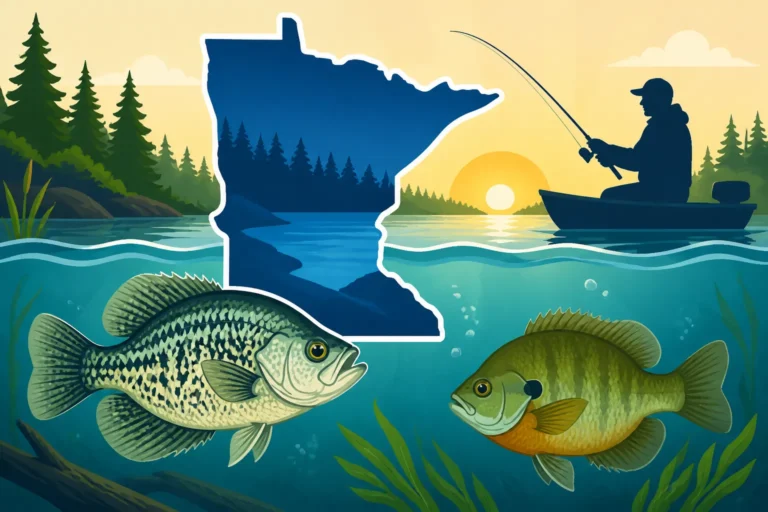
Black crappie are one of Minnesota's most beloved panfish, known for their delicious white meat and feisty fight. Because they're so popular, understanding the rules isn't just about avoiding a fine; it's about helping ensure these populations remain healthy for generations to come. The Minnesota Department of Natural Resources (DNR) sets these guidelines with conservation in mind.
Statewide Daily and Possession Limits
When you're out on most Minnesota lakes, the general rule of thumb for black crappie is fairly straightforward, but it's crucial to understand the difference between a daily limit and a possession limit. These two terms often get mixed up, leading to accidental violations.
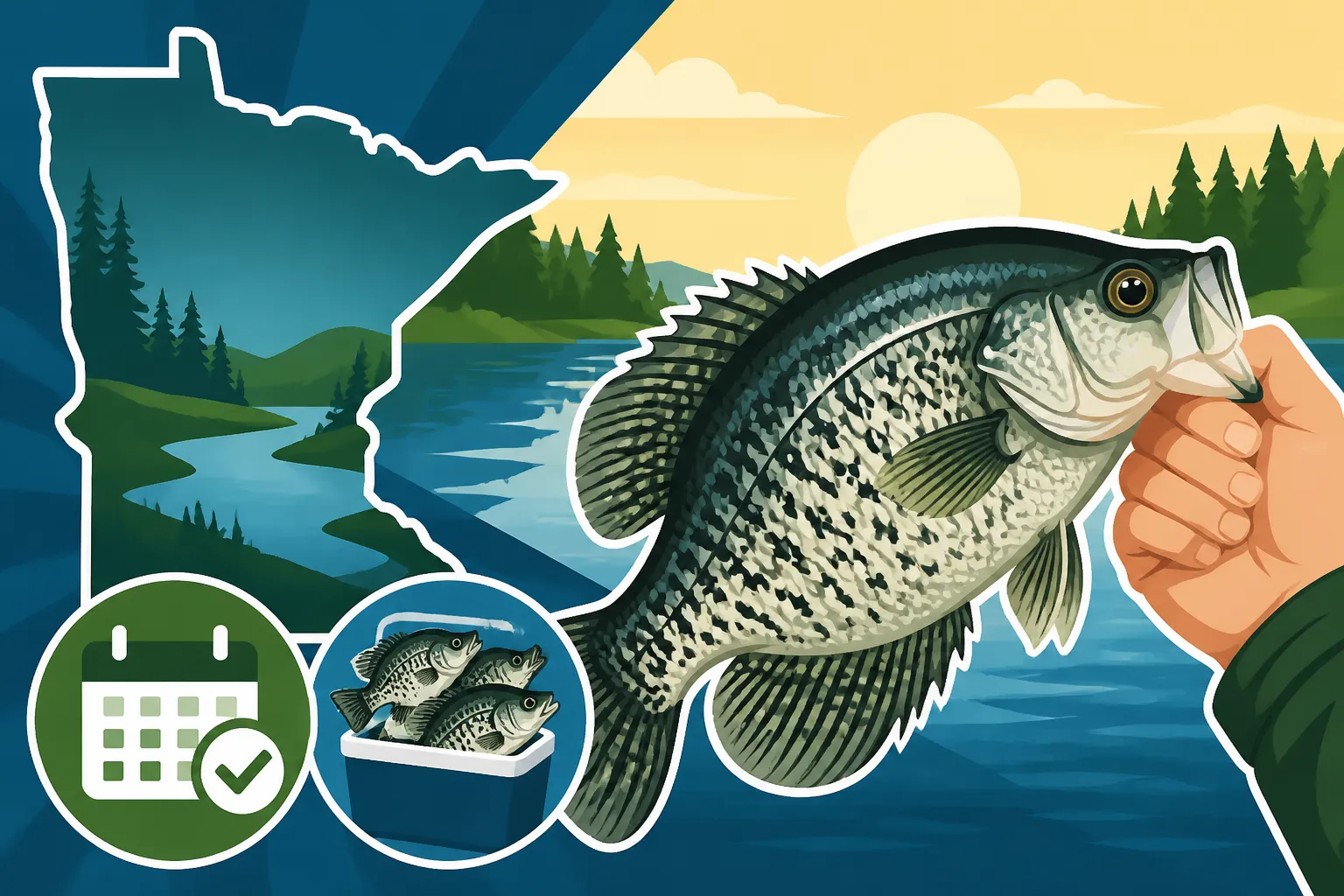
The statewide daily limit for black crappie is 10 fish. This means that in any single day, you can legally keep no more than ten black crappie that you’ve caught. This limit is designed to prevent excessive harvest during a short fishing trip, giving more anglers a chance to bring home some fish. Imagine you're out on Lake Minnetonka for the morning, and you're having a fantastic day. Once you hit that tenth crappie, it's time to either switch to catch-and-release, target a different species, or head home for the day. Exceeding this daily creel limit, even by one fish, can result in penalties.
The possession limit, on the other hand, refers to the total number of fish you can have in your possession at any time, whether that's in your livewell, cooler, or freezer back at home. For black crappie, the statewide possession limit is also 10 fish. This often causes confusion because it's the same number as the daily limit. What it essentially means is that you cannot accumulate more than 10 crappies from multiple fishing trips without consuming or giving them away. So, if you catch and keep 10 crappies on Monday, and then go out again on Tuesday, you cannot keep any more crappies until you've reduced your Monday catch below the 10-fish possession limit. This specific regulation is designed to prevent anglers from stockpiling large quantities of fish, further aiding in sustainable management of the crappie population. It’s a subtle but important distinction that every angler needs to be aware of. For a broader look at the rules, check out our guide on Minnesota Fishing Limits: Bag & Possession (2026).
When Can You Fish for Black Crappie? The Open Season
Good news for crappie enthusiasts: black crappie fishing in Minnesota operates on a continuous, year-round open season. This means there isn't a specific "crappie opener" or closure period like there is for species such as walleye or northern pike. You can pursue black crappie any day of the year, provided you have a valid Minnesota fishing license and adhere to all other regulations.
While the season is technically open all year, the truth is that crappie behavior, and thus fishing success, varies dramatically with the seasons. You'll find different tactics work best depending on whether it's the chilly grip of winter, the bustling activity of spring, the dog days of summer, or the transitional period of fall. For instance, many anglers love to target crappie during the ice fishing season, often finding them schooled up over deep basins or near submerged structures. Our article on How to Catch Crappie Through the Ice in Minnesota dives into specific strategies for that cold-weather pursuit.
The continuous season provides incredible flexibility for anglers, but it also means that you need to be mindful of local conditions and specific lake regulations which might impact crappie fishing. Just because you can fish for them doesn't always mean they'll be biting, or that every lake will have the same specific rules. Always be prepared for seasonal changes in where crappie hold and what baits they prefer, even with the year-round access. Understanding these patterns will greatly improve your chances of success. To learn more about targeting these popular panfish, explore our comprehensive Crappie & Panfish Fishing Techniques guide.
Navigating Special Regulations and Exceptions for Black Crappie
While the statewide limits provide a general framework, Minnesota is renowned for its diverse lakes, and with that diversity comes the need for tailored management strategies. This means many lakes have specific, often more restrictive, regulations for black crappie that override the statewide rules. Missing these details can lead to fines, so paying close attention to the specific body of water you're fishing is non-negotiable.
Designated Waters with Special Crappie Regulations
Special regulations are put in place by the Minnesota DNR for various ecological reasons, often to protect specific fisheries, enhance fish populations, or restore balance to a lake's ecosystem. For crappie, this could mean anything from reduced daily limits, such as 5 fish instead of 10, or even protected slot limits where fish within a certain size range (e.g., 10-12 inches) must be immediately released. These rules are common on lakes where crappie populations are either struggling, experiencing stunted growth, or are being managed for trophy potential.
For example, a lake might have a special regulation aiming to increase the average size of crappies. This could involve a reduced daily limit or a slot limit. If a lake has a "no crappie between 10-12 inches may be kept" rule, and you catch a beautiful 11-inch crappie, you absolutely must release it, even if you haven't reached your daily limit of legal-sized fish. These rules are critical for the long-term health of the fishery, encouraging anglers to harvest smaller, more abundant fish and release the mid-sized, faster-growing ones that will contribute to future spawning. Always check the official DNR regulations booklet or online lake finder before you head out, because these can change from year to year.
Here’s a simplified table illustrating how lake-specific regulations can differ from the statewide standard. Please remember this table is for illustrative purposes only, and you must always consult current DNR regulations for the specific lake you intend to fish.
| Lake Name (Example) | Statewide Limit | Example Special Daily Limit | Example Special Size Restriction | Management Goal |
|---|---|---|---|---|
| Lake A | 10 crappie | 5 crappie | No crappie 10-12 inches | Increase average size |
| Lake B | 10 crappie | 10 crappie | Only 1 crappie over 12 inches | Protect large breeders |
| Lake C | 10 crappie | 5 crappie | None | Reduce harvest pressure |
Understanding Continuous Season and Lake-Specific Rules
While black crappie generally enjoy a continuous open season throughout Minnesota, it's absolutely vital not to mistake "continuous season" for "uniform rules." The fact that you can fish for crappie year-round simply means there's no closed period. It does not mean that the daily or possession limits, or any size restrictions, will be the same on every single body of water.
This is where the Minnesota DNR LakeFinder tool becomes your best friend. Seriously, before you hit any lake, especially one you haven't fished recently, pull up the LakeFinder on your phone or computer. You type in the lake name, and it will list all current, active fishing regulations for that specific body of water. This is where you'll find out if a particular lake has a reduced limit, a protected slot, or any other unique rule that overrides the general statewide regulations. Ignorance of the law is never an excuse, and game wardens won't be sympathetic if you claim you didn't know about a lake's special crappie limits.
Failing to consult these lake-specific rules could lead to unknowingly keeping undersized crappies, taking too many, or retaining fish within a protected slot. For instance, if you're fishing a popular crappie lake like Big Detroit Lake, it might have a special regulation intended to maintain its reputation for trophy panfish, which means stricter limits than a small, local pond. Always, always verify the rules for your target lake. It's a quick check that can save you a lot of hassle and help sustain the fantastic crappie fishing we all love in Minnesota. For more detailed information, our guide on Minnesota Fishing Regulations PDF: Where to Find It can help you locate the official documents.
Why These Regulations Matter: Conservation and Sustainable Fishing
It's easy to get caught up in the thrill of the catch and sometimes view regulations as just annoying rules. However, every single fishing regulation, especially those concerning popular species like black crappie, is rooted in scientific research and a deep commitment to conservation. These rules are the backbone of sustainable fishing in Minnesota, ensuring that our lakes remain vibrant and productive for both current and future generations of anglers.
Protecting Crappie Populations for Future Generations
Black crappie play a crucial role in Minnesota's aquatic ecosystems. They are a forage base for larger predatory fish like northern pike and walleye, and they also help control insect populations. When crappie populations are overharvested or improperly managed, it can throw the entire lake ecosystem out of balance. Imagine a lake where anglers are consistently taking too many of the largest crappie; over time, this can lead to a population dominated by smaller, stunted fish because the larger, more genetically robust breeders are removed before they can adequately reproduce. This isn't just bad for fishing; it's bad for the health of the lake.
The daily and possession limits, along with those crucial lake-specific slot limits, are designed to prevent exactly this kind of scenario. They act as protective measures, allowing enough fish to survive and reproduce, maintaining a healthy age and size structure within the population. It's a balancing act: allowing anglers to enjoy their catch while ensuring enough fish remain to keep the cycle going. Your adherence to these limits directly contributes to the sustainability of your favorite fishing spots. It's not just about what you can take home, but about what you leave behind for tomorrow. For a deeper dive into panfish populations, read our article on Crappie & Panfish in Minnesota: Complete Guide.
Best Practices for Catch and Release and Ethical Angling
Even when you're well within the legal limits, practicing responsible catch and release (C&R) for crappie is a fantastic way to contribute to conservation, especially if you're targeting those larger, breeding-size fish. Sometimes, you've already caught enough for a meal, or perhaps you're just enjoying the sport and want to put the big ones back. The impact of C&R is most significant for bigger crappie, which are vital for reproduction and contributing strong genetics to the population.
When you decide to release a crappie, do it quickly and gently. Here are a few tips:
- Wet your hands: Always wet your hands before handling a fish. Dry hands can remove the crappie's protective slime coat, making them more susceptible to disease.
- Minimize air exposure: Keep the fish in the water as much as possible. If you must remove it for a quick photo, do so quickly and return it to the water immediately.
- Use appropriate tackle: Using barbless hooks or crushing the barbs on your hooks can make unhooking easier and reduce stress on the fish. Small jigs and soft plastics, which are excellent for crappie, generally cause less deep hooking than live bait.
- Support the fish: Hold the fish horizontally and support its body, especially if it’s a larger one. Avoid holding them by the jaw or gills.
Consider selective harvest: if you're keeping fish, try to keep smaller, more abundant crappie for the frying pan, and release the larger ones to ensure a robust spawning stock. This practice, often encouraged by the DNR, helps prevent stunted populations and improves the overall quality of the fishery. By being an ethical angler, you’re not just following rules; you’re actively participating in the stewardship of Minnesota’s precious natural resources.
Finding Current Black Crappie Regulations and Essential Gear
Staying informed about fishing regulations and having the right gear are two pillars of a successful and responsible fishing trip. Regulations can and do change, so relying on old knowledge is a recipe for trouble. Similarly, having proper equipment not only makes fishing more enjoyable but also helps you follow best practices, especially when it comes to handling fish.
Your Go-To Sources for Up-to-Date Information
The absolute best and most reliable source for current Minnesota fishing regulations is the Minnesota Department of Natural Resources (DNR). They publish an annual fishing regulations booklet, available both in print at bait shops and DNR offices, and as a comprehensive PDF online. Make it a habit to review this document at the start of each fishing season, or whenever you plan to fish a new body of water. It's a small investment of time that prevents big headaches.
Beyond the annual booklet, the DNR's website offers an incredibly useful "LakeFinder" tool. This online resource allows you to search for specific lakes and instantly pull up all the current regulations, including any special limits or size restrictions for black crappie. This is especially helpful if you're planning a trip to a lake you're unfamiliar with or haven't fished in a while, as special regulations can be updated more frequently than the annual booklet is printed. It also provides other valuable information like lake maps, fish stocking records, and public access points.
Finally, don't underestimate the wisdom of local bait shops. The folks who run these establishments live and breathe fishing in their area. They often have the latest printed regulations and are usually well-versed in any recent changes or specific local nuances. They can offer invaluable advice on what's biting, where to find them, and what tackle to use, all while ensuring you understand the rules for their area. So, next time you stop to grab some minnows or a new crappie jig, strike up a conversation! For questions like How Many Lines Can You Fish in Minnesota?, they're often a great resource.
Gearing Up for Crappie: Essentials and Where to Find Them
Black crappie fishing doesn't require a huge investment in specialized gear, which is one of its appeals. A light to ultralight spinning rod and reel combo is perfect, offering sensitivity for those subtle crappie bites and enough backbone to handle a decent fish. A 5 to 6-foot rod paired with a small spinning reel spooled with 4-6 pound monofilament or fluorocarbon line is usually ideal.
When it comes to lures and bait, crappie are often enticed by small offerings. Tiny jigs (1/32 to 1/16 ounce) tipped with a small minnow, a piece of plastic grub, or even just a kernel of corn are highly effective. A slip bobber rig is also a fantastic setup for crappie, allowing you to present your bait at a precise depth. You can find a huge variety of crappie jigs, soft plastics, and slip bobbers on Amazon, often in convenient multi-packs. Many anglers also swear by small crankbaits or spoons, especially when crappie are actively feeding. You might even find some great crappie-specific tackle kits on Amazon that bundle all the essentials for a beginner.
It’s always a good idea to have a small tackle box or bag dedicated to your panfish gear, keeping those tiny jigs, bobbers, and small hooks organized. And don't forget a small net for landing bigger crappie, especially if you plan to practice catch and release. You can browse different net options and read reviews from fellow anglers on Amazon to find one that suits your needs. Having the right gear, easily accessible, helps ensure your focus stays on the fishing, not on scrambling for tackle or struggling with a fish you intend to release.
Disclaimer
The information provided in this guide is for general informational purposes only and is based on typical Minnesota fishing regulations. Fishing regulations, including seasons, limits, and special lake-specific rules, can change frequently. It is the angler's sole responsibility to consult the most current and official Minnesota Department of Natural Resources (DNR) regulations before engaging in any fishing activity. Failure to comply with current regulations may result in fines or penalties. Always prioritize safety, ethical angling practices, and respect for Minnesota's natural resources.