Best Lake Trout Fishing Tactics in Minnesota
Chasing lake trout in Minnesota can feel like a quest for a mythical beast. These deepwater dwellers are notoriously elusive, and if you’ve spent countless hours staring at your sonar screen with nothing to show for it, you’re not alone. This comprehensive guide is here to unravel the mysteries of Minnesota’s lake trout, offering proven tactics, essential gear advice, and specific insights to turn those frustrating outings into triumphant catches.
Unlocking Minnesota's Lake Trout Habitat and Behavior
Lake trout are a fascinating species, adapted perfectly to the cold, clear, and deep waters found in many of Minnesota's northern reaches. Understanding their preferred environment and how they react to the changing seasons is the first step in consistently putting them in the boat – or on the ice!
Deep, Coldwater Dwellers
When we talk about lake trout, we're talking about fish that thrive in a very specific environment: cold, oxygen-rich water. This typically means deep sections of lakes, often anywhere from 50 to 200 feet deep during the warmer months. You won't find them lounging in shallow, weed-choked bays like a largemouth bass. Instead, they patrol structures like submerged reefs, deep humps, steep drop-offs, and points that extend far into the lake's abyss. These features provide ambush points and access to their preferred forage.
Think about Lake Superior, for example. Its vast depths and consistently cold temperatures are ideal. But even in smaller, deep inland lakes like those found in the Boundary Waters Canoe Area Wilderness (BWCA), the same principles apply. They'll gravitate towards areas where the bottom drops off sharply, or where underwater rock piles and ledges offer both cover and a buffet for smaller baitfish. Knowing the topography of your chosen lake is paramount. Many anglers rely on detailed contour maps, often available through apps like Navionics or physical map cards for their fish finders, to pinpoint these deep structures. If you're wondering Where to Catch Lake Trout in Minnesota, deep, clear, northern lakes are always your best bet.
Seasonal Shifts and Feeding Patterns
Lake trout are incredibly sensitive to water temperature. Their entire yearly cycle, from feeding to spawning, is dictated by the thermal layers in the water column. Understanding these Seasonal Fishing Patterns in Minnesota is key to finding where they'll be hiding.
In the spring, right after ice-out, lake trout might actually be found shallower than any other time of year. The entire water column is still cold, so they can cruise the upper levels of the lake, often near rocky shorelines or shallower humps, feeding aggressively after a long winter. This can be a fantastic time for casting spoons or shallow-running crankbaits. As the water warms through late spring and early summer, they begin their descent, following the retreating cold water. They'll often be found in a "thermocline" – a distinct layer where water temperature changes rapidly – or just below it.
By mid-summer, lake trout are almost exclusively deep. They’ll be concentrated near deep structures or suspended over vast open water, chasing schools of baitfish like ciscoes (also known as tullibee) or smelt. This is when deep trolling or vertical jigging becomes essential. The fall sees another shift as water temperatures cool. This is often their pre-spawn period, and they'll move shallower again, sometimes as shallow as 10-30 feet, particularly near rocky reefs or shoals where they intend to spawn. They can be incredibly aggressive during this time, gorging themselves before the rigors of reproduction. Finally, during winter ice fishing, they are still deep but might roam more widely, especially along the edges of drop-offs, looking for easy meals. They remain active under the ice, offering a unique challenge to ice anglers.
Essential Gear for Conquering Lake Trout
You can't go to battle with a mighty lake trout armed with panfish tackle. These fish are powerful, often found in deep water, and demand robust gear designed to handle their size and strength. Investing in the right equipment is non-negotiable for success.
Rods, Reels, and Line for Serious Battles
When you're targeting lake trout, durability and strength are paramount. For trolling, which is often the most effective method, you'll want heavy-action trolling rods, typically 7 to 9 feet long. These rods need to absorb the shock of deep-diving lures and heavy leadcore or downrigger weights, while still having enough backbone to haul in a big fish from significant depths. Paired with these, heavy-duty baitcasting reels, like those from Abu Garcia or Daiwa, are a must. Look for reels with a high line capacity and a smooth, powerful drag system. These fish can make blistering runs, and a subpar drag will quickly lose you a trophy.
For vertical jigging, a slightly shorter, heavy-action rod (6 to 7.5 feet) with a sensitive tip but strong backbone is ideal. This allows for precise lure manipulation and immediate hooksets. A sturdy spinning reel with a good drag is often preferred for jigging, as it allows for quicker lure drops and easier line management. The key is balance – you need to feel the bite but have the power to bring up a fish that could weigh 20 pounds or more.
Line choice is equally critical. Most seasoned lake trout anglers opt for braided line as their main line. Its zero stretch provides incredible sensitivity, allowing you to feel subtle bites even in 100 feet of water, and its strength-to-diameter ratio is unmatched. A 30 to 50 lb test braided line is standard. However, because lake trout have excellent eyesight in clear water, and braid can be visible, it's almost always paired with a fluorocarbon leader. A 15 to 25 lb test fluorocarbon leader, typically 6 to 10 feet long, provides invisibility, abrasion resistance, and a bit of stretch for shock absorption. Many fantastic rod, reel, and line combinations can be found on Amazon. If you're just starting out, check out some options under Best Fishing Gear for Beginners in Minnesota By Budget.
Lures and Baits That Trigger Bites
Lake trout are primarily piscivores, meaning they love to eat other fish. Mimicking their natural forage is the best strategy.
Spoons are iconic lake trout lures. Brands like Daredevl, Little Cleo, and large trolling spoons from Northern King or Stingray are highly effective. For deep trolling, heavy, flashy spoons in silver, chrome, or iridescent colors are often the ticket, imitating wounded baitfish. When jigging, consider heavy slab spoons that flutter on the fall, mimicking a dying fish.
Crankbaits come into play for trolling, especially deep-diving models. Think about Rapala Down Deep Husky Jerks, Storm DeepDive ThunderSticks, or Bomber Long A models. These lures can reach impressive depths on their own or when aided by leadcore or downriggers, diving down to where the lakers lurk. Choose colors that resemble ciscoes, smelts, or even perch if those are present in the lake.
Tubes and Grubs are fantastic for vertical jigging. Heavy tube jigs (3-6 ounces) in white, pearl, or chartreuse are irresistible to lake trout. The key is to impart an aggressive jigging motion followed by pauses, letting the tube spiral enticingly. Large paddle tail swimbaits rigged on heavy jig heads also work well, especially when retrieved with a slow, undulating motion.
Finally, live bait can be incredibly effective where legal. Large minnows, ciscoes, or smelts, fished under a bobber (if shallow enough) or on a drop-shot rig, are natural presentations that often prove irresistible. Always check specific lake regulations as live bait rules can vary.
The Importance of Electronics and Accessories
Modern electronics have revolutionized lake trout fishing. A quality fish finder is not just helpful; it's almost mandatory. Look for units from brands like Humminbird, Garmin, or Lowrance that offer detailed 2D sonar, Down Imaging (DI), and Side Imaging (SI). These technologies allow you to see not only the bottom contour but also suspended fish, bait schools, and structure off to the sides of your boat. Paired with a robust GPS system, you can mark precise waypoints over productive humps or drop-offs, ensuring you can return to them later. Many modern fish finders, like the Best Fish Finders & Electronics for Minnesota Fishing, integrate these functions seamlessly.
To present lures at the precise depths where lake trout are holding, downriggers are invaluable for trolling. These devices use heavy weights to get your lure down to a specific depth, allowing it to swim freely behind the weight. For those without downriggers, lead core line is another excellent option. It's a specialized line with a lead core that sinks at a predictable rate per color segment (usually 10 yards), allowing you to estimate your lure's depth based on how many "colors" you have out. A sturdy, long-handled landing net is also crucial for safely landing and handling large, thrashing lake trout, especially if you plan on practicing Catch and Release Best Practices in Minnesota.
Proven Tactics for Catching Minnesota Lake Trout
With the right gear in hand, it's time to talk tactics. Lake trout fishing often involves covering a lot of water and precisely presenting your lure at the correct depth.
Deepwater Trolling Strategies
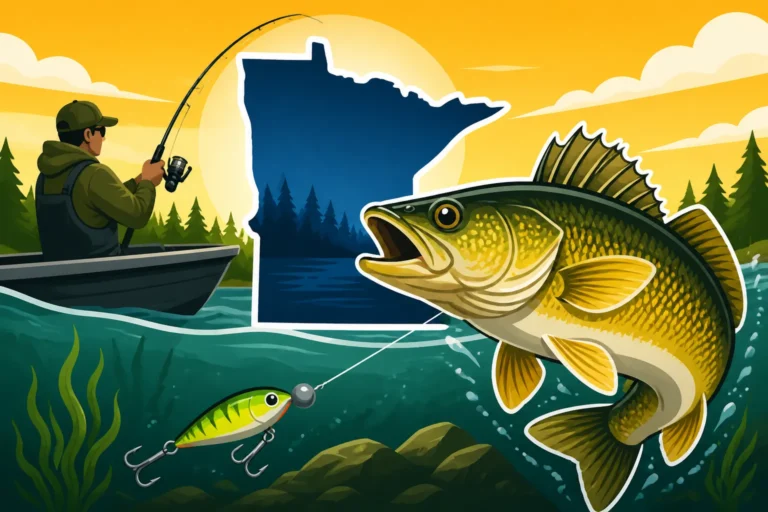
Trolling is arguably the most consistent method for catching lake trout, especially during the summer and fall. It allows you to cover vast areas and present lures at precise depths for extended periods.
For those venturing into the depths, lead core or copper line is a great way to get your presentation down. Lead core line is segmented into different colors, with each color segment (typically 10 yards) sinking your lure a certain amount at a given speed. For example, if you know your lure runs 10 feet deep on its own, and you have 5 colors of lead core out, you might be fishing around 50-60 feet deep, depending on your trolling speed. Copper line is similar but heavier, sinking faster and reaching even greater depths. Trolling speeds typically range from 1.5 to 3 miles per hour. Experimentation is key, as different lures have different optimal speeds for their action.
Downrigging offers even greater precision. A downrigger uses a heavy weight (often a cannonball) to pull your line down to a set depth. A release clip attaches your fishing line to the downrigger cable. When a fish bites, your line "releases" from the clip, allowing you to fight the fish directly without the weight. This technique is fantastic for targeting specific depth bands, like a thermocline, and allows your lure to swim freely with its intended action. You can even use stacker clips to run multiple lines off a single downrigger. Remember to consult How Many Lines Can You Fish in Minnesota regulations to ensure you're compliant.
For shallower trolling or to spread out your lines, long-lining with deep-diving crankbaits or Dipsey Divers can be effective. Dipsey Divers are disc-shaped weights that dive and can be set to run out to the side of the boat, helping to cover a wider swath of water. Throughout all trolling, maintaining consistent boat control is paramount. Using your boat's electric trolling motor, especially those with GPS features like Minn Kota's i-Pilot, can help you hold precise courses and speeds over underwater structures, even in windy conditions.
Vertical Jigging and Finesse Presentations
While trolling covers water, vertical jigging is about putting your lure right in front of fish you've marked on your electronics. This method is incredibly engaging and often leads to aggressive strikes.
Heavy jigs, tubes, and spoons are your primary weapons for vertical jigging. Drop your lure down to the desired depth, often just above where you're marking fish, and then begin an aggressive jigging motion. This could involve sharp snaps of the rod tip, raising the lure 2-3 feet, followed by a controlled fall. The fall is often when a lake trout will strike, so be ready. Many anglers also incorporate a "deadsticking" technique, where they simply hold the lure still for several seconds after a jigging sequence, allowing the tube or spoon to flutter tantalizingly.
Blade baits and jigging raps (like those made by Rapala) are also excellent choices for triggering reaction strikes. Their erratic action on the lift and flutter on the fall can provoke even reluctant fish. The key to successful jigging is actively watching your electronics. Your fish finder will show you your lure as a distinct mark and, hopefully, the lake trout approaching it. This allows for real-time adjustments to your jigging cadence and depth, truly putting you in tune with the fish.
Ice Fishing for Lake Trout
When the lakes freeze over, the chase for lake trout doesn't stop; it just changes form. Ice fishing for lake trout is a popular and rewarding pursuit in Minnesota's deep, clear lakes. If you're new to the hardwater scene, you might want to read our Ice Fishing in Minnesota Complete Beginner-to-Pro Guide.
The first step is finding structure under the ice. Just like open water, lake trout will congregate around deep humps, points, and drop-offs. Using a good lake map and a reliable ice fishing flasher or sonar unit is essential. Tools like a Vexilar or Humminbird Ice Helix allow you to see your lure and any fish approaching it in real-time, greatly increasing your success rate.
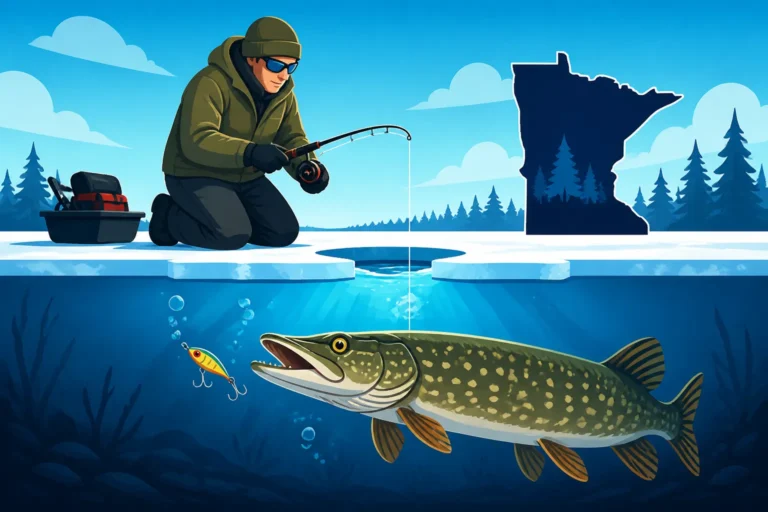
Once you've found a promising spot, you can employ both active jigging and deadsticking. Many anglers will aggressively jig a heavy spoon, tube, or a large jigging rap in one hole, while a second hole (if legal, check your Minnesota Fishing Limits: Bag & Possession (2026)) might be rigged with a tip-up and a large live minnow or a dead baitfish. The active jigging helps to attract fish, and the deadsticking provides an easy meal for a cruising laker. Remember that lake trout are often suspended, so don't just focus on the bottom; work the entire water column.
Specific Minnesota Lake Trout Hotspots and Considerations
While the general tactics remain consistent, each lake trout fishery in Minnesota presents its own unique challenges and rewards.
Lake Superior's Vast Challenges
Fishing for lake trout in Lake Superior is an epic adventure. This vast, cold, and deep body of water holds an incredible population of native lake trout. Anglers typically target them out of ports like Duluth, Grand Marais, and Two Harbors. The sheer size of the lake means that powerful, well-equipped boats are often necessary.
Tactics here often involve deep trolling with downriggers and lead core lines, presenting large spoons, deep-diving crankbaits, or even meat rigs (herring or smelt cut bait behind a flasher) over offshore reefs, deep ledges, and thermal breaks. Fish can be found anywhere from 50 to 200+ feet deep, and sometimes even shallower during spring or late fall when the whole water column cools. Pay close attention to marine forecasts, as Lake Superior can turn rough very quickly. It's a truly world-class fishery, offering the chance at a truly monstrous lake trout, but it demands respect and preparation.
BWCA's Remote Rewards
The Boundary Waters Canoe Area Wilderness (BWCA) offers a completely different, yet equally rewarding, lake trout experience. Here, you trade powerboats for canoes and remote solitude for modern conveniences. Pristine, deep lakes like Saganaga, Knife, Kekekabic, and Mountain Lake are renowned for their lake trout populations.
Since motors are restricted on most BWCA lakes, tactics often involve portaging lighter spinning or baitcasting gear and focusing on casting heavy spoons or jigging tubes from shore or while drifting from a canoe. Trolling with a paddle or small electric motor (where permitted) using lead core line is also effective. The challenge here is the adventure itself – paddling miles, portaging gear, and earning your fish. The rewards are unparalleled: stunning scenery, absolute quiet, and the thrill of catching a wild lake trout in its natural, untouched habitat. For those planning a trip, check out our guide on the Best Lakes for Lake Trout in the BWCA.
Inland Lake Opportunities
Beyond Lake Superior and the BWCA, Minnesota boasts several other deep, clear inland lakes that hold healthy populations of lake trout. Lakes like Clearwater Lake (Cook County), Hungry Jack Lake, and numerous others in the northern tiers of the state offer fantastic opportunities.
These lakes often require similar deepwater trolling or jigging tactics as described earlier. The advantage can be slightly less fishing pressure compared to the more renowned spots, and easier access. Always consult the Minnesota DNR lake finder or local bait shops for specific regulations and stocking information for any particular inland lake you plan to fish. Understanding the unique characteristics of each lake, such as its primary forage base or significant structural features, will greatly increase your chances of success.
Advanced Tips for Consistent Lake Trout Catches
Catching a lake trout can be exhilarating, but consistently doing so requires more than just good luck. It involves honing your skills, understanding the underwater world through your electronics, and respecting the fish itself.
Interpreting Your Electronics
Your fish finder is your window into the underwater world. Learning to interpret what you see on the screen is a game-changer for lake trout fishing. Don't just look for fish arches; learn to differentiate between baitfish schools (which often appear as large, amorphous clouds) and larger, individual fish marks (strong, often elongated arches).
Also, pay close attention to the bottom contour on your GPS and sonar. Identify subtle humps, saddles between deep structures, and the precise edges of drop-offs. These are key ambush points for lake trout. If your unit has side imaging or down imaging, use it to scout areas away from your boat's transducer, identifying hidden rock piles or submerged timber that could hold fish. Marking these productive spots as waypoints on your GPS allows you to return to them precisely on future trips. A thorough understanding of your electronics, especially if you're using a brand like Humminbird or Garmin, can significantly improve your results, so it's worth taking the time to learn your specific unit inside and out.
The Importance of Temperature and Oxygen
We've touched on it already, but it bears repeating: lake trout are slaves to temperature and oxygen. As summer progresses, lakes stratify into distinct temperature layers. The thermocline is the transition zone between warm surface water and cold deep water. Lake trout will often position themselves in or just below this layer, where the temperature and oxygen levels are optimal, and baitfish are often concentrated.
Modern fish finders can often detect the thermocline, appearing as a hazy, often horizontal line on your sonar. Learning to identify this layer and then targeting your lures at or slightly below it will put you in the prime strike zone. Monitoring water temperature with a probe can also give you clues, especially in spring and fall, about where lake trout might be located in the water column.
Handling and Releasing Lake Trout
Lake trout are magnificent fish, and ensuring their survival after capture, especially for large, deep-caught specimens, is crucial for maintaining healthy fisheries. When a fish is brought up from significant depths quickly, it can suffer from barotrauma, a condition caused by the rapid change in pressure. This often manifests as a distended belly, bulging eyes, or an everted stomach.
If you intend to release the fish, particularly deeper fish, handle it minimally. Get it back into the water as quickly as possible. For fish showing signs of barotrauma, consider using a descending device (sometimes called a "fish releaser"). These devices clip onto the fish's jaw or lip and use a weight to quickly return the fish to the depth from which it was caught, allowing its swim bladder to recompress. Once at depth, the device releases the fish. This greatly increases the fish's chances of survival. Always use a large, rubberized net to avoid damaging their protective slime coat, and avoid touching their gills or eyes. Remember to check the Lake Trout Season & Limit in Minnesota regulations for your specific lake to ensure you're compliant with any harvest rules.
| Tactic | Best Season | Gear Highlight | Depth Range (Typical) | Key Advantage |
|---|---|---|---|---|
| Deep Trolling | Summer, Fall, Spring | Downriggers, Lead Core, Heavy Baitcasting Rods, Spoons, Deep Crankbaits | 50-200+ feet | Covers large areas, precise depth control |
| Vertical Jigging | All Seasons (Open Water & Ice) | Heavy Jigs/Tubes, Jigging Raps, Sensitive Rod, Flasher/Sonar | 30-150+ feet | Engages active fish, reacts to sonar feedback |
| Ice Fishing | Winter | Flasher/Sonar, Heavy Ice Rods, Tip-ups, Large Spoons/Tubes | 20-100+ feet | Access to frozen-over spots, unique active bite |
| Shore Casting | Early Spring, Late Fall | Heavy Spinning Rod, Large Spoons/Crankbaits | 10-40 feet | Accessible without a boat, targets shallow cruisers |
Disclaimer
Fishing regulations, seasons, and limits are subject to change. Always consult the latest Minnesota Department of Natural Resources (DNR) fishing regulations before heading out on the water. This guide is for informational purposes only and does not constitute legal advice.