Best Stream Trout Fishing Tactics in Minnesota
Trying to dial in those stream trout in Minnesota can feel like a secret handshake you're not quite privy to. One day you're seeing rising fish everywhere, and nothing you throw at them works. The next, the water looks dead, but a well-placed cast yields a beautiful brown. It's frustrating when you know these feisty fish are there, but you just can't seem to crack the code. This comprehensive guide is here to demystify stream trout fishing in the Land of 10,000 Lakes, providing you with battle-tested tactics for both fly and spin anglers to increase your success.
Understanding Minnesota's Diverse Trout Waters
Minnesota isn't just about massive walleye lakes; it boasts incredible stream trout opportunities, from the rugged North Shore to the serene Driftless Area. Each region presents its own unique challenges and rewards, and understanding these differences is key to choosing the best stream trout fishing tactics.
The Driftless Area's Spring-Fed Gems
Deep in southeastern Minnesota, you'll find the Driftless Area, a geological marvel untouched by glaciers. This region is a labyrinth of steep valleys, bluffs, and, most importantly, cold, spring-fed streams that are absolutely ideal for trout. Here, you’ll encounter primarily brown trout, with some brook trout in the headwaters and even rainbow trout in stocked sections. The water in these streams is often crystal clear, requiring a stealthy approach and precise presentations. Think small streams, tight casting quarters, and lots of overhanging vegetation. If you want to dive deeper into this unique fishery, check out our guide on the Driftless Area Trout Streams Southeast Minnesota.
Navigating these waters means being observant. Trout in these streams are often tucked into undercut banks, behind large rocks, or in the deeper pools created by bends in the river. They're acutely aware of shadows and vibrations, so wading carefully and keeping a low profile is paramount. Imagine sneaking up on a deer – that's the kind of quiet respect you need to show these wary fish. The lush surroundings, while beautiful, can make casting a real challenge, often forcing you into roll casts or bow-and-arrow casts, especially if you’re using a fly rod.
North Shore Tributaries and Lake Superior Steelhead
Head north to the rugged coastline of Lake Superior, and you'll find a completely different trout fishing experience. The North Shore tributaries are typically faster-flowing, rockier rivers that tumble down bluffs towards the big lake. While you can find resident brook and brown trout in the upper reaches, these rivers are most famous for their anadromous runs – particularly steelhead (rainbow trout), but also lake run brown trout and salmon depending on the season. These fish migrate from Lake Superior to spawn in the colder stream waters. For a comprehensive look at fishing in this stunning region, our article on North Shore Fishing Lake Superior & Tributaries is a great resource.
Fishing these rivers demands heavier gear and different tactics than the delicate presentations needed in the Driftless. The water can be high and turbid, especially during spring runoff or after heavy rains, making nymphing or streamer fishing more effective than dry flies. Access can be challenging, with slippery rocks and steep banks, so sturdy wading boots are essential. Knowing the specific runs for different species, such as the spring steelhead run or the fall coho salmon push, is critical to timing your trip right. These powerful fish are a true test of an angler's skill and equipment.
Essential Gear for Minnesota Stream Trout Anglers
Having the right equipment can make or break your day on the stream. It's not about having the most expensive gear, but rather the appropriate gear for the conditions and the fish you're targeting. Whether you're a seasoned fly angler or prefer the simplicity of a spinning rod, thoughtful gear selection is a must. For a broader overview of what you'll need, don't miss our detailed piece on Best Gear for Stream Trout Fishing in Minnesota.
Fly Fishing Setups for Delicate Presentations
For many, fly fishing is synonymous with stream trout, and for good reason. The delicate presentation of a fly can be incredibly effective on wary fish. For most Minnesota streams, especially in the Driftless, a lightweight fly rod is your best friend.
- Rods and Reels: A 7.5 to 9-foot rod in a 3 to 5-weight range is typically ideal. A 3-weight offers the most delicate presentation and makes even small brook trout feel like giants, perfect for those tight, brushy streams. A 5-weight gives you a bit more power for casting larger flies, handling wind, or fighting a bigger brown trout. Pair your rod with a matching reel that balances well and has a smooth drag system. While many fly reels are essentially line holders, a reliable drag is crucial if you hook into a larger fish in swift current.
- Lines, Leaders, and Tippets: A floating fly line is standard for most stream applications. For leaders, a 9-foot tapered leader ending in 4X or 5X is a good starting point. You'll then attach tippet material (usually 5X, 6X, or even 7X for very wary fish) to match the fly size and conditions. Thin tippet is critical for a natural drift, especially when fishing small dry flies or nymphs in clear water. You can find excellent quality fly fishing lines, leaders, and tippet materials readily available on platforms like Amazon.
When choosing a fly setup, consider where you'll be fishing most often. If you're primarily exploring small, overgrown creeks, a shorter, lighter rod will be much more manageable. If you plan on tackling bigger rivers for larger trout, a longer, slightly heavier setup will give you more control and casting distance.
Spin Fishing Gear for Versatility
Spin fishing offers a highly effective and often more accessible alternative for stream trout. Modern ultralight spinning gear allows for incredibly light presentations while still giving you the power to cast various lures and baits.
- Rods and Reels: An ultralight spinning rod, typically 5 to 6.5 feet in length, with a fast action, is perfect. This action allows for accurate casting of small lures and sensitivity to detect subtle bites. Pair it with a small, lightweight spinning reel (1000 or 2000 size). Look for a reel with a smooth retrieve and a reliable, adjustable drag. Brands like Shimano and Daiwa offer excellent options for ultralight reels.
- Line: Spool your reel with 2 to 4-pound test monofilament or fluorocarbon line. Monofilament offers good knot strength and some stretch, which can be forgiving. Fluorocarbon is nearly invisible underwater, offers excellent sensitivity, and sinks, which can be advantageous when fishing jigs or small crankbaits. The choice often comes down to personal preference, but having both options on hand isn't a bad idea.
- Lures and Baits: The beauty of spin fishing is its versatility. You can effectively use small inline spinners, tiny spoons, micro jigs, soft plastics, and even live bait. We'll delve into specific tactics for these later, but ensure your tackle box is stocked with a variety of options to adapt to different conditions.
Remember, the goal with ultralight spin fishing is to present your offering as naturally as possible. Heavier lines or clunky lures will often spook these wary stream dwellers. A little finesse goes a long way.
Waders and Essential Accessories
Beyond your rod and reel, several accessories are non-negotiable for a successful and comfortable day stream trout fishing.
- Waders and Boots: Chest waders are almost always a necessity, allowing you to access prime fishing spots, cross the stream, and stay warm and dry. Breathable waders are great for warmer months, while neoprene offers insulation in colder water. Pair them with felt-soled or rubber-soled wading boots that provide excellent grip on slippery rocks. Safety should always be your top priority, especially when navigating fast currents or uneven streambeds.
- Landing Net: A small, soft-mesh landing net is invaluable for safely landing and releasing trout, minimizing stress on the fish. Look for nets with a rubberized or knotless mesh to protect the fish's slime coat and fins.
- Other Essentials: Don't forget nippers for cutting line, forceps or hemostats for hook removal, polarized sunglasses to spot fish and structure, a hat for sun protection, and a small tackle bag or vest to keep your essentials organized and accessible. Many of these practical items, from waders to nets, are conveniently available for purchase on Amazon, making it easy to prepare for your next outing.
Proven Stream Trout Fishing Tactics: Fly Fishing Focus
Fly fishing for stream trout is an art form, demanding skill, patience, and a deep understanding of trout behavior and aquatic insects. But the rewards – the graceful cast, the delicate take, and the vibrant flash of a trout in clear water – are truly unparalleled.
Mastering the Art of Nymphing
Nymphing is arguably the most consistent and effective fly fishing tactic for stream trout, accounting for the vast majority of a trout's diet. Trout spend most of their time feeding subsurface on immature aquatic insects (nymphs) and other invertebrates. To learn more about this technique, check out our guide on How to Catch Stream Trout: Nymphs & Dries.
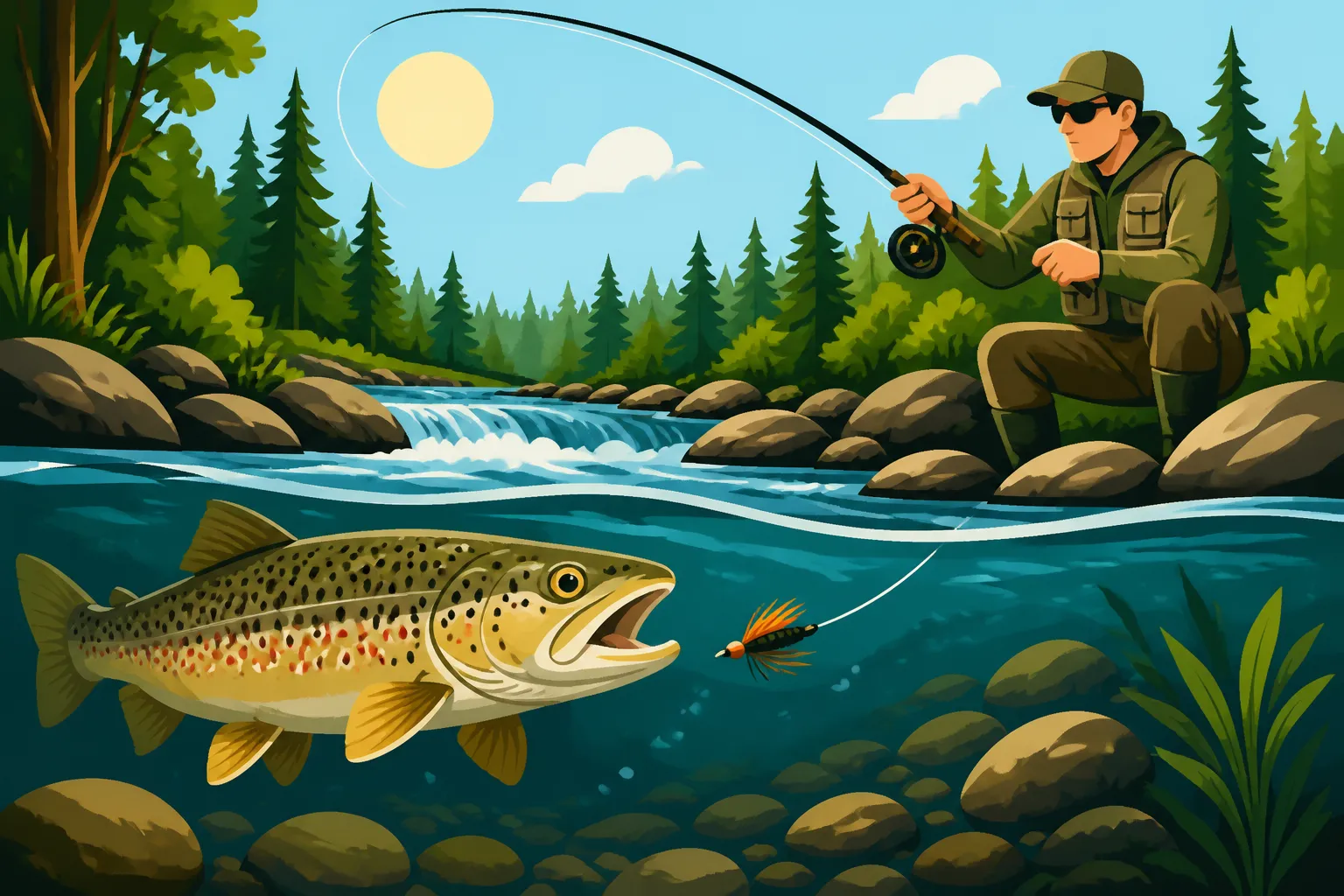
- Indicator Nymphing: This is often the most common method. You'll use a small strike indicator (a float) on your leader to suspend one or two weighted nymph patterns at the depth where trout are feeding. Cast upstream or quartering upstream, and allow your flies to drift naturally downstream without drag. The key is to mend your line constantly to keep the indicator and flies drifting at the same speed as the current. Any hesitation or subtle dip of the indicator should be met with a swift, firm hookset. Common nymph patterns include Pheasant Tail, Hare's Ear, Prince Nymph, and various caddis larva imitations.
- Euro Nymphing (Contact Nymphing): For a more direct and sensitive approach, Euro nymphing is gaining popularity. This method uses a long, sensitive rod, a specialized leader (often sighter material), and no strike indicator. The angler maintains direct contact with the flies, feeling for subtle takes. It's incredibly effective in faster, broken water where traditional indicators might struggle, allowing for very precise depth control and immediate strike detection. While it has a steeper learning curve, the rewards are often worth the effort.
Regardless of the nymphing style, reading the water is critical. Trout often hold in slower water adjacent to faster currents, in seams, or behind structure where food is funneled to them. Pay attention to changes in current speed and depth, as these are prime holding lies.
Dry Fly Action and Hatches
There's nothing quite like watching a trout sip a dry fly from the surface. While not always the most productive method, dry fly fishing offers the most visually exciting strikes and is a true joy when conditions align.
- Matching the Hatch: The golden rule of dry fly fishing is "match the hatch." This means identifying the insects that are emerging from the water and selecting a fly pattern that closely imitates them in size, shape, and color. Common hatches in Minnesota include various species of caddis, mayflies (like Blue-Winged Olives, Sulphurs), and stoneflies. Observing the water for rising fish and emerging insects before you start casting will give you a significant advantage.
- Presentation is Key: Trout feeding on the surface are often highly selective and easily spooked. Your cast needs to be delicate, placing the fly softly on the water with a drag-free drift. Drag occurs when your fly moves at a different speed than the natural current, instantly alerting the trout that something is amiss. Mending your line immediately after the cast is often necessary to achieve that perfect, natural float. Look for calm pockets, eddies, and slower runs where trout can comfortably rise to feed.
Keep an eye on the weather and time of day. Hatches often occur during specific windows, such as late morning or evening, or after a rain shower. Having a diverse selection of dry flies in your fly box, from tiny midges to larger terrestrials like grasshoppers and ants (especially in late summer), will prepare you for various situations.
Streamer Fishing for Aggressive Trout
When trout are aggressive, water levels are higher, or you're specifically targeting larger, predatory fish, streamer fishing can be deadly. Streamers imitate baitfish, leeches, or larger aquatic insects, triggering an instinctual chase response.
- Retrieval Techniques: Unlike the subtle drift of nymphs or dry flies, streamer fishing is all about imparting action. Cast your streamer across or slightly downstream, let it sink to the desired depth, and then retrieve it with varying strips and pauses. Experiment with different retrieve speeds and cadences to find what the fish are reacting to. Sometimes a slow, steady retrieve works, other times a quick, erratic strip-pause-strip can provoke a strike.
- Targeting Structure: Streamers are excellent for probing deeper pools, undercut banks, and the turbulent water at the head of a run where larger trout often hold. These fish are looking for a substantial meal and won't hesitate to ambush a well-presented streamer. Common patterns include Woolly Buggers (in various colors like black, olive, brown), sculpin imitations, and articulated baitfish patterns.
Streamer fishing can be a more active and powerful style of fly fishing, often requiring slightly heavier tippet to handle the larger flies and potential trophy fish. It's a fantastic tactic when other methods aren't producing or when you're simply looking for that adrenaline rush of a hard-hitting strike.
Effective Spin Fishing Tactics for Streams
Spin fishing offers a fantastic way to cover water efficiently and present a wide array of lures and baits to stream trout. With the right ultralight gear and techniques, you can be just as effective as a fly angler, often with a shorter learning curve.
Presenting Small Spinners and Spoons
Inline spinners and tiny casting spoons are classic stream trout lures, and for good reason—they work! Their flash and vibration can mimic a darting baitfish or struggling insect, irresistible to hungry trout. For more on what to stock, check out our guide on Best Tackle for Stream Trout in Minnesota.
- Casting and Retrieve: The most common approach is to cast upstream or quartering upstream and retrieve just fast enough to get the blade spinning or the spoon wobbling. Allow the current to help carry your lure naturally downstream, covering different water columns as it drifts. In faster water, you might need a slightly faster retrieve to prevent your lure from dragging on the bottom. In slower pools, a slower retrieve with subtle twitches can entice a strike. Brands like Mepps, Panther Martin, and Rooster Tail have been catching trout for decades and are staples in any stream angler's tackle box. You can pick up a great assortment of these on Amazon.
- Varying Your Approach: Don't just cast and reel. Experiment with retrieve speed, adding pauses, or even lifting and dropping the rod tip to create an erratic action. Trout can be finicky, and sometimes a slight change in presentation is all it takes to trigger a strike. Pay attention to how the lure performs in different currents and adjust your retrieve to maintain its optimal action.
These lures are fantastic for exploring riffles, runs, and the heads of pools. They're also great search baits, allowing you to cover a lot of water quickly to locate active fish.
Drifting Live Bait and Soft Plastics
When trout are lethargic, highly pressured, or simply not responding to artificial lures, live bait can be the ultimate equalizer. Soft plastics, designed to imitate natural forage, also fall into this category, offering a compelling alternative.
- Natural Drift with Live Bait: Whether you're using garden worms, wax worms, or even mealworms, the key is a natural, unweighted, or very lightly weighted drift. Use a small hook (size 10-16), a split shot or two positioned 6-12 inches above the hook, and allow the bait to tumble naturally downstream with the current. Sometimes a small float or bobber can help detect bites and control depth, especially in slower currents. In faster, more turbulent water, going without a float and relying on the feel of your line can be more effective.
- Soft Plastics for Finesse: Tiny soft plastic baits, such as micro jigs tipped with a small plastic grub, tube, or nymph imitation, can be incredibly effective. Cast them upstream and allow them to drift naturally, much like a nymph. The beauty of soft plastics is their durability and varied profiles. The Berkley PowerBait line, for instance, offers scented options that can significantly increase your strike rate, especially when fish are hesitant. Experiment with different colors and sizes to see what the trout prefer on any given day.
When using live bait or soft plastics, patience is a virtue. Trout will often "mouth" the bait before committing, so a subtle tap or hesitation in your line might be the only indication of a bite. Wait for a solid pull before setting the hook.
Minnow-Imitating Crankbaits for Bigger Fish
While often associated with bass or walleye, small minnow-imitating crankbaits can be incredibly effective for larger, more aggressive stream trout. These lures excel in deeper pools, along undercut banks, or around submerged structure where bigger fish tend to hide.
- Targeting Structure and Depth: Crankbaits are designed to dive to a specific depth, making them ideal for probing deeper sections of a stream. Cast them parallel to undercut banks or into the heart of a deep pool. Retrieve them with a varied action – a steady retrieve with occasional twitches, pauses, or even bumping them off the bottom can trigger a strike.
- Size and Color Selection: Choose small crankbaits, typically 1 to 2.5 inches in length. Natural baitfish colors like silver, gold, black and silver, or perch patterns are often good starting points. Brands like Rapala (their classic countdowns and original floating minnows) are legendary for a reason. These lures are fantastic for covering water and targeting that elusive trophy Brown Trout Season & Limit in Minnesota or Rainbow Trout Season & Limit in Minnesota.
Using crankbaits is a more active fishing style, often requiring a slightly faster retrieve and more aggressive rod work. It's an excellent choice when you've exhausted other options or are specifically hunting for a lunker.
| Tactic | Best Conditions | Pros | Cons | Recommended Lures/Bait |
|---|---|---|---|---|
| Nymphing | Most conditions, active feeding | Highly effective year-round, natural | Requires finesse, subtle takes | Pheasant Tail, Hare's Ear, Prince Nymph |
| Dry Fly | Active hatches, calm water, rising fish | Exciting visual takes, challenging | Hatch-dependent, precise casts | Caddis, Mayflies (BWOs, Sulphurs), Hoppers, Ants |
| Streamers | Higher water, aggressive fish, low light | Targets larger trout, active fishing | Less subtle, can spook small fish | Woolly Bugger, Sculpzilla, various baitfish imitations |
| Spinners | Riffles, runs, aggressive fish | Easy to learn, covers water efficiently | Can spook fish in clear water, line twist | Mepps, Panther Martin, Rooster Tail |
| Live Bait | Slow currents, pressured fish, cold water | Very natural, high success rate | Can attract non-target species, less active | Worms, PowerBait, Wax Worms |
| Crankbaits | Deeper pools, targeting larger fish, structure | Effective for aggressive fish, good depth | Less subtle, can snag easily | Rapala Countdown, small stickbaits (minnow imitations) |
Seasonal Considerations for Minnesota Trout Fishing
Minnesota's seasons profoundly impact trout behavior and, consequently, the best fishing tactics. Understanding these shifts is crucial for consistent success. Remember to always check the specific Stream Trout Season & Limit in Minnesota regulations before heading out. Don't forget, most trout fishing in Minnesota requires a valid fishing license and a Do You Need a Trout Stamp in Minnesota?.
Spring: Post-Spawn and Early Season Feeds
Spring is a highly anticipated time for stream trout anglers. After the long winter, trout are often hungry and more active, making them eager to strike. The water levels can be high due to snowmelt and spring rains, which can both be a blessing and a curse.
- High Water Strategies: In higher flows, trout often move out of the main current and seek refuge in slower seams, eddies, and behind larger structure. This is an excellent time for nymphing heavily weighted patterns or fishing larger streamers that push more water. The increased flow can also make spin fishing with heavier spinners and small crankbaits effective, as these lures can cut through the current more easily and attract attention in murkier conditions. Focus on the edges of currents and any areas that offer a break from the main flow.
- Emerging Hatches: As water temperatures stabilize, various aquatic insects begin to hatch, leading to some fantastic dry fly opportunities. Early season mayflies and caddis can bring fish to the surface, especially on warmer, overcast days. Keep an eye out for rising fish and be prepared to switch from subsurface tactics to dry flies if a hatch starts. The initial weeks after the opener for brook trout and brown trout can be particularly productive.
Summer: Low Flows and Technical Fishing
Summer in Minnesota often brings lower, clearer water conditions, especially in the Driftless Area streams. While beautiful, these conditions can make trout incredibly wary and challenging to catch.
- Finesse and Stealth: With low, clear water, stealth becomes even more critical. Approach quietly, keep a low profile, and make long, accurate casts to avoid spooking fish. This is prime time for light tippets (6X or 7X for fly fishing), small dry flies (especially during evening hatches), and tiny nymphs. For spin anglers, ultralight lines, micro jigs, and tiny, natural-colored spinners will be your best bet. Avoid heavy footsteps and sudden movements.
- Terrestrial Patterns: As summer progresses, grasshoppers, ants, and beetles often fall into the water, becoming an easy meal for trout. Fishing terrestrial patterns (for fly anglers) or small beetle/grub imitations (for spin anglers) can be highly effective, especially along grassy banks or under overhanging vegetation. Target shady areas during the brightest parts of the day, as trout will seek cooler water and protection from overhead predators.
Fall: Aggressive Feeds and Spawning Runs
Fall is another fantastic season for stream trout, marked by cooling water temperatures, vibrant foliage, and often more aggressive fish preparing for winter or spawning.
- Pre-Spawn and Spawning Browns: Brown trout typically spawn in the fall. Leading up to and during the spawn, they become highly territorial and aggressive, making them excellent targets for streamers and larger nymph patterns. Look for these fish in traditional spawning areas – gravelly runs and shallow riffles. However, it's crucial to exercise extreme caution and ethical angling during this time. Avoid targeting actively spawning fish on redds (their nests) to protect future generations. Instead, focus on fish holding in nearby deeper pools or staging areas.
- North Shore Steelhead and Lake Run Browns: The North Shore rivers experience significant runs of lake-dwelling brown trout and, later, steelhead (rainbow trout) as they migrate upstream from Lake Superior. This requires heavier gear, often indicator nymphing with large egg patterns, stonefly nymphs, or swinging streamers. These powerful fish offer an incredible fight and are a highlight of fall fishing. Always be mindful of specific regulations for these unique fisheries.
Understanding these seasonal patterns will allow you to adapt your tactics, select the right gear, and increase your chances of success on Minnesota's beautiful trout streams.
Disclaimer
Fishing regulations, seasons, and limits can change frequently. Always consult the official Minnesota Department of Natural Resources (DNR) website or the current fishing regulations handbook before you head out on the water. This guide is for informational purposes only and should not be considered a substitute for official regulations. Be safe, fish ethically, and help preserve Minnesota's precious natural resources.