Is a Fishing License Required on Lower Red Lake?
Navigating the boundary lines between state and tribal waters on the Red Lake system is one of the most common sources of anxiety for northern Minnesota anglers. Many visitors arrive in the Beltrami County area seeing a massive expanse of water and assuming it is all open for public recreation, only to find themselves inadvertently crossing into restricted territory. This guide clarifies the strict legal requirements for Lower Red Lake and explains how to stay compliant with both state and tribal law.
The Jurisdictional Reality of Lower Red Lake
When you look at a map of Northern Minnesota, the Red Lake system appears as two massive inland seas connected by a narrow channel. However, from a legal and regulatory standpoint, they are worlds apart. Lower Red Lake is entirely contained within the boundaries of the Red Lake Indian Reservation. This is not public water in the sense that Mille Lacs or Leech Lake are. The Red Lake Band of Chippewa Indians holds exclusive jurisdiction over these waters, and they have chosen to keep the fishery private for the use and benefit of their tribal members.
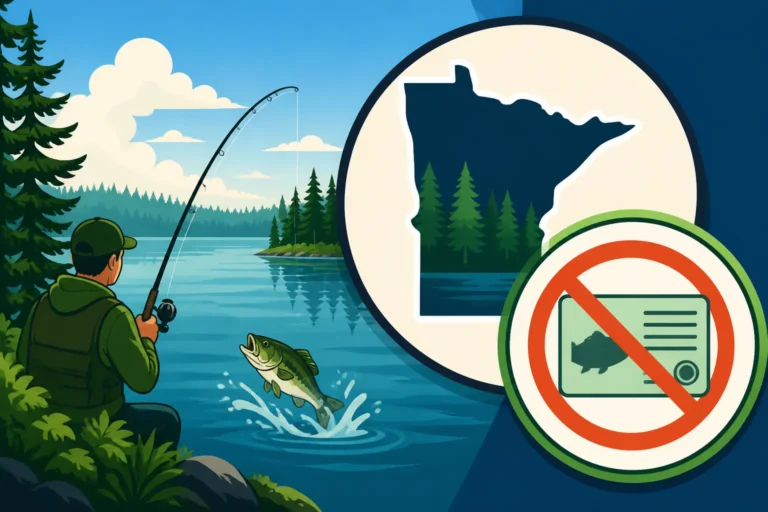
For the average angler holding a standard state-issued permit, the answer to whether you can fish there is a firm no. A standard Minnesota Fishing License: Cost, Types & How to Buy (2026) does not grant you the right to drop a line, launch a boat, or even step onto the ice of Lower Red Lake. The sovereignty of the Red Lake Nation means that their tribal council sets the rules for who can access their natural resources. Currently, Lower Red Lake is closed to non-tribal members for fishing. This is a significant distinction that catches many people off guard, especially those who are used to the vast public access found throughout the rest of the state.
Understanding this requires a bit of historical context. The Red Lake Band never ceded their rights to these waters. While the state of Minnesota manages most lakes, Lower Red Lake remains a sovereign fishery. This allows the tribe to manage the fish populations, specifically walleye and yellow perch, according to their own conservation goals and cultural needs. If you are planning a trip to the area, you must treat the boundary of the reservation with the same respect you would a private property line or an international border.
Comparing Access Across the Red Lake System
Because the terminology can be confusing, it is helpful to break down exactly where your state license works and where it stops. The Red Lake system is divided into Upper and Lower sections. While Lower Red Lake is 100% tribal, Upper Red Lake is split. Roughly the eastern 40% of Upper Red Lake is under the jurisdiction of the Minnesota DNR, while the western 60% belongs to the Red Lake Nation.
When people talk about the legendary "Red Lake Walleye bite," they are almost always referring to the state-managed portion of Upper Red Lake, typically accessed through the town of Waskish. On this side, you are subject to the Upper Red Lake Fishing Regulations (2026) which are updated frequently to manage the high pressure this lake receives. In contrast, the Lower Red Lake Fishing Regulations (2026) apply to tribal members and are not applicable to the general public because access is restricted.
| Feature | State-Managed Upper Red Lake | Tribal-Managed Upper & Lower Red Lake |
|---|---|---|
| Access Permission | Open to the general public | Restricted to Red Lake Tribal Members |
| License Required | Standard MN Fishing License | Tribal ID / Enrollment |
| Typical Entry Point | Waskish (East Side) | Red Lake, Redby, Ponemah |
| Regulations | MN DNR Rules | Tribal Council Ordinances |
| Enforcement | MN DNR Conservation Officers | Red Lake Tribal DNR / Police |
If you accidentally wander across "The Line" on Upper Red Lake and into tribal waters, you are technically trespassing on sovereign land. The boundary on the ice is often marked by GPS coordinates and sometimes physical stakes, but it is the angler's responsibility to know their position at all times. Using a reliable mapping tool or a GPS-enabled sonar unit is essential to ensure you stay within the state-authorized zones.
Why the Restrictions Are So Strictly Enforced
You might wonder why the rules are so rigid regarding Lower Red Lake. To understand this, you have to look back at the late 1990s when the walleye population in Red Lake completely collapsed due to overfishing and environmental factors. It was a devastating blow to the local economy and the tribal way of life. A historic recovery effort was launched, involving a complete moratorium on walleye fishing for several years and a massive restocking program.
Today, the fishery is thriving again, but the Red Lake Nation and the MN DNR are incredibly protective of that success. The tribe manages Lower Red Lake as a commercial and subsistence fishery for its people. By limiting access to tribal members only, they can ensure the long-term health of the walleye stocks without the intense pressure that comes from hundreds of thousands of public anglers. This management style is why the fish in the Red Lake system often reach impressive sizes compared to other heavily pressured lakes.
For the public angler, this means that even if you have read the Minnesota Walleye Limit & Size Rules, those numbers only apply when you are on the state-side water. The tribe has its own set of limits for its members, which are often different from the state’s daily bag limits. This can lead to confusion if you see tribal members keeping fish that would be illegal for you to keep on the Waskish side. Always remember: different water, different sovereign, different rules.
Legal Consequences of Boundary Violations
The penalties for fishing on Lower Red Lake without authorization are severe. Because you are not just violating a fishing regulation but also trespassing on sovereign tribal land, the legal process can be complicated and expensive. If a Red Lake Tribal DNR officer or a tribal police officer finds a non-member fishing on Lower Red Lake, they have the authority to seize all equipment involved in the violation. This includes your rods, reels, electronics, and even your vehicle or boat.
Furthermore, you may be issued a citation that requires an appearance in Tribal Court. This is not the same as a standard ticket you might get from a MN DNR officer. It is a separate legal system with its own procedures. To avoid these headaches, you should always consult the Minnesota Fishing Regulations PDF: Where to Find It before heading out, as it clearly defines the boundaries of the Red Lake Reservation.
If you find yourself in a situation where you are unsure of your location, the best practice is to move toward the eastern shore of Upper Red Lake until you are certain you are back in state-managed waters. Ignorance of the boundary is rarely accepted as a valid defense in court. Knowing What Happens If You Fish Without a License in Minnesota? is one thing, but fishing on restricted tribal land carries even greater weight and can lead to permanent bans from the area.
How to Legally Experience the Red Lake Fishery
If you have your heart set on fishing the Red Lake area, don't be discouraged by the restrictions on the Lower lake. The state-managed portion of Upper Red Lake offers some of the best walleye and crappie fishing in the lower 48 states. To do this legally, you simply need to stay on the correct side of the line and follow the Upper Red Lake Walleye Limit & Slot rules for the current season.
- Get the Right Paperwork: Ensure your MN license is active. If you are an out-of-state visitor, you will need a nonresident permit.
- Use Technology: Download a lake mapping app or use a high-quality GPS. The boundary line on Upper Red Lake is generally the north-south line at 94° 43' 12.0" West longitude, but you should verify this with current DNR maps.
- Stay in Waskish: Most resorts and access points for the public are located on the eastern shore in and around Waskish. These businesses are experts in the local boundaries and can give you a safe "run of the lake" map.
- Follow Special Rules: Red Lake often has special regulations that differ from the rest of the state, such as restricted line counts during certain seasons. Check How Many Lines Can You Fish in Minnesota? to see if there are any current emergency orders for the area.
For those interested in the winter season, Minnesota Ice Fishing & Shelter Rules are especially important on Red Lake. Because the lake is shallow and prone to massive ice shifts, the DNR and local authorities often issue specific safety warnings. If you are using a sleeper house, make sure your provider knows exactly where the reservation line is located. Most reputable outfitters in Waskish have been operating for decades and will ensure your house is set up in legal, state-managed territory.
Where to Find Public Alternatives
If the crowds on Upper Red Lake are too thick or you want to explore more open water where you don't have to worry about tribal boundaries, there are several world-class alternatives within an hour's drive of the Red Lake area. Many anglers use Bemidji as their home base because it offers easy access to a variety of waters.
You can look for Where to Catch Walleye in Minnesota by heading slightly south to Lake Bemidji or Lake Winnibigoshish. These lakes are entirely public and operate under standard state regulations, though some have specific slot limits. If you are looking for a different species, the area is also home to some of the Best Bass Lakes in Minnesota (Smallmouth & Largemouth). By diversifying your locations, you can enjoy the incredible bounty of Northern Minnesota without the stress of navigating complex jurisdictional lines.
Always keep in mind that Minnesota Possession Limits Explained applies to your entire trip. If you catch your limit on Upper Red Lake and then move to another lake the next day, you cannot exceed the total state possession limit. Keeping your catch records organized is the best way to ensure that a fun weekend doesn't turn into a legal nightmare during a routine check by a conservation officer.
Minnesota Fishing Regulations Disclaimer
This guide is provided for informational purposes only and does not constitute legal advice. Fishing regulations in Minnesota, particularly those involving tribal boundaries and special lake-specific slots, are subject to frequent change by the Minnesota Department of Natural Resources and the Red Lake Tribal Council. Always consult the official MN DNR Fishing Regulations handbook and any posted tribal ordinances before your trip. It is the angler's personal responsibility to verify current seasons, limits, and boundary lines to ensure they are fishing legally.