Gull Lake Walleye Limit & Slot
You’re finally pulling the boat onto the legendary waters of the Brainerd Lakes Area, but a nagging worry sits in the back of your mind: am I going to accidentally keep a "protected" fish? Navigating the specific regulations for Gull Lake can be a headache, especially when a mistake leads to a costly citation. This guide clarifies the 2026 Gull Lake walleye limit and slot rules so you can fish with total confidence.
Understanding the Gull Lake Walleye Slot Limit for 2026
If you’ve spent any time at the bait shops in Nisswa or around Lakeshore, you’ve likely heard the term "slot limit" tossed around with a mix of respect and frustration. On Gull Lake, these regulations are not suggestions; they are strictly enforced management tools designed to keep the walleye population healthy and the "trophy" potential high. For the 2026 season, the DNR has maintained specific special regulations that differ from the statewide standard.
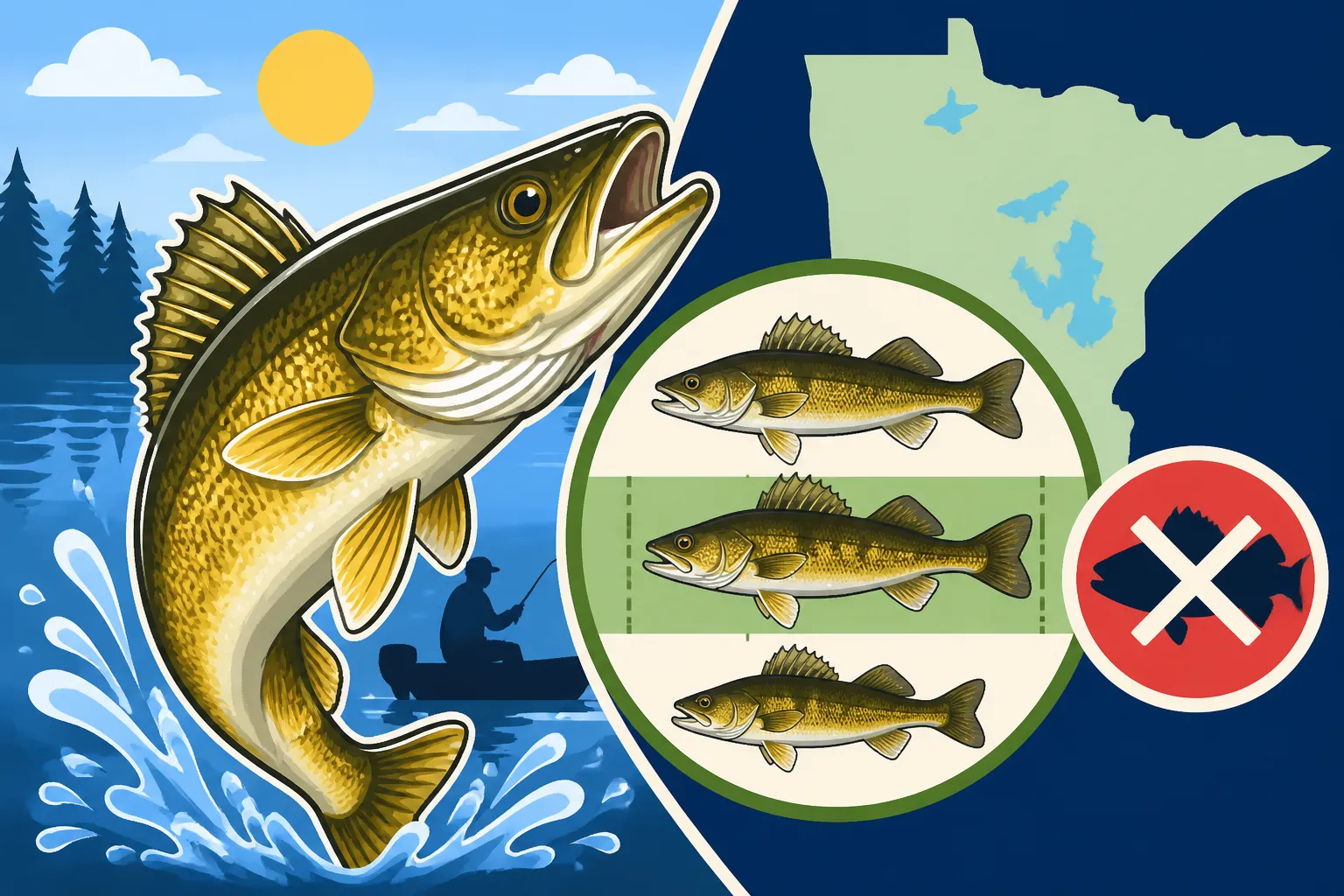
On Gull Lake, the walleye limit is currently set at three fish. However, the "slot" is what usually trips people up. All walleye between 18 and 26 inches must be immediately released. These are the "prime" spawners—the fish that are large enough to produce high-quality eggs but haven't yet reached their geriatric years. You are allowed to keep fish under 18 inches, and you can keep exactly one fish over 26 inches if you’re lucky enough to land a true "walldog."
The Protected Slot Explained
Why 18 to 26 inches? Biologists have found that in high-pressure systems like Gull, if every 20-inch fish went into a frying pan, the population would collapse within a few seasons. By protecting this mid-range size, the lake ensures that there is always a "middle class" of fish moving toward trophy status. When you are out on the water, you need to be meticulous with your measurements. A fish that looks "about 17 inches" could easily be 18.25 inches once you lay it on a flat board.
To stay legal, always measure with the fish's mouth closed and the tail lobes squeezed together to get the maximum length. If the tip of that tail touches the 18-inch mark, back it goes. It is a good idea to brush up on Catch and Release Best Practices in Minnesota to ensure that these protected fish survive the encounter. Deep-water fish, in particular, can suffer from barotrauma, so bringing them up slowly is key to their survival.
Keeping Your Daily Limit
The three-fish limit on Gull is lower than the standard four or six-fish limits seen on other lakes, which makes every keeper count. Because the limit is tighter, many anglers choose to be selective. Just because a 14-inch walleye is legal doesn't mean you have to keep it. However, if you’re looking for a meal, that 15-to-17-inch range is the "sweet spot" for flavor and ease of cleaning.
Before you head out, make sure you have checked the Minnesota Fishing Seasons & Opener Dates (2026) to ensure the season is actually open. Keeping a walleye during the closed season, even if it’s under the slot, is a one-way ticket to a conversation with a Conservation Officer you’d rather avoid. If you do manage to snag a limit of those perfect "eaters," knowing How to Fillet a Walleye (Step by Step) will help you make the most of your harvest without wasting meat.
| Regulation Category | Gull Lake Specifics (2026) | Statewide Standard (Reference) |
|---|---|---|
| Daily Limit | 3 Walleye | 6 Walleye (on most lakes) |
| Protected Slot | 18" to 26" (Must release) | None (unless specified) |
| Over-Size Allowance | 1 fish over 26" | 1 fish over 20" (usually) |
| Possession Limit | 3 Walleye | 6 Walleye |
Navigating the Gull Lake Chain Regulations
Gull Lake isn't just one big bowl of water; it’s a sprawling chain that includes several smaller, connected lakes. One of the most common questions at the landing is: "Does the Gull Lake slot apply to the whole chain?" The answer is a definitive yes. The special walleye regulations for Gull Lake (located in Cass and Crow Wing counties) extend to its connected waters, including Margaret, Roy, Upper Gull, and Nisswa Lake.
Connected Waters and Tributaries
If you are navigating through the channels into Nisswa Lake to grab a burger and then deciding to do some fishing on the way back, the same 18-to-26-inch protected slot applies. The DNR manages these as a single ecological system because the fish move freely between the basins. This is especially true during the spring when walleye are looking for current and rocky runs to spawn.
During the early season, you might find fish stacked in the channels. Even if you are technically in a small channel connecting two lakes, you are still under the Gull Lake special regulations. Always have your Minnesota Fishing License: Cost, Types & How to Buy (2026) on your person, as these high-traffic corridors are prime spots for spot-checks. If you aren't sure where the boundaries lie, consult the Brainerd Lakes Area Fishing Guide for local maps and detailed waterway information.
Special Regulations vs. Statewide Rules
The frustration for many visitors is that they might fish Gull in the morning and then head over to a smaller, unnamed pothole lake in the afternoon where the "standard" rules apply. This is where Minnesota Possession Limits Explained becomes critical. Your possession limit is the total number of fish you can have in your freezer, your cooler, or on your stringer at any given time.
If Gull Lake allows 3 walleye and the statewide limit is 6, you cannot keep 3 on Gull and then go to another lake and keep 6 more. Your total possession for walleye across the state cannot exceed the highest limit of the waters you are fishing, but you can never exceed the specific limit of the lake you are currently on. It’s a bit of a math problem that no one wants to do while they’re on vacation, but getting it wrong leads to Penalties for Keeping Over-Limit Fish in Minnesota that can include losing your equipment or your right to fish.
Practical Strategies for Catching Walleye on Gull Lake
Now that the legalities are out of the way, let’s talk about how to actually get those three fish into the boat. Gull Lake is a diverse fishery with everything from sprawling "mud flats" to razor-sharp drop-offs and lush cabbage beds. To find those 17-inch keepers or the 28-inch trophy, you have to understand the lake's seasonal rhythm.
Early Season Tactics
In May and early June, the walleye are often found in surprisingly shallow water. Look for "new" green weeds—the bright green cabbage is a magnet for baitfish, and the walleye follow. Pitching a 1/8-ounce jig tipped with a shiner minnow into 6 to 10 feet of water is a classic Gull Lake move. Areas like the mouth of the Gull River or the sandy flats near Wilson's Bay can be productive.
As the sun goes down, these fish move even shallower. Many locals swear by "long-lining" shallow-running crankbaits in 5 to 7 feet of water after dark. Using the Best Walleye Lures: Jigs, Cranks & Spinners can make a huge difference here. A perch-colored rapala or a flicker shad in a natural hue usually does the trick. Because the water in Gull is relatively clear, natural colors often outperform neon or "hot" colors during the daytime.
Summer Deep Water Patterns
As July and August roll around, the water warms up, and the walleye head for the deep structure. This is when the famous "Gull Lake Bars" come into play. Points like Cabbage Point or the steep drops off Grassy Point become the primary targets. You’ll want to look for fish holding on the edges of the drop-offs in 18 to 24 feet of water.
This is the season for "Lindy Rigging." A long fluorocarbon leader with a leech or a nightcrawler, dragged slowly along the bottom, is the most effective way to pick off those lethargic summer fish. If you prefer a more active approach, heavy jigs or even "jigging raps" worked vertically over deep schools can trigger a reaction bite. Check the Gull Lake Fishing Report & What's Biting before your trip to see if the fish have made their move to the deep water yet.
Essential Gear and Licensing for Gull Lake
To successfully fish Gull Lake, you don't just need a boat; you need the right setup. The clear water means the fish can be "spooky," so your gear needs to be refined. If you’re showing up with 20-pound monofilament on a heavy rod, you’re going to have a hard time feeling those subtle walleye "ticks."
License Requirements
Before you even launch at the Hole-in-the-Day Bay access, ensure your paperwork is in order. You can easily find out How Much Is a Minnesota Fishing License? at local retailers or online. Remember that if you are a nonresident, the rules and prices differ slightly. Having a digital copy on your phone is great, but a printed, signed copy kept in a waterproof bag is the gold standard for avoiding issues with enforcement.
Gear Recommendations
For Gull Lake walleye, a 6'6" to 7'0" medium-light power, fast-action spinning rod is the versatile choice. It gives you enough "backbone" to set the hook in deep water but enough "tip" to feel the light bites in the weeds. Check out our list of the Best Walleye Rods & Reels for specific model recommendations that handle the clear-water finesse required on this chain.
Using high-quality electronics is also a game-changer on Gull. Because the structure is so defined, being able to stay on the "edge" of a drop-off is the difference between a limit and a "skunk." If you can see the fish on your sonar but they won't bite, try downsizing your presentation. Dropping from a 1/4-ounce jig to a 1/16-ounce jig can sometimes be the only thing that triggers a strike from a pressured Gull Lake walleye.
Minnesota Fishing Regulations Disclaimer
This guide is intended for informational and educational purposes only. While we strive to provide the most accurate and up-to-date information regarding the 2026 Gull Lake walleye regulations, fishing rules are subject to change by the Minnesota Department of Natural Resources (DNR) at any time. Emergency closures, mid-season adjustments, or specific bay-level restrictions may occur. Always consult the official Minnesota Fishing Regulations handbook or the DNR website before your trip. Compliance with all state laws and local ordinances is the sole responsibility of the individual angler.