Mille Lacs Lake Walleye Limit & Slot
Planning a trip to Mille Lacs Lake often comes with a bit of anxiety around the changing walleye rules. Between shifting slot limits, unexpected mid-season closures, and strict harvest caps, staying legal while trying to bring home dinner can feel overwhelming. This comprehensive guide breaks down how the Mille Lacs walleye slot limit works, how daily limits are determined, and what practical steps you need to take to avoid costly fines on the water.
Understanding Mille Lacs Lake Walleye Slot Limits and Bag Limits
Few bodies of water in North America experience the level of fishery management scrutiny that Mille Lacs Lake receives. Because of its status as a premier sport fishery and its shared harvest management between state authority and tribal bands, walleye regulations on Mille Lacs are exceptionally dynamic. Understanding how slot limits and bag limits function here requires looking past standard statewide rules and focusing on lake-specific conservation strategies.
How Slot Limits Protect the Fishery
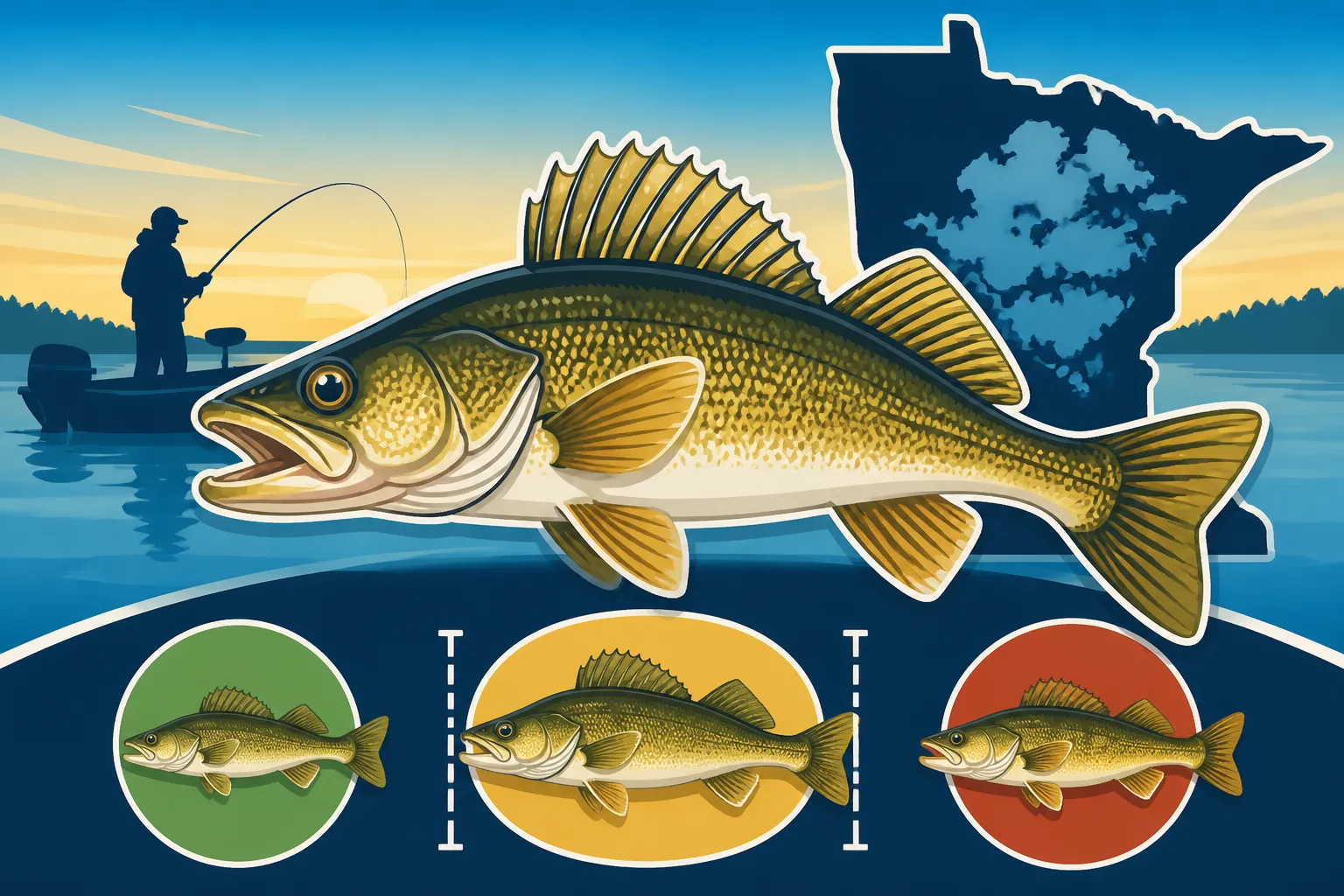
A slot limit is a regulatory tool designed to protect specific length classes of fish. On Mille Lacs, state fisheries managers utilize slot limits to safeguard strong year-classes of breeding adults while occasionally allowing anglers to harvest abundant, smaller fish. Depending on population assessments, a slot might be written as a “harvest slot,” where you can only keep fish within a tight window (for instance, fish between 18 and 20 inches), or as a “protected slot,” where all fish falling inside a specified size range must be immediately released.
The fundamental goal of these restrictions is ensuring that enough mature female walleyes survive to spawn each spring. When you are out on the water targeting fish over mid-lake structure, understanding the purpose behind these rules helps contextualize why a fish measuring just a quarter-inch over the legal line must go straight back into the lake. For a broader look at how these management tools are applied across the state, read about Minnesota Slot Limits: Which Lakes & Why.
Deciphering the Protected Harvest Range
Measuring a walleye on Mille Lacs requires precision. A fish is measured from the tip of its snout to the farthest tip of the tail when pinched together. If a regulation specifies a keepable size range of 21 to 23 inches, a walleye measuring 20.9 inches or 23.1 inches must be returned to the water immediately.
When fishing under tight slots, subtle errors in measurement can lead to severe penalties. Squeezing the tail improperly or using an unverified tape measure wedged against a boat cleat might lead you to believe a fish is legal when an officer’s official bump board says otherwise. Anglers should always compare local lake rules against standard guidelines covered in Minnesota Walleye Limit & Size Rules before stowing any catch in the livewell.
| Season Window | Typical Walleye Regulation | Common Bait & Operational Rules |
|---|---|---|
| Early Spring | Strict Harvest Slot or C&R | Live Bait Allowed, Standard Hours |
| Mid-Summer | Catch & Release or Closure | Artificial Bait Only / Night Ban |
| Early Fall | Restored Harvest Slot (Low Cap) | Live Bait Allowed, Night Fishing |
| Winter Ice | Harvest Allowed (1 Fish Limit) | Standard Lines & Live Minnows |
Possession Limits vs Daily Bag Limits
On Mille Lacs, your daily bag limit and your total possession limit are almost always identical. If the current season rule dictates a one-walleye limit, that means you may only have one legal walleye in your possession whether you are on the boat, at the dock, or resting in your cabin. You cannot catch a legal fish in the morning, clean it, place it in a cooler, and head back out to catch another the same afternoon.
Understanding Minnesota Possession Limits Explained is critical when spending multi-day trips on large lakes. On Mille Lacs specifically, state conservation officers routinely check shorelines, cleaning stations, and resort docks. If you are ever confused about your rights on the water, review Is a Fishing License Required on Mille Lacs Lake? to ensure your credentials match your target species and location.
Seasonal Regulation Changes and Harvest Caps on Mille Lacs
The rules on Mille Lacs rarely stay static from May through October. The state establishes an annual safe harvest level, expressed in total pounds of walleye, which is split between tribal harvest and state sport anglers. Because sport harvest depends heavily on water temperature, angler pressure, and fish mortality, rules adjust seasonally to prevent exceeding this poundage cap.
Open Water Season vs Winter Ice Fishing Rules
The open-water season typically opens in mid-May with specific length restrictions and, in many years, a limited harvest allowance. As the water warms in June and July, walleyes feed aggressively, increasing hooking mortality. To preserve the allocation cap, state managers frequently transition the lake into catch-and-release-only status during mid-summer.
Conversely, winter ice fishing on Mille Lacs often presents a different set of opportunities. Cold water dramatically lowers hooking mortality, allowing managers to offer modest harvest limits during the ice season. Anglers dropping lines through the ice near gravel bars often enjoy a small harvest window, provided the overall annual poundage allocation was not exhausted during the summer months. For broader background on lake rules, see Mille Lacs Lake Fishing Rules & Limits.
Mid-Summer Catch and Release Bans and Night Fishing Restrictions
During peak summer heat, deep-water walleyes hooked on heavy jigs or live-bait rigs experience severe thermal shock and barotrauma when pulled quickly to the surface. To reduce indirect mortality during periods of heavy angler effort, the Department of Natural Resources often implements temporary fishing closures or bans live bait usage.
Additionally, night fishing bans are a staple of Mille Lacs walleye management. To curb harvest rates on predatory walleyes shallowing up to feed after dusk, a lake-wide night closure is usually enforced from late May through mid-June, typically running from 10:00 PM to 6:00 AM. Exceptions are sometimes made for anglers targeting muskie with large artificial lures, but strict tackle checks are common during these enforcement periods. For a deeper look at overall management strategies on the lake, examine Mille Lacs Lake Fishing Regulations Explained.
How Safe Harvest Levels Impact In-Season Adjustments
The total allowable harvest is calculated using comprehensive fish population models, gill net surveys, and forage abundance assessments. If spring surveys indicate a declining population or poor recruitment of young fish, the safe harvest cap is lowered significantly.
When anglers experience exceptionally good fishing in June, the collective harvest rate rapidly consumes the seasonal allocation. When the quota is approached, state managers issue emergency regulation updates. These updates can change a harvest fishery into a catch-and-release fishery with only a few days’ notice. Staying informed via local bait shops and official state updates is vital before launching your boat. If you are wondering about keeping fish under current management plans, consult Can You Keep Walleye From Mille Lacs?.
Practical Tips for Measuring Handling and Staying Legal
Navigating complex regulations requires the right equipment and careful fish-handling routines on the boat. A simple mistake in handling can lead to unnecessary fish mortality or an accidental citation during a routine check by a conservation officer.
Accurate Measuring Techniques on the Water
To ensure your measurements align perfectly with enforcement standards, every angler should keep a flat, commercial-grade bump board on board. Flexible fabric tapes or floating rulers can bend, slide, or stretch, leading to inaccurate readings.
- Lay the bump board flat on the boat floor or casting deck, away from direct sunlight that can heat the aluminum surface.
- Wet the surface of the bump board with lake water to protect the fish’s delicate slime coat.
- Lay the walleye gently on its side with the snout pressed firmly against the zero-inch vertical stop.
- Compress the tail fins together smoothly to measure the maximum total length.
- If the tail tip touches or crosses a restricted line on the board, treat the fish according to the conservative side of the rule to avoid any regulatory infractions.
Best Practices for Catch and Release in Deep Water
When targeting fish in deep water, such as mid-lake mud flats, walleyes can suffer from barotrauma—a condition where expanding gases in the swim bladder prevent the fish from swimming back down. Practicing sound release techniques ensures that released fish survive to spawn and maintain the fishery.
- Bring fish up at a steady, moderate pace rather than cranking them in as fast as possible.
- Keep the fish in the water as much as possible using a rubberized, tangle-free landing net.
- Unhook the fish quickly using long-nose pliers or a dedicated hook extractor.
- If a fish is hooked deep in the throat or gills, cut the line close to the hook rather than pulling, as stomach acids will break down soft metal hooks over time.
- Venturing out with proper handling knowledge is essential; learn more by checking Catch and Release Best Practices in Minnesota.
Navigating DNR Inspection and Enforcement Guidelines
Conservation officers regularly patrol public accesses, marina slips, and open-water hotspots across Mille Lacs. When approached by an officer, turn off your main engine, reel in your lines, and step away from active fishing gear.
Officers will ask to inspect your valid fishing license, check your livewell and coolers, and review your tackle to verify compliance with any active artificial-only or hook-size restrictions. Ensuring your livewell is clear of non-legal fish and keeping your boat organized makes these checks quick and hassle-free.
Gear and Tactical Adjustments for Targeted Mille Lacs Walleye
Adjusting your presentation not only helps you hook more fish on Mille Lacs, but it also helps you manage fish safely when tight slot limits are in effect. Using gear tailored to the structure and depth protects both your tackle and the resource.
Rigging Down to Handle Slot Fish Safely
When catch-and-release rules or narrow harvest slots are active, modifying your tackle minimizes injury to deep-hooked walleyes. Swap out traditional small live-bait hooks for circle hooks when fishing live minnows or leeches on a drag line. Circle hooks naturally slide to the corner of the fish’s mouth before setting, preventing gut-hooking.
If you enjoy pulling live bait on long leaders, learn the mechanics of How to Fish a Lindy Rig for Walleye. Using heavier fluorocarbon leaders reduces line abrasion around rocks and zebra mussel shells, allowing you to bring fish to the boat quickly before they become exhausted.
Electronic Mapping and Depth Tactics Around Structure
Mille Lacs is famous for its vast, offshore mud flats and extensive rock reefs. Walleyes shift locations dramatically based on water temperature, wind patterns, and light levels. During the heat of summer, large schools congregate along the edges of the deep flats where they feed on mayfly larvae and tullibee.
Using high-definition lake charts allows you to pinpoint steep breaklines and subtle gravel transition zones where fish rest. To explore structure options across the lake, take a look at Mille Lacs Lake Depth Map & Structure. When targeting these deep zones, adjust your electronics to watch how fish react to your jigs. If you notice fish suspended high in the water column, target those active biters first, as they are less susceptible to barotrauma than bottom-huggers resting in forty feet of water.
Mastering the mud flats requires precise boat control and vertical presentations. For actionable seasonal strategies on these deep offshore structures, dive into Fishing the Mille Lacs Mud Flats for Walleye or explore general patterns in Mille Lacs Walleye Fishing: Tips & Best Spots. By aligning your tactical approach with current regulations, you can enjoy world-class walleye fishing while helping preserve one of Minnesota’s most iconic natural resources.
Disclaimer
This article is for general informational purposes only and does not constitute professional advice. Laws, prices and regulations vary by location and change over time. Consult a qualified professional for guidance on your specific situation.